







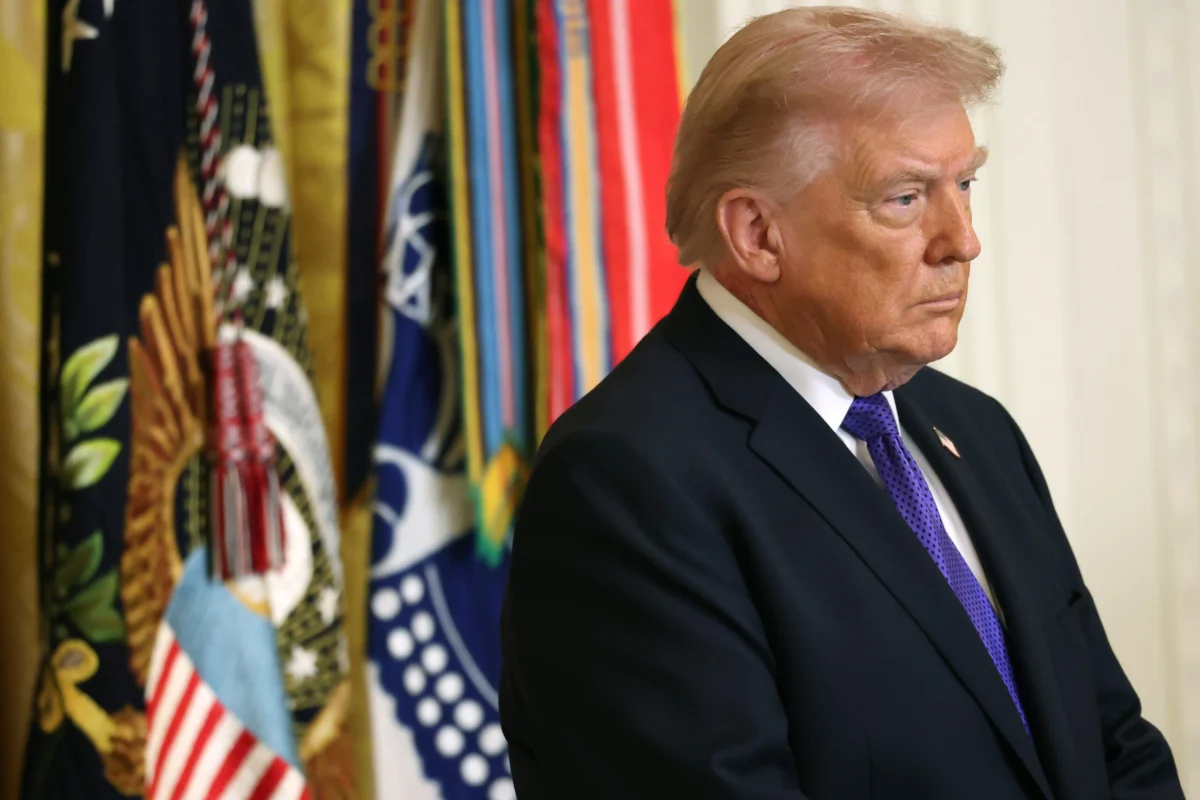
In a high-stakes primetime address that aimed to reshape the national conversation regarding the integrity of American democratic processes, President Donald Trump returned to familiar, long-debunked narratives regarding election fraud. Despite months of anticipation and promises of "bombshell" revelations from the White House, the speech served as a re-litigation of grievances that have been repeatedly rejected by state auditors, federal intelligence agencies, and the judicial system.
The address, which focused heavily on alleged foreign interference and supposed irregularities in voter rolls, was met with swift and sharp criticism from election security experts, state officials, and legal scholars. Critics argue the speech is less a reflection of newfound evidence and more a sign of a deepening political desperation as an 18-month-long, taxpayer-funded investigation into voter fraud has failed to produce any substantive proof of widespread malfeasance.
The Mirage of Evidence: A Chronology of Unsubstantiated Claims
For the past year and a half, the Trump administration has directed significant federal resources toward investigating the legitimacy of U.S. elections, specifically targeting the 2020, 2022, and 2024 cycles. The investigation, spearheaded by former media figure and opinion writer John Solomon, was touted as the definitive inquiry that would uncover evidence of systemic compromise.
However, the reality of the inquiry has been characterized by a lack of tangible findings. Throughout the 18-month duration of this project, the administration has declassified vast tranches of intelligence documents. Rather than revealing the "explosive" evidence of Chinese interference that the White House teased, these documents have largely reinforced the consensus of the intelligence community: while foreign actors engaged in influence campaigns, there is zero evidence of an attempt to manipulate actual ballot counts, compromise voting machines, or alter the electoral outcome.
Even John Solomon, in a candid admission to reporters following the President’s speech, conceded that the intensive search had failed to yield evidence of fraud affecting the results of recent federal elections. This admission stands in stark contrast to the rhetoric employed by the administration, which continues to characterize the integrity of the American electoral system as fundamentally compromised.
The Noncitizen Voter Narrative: Data vs. Reality
A cornerstone of the President’s recent address was the allegation that the Department of Homeland Security (DHS) had identified hundreds of thousands of noncitizens registered to vote across four key states. This claim has become a recurring theme in the administration’s rhetoric, yet it consistently fails to withstand scrutiny under the lens of rigorous data analysis.
Election integrity experts point out that the administration’s methodology for identifying these voters relies heavily on matching voter registration lists against commercial databases—a process widely considered unreliable. As David Becker, executive director of the Center for Election Innovation and Research, noted, "It is impossible to take a public voter file with very little information… and compare it to a commercial database and say for sure the individual identified is the same person."
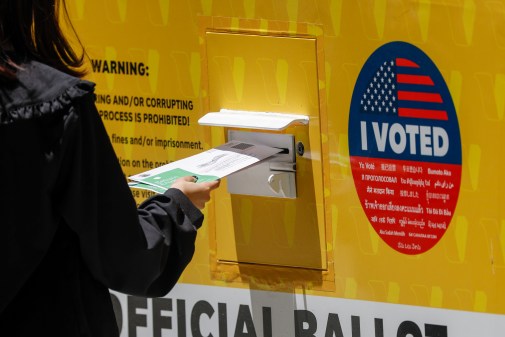
Furthermore, this claim contradicts the findings of post-election audits conducted by state officials across the political spectrum. In Georgia, for instance, a Republican-led audit found only a negligible number of noncitizens—in the double digits—registered to vote out of a population of over 8 million voters. Similar efforts by GOP secretaries of state in other jurisdictions have consistently shown that when claims of "mass noncitizen registration" are investigated, they are almost always the result of shoddy data matching, with the vast majority of flagged individuals being legal U.S. citizens.
The situation is further complicated by the legal status of the tools the administration uses to monitor these records. A federal court recently ordered the DHS to dismantle the SAVE database—the primary tool used to verify citizenship status—citing its unreliability and violations of privacy laws. The administration’s continued reliance on such tools, despite court rulings and the warnings of data scientists, underscores a disconnect between the political narrative and the technical reality of election administration.
Institutional Responses: "Calling Balls and Strikes"
The pushback from state election officials has been both forceful and bipartisan. Recognizing the importance of maintaining public trust in the electoral process, officials have stepped forward to defend the integrity of their systems against what many describe as a campaign of misinformation.
Nevada Secretary of State Francisco Aguilar, a Democrat, issued a pointed rebuke following the speech. "As Nevada’s chief elections officer, it’s my job to call balls and strikes—so when the President lies, I am obligated to call him out," Aguilar stated. He emphasized that Nevada’s elections remain among the safest and most secure in the nation, a sentiment echoed by officials in other states who are frustrated by the administration’s attempts to cast doubt on local oversight.
The resistance to the White House’s inquiries is not limited to Democratic officials. Republican election authorities have also moved to block federal efforts to seize sensitive voter data, viewing these demands as an overreach of federal power into state-run affairs. In Idaho, the Republican secretary of state formally pushed back against a Department of Justice letter threatening prosecution, labeling the demands as potentially illegal under state ethics laws.
The EAC Shakeup and Potential Implications
One of the most concerning developments in the eyes of security experts is the recent firing of all three commissioners of the Election Assistance Commission (EAC). The EAC plays a vital role in certifying voting machines for security and interoperability, serving as a non-partisan anchor for local election boards.
Pamela Smith, CEO of the nonprofit Verified Voting, has expressed concern over the disruption of these critical functions. While the commission’s core testing and certification work may continue under existing frameworks, the removal of leadership is widely interpreted as a political maneuver. Observers fear this is a preemptive strike designed to remove independent voices who might otherwise rebut future claims that voting hardware is compromised.
This pattern of behavior—discrediting the officials who oversee the machines—mirrors the 2020 strategy of attempting to undermine the Cybersecurity and Infrastructure Security Agency (CISA) after its leaders confirmed the integrity of the election. By removing or sidelining those who are best positioned to defend the technology, the administration effectively creates a vacuum that it can fill with its own unverified narratives.
Implications for the Future of American Democracy
The broader implications of the President’s rhetoric are significant. By framing the election system as inherently corrupt despite a total lack of supporting evidence, the administration risks damaging the public’s faith in democratic institutions.
Some analysts fear that the ultimate goal of these claims is to create a pretext for executive action, such as the declaration of a national emergency or, in an extreme scenario, the postponement of electoral events. However, constitutional experts remain skeptical that such measures would have any legal standing. The United States has successfully held elections through the War of 1812 and the Civil War; the courts have historically been the final arbiter of these limits.
Indeed, the judicial branch has been the primary check on the administration’s election-related activities. More than a dozen federal courts have ruled against the government’s efforts to forcibly obtain state voter data, and other rulings have struck down key portions of executive orders related to election oversight.
Conclusion: A Strategy of Desperation
The consensus among election security professionals is that the administration’s 18-month crusade has been a failure of evidence, not of effort. By "grabbing as much garbage as they can and throwing it up against the wall," as David Becker characterized it, the White House is attempting to manufacture a crisis that does not exist.
As the nation looks toward future election cycles, the tension between the federal government’s political narrative and the state-level reality of secure, audited, and transparent elections remains the central fault line. While the administration continues to use the bully pulpit to spread doubt, the resilience of the state election apparatus, supported by the courts and the continued vigilance of election officials, remains the primary barrier against the erosion of democratic trust. The "bombshell" promised to the American people never materialized, leaving only a clear picture of a political agenda struggling to find a foundation in the facts.