In the fast-paced world of digital publishing, the "hit or miss" approach to content creation is becoming a relic of the past. For years, WordPress site owners have relied on static analytics—page views, bounce rates, and exit pages—to guess what their audience finds valuable. But these metrics only tell you what happened; they never explain why a visitor left or what they were actually searching for when they arrived.
Enter "Site Brain," a pioneering experiment from the team behind OpenClaw. By integrating an always-on AI agent directly into the WordPress ecosystem, this project aims to turn every unanswered visitor query into a blueprint for future growth. Site Brain does more than just answer questions; it functions as an automated research department, an editorial assistant, and an internal link architect, all working in the background to ensure no visitor intent goes to waste.
The Genesis of Site Brain: Bridging the Intent Gap
The concept for Site Brain originated from a fundamental question: What if a website could "listen" to its visitors and learn from their unmet needs? As digital content becomes more saturated, the competitive advantage lies in relevance.

The developers at OpenClaw identified a critical flaw in traditional AI chatbots. Most implementations are designed to be a "dead end"—a user asks a question, receives an answer, and the interaction concludes. Site Brain flips this model. By leveraging the OpenClaw AI agent, the team created a system that logs the semantic gaps between what a user asks and what the site provides.
This experiment serves as a functional proof-of-concept for how AI can move beyond simple customer support and into the realm of data-driven editorial strategy.
How Site Brain Functions: A Technical Overview
At its core, Site Brain is an orchestration of modern AI infrastructure and WordPress functionality. To achieve its results, the system relies on three distinct pillars:

- OpenClaw AI Agent: The "brain" that manages the conversation and processes the logic behind the scenes.
- OpenAI Embeddings: These allow the system to understand the meaning behind a user’s query. By converting content into vector representations, the AI can surface relevant pages even if the user’s phrasing doesn’t match the exact keywords in a post.
- Qdrant Vector Database: This acts as the searchable memory, storing the site’s content index to ensure rapid, context-aware retrieval.
The integration process is surprisingly modular, allowing site owners to configure the assistant to scan only published, public-facing content. This ensures that the AI remains a tool for visitor engagement rather than a security risk or a publishing hazard.
Chronology of the Experiment: From Prototype to Insights
The development of Site Brain followed a rigorous, phased approach to ensure utility and safety.
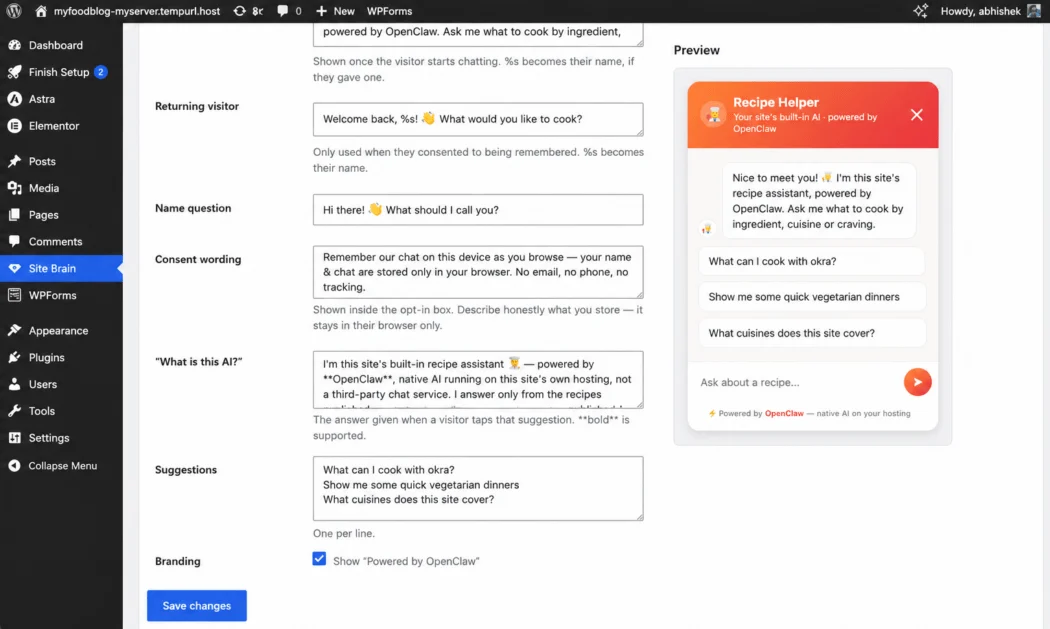
- Phase 1: The "Recipe Helper" Prototype: The team first deployed the agent on a food blog. By naturalizing the chatbot interaction, they observed how visitors asked questions like "What can I cook with potatoes and spinach?" or "Do you have any vegetarian options that aren’t pasta?" The agent successfully parsed these natural language queries, serving up relevant, actionable recipe links.
- Phase 2: The Unmet Need Analysis: Once the chatbot was live, the team shifted focus to the backend. They programmed the agent to categorize questions that the site’s current content couldn’t fully answer. This created a "gap analysis" log.
- Phase 3: Editorial Synthesis: The AI then aggregated these unmet needs to suggest an editorial calendar. Instead of guessing trends, the system provided a list of five high-demand articles that readers were actively requesting.
- Phase 4: Structural Optimization: Finally, the team tackled the "orphan page" problem. The AI identified content that had no internal links pointing to it, then generated a specific, human-readable plan to connect those posts to existing, relevant pages.
Supporting Data: Turning Silence into Strategy
The power of Site Brain lies in its ability to synthesize unstructured data into structured, actionable intelligence. In the prototype’s test run, the AI identified a specific deficiency: visitors were asking for diet-specific recipes that weren’t clearly categorized on the site.

The data provided by the agent wasn’t just a list of keywords; it included:
- Commonality metrics: How many users asked the same or similar questions.
- Answerability scores: A percentage rating of how well the current site infrastructure addressed the intent.
- Linking opportunities: Specific, context-rich anchor text suggestions pulled from existing content.
This shift from "vanity metrics" (like total traffic) to "intent metrics" (what people want to know) provides a quantitative basis for content creation. It essentially provides the site owner with a market research report generated in real-time, 24/7.
Implications for the WordPress Ecosystem
The introduction of Site Brain has profound implications for site administrators, SEO specialists, and content creators.

1. The Death of the "Orphan" Post
Orphaned pages are a common issue in WordPress, often resulting from rapid content growth without a maintenance strategy. Site Brain systematically identifies these pages and suggests exactly where to place links to bring them into the site’s hierarchy. By providing the exact sentence and anchor text, the AI removes the manual labor traditionally required to improve site architecture and internal linking.
2. Intelligent Editorial Planning
For many, the most intimidating part of blogging is the "blank page" syndrome. Site Brain eliminates this by providing an editorial roadmap based on real-time demand. If a segment of your audience is consistently searching for "quick vegetarian dinners," the AI identifies this trend before you might see it in a monthly search console report.
3. Maintaining Human Control
A critical concern with AI-driven site management is the loss of human oversight. The developers behind Site Brain were explicit in their design: the system provides recommendations, not autonomous changes. Every link suggestion and editorial idea is presented to the site owner for approval. It is an "AI-in-the-loop" system, ensuring that the human voice of the brand remains protected.

Official Perspective: The Vision for OpenClaw
In the announcement of the OpenClaw platform, the developers emphasized that the tool is intended to be an "always-on" agent. By hosting on WPMU DEV, users gain access to the infrastructure required to run these intensive AI processes without compromising site performance.
"We wanted to create something that doesn’t just sit in a corner," a project spokesperson noted. "Site Brain is designed to be an active participant in your content strategy. It learns, it reports, and it suggests, but it leaves the final editorial decision-making to the expert: the site owner."
Future Outlook: A New Standard for Content Management?
As we look toward the future of web management, the barrier between site administration and AI assistance will continue to blur. Experiments like Site Brain suggest that the next generation of WordPress plugins will not just be functional add-ons—they will be strategic partners.

The potential for this technology extends far beyond food blogs. In technical documentation, an AI agent could identify complex concepts that users find difficult to understand, prompting the creation of better tutorials. In travel blogging, it could identify regional interests that aren’t currently covered by the site’s guides.
By closing the loop between visitor curiosity and content production, Site Brain effectively transforms the WordPress site into a living, learning organism. It is a compelling vision of a future where your website doesn’t just host your content—it helps you write it better.
For those interested in testing this on their own infrastructure, the developers have provided comprehensive build guides. Whether or not you choose to implement an AI assistant today, the message is clear: the future of content marketing belongs to those who understand the specific, nuanced questions their visitors are asking. With tools like Site Brain, those questions are no longer lost to the void—they are the building blocks of your next success.