










After a three-year hiatus from the competitive landscape of the Indian smartphone market, Alcatel—now operating under the robust umbrella of TCL Communication—is officially staging a comeback. The brand, once a household name in the early days of mobile telephony, is looking to reclaim its footprint with the upcoming launch of the Alcatel V3 Ultra. This strategic re-entry marks a pivotal shift for the manufacturer, as it seeks to pivot from its historical legacy toward a premium, innovation-driven future.
The Tease: Unveiling the V3 Ultra
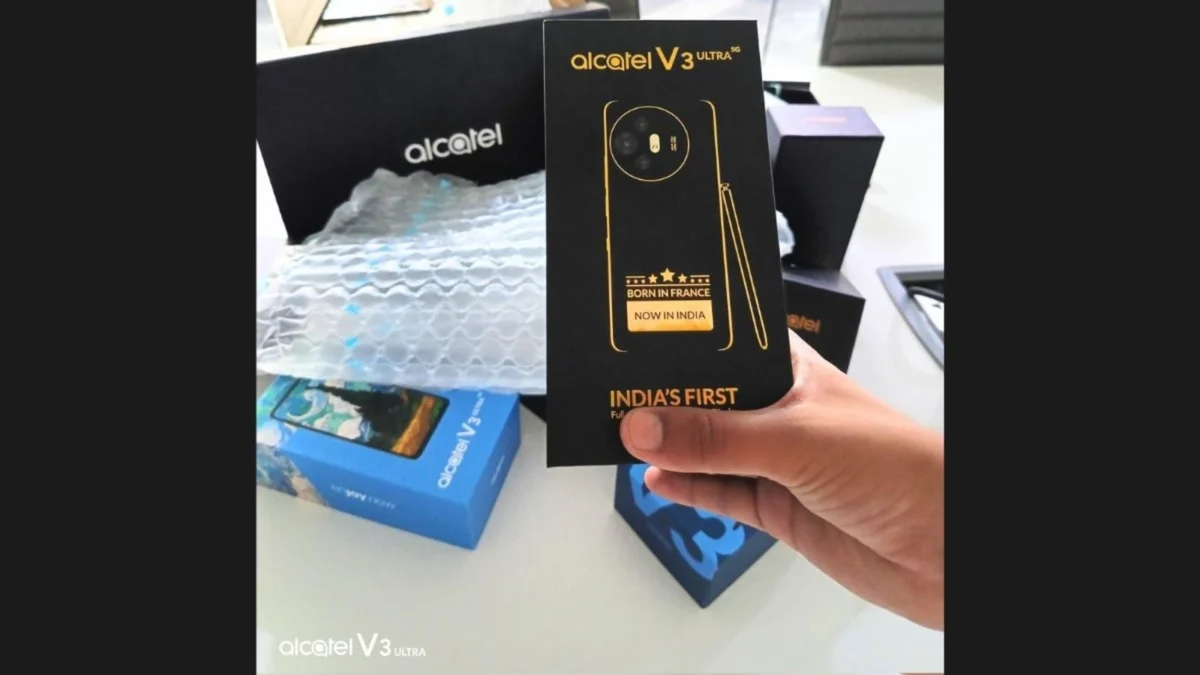
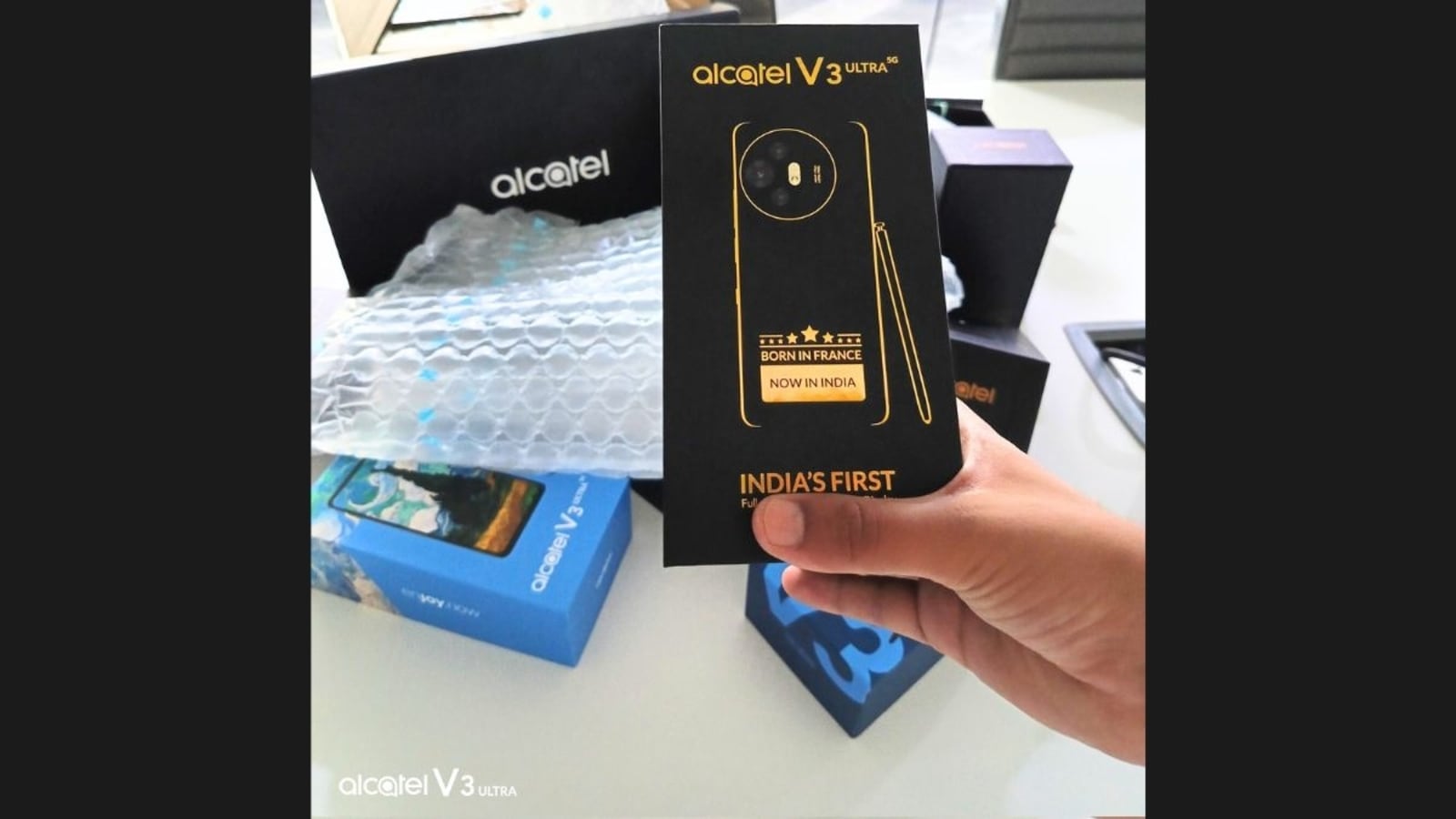
The excitement surrounding the brand’s return reached a fever pitch recently when Madhav Sheth, a key figure instrumental in driving Alcatel’s Indian operations, provided the first concrete glimpse of the device. Via a calculated social media reveal, Sheth shared an image of the V3 Ultra’s retail packaging.
The box, sporting a bold black finish with vibrant yellow typography, confirms the device’s nomenclature and hints at a sophisticated design philosophy. Most notably, the presence of a dedicated stylus icon on the packaging suggests that Alcatel is targeting the productivity-conscious consumer, a niche segment currently dominated by few players. The retail box also offers a peek into the design language: a circular rear camera housing featuring a triple-sensor array, paired with an LED flash. The imagery further suggests a modern, sleek aesthetic, characterized by a flat display and a centrally positioned hole-punch camera cutout.
Chronology of a Comeback: From Silence to Strategy
To understand the significance of the V3 Ultra, one must look at the timeline of Alcatel’s strategic withdrawal and subsequent rebirth.
- The Departure (2022): Following global shifts in consumer demand and intense competition from Chinese OEMs, Alcatel effectively scaled down its presence in the Indian market to realign its global supply chain.
- The Re-announcement (April 2025): The brand officially signaled its intention to return, with leadership confirming that it would leverage TCL’s massive manufacturing prowess to re-enter the Indian theater.
- The Partnership (Q2 2025): Alcatel entered a strategic distribution agreement with Flipkart. This partnership is designed to ensure maximum visibility, utilizing both the primary e-commerce platform and the ultra-fast delivery service, "Flipkart Minutes," to ensure the new devices reach urban centers rapidly.
- The Product Tease (Present): With the V3 Ultra’s packaging now public, the company has transitioned from high-level corporate announcements to aggressive product-centric marketing.
Technological Pillars: The NXTPAPER Advantage
A standout feature of the upcoming Alcatel V3 Ultra, as teased on official Flipkart landing pages, is the integration of TCL’s proprietary NXTPAPER display technology. This technology represents a significant departure from standard LCD or OLED panels found in the mid-range segment.
NXTPAPER is designed to minimize blue light emission and reduce glare, effectively mimicking the reading experience of physical paper while maintaining the fluidity and color reproduction of a high-end smartphone display. By incorporating this, Alcatel is positioning the V3 Ultra not just as a standard smartphone, but as a "health-conscious" device for professionals and students who spend excessive time on their screens. This is a deliberate differentiation strategy aimed at carving out a space in a market saturated with "spec-sheet-first" competitors.
Strategic Implications: The ‘Make in India’ Commitment
Perhaps the most crucial aspect of Alcatel’s re-entry is its alignment with the Indian government’s "Make in India" initiative. In an era where supply chain resilience is paramount, Alcatel has confirmed that its smartphones will be manufactured locally.
This move serves a dual purpose:
- Cost Efficiency: Local manufacturing reduces the burden of import duties, allowing the brand to price its premium offerings more competitively against established giants like Xiaomi, Samsung, and Motorola.
- Regulatory Alignment: By setting up local production lines and a comprehensive service network across the country, Alcatel is signaling to the Indian consumer that they are here for the long haul. This infrastructure investment is a direct counter to the "hit-and-run" perception that often haunts brands re-entering a market after a prolonged absence.
The Competitive Landscape: Where Does the V3 Ultra Fit?
The Indian smartphone market is notoriously unforgiving. With the V3 Ultra, Alcatel is aiming for the mid-range to premium segment. Industry analysts estimate the device will likely carry a price tag in the vicinity of ₹22,000 to ₹25,000.
In this bracket, the V3 Ultra faces fierce competition. The most notable rival is the Motorola Edge 60 Stylus, which has successfully captured the interest of users looking for note-taking capabilities in a portable form factor. For Alcatel to succeed, the V3 Ultra must do more than just provide a stylus; it must offer a seamless software experience and hardware reliability that justifies its premium price point.
The integration of the stylus is not merely an accessory; it is a declaration of intent. It positions the V3 Ultra as a multitasking powerhouse. If the company can provide software optimization that rivals the productivity suites of higher-end flagships, they may successfully entice users looking for an alternative to the traditional smartphone experience.
Supporting Data: Market Dynamics
Recent market research from IDC and Counterpoint indicates that the Indian smartphone market is seeing a trend toward "premiumization." Consumers are increasingly willing to spend upwards of ₹20,000 for devices that offer specific value-adds—such as better display technology, unique design elements, or specific productivity tools.
Alcatel’s focus on the NXTPAPER display hits the bullseye of this trend. By offering a display technology that provides tangible benefits to eye health, Alcatel is betting that the Indian consumer will prioritize long-term usage benefits over raw processor speed alone. However, the brand will need to overcome the "brand recall" hurdle. While Alcatel carries heritage, the current Gen-Z and Millennial consumer base is driven by influencers and aggressive digital marketing. The brand’s reliance on Flipkart’s massive distribution network is a sound tactical move, but it will require significant marketing investment to reignite the brand’s relevance.
Official Responses and Future Outlook
While specific hardware specifications—such as the processor, battery capacity, and RAM configurations—remain under wraps, the industry consensus is that Alcatel will likely utilize a high-performance chipset from the Qualcomm Snapdragon or MediaTek Dimensity series to ensure the V3 Ultra holds its own in benchmark tests.

"The Indian market is not just a volume game; it is a value game," notes a senior market analyst at a leading tech research firm. "Alcatel’s strategy of re-entering with a focus on display innovation and productivity tools is smart. If they can couple this with a robust after-sales service, they have a genuine chance to recapture a significant market share."
Looking forward, the V3 Ultra is expected to be the flagship of a wider portfolio. The brand has already hinted at a series of handsets, suggesting that the V3 Ultra is the tip of the spear. If the launch is successful, we can expect subsequent releases aimed at the budget-conscious segment, leveraging the same manufacturing efficiencies.
Conclusion: A New Chapter or a Nostalgic Blip?
The Alcatel V3 Ultra represents a calculated gamble. The brand is betting on the loyalty of older users who remember the glory days of Alcatel, while simultaneously trying to court the modern, productivity-focused professional with cutting-edge display technology and a dedicated stylus.
The challenges are significant. The market is more crowded than it was three years ago, and the barrier to entry has never been higher. However, with the backing of TCL’s manufacturing capacity, a strong distribution partner in Flipkart, and a clear product identity, Alcatel is positioned better than most brands attempting a comeback. As the launch date approaches, all eyes will be on whether the V3 Ultra can deliver on the promises made in its retail box—a synthesis of form, function, and the "paper-like" promise of the future.
For now, the industry waits. If the V3 Ultra manages to blend the reliability of the past with the technological advancements of the present, Alcatel’s return to India may well be remembered as one of the most successful corporate pivots in the history of the smartphone era.



