Udacity in 2026: A Comprehensive, Journalistic Evaluation of Its All-Access Model, Pricing, and Career Value
By Tech Education Desk Published: October 2026
Main Facts: The Evolution of Udacity
In the hyper-competitive landscape of online technical education, few names evoke as much polarized debate as Udacity. Known historically for its signature "Nanodegree" programs—and its origins rooted in Stanford University’s pioneering artificial intelligence experiments—the platform has undergone significant structural transformations. Today, operating under the corporate umbrella of global consulting and technology giant Accenture, Udacity positions itself less as a traditional massive open online course (MOOC) marketplace and more as an intensive, career-focused technical accelerator.
Boasting over 16.9 million registered users across 240+ countries, more than 500 specialized courses, and an expansive network of 700+ industry mentors, Udacity’s core value proposition relies heavily on project-based learning. Rather than encouraging casual dabbling, the platform’s current "All Access" subscription model is explicitly engineered for individuals aiming to break into technology sectors, pivot careers, or radically upskill in high-demand areas like artificial intelligence, cloud computing, and data science.
However, this specialized focus comes with a steep financial barrier. Individual subscriptions are priced at a robust $249 per month, while a four-month prepaid bundle is offered at $846. This comprehensive analysis evaluates Udacity’s curriculum, project-based structure, mentorship framework, and pricing strategy to answer the central question: Can this platform genuinely deliver a return on investment in a rapidly evolving job market?
Chronology: From Stanford Experiment to Accenture Subsidiary
To understand how Udacity operates today, it is necessary to examine the historical trajectory that shaped its current business model.
2011 (The Catalyst): Stanford University instructors Sebastian Thrun and Peter Norvig open their online "Introduction to Artificial Intelligence" course to the world. More than 160,000 students from over 190 countries enroll, demonstrating the explosive global demand for accessible, high-quality computer science education. This success inspires the founding of Udacity.
2013–2019 (The Nanodegree Era): Udacity pivots away from traditional open university-style courses to focus on career-aligned education. It introduces the "Nanodegree"—a structured, multi-month credential created in partnership with industry titans like Google, Amazon, and AT&T. During this phase, programs are sold as distinct, siloed purchases.
2023–2024 (The Corporate Acquisition): Facing intensifying competition from subscription-heavy rivals like Coursera and specialized bootcamps, Udacity is acquired by professional services giant Accenture. This transition shifts the company’s strategic alignment toward enterprise-grade workforce readiness and continuous corporate upskilling.
2025–2026 (The All-Access Pivot): Udacity replaces its fragmented, single-program purchasing structure with the All-Access subscription model. Subscribers gain unrestricted entry to the broader catalog, permitting fluid cross-disciplinary learning—such as a data science student simultaneously reinforcing foundational programming skills without incurring additional costs.
Supporting Data: Catalog Performance and Metrics
Our editorial review board evaluated Udacity across nine core metrics to establish a holistic view of its market standing. Overall, the platform secured a competitive 4.5 out of 5 rating, excelling in technical accuracy and project implementation while losing points on raw affordability.
Feature Area
Editorial Rating
Summary Evaluation
Course Selection
4.6 / 5
Highly targeted catalog centering strictly on high-yield technical and professional domains.
AI & Tech Courses
4.8 / 5
Outstanding depth, ranging from foundational literacy to advanced machine learning and generative AI architectures.
Project-Based Learning
4.8 / 5
Robust, practical milestones requiring functional code and real-world dataset applications.
Mentor Support
4.6 / 5
Responsive network of 700+ industry practitioners providing project evaluations and technical guidance.
Career Resources
4.5 / 5
Tailored resume reviews, interview preparation, and individualized career coaching sessions.
Ease of Learning
4.4 / 5
Intuitive interface, though curriculum pacing demands discipline from working adults.
Excellent entry paths for programming and AI, though advanced prerequisites apply to specialized tracks.
Overall Value
4.5 / 5
Recommended for dedicated career-switchers and professionals with specific upskilling targets.
Curriculum Breakdown
Udacity’s current course catalog concentrates on five distinct professional verticals:
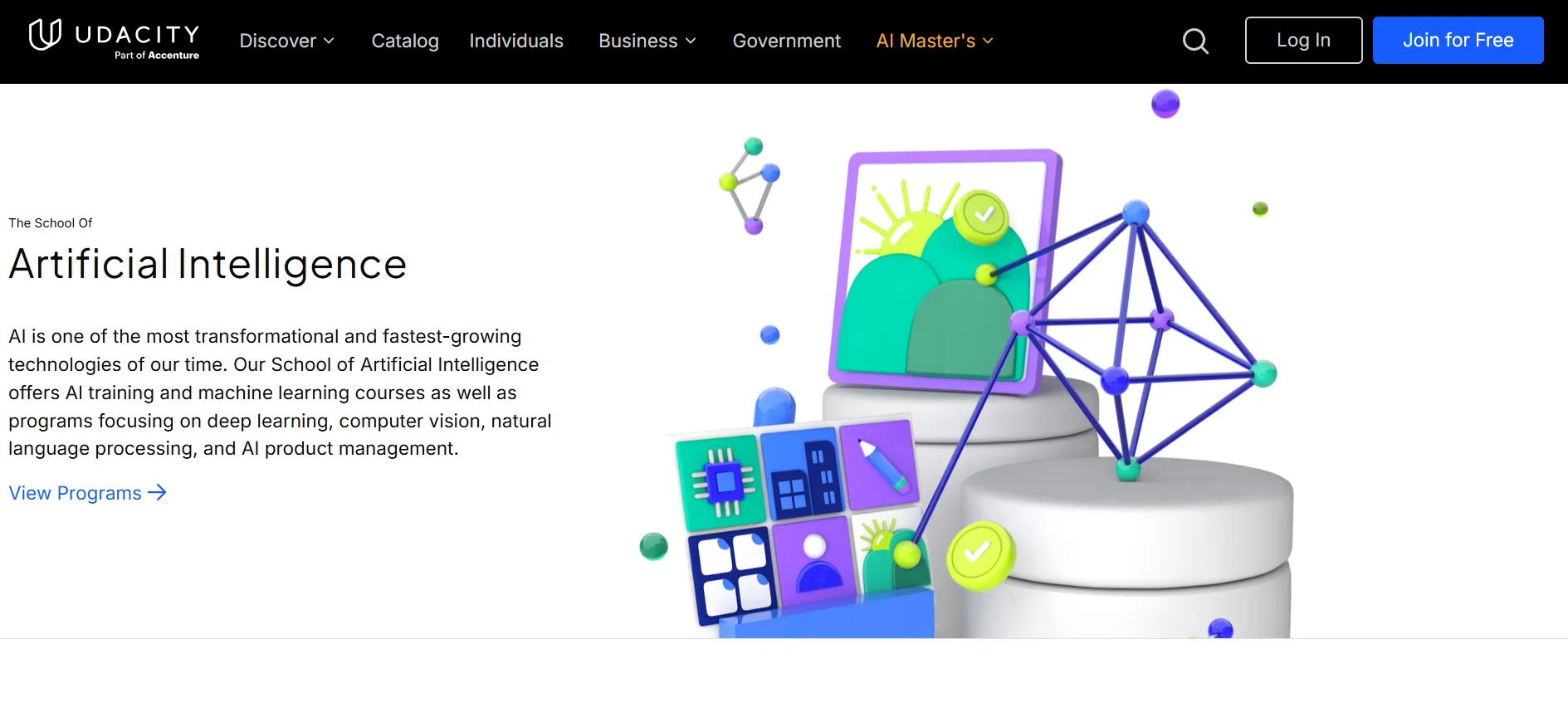
Artificial Intelligence: Ranging from foundational generative AI fluency courses to advanced machine learning, deep learning, and specialized engineering tracks.
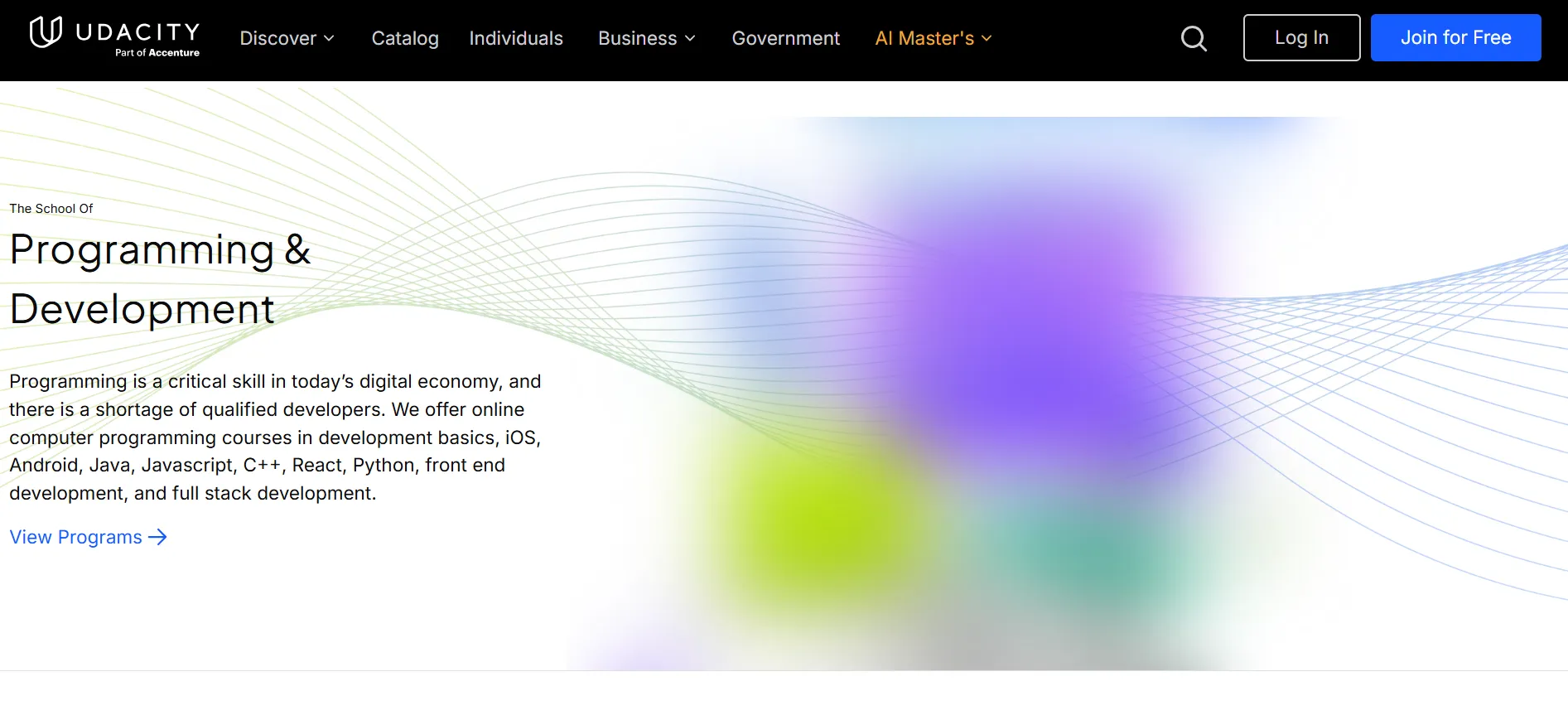
Programming & Development: Covering core languages including Python, C++, and comprehensive full-stack web development pipelines.
Data Science & Analytics: Emphasizing business analytics, SQL, data engineering, and complex data modeling.
Cloud Computing & DevOps: Focusing on AWS architectures, system infrastructure, and operational deployment workflows.
Product Management & Digital Marketing: Serving non-coding professionals who interact directly with engineering departments.
Official Responses and Strategic Positioning
Speaking on the platform’s structural philosophy, Udacity representatives emphasize that the modern economy values demonstrable competency over passive consumption. Unlike platforms that measure success by video completion rates, Udacity’s architecture is anchored in its peerless project-based pipeline.
"Our mandate has never been to provide casual entertainment or hobbyist tutorials," noted a platform curriculum lead during a recent academic panel. "When a professional or a career-changer logs into Udacity, they are engaging in a simulation of the modern workplace. You write code, you submit it, an expert critiques your methodology, and you iterate until it meets industry standards."
Furthermore, integration with Accenture has bolstered the platform’s enterprise relevance. The company asserts that its curriculum is constantly audited and updated to reflect shifting corporate software stacks, ensuring that the skills learned are immediately applicable in production environments.
Implications: Is Udacity Worth the Investment?
Navigating Udacity’s financial model requires careful consideration. At $249 per month, or $846 upfront for a four-month bundle (representing a 15% discount), the platform demands a calculated financial risk.
Career Switchers: Individuals seeking a structured pathway into technology without enrolling in a multi-year university degree program. The combination of Nanodegree milestones and career coaching provides a clear transition framework.
Active Tech Professionals: Software engineers, data analysts, and IT administrators looking to rapidly absorb specialized competencies—such as generative AI integration or AWS DevOps migration—within a compressed timeframe.
Portfolio Builders: Learners who prioritize hands-on deliverables over passive video lectures, utilizing code repositories and completed projects to impress prospective employers.
Who Should Avoid Udacity?
Casual Learners: Individuals seeking low-cost, hobbyist exploration in fields outside technology (e.g., cooking, photography, or creative writing) will find Udacity’s catalog entirely unsuited to their needs.
Budget-Conscious Beginners: Those who require inexpensive, self-paced courses with permanent lifetime access for a modest one-time fee will find more economical alternatives across other MOOC ecosystems.
Final Verdict
Udacity remains a premier, albeit premium, destination for technical upskilling in 2026. Earning a solid 4.5 out of 5 stars, the platform succeeds by marrying rigorous, project-driven curriculums with personalized expert mentorship and career coaching.
While its $249 monthly price tag places it out of reach for casual learners, dedicated professionals and career switchers who fully utilize its All-Access catalog and mentor network will find genuine vocational value. For committed individuals, securing the four-month bundle at $846 represents the most economically viable path to transforming technical capability into career advancement.