











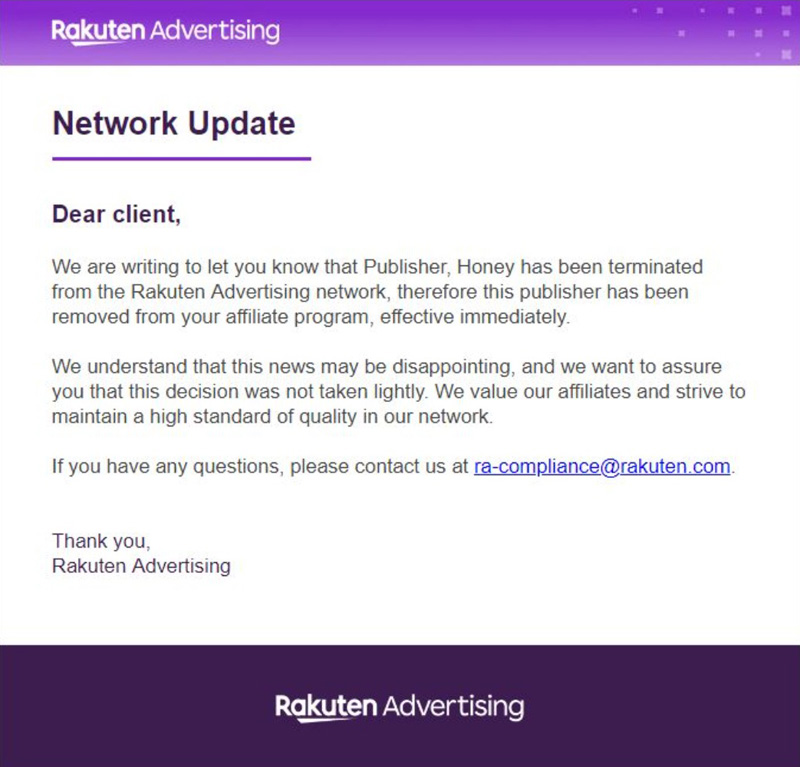
The affiliate marketing landscape is experiencing a massive tectonic shift following an unprecedented enforcement wave against one of the industry’s most recognizable consumer-facing entities. PayPal Honey, the ubiquitous shopping and coupon-aggregation browser extension acquired by fintech giant PayPal for $4 billion six years ago, has been unceremoniously removed or suspended from North America’s two premier affiliate marketing networks: Rakuten Advertising and impact.com.
This high-profile disciplinary action—catalyzed by rigorous investigative reporting from industry watchdog Ben Edelman and tech creator MegaLag—has sent shockwaves through the partnership economy. Coming on the heels of mounting scrutiny regarding the behavior of downloadable software publishers (DSPs), the incident has exposed structural vulnerabilities in how last-touch attribution is managed, monitored, and abused. For affiliate managers, network executives, and digital merchants, the fall of Honey serves as a wake-up call, emphasizing that brand reputation and ecosystem integrity must take precedence over unchecked revenue acquisition.
Main Facts: The Anatomy of the Suspension
The core of the controversy centers on systemic noncompliance with network platform policies, specifically involving attribution manipulation and the violation of "stand-down" rules.
In affiliate marketing, the prevailing compensation model relies on "last-touch-wins-all," meaning the final affiliate in a consumer’s clickstream secures the credit—and the commission—for a transaction. To maintain fairness, browser extensions like Honey are governed by strict stand-down protocols. These rules dictate that if a consumer has already engaged with an earlier-funnel affiliate (such as a content publisher, reviewer, or niche blogger), the browser extension must stand down rather than inject a late cookie, hijack the link, and overwrite the rightful attribution.
According to investigations led by Ben Edelman and echoed by platform executives, PayPal Honey engaged in deliberate violations of these stand-down rules, coupled with concealment tactics designed to bypass detection. Because Honey operates at the point of purchase, its automated code frequently executed final-second cookie drops, effectively siphoning commissions away from content creators and affiliates who had done the heavy lifting of driving initial consumer intent.
The fallout was swift:
- Rakuten Advertising permanently terminated Honey from its network, citing the need to uphold rigorous quality standards.
- impact.com issued a temporary suspension, removing Honey from its Discovery Marketplace for violating platform policies that safeguard trust in the partnership ecosystem.
Chronology of Events
The unfolding of the PayPal Honey disciplinary saga played out across a tense week in mid-January, perfectly coinciding with the industry’s premier annual gathering.
- Pre-January 2026: Independent investigators, notably Ben Edelman and tech analyst MegaLag, compile comprehensive evidence detailing how specific browser extensions covertly bypass stand-down requirements, manipulating clickstreams to capture unearned conversions.
- Monday, January 12, 2026: On the exact opening day of Affiliate Summit West—the largest U.S. affiliate marketing conference—Rakuten Advertising drops a bombshell announcement. It publicly confirms that PayPal Honey has been "terminated from the network" to maintain high standards of quality. The news instantly dominates conversations at the conference and across social media platforms like LinkedIn and X (formerly Twitter).
- Tuesday–Thursday, January 13–15, 2026: Industry professionals dissect the implications of the Rakuten ban. Discussions center on whether other major networks will follow suit and how merchants should audit their existing software partners.
- Friday, January 16, 2026: impact.com steps in, announcing that Honey is "out of compliance" with its platform policies. impact.com places Honey on a temporary suspension, removing its profile from the Discovery Marketplace and explicitly highlighting "attribution manipulation" as the core catalyst for the penalty.
Supporting Data and Industry Context
The enforcement actions against PayPal Honey do not exist in a vacuum. They arrive alongside a growing body of independent research highlighting systemic flaws in how affiliate networks police digital software publishers.

Recent studies underscore the urgency of these reforms. Notably, the Affiliate & Partner Marketing Association (APMA) in the United Kingdom recently published a comprehensive 24-page independent audit titled Independent Audit of Attribution Rules in the UK Affiliate & Partner Marketing Industry. The audit evaluated thirty brands across ten affiliate networks and three distinct affiliate types, shedding light on the friction between early-funnel content creators and last-touch software tools.
Furthermore, the Performance Marketing Association (PMA) maintains an active resource comparing network DSP policies, emphasizing that different platforms treat downloadable software with varying degrees of oversight.
Historically, affiliate networks have often moved slowly when dealing with high-volume enterprise publishers due to the sheer volume of transactions they generate. The fact that two major networks took decisive action against a PayPal subsidiary signals that the economic risk of harboring rule-breaking publishers—namely, the alienation of honest content creators—has finally outweighed the short-term financial gains.
Official Responses and Network Statements
The leadership of the affected networks pulled no punches when explaining the rationale behind the disciplinary measures.
Rakuten Advertising framed its termination of Honey as a non-negotiable step required "to maintain a high standard of quality" within its ecosystem. By emphasizing quality assurance, Rakuten positioned itself as a defender of merchant ROI and fair compensation for all participating publishers.
Meanwhile, impact.com’s executive team addressed the root cause of the suspension with stark transparency, explicitly calling out "attribution manipulation" and behaviors that systematically "undermine trust in the partnership economy." impact.com’s decision to opt for a temporary suspension rather than a permanent ban indicates an ongoing compliance review process, yet the public reprimand remains a severe blow to Honey’s enterprise credibility.
Noticeably absent from the immediate aftermath was a detailed public defense from PayPal, which has largely left merchants and affiliate managers to navigate the fallout independently.
Strategic Implications: Five Essential Lessons for Affiliate Program Management
For digital marketers and affiliate managers, the Honey debacle provides a masterclass in risk management, compliance, and program architecture. Industry veterans at consultancy AM Navigator have distilled five critical takeaways from the crisis.
1. "One Bad Apple" Destroys Program Quality
In modern affiliate marketing, working with a predatory last-touch publisher doesn’t just impact conversion metrics—it poisons the well for entire partnerships. Savvy, rule-abiding affiliates routinely audit merchant programs using advanced tracking and policing tools. When they discover that a program tolerates cookie-snatching browser extensions that routinely overwrite legitimate clickstreams, top-tier content creators simply refuse to join or promote the brand. Protecting your program’s reputation requires proactively purging bad actors to retain high-value partners.
2. Independent Policing Supersedes Network Oversight
Relying solely on affiliate networks to police compliance is a dangerous gamble. Network compliance teams primarily monitor for violations of network-wide rules, not necessarily the bespoke terms of your individual brand agreement. Furthermore, commercial pressures have historically caused some networks to look the other way when dealing with enterprise-scale publishers. Merchants must establish clear Terms and Conditions (Ts & Cs) in their affiliate agreements, actively audit partner behavior, and exercise their contractual right to enforce compliance independently.
3. Master the Intricacies of Technical Compliance
Policing modern affiliates requires a deep understanding of technical nuances. Affiliate managers must educate themselves on the differences between "soft clicks," standard tracking mechanisms, and nuanced stand-down obligations. Utilizing resources such as the APMA audit and the PMA’s DSP policy comparisons ensures that compliance officers can differentiate between legitimate utility extensions and malicious attribution hijackers.
4. Avoid Dangerous Generalizations
While Honey’s infractions were severe, program managers must guard against knee-jerk generalizations. Just as not all paid search affiliates engage in trademark bidding, not all browser extensions violate stand-down rules. Blanket bans that lump loyalty platforms, closed user groups (CUGs), and utility extensions into a single prohibited category often alienate legitimate, high-performing partners. Every affiliate must be evaluated on its individual merit and technological behavior.
5. Diversify Your Affiliate Base Rigorously
The ultimate safety net against publisher volatility is robust diversification. Programs that suffer catastrophic revenue drops following the removal of a single publisher suffer from an "all eggs in one basket" vulnerability. Healthy affiliate ecosystems should span a broad spectrum of publisher models. Expanding recruitment beyond simple coupon sites to include up to 28 distinct affiliate types—ranging from content producers and podcast hosts to card-linked offers, micro-influencers, and post-checkout solutions—ensures long-term resilience and sustainable, balanced growth.
Conclusion
The swift ejection of PayPal Honey from Rakuten Advertising and impact.com marks the end of an era where major software publishers could operate above standard compliance checks. As the affiliate marketing industry matures into 2026 and beyond, transparency, fair attribution, and rigorous self-policing are no longer optional—they are the bedrock of brand survival. For merchants willing to adapt, audit, and diversify, this watershed moment presents an invaluable opportunity to build healthier, fairer, and ultimately more profitable partnership programs.



