The traditional playbook for sports sponsorship was, for decades, a model of transactional simplicity: a brand would purchase a list of assets—perimeter signage, logo placement, perhaps a few tickets—activate around a championship moment, and exit the stage until the next season. It was a strategy defined by visibility, not engagement.
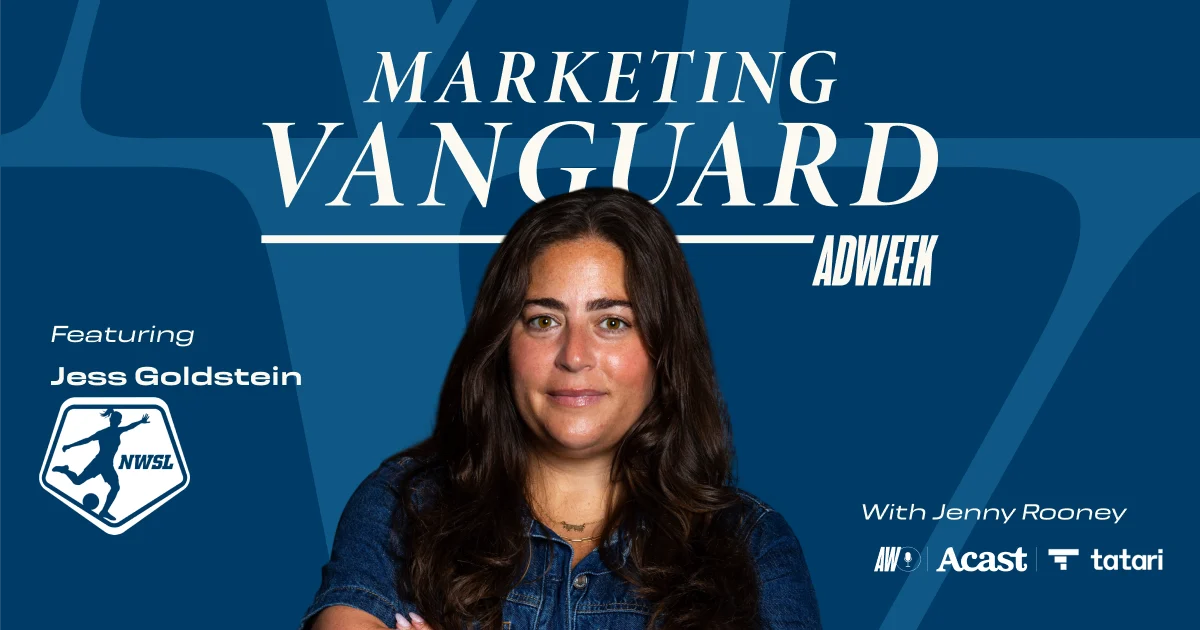
However, as the sports landscape undergoes a seismic shift driven by digital fragmentation and the explosive growth of women’s sports, that legacy model is rapidly becoming a relic. Standing on the Marketing Vanguard stage at Brandweek 2026, Jessica Goldstein, Vice President of Partnerships and Marketing Solutions at the National Women’s Soccer League (NWSL), issued a clear challenge to the industry: stop treating sponsorships like a grocery list and start building them like platforms.
In a wide-ranging conversation with Jenny Rooney, Goldstein unpacked a new philosophy for brand integration—one that prioritizes athlete-driven storytelling, consistent cultural presence, and a deep understanding of evolving fan behavior.
The Death of the Asset-List Sponsorship
For over 20 years, Goldstein has occupied a unique vantage point in the industry. Starting her career in production and entertainment at the NBA, transitioning through 11 years on the agency side, and now shaping strategy for the NWSL, she has watched the efficacy of "logo-slapping" diminish.
"The asset-list sponsorship is over," Goldstein declared during the Brandweek session. The modern sports consumer—particularly the younger demographic—does not interact with a league in a vacuum. They exist in a fluid digital environment where the boundaries between matchday, social media content, lifestyle, and community are porous.
Goldstein argues that when brands treat sponsorship as a menu of contracted rights, they miss the opportunity to become part of the fan’s journey. Instead, she advocates for "360-degree strategies" that treat the partnership as an ecosystem. A brand shouldn’t just occupy space; it should occupy a role that the audience recognizes and values. If a partner’s presence is limited to a banner on a wall, they are essentially invisible to a fan who is already looking at their phone, following a player’s post-game outfit, or discussing a tactical breakdown on a Discord server.
Chronology of a Paradigm Shift
The evolution of NWSL partnerships did not happen overnight. It is the result of a deliberate, multi-year strategy to professionalize the league’s marketing output while maintaining the grassroots, authentic energy that defines women’s soccer.
- The Foundational Phase: Historically, women’s sports were often sold as a "value add" or a CSR (Corporate Social Responsibility) initiative. The focus was on parity rather than commercial viability.
- The Discovery Phase: As the league gained momentum, the focus shifted to "discoverability." The NWSL recognized that the biggest hurdle to growth was not fan interest, but access.
- The Platform Phase (Present): Under leaders like Goldstein, the league has moved into a phase where the sponsorship is a co-authored narrative. The brand and the league are now tasked with building a "platform" where the fan’s experience is enhanced by the partner’s involvement rather than interrupted by it.
Supporting Data: The Power of Intentional Integration
Goldstein points to Google’s strategic entry into women’s sports as the "gold standard" for this new era. Notably, Google chose to invest in the WNBA before even considering a deal with the NBA. This was not a coincidence; it was a deliberate choice to prioritize accessibility.
The Google Case Study
Google’s partnership was not merely a financial transaction. They focused on "discoverability," using their technical infrastructure to ensure that fans could actually find games, check scores, and access content with ease. By helping facilitate the movement of games onto major networks like ESPN and ABC, Google transformed from a passive sponsor into a vital stakeholder in the sport’s growth.
The lesson for other brands is profound: the strongest partnerships create value for the brand while simultaneously solving a problem for the league. When a brand helps make a sport easier to follow, the fan rewards that brand with long-term loyalty.
Athlete Storytelling: The Human-Centric Growth Strategy
Perhaps the most significant pivot in Goldstein’s strategy is the elevation of the athlete as the primary vehicle for brand messaging. In the past, leagues sold the "League Brand" or the "Team Brand." Today, they sell the people.
"Building the NWSL means building the athletes too," Goldstein explained. This strategy acknowledges that modern fandom is inherently parasocial. Fans are drawn to the league because they are drawn to the players. By understanding a player’s personality, their life off the field, and their unique interests, fans form an emotional connection that transcends the 90 minutes of match time.
This is a growth strategy that acknowledges the "on-ramp" nature of modern fandom. A fan does not need to be a soccer expert to appreciate a player’s journey. By highlighting the human side of the game, the NWSL creates entry points for fans who might start by following an athlete on TikTok or Instagram, and eventually migrate to watching live matches.
Cultural Crossover: Sports as a Lifestyle
One of the most persistent myths in sports marketing is that the "game" is the only thing that matters. Goldstein pushes back hard against this, noting that sports is now inextricably linked to music, fashion, and cultural discourse.
"Sports is culture," Goldstein noted. The modern fan sees a player’s tunnel walk—their pre-game outfit—as just as important as their performance on the pitch. This creates a vast "storytelling territory" for brands. Whether it is fashion, wellness, or technology, brands that understand how to intersect with the lifestyle of the athlete and the fan have a much higher ceiling for engagement.
This requires brands to be agile. They must be willing to participate in the conversation rather than simply attempting to dominate the broadcast. By aligning with the cultural touchpoints that athletes are already engaging with, brands gain permission to enter the fan’s world in a way that feels additive rather than intrusive.
Implications for the Future: A Call to Action for CMOs
The implications for the marketing industry are clear: the era of the passive sponsor is ending. To succeed in the coming decade, brands must rethink their internal structures regarding sports marketing.
1. From Transactional to Relational
CMOs must move away from procurement-led sponsorship models. Sponsorship should be treated as a marketing partnership that requires dedicated resources for content creation, community management, and ongoing activation.
2. Prioritize Long-Term Presence
Goldstein emphasizes that "consistent presence" is the secret sauce. A brand that shows up for one major tournament and disappears for the rest of the year will fail to build the necessary trust with a sophisticated, skeptical audience.
3. Embrace the "Platform" Mindset
Brands should ask themselves: What is the role I play in this fan’s life? If the answer is simply "a logo on a screen," the brand is failing. If the answer involves providing tools, stories, or community access, they are building a platform.
4. Authenticity is Currency
The NWSL audience is highly attuned to authenticity. They know when a brand is simply trying to capitalize on the "women’s sports moment." Brands that invest in the infrastructure of the sport—like Google did—will find themselves rewarded with a level of brand affinity that traditional ad spend simply cannot purchase.
Conclusion: The Road Ahead
As the NWSL continues its trajectory of unprecedented growth, the philosophy championed by Jessica Goldstein serves as a blueprint for the wider sports industry. The shift from selling "assets" to building "platforms" is not just a trend; it is a fundamental correction of a broken model.
The future of sports marketing belongs to those who recognize that the game is no longer just on the field—it is in the stories, the culture, and the consistent, meaningful connections between athletes and their fans. For brands looking to make an impact, the message from the Marketing Vanguard stage was loud and clear: stop buying the logo, and start helping to write the story.
As Goldstein noted in her closing remarks, "The goal is not to expect every new fan to immediately watch every game. It is to create enough connection that following the athlete becomes an entry point into following the league." In that transition from curiosity to community lies the future of sports business.