










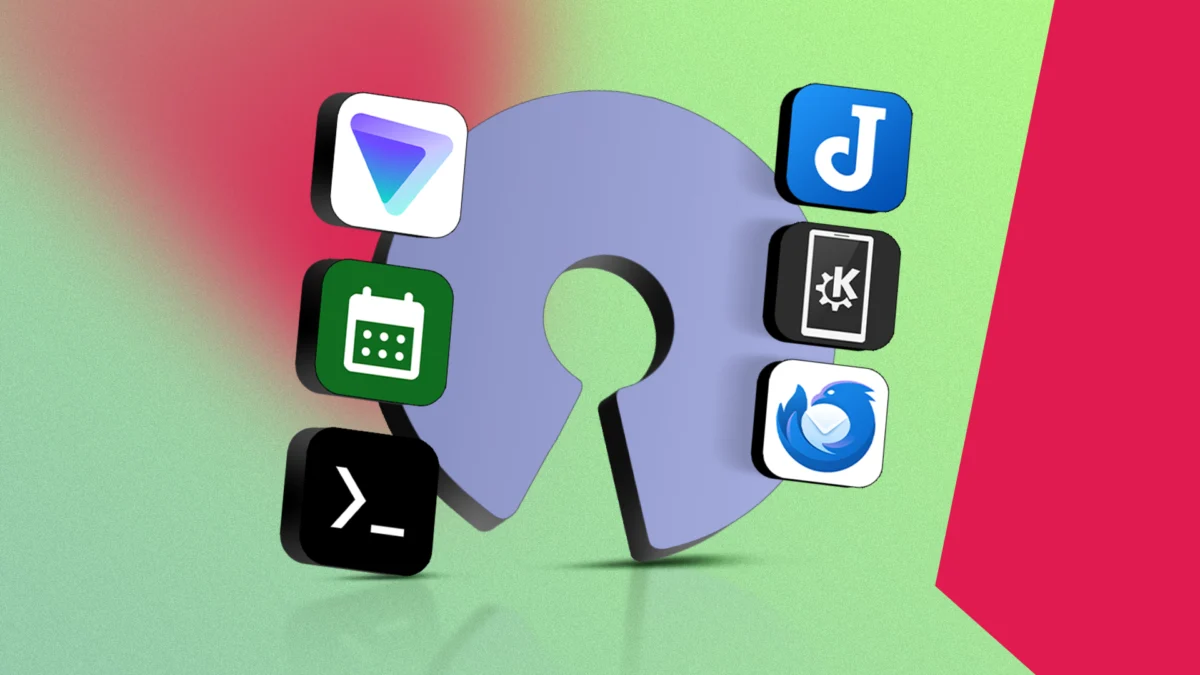
In an era defined by ubiquitous data harvesting and the "walled garden" approach of major tech conglomerates, the digital landscape has become increasingly restrictive. For the average user, the convenience of Google’s Workspace suite—Docs, Sheets, Drive, and Gmail—is undeniable. However, beneath the polished interface of these industry-standard tools lies a complex ecosystem of tracking, telemetry, and data monetization that is beginning to alienate privacy-conscious consumers.
As public awareness regarding data sovereignty matures, a quiet revolution is taking place. Users are migrating toward Open Source Software (OSS), a movement rooted in the philosophy that software should be transparent, verifiable, and under the control of the end-user. Far from being a niche pursuit for software engineers, the modern open-source landscape is becoming increasingly accessible, offering robust, high-performance alternatives to proprietary monoliths.
The Philosophical Shift: Why Open Source Matters
The primary critique of closed-source ecosystems is the "black box" nature of their operations. When a user interacts with a proprietary application, they are often unaware of what telemetry data is being exfiltrated or how their behavioral patterns are being indexed to build advertising profiles.
Open-source projects, by contrast, invite public scrutiny. Because the source code is available for inspection, the community can identify vulnerabilities, verify privacy claims, and prevent backdoors. The economic model has also shifted: while core features remain free to ensure widespread adoption, many projects now offer tiered subscription models for cloud hosting, cross-device synchronization, and advanced team functionality. For the user, this transforms the software from a "free" product where the user is the commodity into a service where the user is the customer.
Chronology of the Migration: A Step-by-Step Transition
The transition away from Big Tech is not a task to be completed overnight. It is a process of incremental replacement. For those looking to reclaim their digital footprint, the journey typically follows a logical progression:
- The Infrastructure Phase: Securing connections and managing files.
- The Utility Phase: Replacing daily drivers like calendars, browsers, and note-taking apps.
- The Communication Phase: Consolidating email and messaging to remove reliance on centralized, data-hungry platforms.
Supporting Data: Six Pillars of the Open-Source Stack
1. Terminal Mastery with Termux
For users who require surgical precision in file management, Termux provides a full Linux terminal environment on Android. Unlike standard mobile file managers that often hide the underlying directory structure, Termux grants the user root-level command over their device.
By utilizing utilities like wget for direct image acquisition or yt-dlp for video retrieval, users bypass the bloated, ad-ridden, and often malicious redirect loops found on many websites. While this requires a baseline knowledge of Linux commands—such as pkg upgrade to maintain repository health—the result is an unfiltered, high-speed experience that removes the "middle-man" of web-based download buttons.
2. Privacy-First Scheduling: Fossify Calendar
The Fossify suite represents a growing trend of "de-Googling" the smartphone. Fossify Calendar is a lightweight, ad-free alternative to Google Calendar. Crucially, it operates entirely offline, meaning sensitive scheduling data—such as medical appointments, period tracking, or private routines—never leaves the local device unless the user explicitly chooses to export it in the standard .ics format. By eliminating the need for a cloud-connected account, Fossify restores the concept of personal privacy to the digital planner.
3. Fortifying Connections with ProtonVPN
Security experts frequently warn against "free" VPN services, which often monetize user traffic to offset operational costs. ProtonVPN stands as a notable exception. Its business model relies on a freemium structure, with paid tiers subsidizing the security infrastructure.

Supported by annual audits from independent firms like Securitum, ProtonVPN has proven its "no-logs" claims. A critical feature for the privacy-conscious is the "Kill Switch," which, when enabled, severs all internet traffic if the VPN connection drops, ensuring that no unencrypted data leaks during a transition. Integrating this at the OS level—via the "Always-on VPN" settings—creates an ironclad barrier against ISP tracking and geo-blocking.
4. Cross-Platform Interoperability with KDE Connect
The friction between Android and macOS or Windows is a design choice by major manufacturers intended to lock users into specific ecosystems. KDE Connect breaks these barriers. By allowing a smartphone and a PC to communicate over a local network, it enables seamless clipboard sharing, file transfers without cloud dependency, and remote-control functionality. It is a vital tool for those who refuse to be tethered to a single brand’s hardware ecosystem.
5. Structured Knowledge Management: Joplin
Note-taking apps have become the primary brain-dump for modern professionals, but they are often the most invasive. Joplin offers a Markdown-based alternative that supports local-only storage or encrypted cloud synchronization. Unlike proprietary apps that use proprietary formats, Joplin uses open standards, ensuring that a user’s notes remain portable and accessible even if the app were to disappear tomorrow.
6. Email Sovereignty via Thunderbird
The consolidation of email is a common necessity, but doing so within an app like Gmail or Outlook often subjects the user to AI-driven "smart" features that scan the content of every message. Thunderbird, managed by the non-profit Mozilla foundation, offers a secure, decentralized way to manage multiple accounts. By using OAuth, Thunderbird ensures it never actually "holds" the user’s password, instead receiving an access token that can be revoked at any time.
Implications for the Tech Industry
The rise of these tools has profound implications for the tech giants. If a significant percentage of the user base shifts to open-source tools, the data-mining engines that drive modern tech valuations will begin to sputter.
Official responses from these companies often emphasize "security" as a justification for closed systems, arguing that the fragmentation of open-source tools creates vulnerabilities. However, the open-source community counters that the "security through obscurity" model is fundamentally flawed. When thousands of independent developers can inspect code, security is bolstered by collective vigilance rather than corporate mandates.
Conclusion: Starting the Transition
Moving toward an open-source workflow is not about avoiding technology; it is about choosing technology that respects the user. The transition should be approached with a "one-app-at-a-time" mentality. Start by replacing a low-risk application, such as your calendar or note-taking tool. Once the workflow is established, move on to more complex integrations like email clients or VPNs.
The objective is not to become a developer or a sysadmin, but to regain agency over the tools that define our digital lives. By prioritizing open standards and privacy-centric software, we can ensure that our devices serve us, rather than the data-hungry platforms that once defined our online existence. The exodus from the walled garden is not just possible; it is a necessary step toward a more private and equitable digital future.



