Executive Summary: A Bold Push into the Indian E2W Landscape
In a move that signals a significant shift in India’s burgeoning electric vehicle (EV) ecosystem, Vietnamese automotive heavyweight VinFast has officially laid the groundwork for its foray into the Indian electric two-wheeler (E2W) market. The company has announced the signing of Letters of Intent (LoIs) with over 50 prominent dealer partners across the country. This strategic move aims to establish a robust footprint, with plans to inaugurate over 50 exclusive e-motorcycle showrooms spanning 34 cities across 15 states and union territories.
From the bustling corridors of Delhi NCR to the commercial hubs of Maharashtra, Karnataka, and Tamil Nadu, VinFast is positioning itself as a formidable contender. By focusing on e-motorcycles—a niche that remains less saturated than the e-scooter segment—the company is aiming to capture the imagination of the Indian consumer. This expansion is not merely about retail presence; it is a holistic strategy encompassing the development of a comprehensive charging infrastructure and a robust after-sales support network, ensuring that the "ownership journey" for Indian riders is as seamless as possible.
The Chronology of Ambition: From Initial Plans to On-Ground Execution
The journey of VinFast into the Indian market has been one of calculated deliberation. Nearly a year ago, the company first unveiled its roadmap to enter the Indian E2W space by 2026. The initial announcement was anchored in a staggering $2 billion investment pledge, aimed at scaling its local production capacity from an initial 50,000 units to a massive 1.5 lakh units annually.
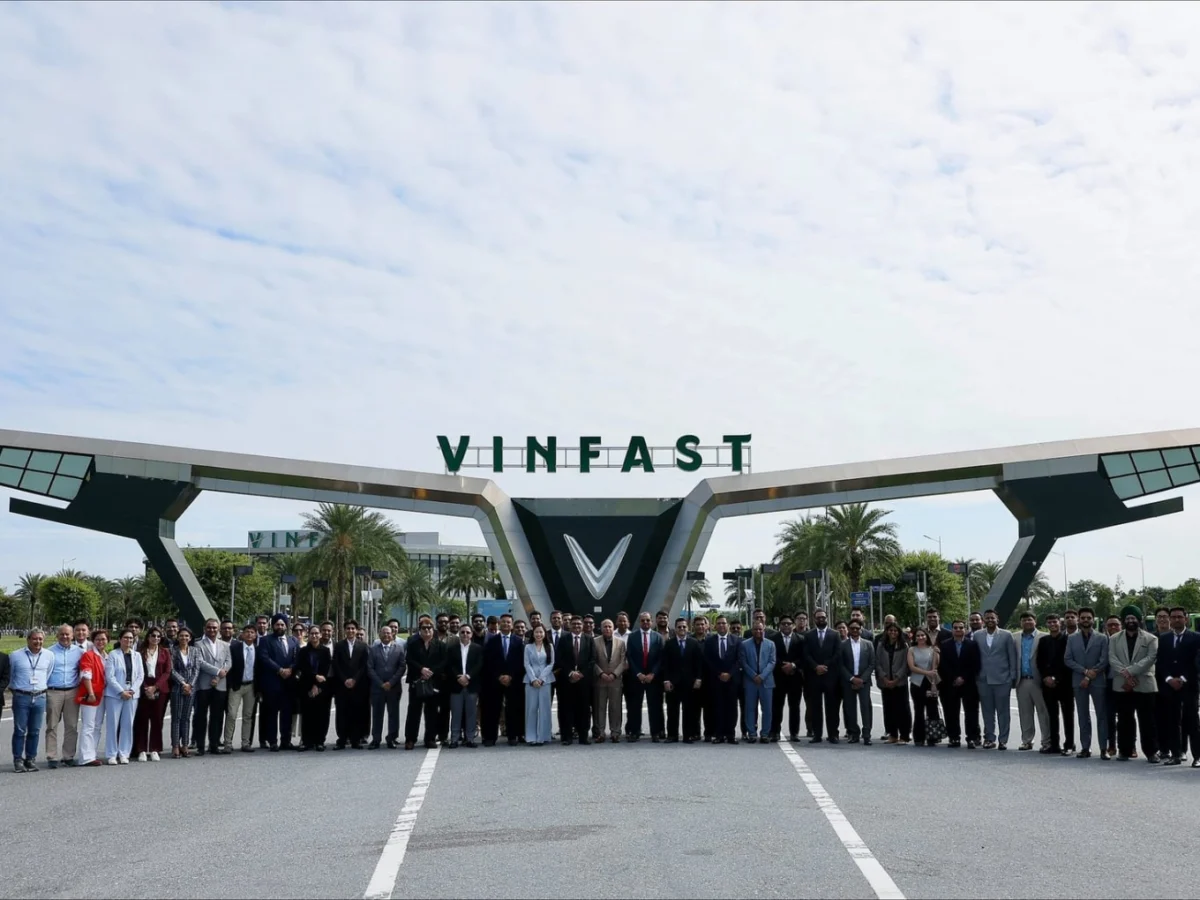
However, the path to market entry has seen its fair share of strategic recalibrations. The global EV landscape has shifted rapidly, forcing VinFast to navigate economic headwinds and shifting consumer demands. Earlier this year, reports emerged that the company had temporarily halted certain car production initiatives in India to reassess cost structures and prioritize market fit. This period of reflection appears to have borne fruit, as the company pivoted toward a more focused approach. Last month, industry reports indicated that VinFast had entered into advanced discussions with local suppliers to co-develop two new, India-specific EV models. By signing these 50+ dealer agreements at their state-of-the-art manufacturing facility in Hai Phong, Vietnam, the company has transitioned from the "planning phase" to "execution mode."
Market Dynamics: Why India? Why Now?
The Indian E2W market is currently undergoing a structural transformation. The confluence of government incentives, such as the FAME-II and PM E-DRIVE schemes, rising fuel costs, and a heightened public consciousness regarding climate change, has created a fertile ground for electric mobility.
The Competitive Landscape
The current market is dominated by legacy giants—TVS Motor, Bajaj Auto, and Hero MotoCorp—who have successfully leveraged their established distribution networks to pivot toward electrification. Simultaneously, the ecosystem has been energized by the meteoric rise of new-age, digital-first players like Ola Electric and Ather Energy.
VinFast’s entry introduces a unique variable: it is eschewing the crowded e-scooter segment to focus on the e-motorcycle category. While this move avoids a head-on collision with mass-market scooter manufacturers, it places VinFast in direct competition with emerging Indian startups like Oben Electric, MATTER, and Ultraviolette, which are also vying for the premium and performance-oriented e-motorcycle segment.
The Data Behind the Growth
The urgency of this move is supported by compelling data. In September alone, E2W registrations in India surged by 12.2% month-on-month, reaching 2.07 lakh units compared to 1.84 lakh in August. This consistent growth trajectory, driven by gig economy platforms (food delivery and ride-hailing services) and individual buyers alike, provides the "headroom" that VinFast is banking on. The company believes that by bringing its global expertise to these high-growth cities, it can secure a significant slice of the pie.
Strategic Pillars of the VinFast India Strategy
VinFast’s entry strategy is built upon three core pillars designed to alleviate the primary pain points of Indian EV consumers:
1. Extensive Distribution Network
By partnering with over 50 dealers, VinFast is ensuring a pan-India presence from day one. These showrooms will be strategically located in regions with high two-wheeler density, including Uttar Pradesh, Rajasthan, West Bengal, and the key metropolitan hubs. The company’s focus on physical showrooms reflects a realization that in the Indian context, "touch and feel" remains a critical component of the high-value purchase journey.
2. Charging Infrastructure and After-Sales Support
One of the most significant barriers to EV adoption in India is "range anxiety." VinFast has explicitly stated that it is not just selling bikes; it is building an ecosystem. By investing in charging infrastructure alongside its showrooms, the company aims to reassure potential buyers about the usability of its products. Furthermore, the commitment to strengthening after-sales service is a strategic move to build brand trust in a market where maintenance and spare parts availability are key concerns for the long-term EV owner.
3. Localization and Cost Optimization
The company’s recent move to engage with local suppliers is a testament to its commitment to the "Make in India" initiative. By localizing the supply chain, VinFast aims to keep its price points competitive while insulating itself from the volatility of global logistics. This strategic reset is expected to yield products that are not only technologically superior but also priced to penetrate the price-sensitive Indian middle class.
Official Perspectives: A Commitment to the Ownership Journey
Anurag Saxena, the India CEO of VinFast’s e-scooter division, emphasized the significance of the recent LoI signings. "Partnering with more than 50 dealer partners across 15 states and territories and 34 cities marks the beginning of our journey to bring VinFast e-motorcycles across India," Saxena noted.
He further highlighted the company’s commitment to the customer experience, stating, "Alongside, we are also building charging infrastructure and strengthening after-sales services to ensure that customers across these locations receive the support they need throughout their ownership journey." This emphasis on the "ownership journey" suggests that VinFast is looking beyond the initial transaction, aiming to foster long-term brand loyalty in a market where customers are increasingly prioritizing reliability and service.
Implications and Future Outlook
VinFast’s entry into India is a microcosm of the larger global shift in the automotive industry. As the company seeks to diversify its manufacturing and sales footprint beyond Vietnam, India serves as a critical strategic frontier.
Challenges Ahead
Despite the optimism, the road ahead is fraught with challenges. The Indian market is notoriously difficult, characterized by extreme price sensitivity and diverse environmental conditions that demand highly durable vehicles. Additionally, the existing players have already established deep-rooted relationships with consumers and have optimized their logistics chains. VinFast will need to demonstrate that its e-motorcycles offer a distinct value proposition—whether in terms of battery technology, build quality, or software integration—to displace the incumbents.
The Macro Perspective
The successful entry of a global player like VinFast could catalyze further innovation within the Indian EV space. Increased competition often leads to faster technological advancements, better pricing, and a more robust charging infrastructure for all consumers. As India marches toward its ambitious goal of 30% EV penetration by 2030, the presence of players like VinFast will be essential in bridging the gap between current adoption rates and national targets.
Conclusion
The signing of LoIs with over 50 dealers is more than just a business development milestone; it is a clear declaration of intent. VinFast is signaling that its "India story" has officially moved from the boardroom to the streets. With a focus on the e-motorcycle segment, a commitment to localized infrastructure, and a massive investment pipeline, the Vietnamese EV maker is set to be a key disruptor.
As the company prepares to roll out its showrooms across 34 cities, all eyes will be on how it executes its promise of superior after-sales support and charging accessibility. If VinFast can successfully blend its global manufacturing prowess with a deep understanding of the unique Indian consumer, it could well redefine the landscape of electric mobility in the subcontinent, setting the stage for a new era of two-wheeled transportation.