
NEW YORK — In the highly competitive landscape of website builders and content management systems, pricing transparency and feature distribution remain critical factors for digital entrepreneurs, creatives, and small-business owners. Squarespace, a dominant force in the web-publishing sector, has updated its value proposition with a tiered pricing model that leverages introductory promotional discounts and nuanced commerce fee structures.
This comprehensive analysis breaks down the platform’s current offerings—the Basic, Core, and Advanced tiers—evaluating how structural updates, transaction fees, and operational capabilities impact the bottom line for website administrators.

Main Facts: Decoding the Current Squarespace Pricing Matrix
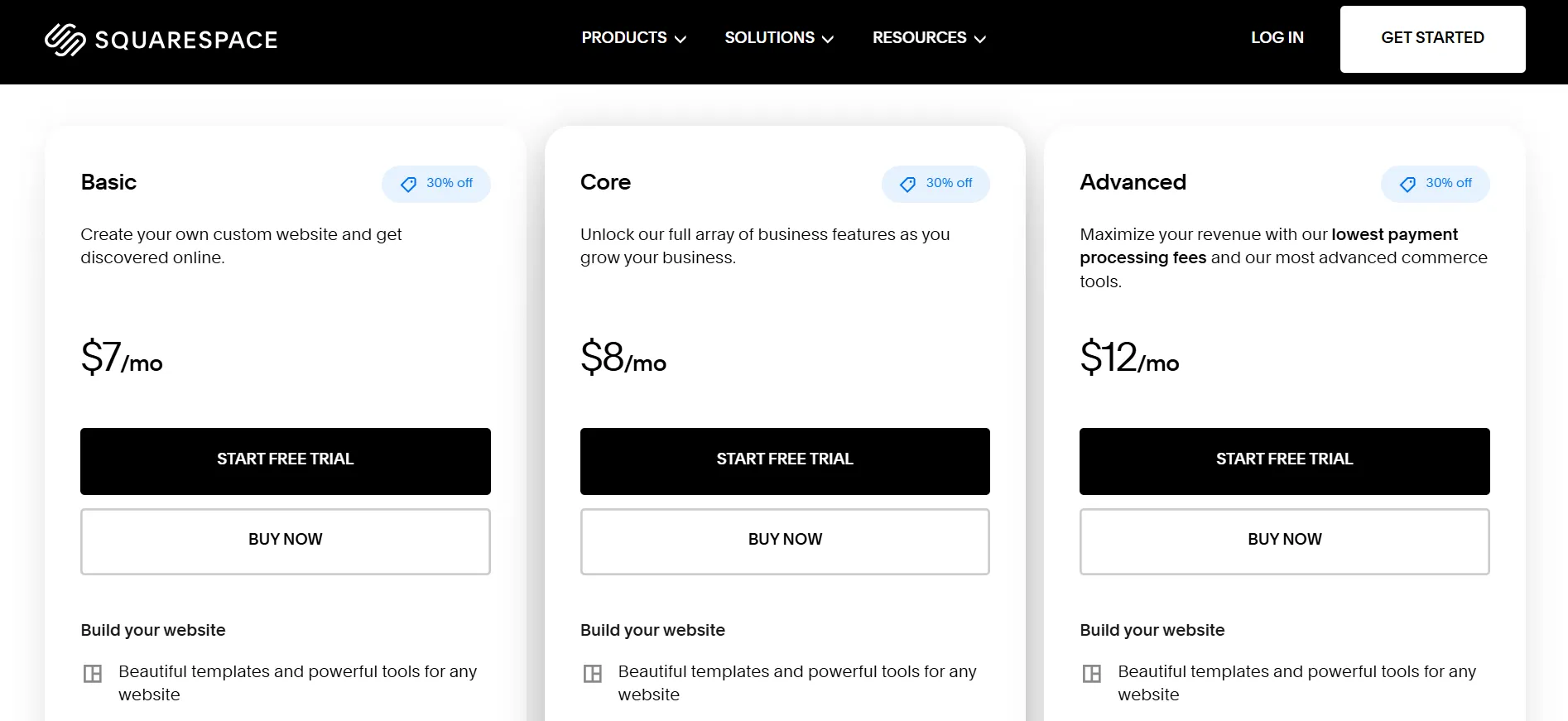
The baseline of Squarespace’s current pricing page outlines three primary tiers under monthly billing cycles, all heavily spotlighting a promotional 30% discount.
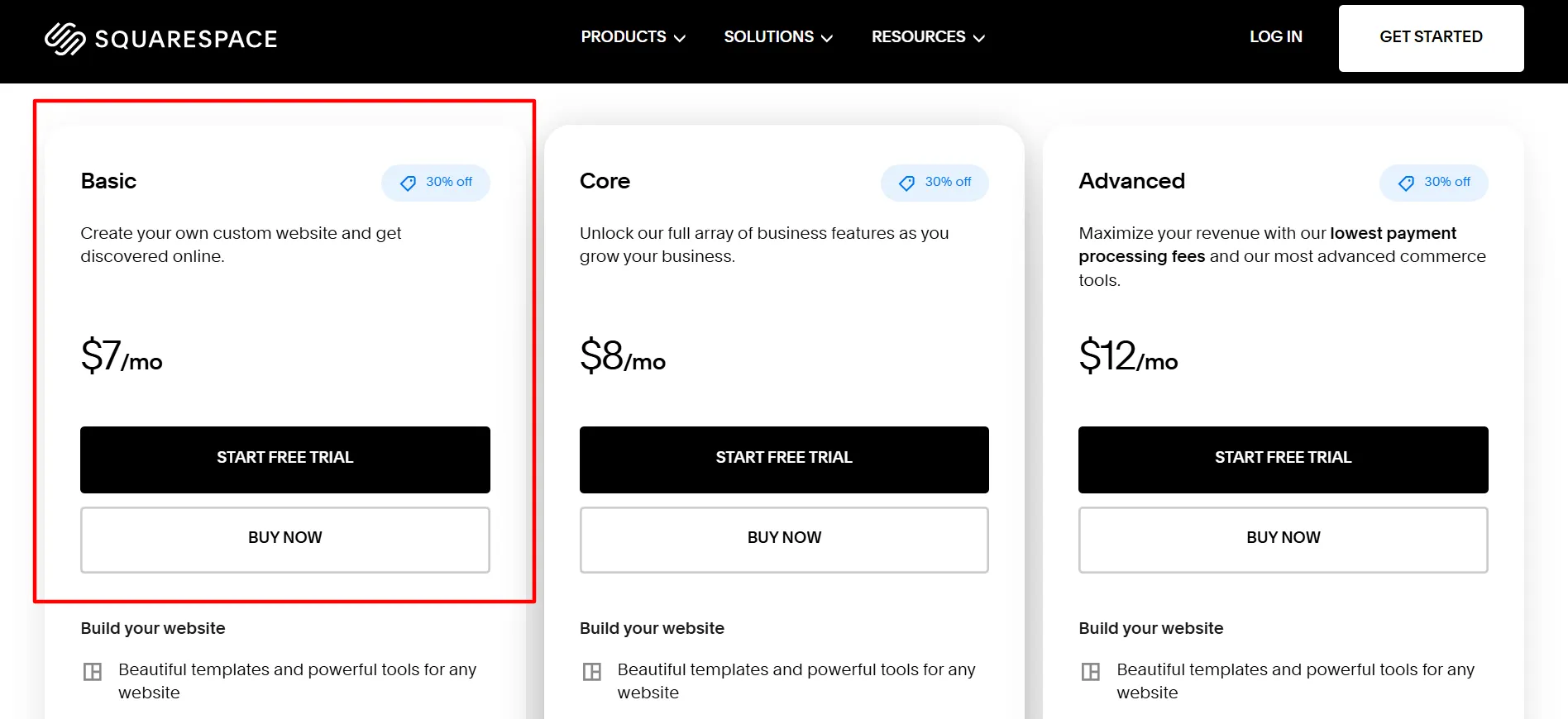
- Basic Plan: Listed at $9 per month (reflecting a 30% discount), this entry-level subscription targets simple content repositories, personal portfolios, standard blogs, and informational small-business websites.
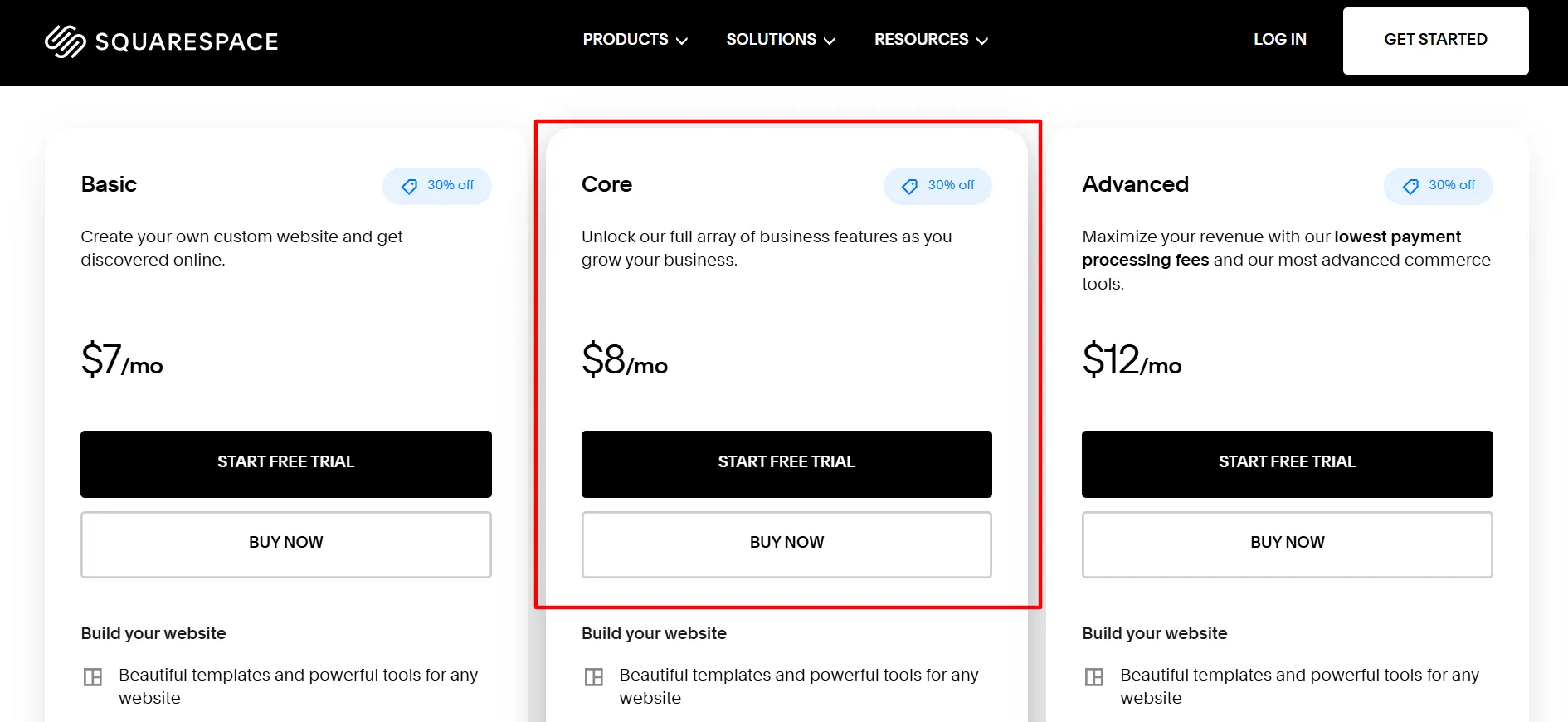
- Core Plan: Priced at $12 per month (with a 30% discount), this middle tier bridges the gap for growing enterprises and collaborative teams requiring custom code injection and advanced analytics.
- Advanced Plan: Positioned at $17 per month (incorporating a 30% discount), this top-tier consumer option is engineered for robust ecommerce stores that demand specialized shipping calculations, zero standard platform transaction fees, and maximized digital sales capacity.
While the financial delta between the entry-level Basic plan and the feature-rich Core plan is a mere $3 monthly, the operational differences extend far beyond cosmetic design. Contributors, transaction fees, storage limits, and third-party integrations vary significantly across tiers, forcing site administrators to balance upfront subscription costs against long-term business yields.
Chronology: The Evolution of Website Builder Pricing Tiers
The trajectory of Squarespace’s pricing architecture reflects broader industry shifts among Software-as-a-Service (SaaS) website platforms. Historically, website builders relied on strict divides between portfolio management and full-scale online retail.
- The Early Era of Flat-Rate Hosting: Platforms primarily charged a flat fee for basic publishing, treating ecommerce as an expensive, siloed add-on.
- The Shift to Tiered Commerce: As direct-to-consumer (DTC) brands and freelance creators surged over the past decade, platforms reorganized their structures. They introduced tiered models that integrated basic store features into lower packages while penalizing high-volume sellers with platform-imposed transaction fees.
- The Promotional Discount Model: In recent iterations, platforms have increasingly utilized conditional promotional discounts—such as the prominent 30% off tags currently displayed across Squarespace’s ecosystem—to incentivize conversions. This strategy complicates direct price comparisons, as users must navigate the transition between promotional periods, monthly commitments, and long-term annual billing renewals.
Supporting Data: Plan Comparisons at a Glance
To fully comprehend the financial and technical implications of each subscription level, a side-by-side analysis of features, limits, and fees is essential.

| Plan | Monthly Price Displayed | Discount Displayed | Key Limits | Standard Commerce Transaction Fees | Best Suited For |
|---|---|---|---|---|---|
| Basic | $9 / month | 30% off | Up to 2 contributors, 1,000 pages, 30 mins video storage | 2% fee on physical items, services, & donations; 7% on digital products | Portfolios, standard blogs, informational small business sites |
| Core | $12 / month | 30% off | Unlimited contributors, custom CSS/JS, 5 hours video storage | 0% standard fee on physical items; 5% on digital products | Growing businesses, team websites, active small shops |
| Advanced | $17 / month | 30% off | Unlimited contributors, unlimited video storage, carrier-calculated shipping | 0% standard fee on physical items; 0% on digital products | High-volume ecommerce stores, large digital product creators |
Granular Feature Breakdown
- Basic Plan Capabilities: Beyond standard hosting, SSL security, and blogging tools, the Basic tier accommodates up to two users. It supports baseline online selling, enabling entrepreneurs to list products and services, accept donations, and issue invoices. However, its 2% commerce transaction fee (and 7% fee for digital goods) can accumulate quickly for active sellers.
- Core Plan Capabilities: For an additional $3 per month, users unlock unlimited contributors, custom CSS and JavaScript capabilities, promotional pop-ups, announcement bars, automated discounts, and Google Shopping integrations. Crucially, Core eliminates the standard 2% Squarespace transaction fee on physical goods, replacing it with a reduced 5% fee solely for digital products.
- Advanced Plan Capabilities: At $17 per month, the Advanced tier removes all standard commerce and digital product transaction fees (0% across the board). It introduces advanced tools such as real-time carrier-calculated shipping rates, unlimited video storage, and sophisticated processing optimizations for high-volume catalogs.
Official Responses and Strategic Guidance
Industry analysts and Squarespace’s official documentation emphasize that subscription selection should be driven entirely by operational utility rather than an instinct to purchase the cheapest or most expensive tier.
Platform representatives consistently advise users to conduct a pre-audit of their operational needs:

- Define the Core Objective: Is the site meant to be a static business card/portfolio, or a dynamic sales engine? Freelancers requiring only a contact page and service portfolio gain virtually no ROI from upgrading past the Basic tier.
- Calculate Transaction Volume: Store owners processing high volumes of transactions mathematically benefit from moving to Core or Advanced tiers. Eliminating the 2% platform transaction fee often offsets the $3 to $8 monthly subscription increase.
- Assess Team and Technical Needs: Collaborative sites requiring multiple editors or custom code injection must bypass Basic due to contributor ceilings and code restrictions.
Furthermore, consumers are repeatedly urged to review the fine print regarding billing terms. Promotional banners highlighting percentage-off discounts frequently apply only to the initial payment term or require specific annual commitments that shift the billing cadence entirely.
Implications: What This Means for Digital Entrepreneurs
The structure of Squarespace’s pricing holds deep implications for the broader creator economy and small-business sector.
1. The Cost of Scaling Online Retail
For emerging ecommerce brands, hidden platform fees can erode profit margins. By waiving standard transaction fees on the Core and Advanced tiers, Squarespace incentivizes businesses to scale within its ecosystem. However, merchants must factor in separate payment processing fees (such as Squarespace Payments’ standard US rate of 2.5% plus $0.30 per transaction) alongside third-party gateway charges, domain renewals, and applicable taxes.
2. Flexibility vs. Financial Commitment
The availability of monthly billing options lowers the barrier to entry for testing new business concepts. Entrepreneurs hesitant to commit to annual upfront fees can validate their digital footprint month-to-month at modest price points ($9 to $17). Yet, long-term sustainability generally points toward annual billing models, which typically offer lower annualized equivalents once promotional windows expire.
3. Avoiding Feature Bloat
A recurring pitfall for digital project managers is "feature bloat"—subscribing to higher tiers for advanced capabilities that go unused. Conversely, under-provisioning a site with a Basic plan when team management and custom integrations are required can lead to workflow bottlenecks. Strategic auditing remains the single most effective tool for maintaining cost efficiency.
Frequently Asked Questions (FAQs)
- Is there a trial period available before committing to a paid plan?
Yes, Squarespace offers a standard 14-day free trial, allowing administrators to build, design, and test site functionality before entering payment details. - Can I change my subscription plan later?
Yes. Users can upgrade or downgrade their plans at any time. However, downgrading may result in the loss of specific features, reduced contributor limits, or altered transaction fee structures. - Do transaction fees apply to all plans equally?
No. The Basic plan incurs a 2% standard commerce transaction fee on physical goods and donations (and 7% on digital products). The Core and Advanced plans eliminate the standard commerce transaction fee on physical items, with Core retaining a 5% fee on digital products and Advanced reducing digital product fees to 0%. - Are prices uniform globally?
No. Subscription pricing, currency conversions, local taxes, and payment processing rates vary by geographic region and country.
Affiliate disclosure: In full transparency, some of the links associated with Squarespace reviews and guides may be affiliate links. If utilized to make a purchase, a commission may be earned at no additional cost to the consumer.