










For many YouTube creators, the "holy grail" of career progression is securing a lucrative brand sponsorship. It represents financial stability, professional validation, and the ability to invest in higher-quality production. However, a growing wave of highly sophisticated, modular phishing campaigns is weaponizing this desire, turning the dream of a brand partnership into a nightmare of total account takeover and permanent digital displacement.
Recent intelligence from cybersecurity researchers at ESET has unveiled a calculated, multi-stage scam targeting influencers and content creators. By masquerading as legitimate marketing agencies or corporate representatives for global brands, these bad actors are systematically harvesting Google credentials, effectively stripping creators of their livelihoods in a matter of seconds.
The Anatomy of the Deception: How the Scam Unfolds
Unlike the generic, poorly written "Nigerian Prince" emails of the past, these campaigns are characterized by high production values and psychological manipulation. The fraudsters have moved beyond mass-blasting; they are now employing personalized outreach that specifically references the creator’s own content, building an immediate sense of rapport and credibility.
Chronology of an Attack
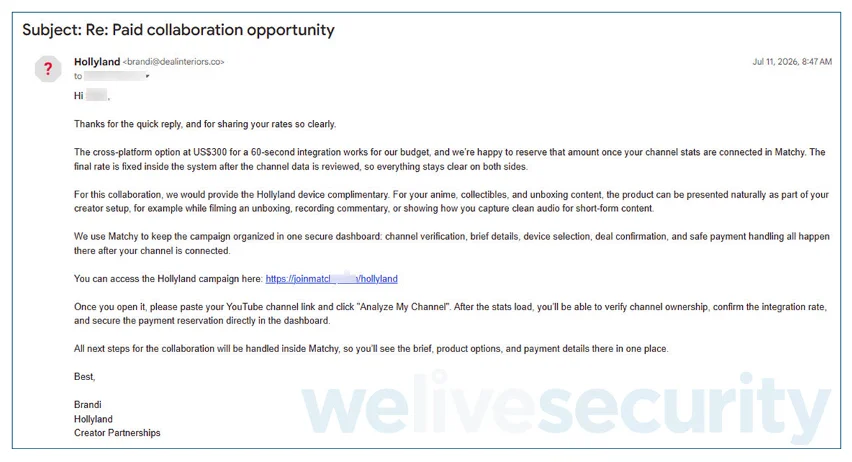
- The Initial Hook: The process begins with an email that appears to come from a reputable brand or a specialized talent agency. These emails are often crafted to sound professional, referencing specific videos the creator has produced, which creates a false sense of security.
- The Negotiation Phase: The attackers engage the creator in a professional back-and-forth, discussing rates, deliverables, and campaign goals. By mimicking the rhythm of a standard business negotiation, they lower the creator’s natural defenses.
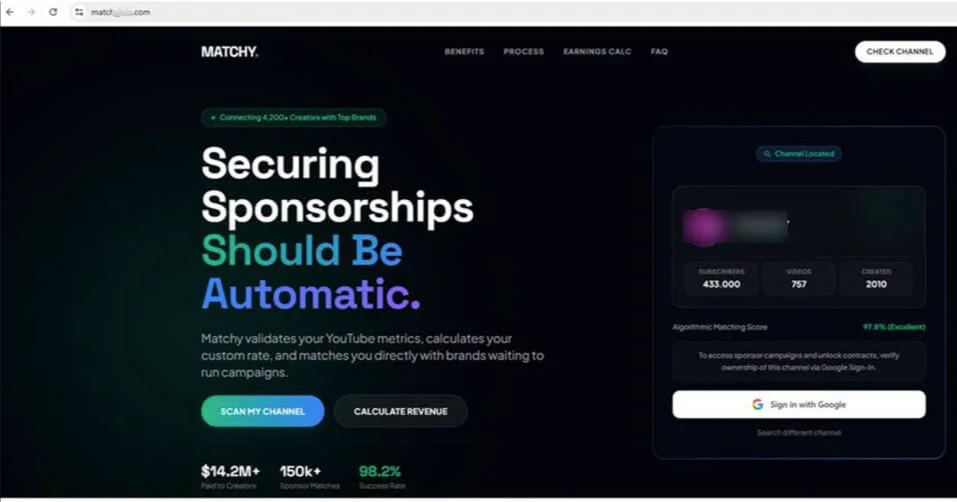
- The "Collaboration Platform" Lure: Once the victim is sufficiently invested, they are directed to a polished, bespoke website. These platforms are designed to look like industry-standard influencer management tools. They often feature complex dashboards, earnings calculators, campaign metrics, and professional-looking legal contracts.
- The Verification Trap: As the final step in the "onboarding" process, the platform requests that the creator "verify their channel ownership" by signing in with their Google credentials.
- The Hijack: The moment the user enters their credentials and a one-time multi-factor authentication (MFA) code, the attackers gain full access to the account. They immediately move to lock the owner out by replacing recovery email addresses, updating phone numbers, and generating new backup codes.
A Modular Threat Landscape
One of the most alarming aspects of this campaign is its modular nature. ESET researchers have identified that the infrastructure behind these scams—the websites and phishing kits—is highly reusable. By simply swapping out logos, brand names, and minor snippets of source code, the attackers can pivot from impersonating a tech brand like Hollyland to a lifestyle giant like Nike or a digital platform like Spotify without rebuilding their entire infrastructure.
Domains such as joinmatchy[.]com, joinscouty[.]com, and mytubive[.]com have been flagged as central hubs for these operations. These sites share identical favicons, meta descriptions, and underlying code structures, suggesting a single, coordinated criminal enterprise operating a "phishing-as-a-service" style operation.

Supporting Data: Why Creators Are Vulnerable
The effectiveness of these scams lies in the "professional theater" surrounding them. The fraudsters go to great lengths to provide a veneer of legitimacy. In recent instances involving the gaming furniture company AndaSeat, scammers utilized an agency called "Creoventura" to facilitate the ruse.
While a quick glance at the Creoventura website might satisfy a casual observer—it included a physical address and a registration number—a deeper investigation revealed significant inconsistencies. For example, the company’s name in the UK’s official business registry did not match the name on the website, and its listed business activities (IT and engineering consultancy) had nothing to do with influencer marketing.
This highlights a critical reality: Criminals are betting on the fact that busy creators will perform a cursory check, not a forensic one. When a creator sees a professional website with familiar brand logos and a slick user interface, their professional instinct is to prioritize the business opportunity over security due diligence.
The Devastating Implications of Account Loss
For a YouTuber, a Google account is not just an email address; it is the master key to their professional existence. Losing access to this account means losing access to:
- The YouTube Channel: Years of content, subscriber bases, and ad revenue streams can be wiped out or held for ransom.
- Google Drive/Cloud: Essential production assets, scripts, raw footage, and personal files are suddenly accessible to third-party intruders.
- Gmail: The primary communication hub, often linked to bank accounts, recovery codes for other services, and sensitive private correspondence.
Victims have reported that attackers often immediately initiate "recovery-proof" measures. By changing the recovery phone number and generating new backup codes, the attackers ensure that even if the creator realizes the breach quickly, the official recovery paths provided by Google are rendered useless.
Official Responses and Industry Vigilance
Major brands are increasingly forced to issue public warnings to protect their reputation and their partners. Companies like AndaSeat have taken to social media to explicitly state that they have no affiliation with the "agencies" reaching out in their name.
However, the burden of security cannot rest solely on the brands or the platform. Cybersecurity experts emphasize that the "Sign in with Google" button is being weaponized precisely because users have been trained to trust it as a secure method of authentication. The danger, of course, is when that button is hosted on a domain controlled by the attacker. If the URL in the browser address bar is not explicitly accounts.google.com, the user is not logging into Google; they are handing their credentials to a malicious server.
Defensive Strategies: How to Protect Your Digital Assets
In response to these threats, experts at ESET and other security firms have outlined a rigorous defensive posture for content creators:
1. Verify Before You Click
Never rely on the contact information provided in a sponsorship email. If you receive an offer from a brand, navigate to their official website independently. Find their verified contact email—usually found in their press or "work with us" section—and send a query to confirm if the outreach is legitimate.
2. Scrutinize the "Sign-In" Prompt
Always inspect the browser URL before entering credentials. A legitimate Google sign-in must always occur on a Google-owned domain. If you are prompted to sign in on a third-party site, pause. Furthermore, examine the permissions the site is asking for. If a platform is asking for "Full Access" to your Google account when it only needs to "verify ownership," that is a massive red flag.
3. Implement Hardware-Based Security
Standard SMS-based two-factor authentication can be bypassed by sophisticated phishing. Creators are strongly encouraged to use hardware security keys (like YubiKeys) or app-based authenticator codes that do not rely on SMS interceptability.
4. Perform Regular Security Audits
Use Google’s Security Checkup tool periodically. This dashboard allows you to review:
- Signed-in devices: Log out of any hardware you don’t recognize.
- Third-party access: Revoke permissions for any apps or services that no longer require access to your account.
- Recovery info: Ensure that the backup email and phone number are still under your exclusive control.
Conclusion: A New Standard of Vigilance
The era of trusting an email simply because it looks professional is over. For creators, the "brand deal" is now a high-stakes encounter that requires the same level of scrutiny as a financial transaction. By treating every unsolicited sponsorship offer with a "verify, then trust" mindset, creators can protect the digital infrastructure they have spent years building.
If you suspect you have been compromised, speed is the only advantage. Use Google’s official account recovery page immediately, notify your audience if necessary, and reach out to Google support through verified channels. The threat is real and constantly evolving, but with heightened awareness and rigorous security habits, creators can keep their channels—and their futures—secure.



