










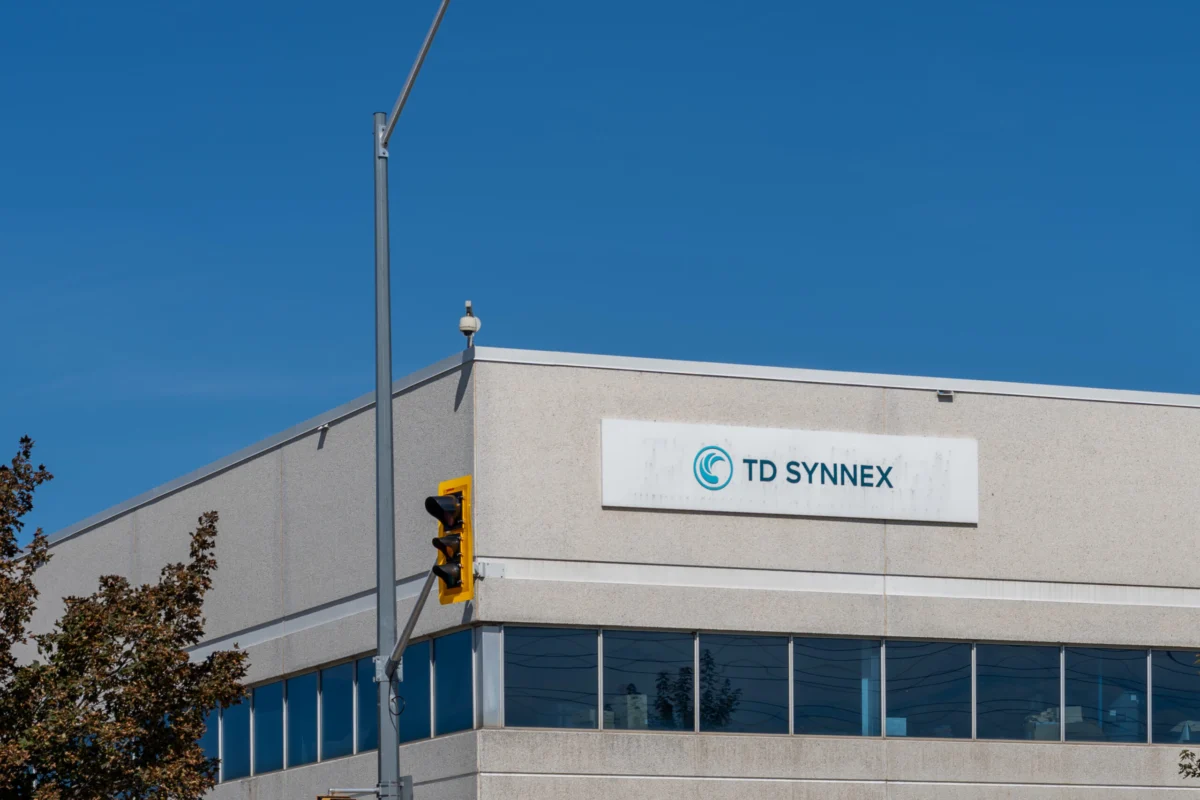
In a move that promises to reshape the landscape of specialized IT distribution, global technology giant TD Synnex has announced a definitive agreement to acquire Clearwater, Florida-based BlueStar. The acquisition, which remains subject to customary regulatory approvals, marks a significant consolidation of the supply chain for Automatic Identification and Data Capture (AIDC) and related business technologies. While both companies have committed to operating independently until the deal officially closes, the industry is already abuzz with questions regarding what this transition means for the niche providers that rely on BlueStar’s specialized services.
The Strategic Rationale: Merging Niche Expertise with Global Scale
TD Synnex, a powerhouse in the global IT distribution ecosystem, is positioning this acquisition as a bridge between high-touch specialization and broad-market logistical superiority. By absorbing BlueStar—a distributor renowned for its deep expertise in barcode scanners, point-of-sale (POS) systems, RFID, and industrial robotics—TD Synnex is effectively filling a critical gap in its service portfolio.
For TD Synnex, the value proposition is clear: scale. As the company continues to navigate an increasingly complex IT landscape, the ability to offer a "one-stop-shop" experience that includes not just general computing hardware but also highly specialized operational technology is a major competitive advantage. The acquisition allows TD Synnex to fold a highly curated, technical, and vertically integrated product set into its massive, global distribution engine.
Chronology and Context: A Consolidation in the Making
The distribution market has seen a wave of consolidation over the last decade as IT firms seek to combat thinning margins and rising supply chain complexities.
- The Build-up: BlueStar spent years carving out a reputation as a "niche expert." Unlike broad-line distributors, BlueStar thrived by providing consultative support to resellers and system integrators who needed more than just a box-drop delivery; they needed technical guidance on complex RFID deployments and POS integrations.
- The Agreement: The formal announcement of the acquisition arrived as a milestone in the current fiscal year for TD Synnex, signaling its intent to dominate the "Edge" technology segment.
- The Transition Period: Following the announcement, leadership from both organizations confirmed that business operations will remain siloed. This "business as usual" approach is intended to prevent disruption for existing partners and vendors who are currently midway through project lifecycles.
- The Path Ahead: The firms are currently awaiting regulatory clearance. Once approved, the integration process will begin, which industry experts anticipate will involve a phased transition of BlueStar’s backend logistics into the TD Synnex infrastructure.
Supporting Data: Why Specialized Distribution Matters
The market for AIDC and RFID technology is projected to grow exponentially as businesses in the retail, logistics, and healthcare sectors scramble to automate their operations. According to recent industry reports, the demand for sophisticated POS systems and real-time inventory tracking has moved beyond "nice-to-have" status into essential business infrastructure.
BlueStar’s success was rooted in its ability to manage these complex product lines. For many small-to-medium-sized resellers (VARs), BlueStar acted as an extension of their own sales and engineering teams. They provided the credit lines, the product training, and the technical support necessary to close deals that required specialized hardware—products that generalist distributors often lacked the technical bandwidth to support.
However, the scale of TD Synnex brings its own set of supporting data points:
- Logistical Reach: TD Synnex boasts a network that covers the globe, offering shipping and warehousing capabilities that smaller, regional distributors simply cannot match.
- Financial Stability: The combined entity will offer a much deeper pool of capital, allowing for more aggressive financing options for partners—a critical factor in the high-stakes, high-cost world of large-scale industrial robotics and warehouse automation.
Official Responses: Leadership Perspectives
The leadership at TD Synnex has been vocal about the strategic alignment between the two organizations. Reyna Thompson, president of North America for TD Synnex, emphasized the reputation BlueStar has cultivated.
"BlueStar has built an outstanding reputation through specialization, technical expertise and an unwavering commitment to its partners," Thompson stated in the official release. "We’re excited about the opportunity to combine BlueStar’s expertise in AIDC, operational technology, mobility, RFID, point-of-sale and related technologies with the global resources, investments and reach of TD Synnex."
Adding to this, Miriam Murphy, president of EMEA for TD Synnex, underscored the human capital aspect of the acquisition. "In addition to BlueStar’s portfolio, the specialized knowledge and expertise within its team are central to the differentiated support and services it provides," she said. "Combined with the global capabilities of TD Synnex, those strengths have the potential to enhance opportunities for customers and vendors of both companies."
Implications: The "General Store" vs. "Specialty Shop" Debate
While the executive messaging is overwhelmingly positive, industry analysts are taking a more measured, if not cautious, approach. The consensus is that the deal represents a classic trade-off: the gain of global logistical power against the potential loss of localized, specialized focus.
The Vendor’s Dilemma
Mike Danford, owner and chief revenue officer of the marketing agency Adverio, frames the acquisition as a "specialty shelf getting absorbed into a general store." For smaller vendors, this poses a dual-sided risk. On one hand, their products gain access to 150,000 customers that were previously unreachable. On the other, they are no longer the "big fish in a small pond."
In the BlueStar ecosystem, a niche manufacturer was a priority. In the TD Synnex ecosystem, that same manufacturer may become just another line item in a massive, crowded catalog. The risk of being "lost in the noise" is a legitimate concern for smaller firms that rely on the distributor’s sales team to actively push their products.
The Partner’s Perspective
Tom Cloud, founder of CIO Advisory, highlights the operational risks for Value-Added Resellers (VARs) and Managed Service Providers (MSPs). For these partners, a distributor is not merely a fulfillment house; it is a business partner.
"Smaller providers often rely on distributor relationships for more than just fulfillment," Cloud notes. "They depend on product expertise, responsive support, credit flexibility, and people who understand a particular niche."
If the integration of BlueStar results in a "standardization" of services—where support is routed through generalized call centers rather than the specialized teams that BlueStar customers are accustomed to—the resulting churn could be significant. Cloud advises that partners should treat this acquisition as a catalyst for a "vendor-concentration audit." For companies that have placed all their eggs in the BlueStar basket, the move to a larger, more bureaucratic corporate structure is the perfect time to evaluate alternative, secondary sources to ensure supply chain continuity.
Long-Term Outlook: What to Watch For
As the integration proceeds, industry observers have identified three key metrics that will determine whether the acquisition is a success for the ecosystem at large:
- Credit and Purchasing Terms: Will the flexible credit terms that defined BlueStar’s relationships with smaller partners remain, or will they be tightened to align with TD Synnex’s broader corporate policies?
- Specialized Support Retention: Can TD Synnex retain the human expertise—the engineers and category experts—that made BlueStar a destination for complex projects?
- Partner Attention: Will the smaller partners who felt "special" at BlueStar continue to receive the same level of attention, or will they be deprioritized in favor of larger, higher-volume corporate accounts?
Ultimately, the acquisition of BlueStar by TD Synnex is a mirror of the broader IT industry’s evolution. The market is trending toward consolidation, driven by a desire for operational efficiency and economies of scale. Whether this trend ultimately benefits the end-user remains to be seen. While the "big pond" offers undeniable advantages in terms of logistics, finance, and product breadth, the "small pond" of specialized distribution has historically provided the personalized service and technical intimacy that many businesses find indispensable.
For now, the industry watches and waits. The success of this deal will not be measured by the headline numbers of the acquisition, but by the ability of a global giant to prove that it can maintain the "specialty" touch that made its target so valuable in the first place.



