










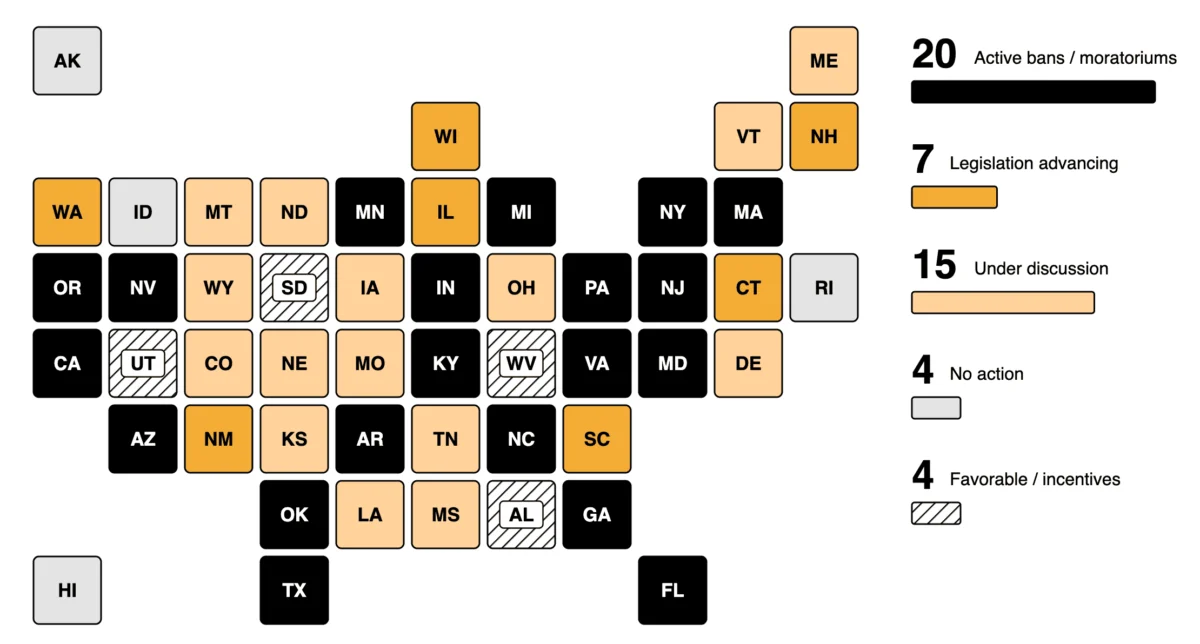
The rapid ascent of generative AI has triggered a gold rush of unprecedented proportions, yet the physical manifestation of this digital revolution—the massive, power-hungry data center—is meeting a fierce, rising tide of public and legislative resistance. From the quiet suburbs of Northern Virginia to the arid basins of Arizona, the infrastructure required to train and run the next generation of AI models is creating a profound rift between the promise of technological dominance and the reality of local utility bills, water scarcity, and strained municipal resources.
The Rising Cost of Compute: Main Facts
At the heart of the conflict is a fundamental mismatch in the distribution of costs and benefits. Data centers, which pack high-density GPU clusters that require constant, massive cooling and power, are changing the load profile of the American electrical grid.
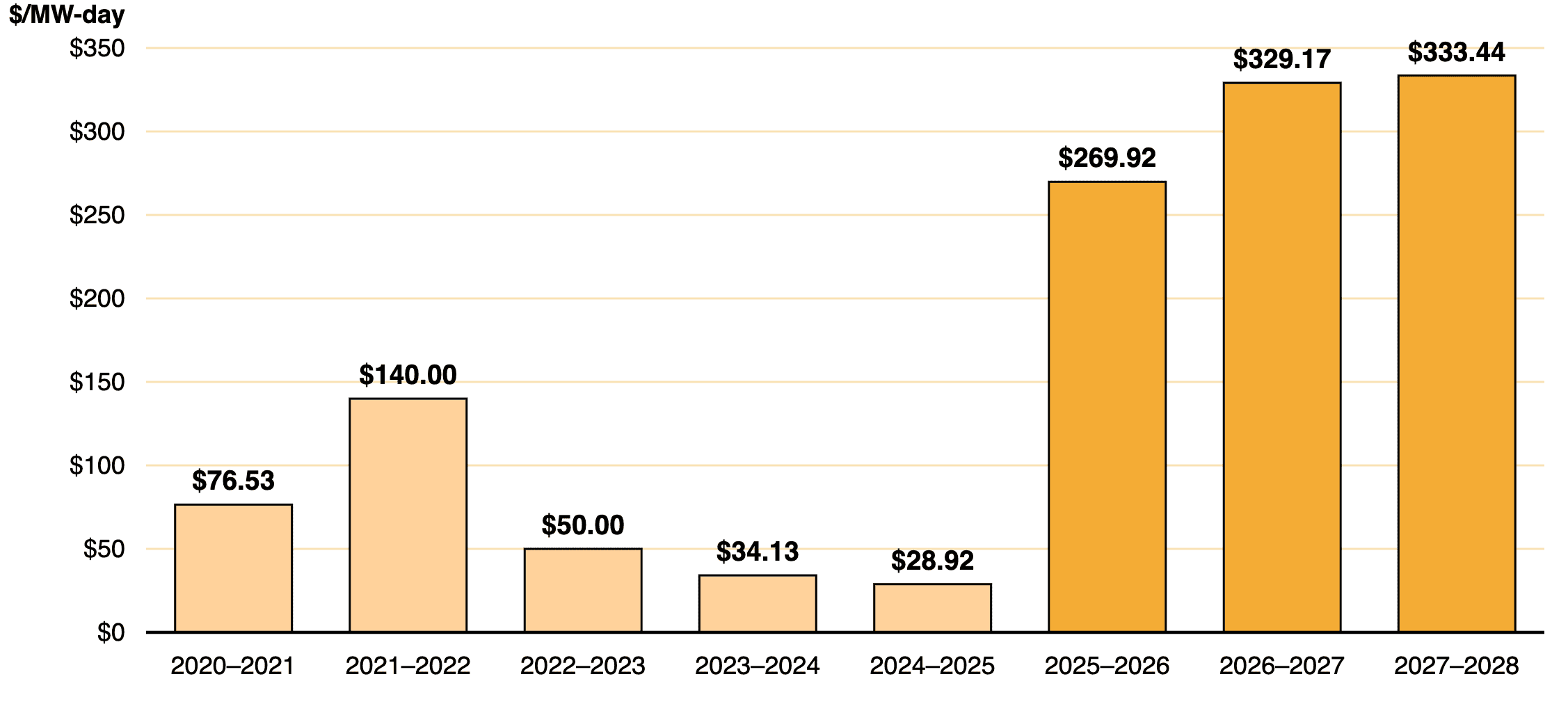
In January 2026, the human cost of this shift became visible when residents like John Steinbach, a longtime homeowner in Manassas, Virginia, opened an electricity bill that had nearly tripled—spiking from $100 to $281 in a single month. While the causal link between individual bills and specific data centers is often debated, the aggregate data is clear: the PJM Interconnection, the grid operator for 13 states and D.C., saw capacity clearing prices skyrocket from $28.92 per megawatt-day in 2024 to over $333.44 in recent auctions. Analysts attribute roughly $9.3 billion of this price shock directly to the surging demand from data centers.
The industry argues that these massive investments act as a net benefit, spreading fixed costs across a larger consumer base. However, this relies on a stable, predictable demand that has yet to be fully realized. As AI developers race to build, communities are increasingly asking: if the anticipated economic windfall fails to materialize, who is left holding the bill for the massive grid upgrades?
A Chronology of Resistance: 2025–2026
The resistance to data center expansion has evolved from scattered complaints into a organized political movement.
- August 2025: The City Council of Tucson, Arizona, set a precedent by unanimously rejecting Amazon’s "Project Blue," citing intense community concerns regarding water usage in a drought-stricken region.
- January 2026: A Gallup poll revealed a striking consensus: seven in 10 Americans now oppose the construction of AI data centers in their vicinity, with 48% expressing strong opposition regardless of political affiliation.
- Q2 2026: According to Data Center Watch, opposition stalled approximately 120 projects nationwide, with 45 major developments worth $68 billion put on hold during the second quarter alone.
- June–August 2026: Legislative activity surged. Illinois, Massachusetts, and Nebraska moved to pause or restructure tax incentives, while Charlotte, North Carolina, implemented a 150-day moratorium after a city survey showed 78% public opposition. Indianapolis joined the movement in August, voting 23–1 to freeze new construction through 2027.
- September 2026: Texas Governor Greg Abbott halted state-level permitting for data centers pending a comprehensive audit of energy and water impacts, signaling that even pro-business states are feeling the pressure to slow down.
Supporting Data: The Efficiency vs. Demand Dilemma
The debate is often polarized between two sets of data: the projected economic growth and the immediate environmental strain.

The Power Bottleneck
According to reports from the Department of Energy, data centers accounted for 4.4% of U.S. electricity consumption in 2023. Forecasts from Bloom Energy suggest this load could double to 150 gigawatts by 2028. Because utility providers often struggle to build infrastructure at the speed of tech development—lagging by 18 to 24 months—some companies have resorted to on-site power generation. This was most controversially demonstrated in Memphis, where xAI (a division of Elon Musk’s SpaceX) operated dozens of unpermitted methane gas turbines to power its "Colossus" supercomputer, leading to local air quality concerns and a federal lawsuit from the NAACP and environmental groups.
The Water Equation
The water footprint of AI is equally contentious. While tech giants point to the fact that data centers consume less than 0.5% of total U.S. freshwater, the impact is localized. A single campus can consume millions of gallons daily. In places like Botetourt County, Virginia, a proposed Google facility could draw up to 8 million gallons per day, forcing the local government to invest $300 million in water infrastructure—a cost partially justified by tax revenue, but one that fundamentally alters the local resource landscape.
The Tax Debate
The economic case for data centers is built on the tax revenue they generate. In Quincy, Washington, data centers carry over 50% of the local property tax burden, funding schools and emergency services. However, a Brookings Institution analysis found that for most counties, the first large data center adds only 100 to 200 jobs over a decade. When factoring in generous tax exemptions—often granted under strict nondisclosure agreements—the net benefit to the local taxpayer remains a subject of intense academic and political scrutiny.
Official Responses and Policy Shifts
The tech industry’s response has shifted from confident expansionism to a more conciliatory, albeit defensive, posture. Organizations like the Data Center Coalition and various tech companies have funded independent studies, such as the E3 report, which argues that data centers contribute a net surplus to utility territories.
Conversely, regulators are beginning to demand more accountability. Virginia’s recent decision to implement a 1.1-cent-per-kilowatt-hour tax on data center electricity consumption represents a new paradigm: ensuring that these facilities pay a "fair share" for the grid strain they create. Simultaneously, states like Pennsylvania and Michigan are advancing bills to outlaw the use of nondisclosure agreements in public negotiations, aiming to bring the siting process out of the shadows and into the light of public scrutiny.
Implications for the Future of AI
The implications of this standoff are profound. If the industry fails to address local concerns regarding utility costs and environmental impact, it risks a "regulatory winter" that could hamper the deployment of critical AI infrastructure.
1. The Financial Risk of Overbuild
The most significant long-term risk is the potential for an "AI bubble" in infrastructure. If capital investment hits the projected $7 trillion by 2030 but the anticipated demand for AI compute underperforms, the stranded assets—the empty or underutilized data centers—will leave utilities with massive debt. Utilities are already beginning to implement "take-or-pay" clauses, requiring companies to pay for 85% of their contracted energy load regardless of usage, effectively offloading the financial risk from the public to the private developer.
2. The Move Toward Self-Sufficiency
We are likely to see a shift in AI architecture toward "grid-independent" data centers. By integrating on-site microgrids, nuclear small modular reactors (SMRs), and advanced water-recycling cooling systems, developers hope to bypass the bottleneck of public infrastructure. However, this creates a new class of regulatory questions: should private companies be allowed to operate their own power plants without the same oversight as public utilities?
3. The New Political Consensus
Finally, the "NIMBY" (Not In My Backyard) label is becoming insufficient to describe the opposition. This is increasingly a debate about sovereignty—who has the right to determine the trajectory of a community’s resources? As candidates in both parties begin to run on platforms that challenge data center expansion, the industry must pivot from a model of "ask for forgiveness later" to one of "transparent partnership today."
Conclusion
The data center conflict is not merely a clash of interests; it is a preview of the challenges inherent in scaling the digital economy. The evidence suggests that while data centers provide significant tax revenue and economic development, the costs—when they occur—are immediate and local.
The era of "stealth" data center development is ending. For the industry to continue growing, it must reconcile its massive demand with the physical limits of the municipalities it inhabits. The question of "who pays" remains the central pivot point for this debate. If the industry can guarantee that its growth does not come at the expense of residential rate stability and local resource security, it may find a path forward. If not, it will continue to face a map increasingly covered in moratoriums, and the AI revolution may find itself physically disconnected from the very society it intends to transform.



