










By Digital Technology Desk
Published: Special Industry Report
Main Facts: The Rise of Napkin AI in Modern Content Workflows
In an era saturated with artificial intelligence applications promising to reinvent productivity, most platforms ultimately offer incremental improvements to tasks that professionals were already managing efficiently. However, a select few platforms manage to target chronic operational bottlenecks. Enter Napkin AI, a rapidly emerging visual generation tool that has captured the attention of content creators, marketing agencies, corporate trainers, and digital consultants globally.
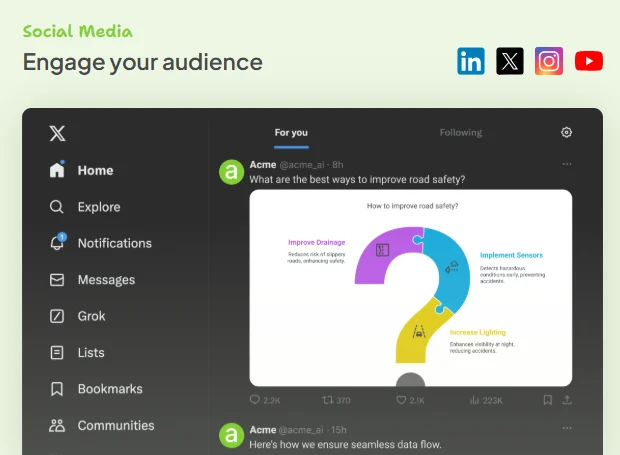
At its core, Napkin AI addresses one of the most persistent friction points in modern content creation: the translation of dense, approved textual narratives into clean, professional diagrams, conceptual flowcharts, and structural frameworks in a matter of seconds. Unlike generative image tools that rely on abstract text prompts to create artistic renderings (such as Midjourney or DALL-E), Napkin AI functions as a context-aware translation engine. Users input structured text—ranging from standard operating procedures and blog posts to strategic reports and checklists—and the platform analyzes the underlying logic to generate relevant, contextual visual assets.
Currently operating in an open beta phase, the platform allows users to access most of its Pro-tier features free of charge. This pricing strategy has fueled rapid adoption across the digital marketing and educational sectors. However, industry analysts note that such "free beta" models are inherently temporary. As the platform matures and transitions toward commercial stabilization, pricing tiers are widely expected to shift, prompting experienced professionals to archive and export their assets strategically.
Despite its accessibility, Napkin AI is not a universal panacea for all data visualization needs. Designed specifically for conceptual and process-driven frameworks, the tool excels at illustrating workflows, hierarchies, and step-by-step guides. Conversely, it is not optimized for precise, data-heavy financial modeling, revenue charts, or granular funnel metrics. For hard metrics, traditional spreadsheet and analytics platforms remain indispensable; Napkin AI’s true power lies in building the conceptual narrative wrappers around that hard data.
Chronology: From Concept to Open Beta and Industry Adoption
To understand Napkin AI’s current market positioning, it is necessary to examine the trajectory of generative visual software over the past several years:
- The Era of Static Design Tools (Pre-2023): For decades, creating conceptual diagrams required manual intervention in vector-based software like Adobe Illustrator, or drag-and-drop presentation tools like Microsoft PowerPoint and Canva. While effective, this process introduced significant bottlenecks, often requiring hours of layout design for a single process map.
- The Generative AI Boom (2023–2024): The initial wave of generative AI focused predominantly on text generation (Large Language Models) and raster image creation. While text generation accelerated copywriting, it left visual production largely untouched, forcing creators to manually break down AI-generated text into visual aids.
- The Emergence of Context-Aware Visual AI (2024–2025): Platforms began experimenting with parsing text structures directly into layout engines. Napkin AI emerged during this period, differentiating itself by integrating directly into workflow documents and recognizing semantic relationships within sentences and paragraphs to automatically suggest relevant diagrams.
- The Open Beta Expansion (Late 2025–Present): Napkin AI opened its platform to the public, offering free access to Pro features to drive rapid user acquisition. During this phase, industry leaders and digital educators—such as Indian digital marketing pioneer Sorav Jain—began incorporating the tool into formal training curricula, validating its utility for high-volume content teams and corporate agencies.
- Current State (2026): The platform now supports visual generation in over 60 languages, syncing diagram text natively with source material. While mobile platforms allow users to view shared documents, full editing capabilities and account creation remain tethered to desktop environments, reinforcing its positioning as a desktop-first productivity utility.
Supporting Data: Capabilities, Limitations, and Best Practices
As adoption accelerates, early enterprise and agency users have mapped out clear guidelines regarding where Napkin AI excels and where users must exercise caution.
1. Linguistic Reach and Localization
While the software’s user interface is maintained primarily in English, its generative engine supports output in more than 60 languages. Crucially, the text within the generated diagrams dynamically matches the language of the source text provided by the user, making it a viable tool for localized content teams operating in multilingual markets.
2. Platform Constraints and Ecosystem Integration
A common misconception among new users is that Napkin AI aims to replace traditional presentation software like PowerPoint or Keynote. Industry experts clarify that Napkin AI is designed to build the interior components of a broader presentation.
- The Recommended Workflow: Users generate structural diagrams within Napkin AI, export these assets as editable
.pptx(PowerPoint) files, and subsequently import them into polished, brand-compliant slide decks. - Design Customization: For campaigns requiring hyper-specific brand styling, complex animations, or custom vector manipulation, users typically transition Napkin outputs into advanced design suites like Canva or Figma. Napkin AI acts as the "fastest bridge between an idea and a first draft."
3. Data Sensitivity and Enterprise Security
Because generative AI tools process user inputs through cloud-based Large Language Models, security experts emphasize strict data hygiene. Just as professionals treat any third-party software vendor with scrutiny, users are advised to avoid pasting sensitive client data, confidential financial statements, or Personally Identifiable Information (PII) into AI tools until comprehensive corporate data governance policies are reviewed and verified.
Official Perspectives and Expert Insights
The industry reception of Napkin AI has been championed by prominent digital marketing figures, most notably Sorav Jain, Founder of echoVME Digital and Digital Scholar. Managing a portfolio that oversees hundreds of major global brands—including Bosch, Ramco, and Genpact—Jain has evaluated numerous emerging software solutions.
"I have tested a long list of AI tools on this channel, and most of them solve a problem you did not actually have," Jain notes in his technical evaluations. "Napkin AI is different; it solves a problem every content team, agency, and trainer already has: turning approved text into a visual fast enough to keep up with a content calendar."
Jain advises digital professionals to avoid treating the platform as a casual experiment to be explored "someday." Instead, he recommends an immediate, hands-on integration: taking a recent blog post or client briefing, pasting it into the platform, and generating an initial diagram to understand the logic of the engine.
Furthermore, Jain outlines a specific "Creative Brief" input methodology to maximize output quality:
- Structure Your Input: The platform performs best with structured inputs (processes, frameworks, timelines, comparisons). If an input consists of an unstructured block of text, users should spend a minute formatting it logically before generating visuals.
- Iterate Generatively: Users should write in short, clear sentences and generate concepts sequentially rather than dumping entire whitepapers at once.
- Embrace the Second Attempt: Much like prompt engineering in LLMs, the optimal visual layout often materializes on the second or third regeneration attempt rather than the initial render.
Implications: The Future of Content Agencies and Digital Training
The mainstreaming of tools like Napkin AI carries significant implications for the broader digital economy, particularly for creative agencies, educational institutions, and corporate communication departments.
1. Compression of Production Timelines
For content agencies managing high-volume publishing schedules, the bottleneck has historically shifted from writing to visual design. By automating the transition from text to diagram, agencies can drastically reduce the man-hours required to produce accompanying graphics for blogs, whitepapers, and social media campaigns. This efficiency democratizes visual communication, allowing copywriters and strategists to conceptualize layouts without relying heavily on dedicated graphic design resources for foundational drafts.
2. Shifts in Digital Marketing Education
As automated tools reshape execution-level tasks, training institutions are forced to pivot their curricula. Programs such as Digital Scholar—which has trained over 300,000 students and pioneered India’s first 1-year MBA in Digital Marketing in partnership with Woolf University—are increasingly integrating AI workflow automation into their core modules. The focus of modern digital marketing education is shifting away from manual execution and toward prompt architecture, workflow integration, and critical editing of AI-generated assets.
3. Commercial Compliance and Licensing
As artificial intelligence generated assets become ubiquitous in client deliverables, marketing materials, and commercial distribution, questions regarding copyright and licensing remain critical. While current open beta terms allow for broad application across blog posts, training guides, and client reports, businesses must remain vigilant regarding future updates to commercial terms of use, ensuring that all distributed assets comply with evolving intellectual property standards.
Conclusion
Napkin AI represents a maturing phase in productivity technology: one where artificial intelligence ceases to be a novelty and becomes deeply embedded into the operational plumbing of creative work. While limitations exist regarding data visualization precision and enterprise security safeguards, its capacity to rapidly synthesize structured text into clean, contextual diagrams fills a long-standing void in content production. For agencies, creators, and corporate trainers willing to adapt their workflows, the platform offers a formidable competitive advantage in speed and conceptual clarity.



