











In the digital age, the inbox has become the most contested real estate in marketing. For years, the prevailing wisdom has been to treat email as a high-frequency delivery system for discount codes, cart-abandonment reminders, and product announcements. While these transactional tactics are essential for short-term revenue, they often fail to cultivate the most valuable asset a brand can possess: a community.
The difference between a list and a community is profound. A list is a passive repository of data points—email addresses acquired through lead magnets and checkout forms. A community, conversely, is a group of individuals who share a sense of belonging, purpose, and connection to a brand’s ethos. As modern commerce shifts toward relationship-based models, brands that move beyond the "funnel-first" mentality are the ones seeing the highest customer lifetime value and brand advocacy.
The Core Thesis: Moving Beyond the Funnel
Most e-commerce email programs are designed with a singular, narrow objective: conversion. By relying solely on automated flows like "welcome series" and "win-back" campaigns, brands treat their subscribers as statistics rather than people. This creates a transactional loop that is easily disrupted by competitors offering lower prices or more aggressive advertising.
True community-building in the inbox requires a paradigm shift. It demands that founders treat their email channel as a two-way relationship platform first and a revenue engine second. When subscribers feel they are part of a brand’s journey—rather than just the target of its sales pitch—they become immune to the noise of the market. They become advocates who recommend the brand organically, defend it against competitors, and provide the critical feedback necessary for long-term growth.
The Mechanics of Insider Access
One of the most effective strategies for fostering community is the intentional creation of "insider status." This does not require expensive loyalty programs or gated digital portals. Instead, it is achieved through a radical shift in communication strategy.
The Power of Narrative Over Promotion
Instead of sending a blast announcing a new product, consider sharing the "why" behind it. What specific problem were you trying to solve? What were the failed prototypes that led to this final version? By exposing the messy, human process of creation, you invite your subscribers to invest in your success. This transparency builds trust, a currency far more stable than the temporary excitement of a discount.
The "Founder-Led" Approach
In an era of hyper-polished, AI-generated marketing content, the raw, unvarnished voice of a founder remains a powerful differentiator. Many of the most successful community-focused brands utilize plain-text, personal emails that eschew elaborate formatting. These emails feel like a note from a friend rather than a corporate newsletter. They signal that there is a human at the other end of the screen who cares about the craft behind the product.
Fostering Two-Way Conversations
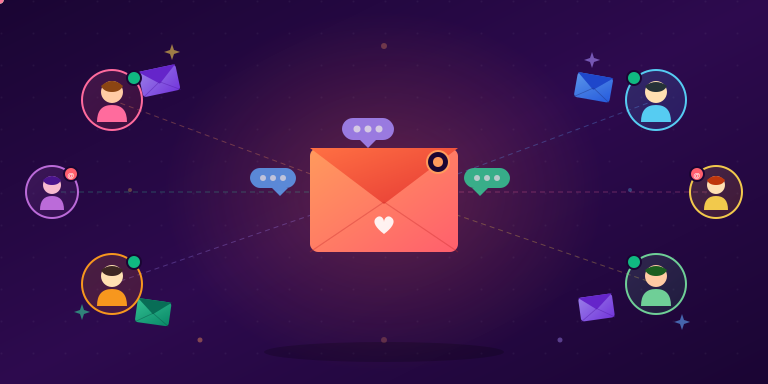
Email is uniquely positioned as an intimate, one-to-one medium, yet most brands utilize it as a one-to-many broadcast channel. To build a community, you must flip this dynamic.
The Art of the Reply
The most effective community managers treat the "Reply" button as an invitation. Rather than burying your contact info in the footer, pose genuine questions to your audience. Ask them what they are struggling with in your industry, or what features they want to see next.
Crucially, when they reply, you must engage. While responding to 50,000 emails is not scalable, the impact of having a direct, personal conversation with 50 of your most engaged customers is immeasurable. These individuals are your early adopters, your brand champions, and your most valuable source of market intelligence.
Utilizing Community Spotlights
For brands selling tangible goods—from cameras to fitness gear—the community is often the best source of content. Featuring real customers and their experiences in your newsletters provides social proof that goes beyond standard reviews. It acknowledges your customers’ contributions, signaling that your brand is not just selling a product, but participating in the lifestyle your customers enjoy.
The Role of Brand Identity and Voice
Community coheres around identity. If your email content is generic or could be sent by any of your competitors, you are not building a brand; you are merely running a clearance rack.
A strong, recognizable voice is the bedrock of community. Your emails should reflect a consistent, opinionated perspective. What does your brand believe about its industry? What does it refuse to do? What values are non-negotiable? When these beliefs are consistently articulated, they act as a filter, attracting like-minded people while naturally repelling those who don’t share your values. This is not a negative; it is the definition of building a "tribe."
Quantitative Indicators: How to Measure "Community"
While community-building is qualitative, it is not immune to measurement. To determine if your shift toward relationship-building is working, you must look beyond the standard Open Rate and Click-Through Rate.
- Reply Rate: This is your primary metric for engagement. If your audience is not replying to your prompts, your messaging may be too broadcast-heavy.
- Forward Rate: A forwarded email is the ultimate digital endorsement. It indicates that your content is valuable enough for a subscriber to share with their personal network.
- Referral-Based List Growth: Track how many new subscribers enter your list because they were told about you by an existing member. This is the most organic form of growth and a direct result of a healthy community.
- Sentiment Analysis of Unsubscribes: While high unsubscribes are typically viewed negatively, they can provide insight. If you see spikes after "value-add" content, it suggests you are building a brand voice that is polarizing (in a good way) and authentic.
Implications for Future Growth
The shift toward community-led growth comes at a time when the cost of digital acquisition is rising across all major ad platforms. Algorithms are becoming more restrictive, and privacy regulations are making traditional tracking more difficult. In this environment, the email list is the only channel where the brand maintains total control over the delivery of its message.
By investing in community, brands are effectively building an insurance policy against future market volatility. When a brand has a community, it has a captive audience that is not dependent on the whims of an algorithm. This creates a sustainable, repeatable revenue stream that is driven by loyalty rather than price-cutting.
Conclusion: Starting the Shift
Building a community does not happen overnight, and it is not a project that can be outsourced to a generic marketing agency. It requires a commitment from leadership to be present, to be transparent, and to be human.
For those looking to integrate this strategy, platforms like Omnisend provide the necessary infrastructure to balance the transactional with the relational. By using advanced segmentation to ensure that the right message hits the right person, and utilizing automation to handle the logistics of the customer journey, founders can free up their time to focus on the high-touch, human-centric tasks that build real, lasting connections.
The most successful brands of the next decade will not be the ones with the largest budgets or the most sophisticated technical stacks. They will be the brands that made their subscribers feel like they were part of something bigger—a movement, a mission, or a shared passion. In a world of infinite digital noise, the ability to treat your customers as people is the ultimate competitive advantage.



