










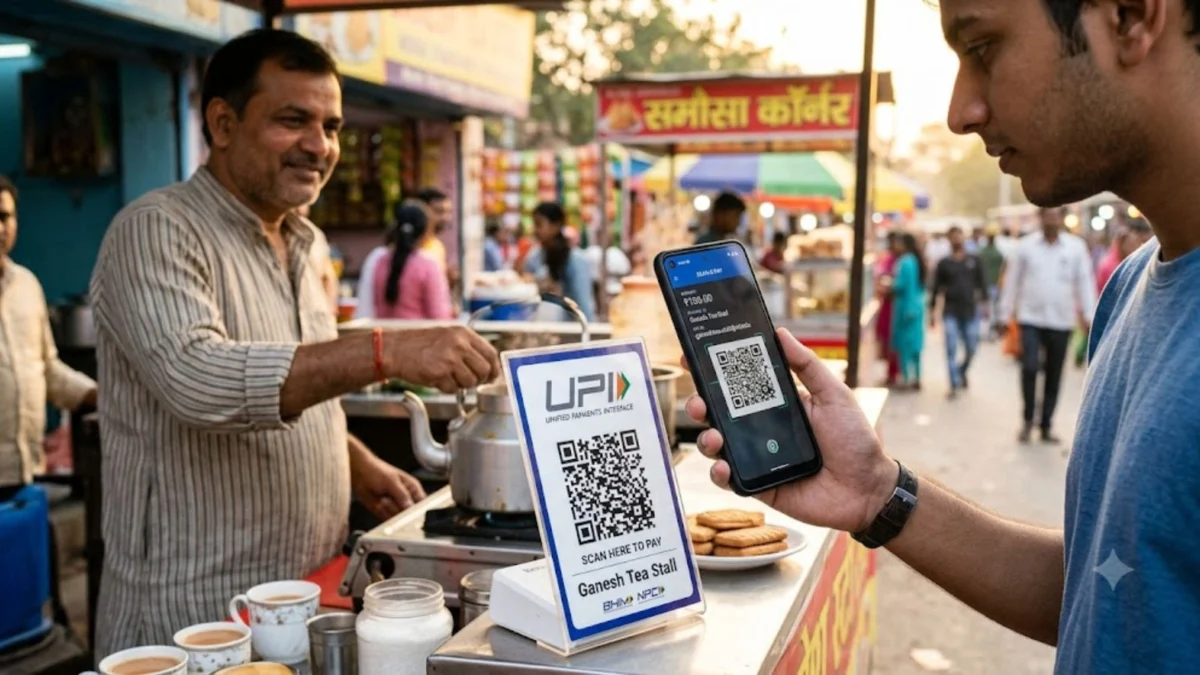
New Delhi: The implementation of the much-debated merchant discount rate (MDR) framework for Unified Payments Interface (UPI) transactions is widely anticipated to be pushed back to January 1, 2027. According to people familiar with the matter speaking to Financial Express, the rollout—originally slated for an October 15 implementation—is facing a targeted delay to provide merchants, fintech players, and the broader payments ecosystem with adequate breathing room during the high-stakes festive season, a period historically marked by an unprecedented surge in digital transaction volumes.
Despite the prospective shift in the timeline, insiders emphasize that the foundational contours of the framework itself remain entirely unchanged. The proposed regulatory architecture introduces a measured levy on specific person-to-merchant (P2M) digital transfers, a structural adjustment that has already triggered strategic repositioning among payment aggregators (PAs), banking institutions, and regulatory authorities alike.
1. Main Facts: Understanding the Proposed UPI MDR Framework
The impending rollout of the Merchant Discount Rate (MDR) framework represents a pivotal turning point for India’s digital public infrastructure, which has long prided itself on zero-cost transactions for everyday users. Under the framework finalized by policymakers:
- The Rate Structure: A modest MDR of 0.4% will be levied on specific person-to-merchant (P2M) UPI transactions that exceed the ₹2,000 threshold.
- The Cap: To protect high-value commerce and ensure large-scale merchants are not overly burdened, the fee is subject to a strict ceiling of ₹300 for individual payments amounting to ₹75,000 or more.
- The Scope: The framework specifically targets designated person-to-merchant categories, shielding peer-to-peer (P2P) transfers entirely from any charges.
While the financial markets and merchant associations continue to analyze the fine print, the overarching intent is to build a sustainable commercial model for acquiring banks, payment aggregators, and fintech infrastructure providers who shoulder the mounting operational and technological costs of running the world’s most robust real-time payment network.
2. Chronology of Events: From Policy Formulation to Implementation Hurdle
The pathway toward introducing MDR on select UPI transactions has been marked by crucial legal, regulatory, and administrative milestones:
- Policy Conception & Approvals: Following extensive deliberations between the central bank, the Ministry of Finance, and key stakeholders in the digital payments ecosystem, the framework for introducing a tiered MDR structure was drafted to ensure the long-term viability of payment processors.
- September 28, 2026 — Legal Challenge Dismissed: The Supreme Court of India delivered a crucial verdict, refusing to grant a stay on the Centre’s decision to impose MDR on specified person-to-merchant transactions. This judicial clearance cleared the primary legal obstacle holding back the policy framework.
- Initial Rollout Target (October 15, 2026): Regulatory indications initially pointed toward a mid-October rollout, strategically positioned ahead of the peak consumer shopping season.
- Early October 2026 — Deferral Discussions: Recognizing the logistical nightmare a mid-festival rollout could pose for merchants and backend payment gateways, sources indicate that authorities are actively steering the implementation date toward January 1, 2027.
3. Supporting Data: Transaction Growth and Market Dynamics
Concerns regarding how the new fees might impact adoption are frequently balanced against the explosive, institutionalized growth of UPI across the Indian economy.
Resilience in Transaction Volumes
Data from recent quarters underscores the incredible momentum of India’s digital economy:
- During the first quarter of financial year 2026–27, UPI transaction volumes registered a robust 24.2% year-on-year growth.
- In the second quarter of 2026–27, momentum remained exceptionally strong, with volumes expanding by 22.2%.
While the slight tapering from 24.2% to 22.2% reflects a maturing market base, industry analysts note that the trajectory remains upward, pointing to deep consumer habituation toward instant digital payments.
Behind the Scenes: Payment Aggregators Negotiate Share
As the ecosystem prepares for the new framework, the business-to-business (B2B) landscape is shifting dramatically. Payment aggregators (PAs) are currently engaged in intense, high-stakes negotiations with their sponsor banks. The core objective? Securing a larger slice of the acquiring banks’ portion of the MDR generated through UPI transactions.
Current industry talks highlight that payment aggregators are aggressively pushing to retain anywhere between 50% to 80% of the bank-held share of the MDR. With final bilateral agreements still under negotiation, these commercial splits will dictate how profitability is distributed across the fintech value chain once the policy officially goes live.
4. Official Responses: The RBI’s Stance and Economic Outlook
Weighing in on the psychological and quantitative impact of the upcoming changes, Reserve Bank of India (RBI) Governor Sanjay Malhotra has sought to calm market anxieties. Speaking publicly on the matter, Malhotra expressed profound confidence in the maturity of India’s digital payments user base.
"On UPI-MDR, a decision has already been taken," Governor Malhotra stated. "As of now, we do not see any drop in UPI volumes, and I don’t personally think that a small fee will have a major impact on the volumes."
The central bank’s position is rooted in the targeted nature of the fee. By exempting low-value transactions (those under ₹2,000) and small-scale everyday retail, the policy safeguards the everyday consumer while allocating a sustainable revenue stream to the merchants and intermediaries facilitating larger commercial exchanges. Financial sector experts point out that the clarity provided by the RBI Governor has helped alleviate fears of a sudden liquidity crunch or a mass migration back to cash.
5. Implications: What the New Framework Means for the Ecosystem
The structural transition to an MDR-backed UPI ecosystem carries profound implications for all stakeholders involved—from corner stores to large fintech enterprises.
For Merchants and Retailers
For small and medium enterprises (SMEs) and large retail chains, the introduction of a 0.4% fee on transactions exceeding ₹2,000 means factoring a minor cost of acceptance into their operational budgets. However, business owners widely acknowledge that the convenience, speed, and broadening customer base provided by UPI far outweigh the fractional expense. Furthermore, the deferral to January 1, 2027, provides merchants with a crucial window to update their point-of-sale (PoS) software, reconcile accounting systems, and train staff without disrupting festive-season sales.
For Banks and Payment Aggregators
The long-term health of India’s financial architecture depends heavily on the economic viability of its payment processors. For years, the absence of MDR on UPI placed a heavy financial burden on banks and payment gateway operators, who bore the massive costs of network maintenance, fraud prevention, and server scaling without direct commercial compensation. The new framework—alongside ongoing negotiations between PAs and sponsor banks for a 50%–80% revenue split—will inject much-needed capital back into technological innovation, cybersecurity infrastructure, and customer service expansion.
For Consumers
For the everyday citizen, the core promise of UPI remains intact. Because the 0.4% charge only applies to commercial transactions over ₹2,000 and bypasses peer-to-peer (P2P) transfers entirely, ordinary users sending money to family and friends or buying groceries below the threshold will continue to experience completely free, instantaneous digital payments.
Outlook Ahead
As the ecosystem counts down to the anticipated January 1, 2027 implementation date, stakeholders across the board are utilizing the extended timeline to iron out operational creases. With the Supreme Court having cleared the legal pathway and the RBI maintaining a steady, reassuring outlook on transaction volumes, the Indian digital payments landscape is successfully navigating its next great evolution—balancing universal financial inclusion with long-term economic sustainability.



