Executive Summary: A Strategic Exit Amidst Market Optimism
In a move that highlights the ongoing churn among early-stage investors in India’s burgeoning logistics sector, Qualcomm Ventures has offloaded 57.1 lakh shares of the listed logistics major, Shadowfax. Executed via an open-market transaction, the sale raked in ₹157.3 Cr, marking yet another significant exit for a marquee investor in the company.
The transaction, carried out through Qualcomm’s affiliate, Qualcomm Asia Pacific Pte Limited, saw the shares change hands at ₹275.3 apiece—a 6.6% discount to the stock’s previous closing price. This divestment is part of a broader trend of profit-booking by institutional investors who are capitalizing on Shadowfax’s remarkable stock market performance over the last two quarters.
The Transaction: Anatomy of the Bulk Deal
The sale, processed on the Bombay Stock Exchange (BSE), involved the liquidation of 57.1 lakh shares. This is not an isolated incident but rather the latest in a series of strategic moves by the chipmaker to reduce its exposure to the logistics unicorn.
At the end of June 2026, Qualcomm Asia Pacific held a 2.26% stake in the company, equivalent to 1.32 crore shares. By August 2026, the firm had already initiated its exit strategy, diluting its holdings by selling 75 lakh shares in a deal valued at approximately ₹183.9 Cr. The recent ₹157.3 Cr transaction further signals a systematic withdrawal as the investor realizes returns on an investment that dates back to the company’s Series C funding round in 2018.
A Chronology of Growth and Exit
To understand the significance of this sale, one must look at the timeline of Shadowfax’s evolution and its relationship with early backers:
1. The Early Years (2015–2018)
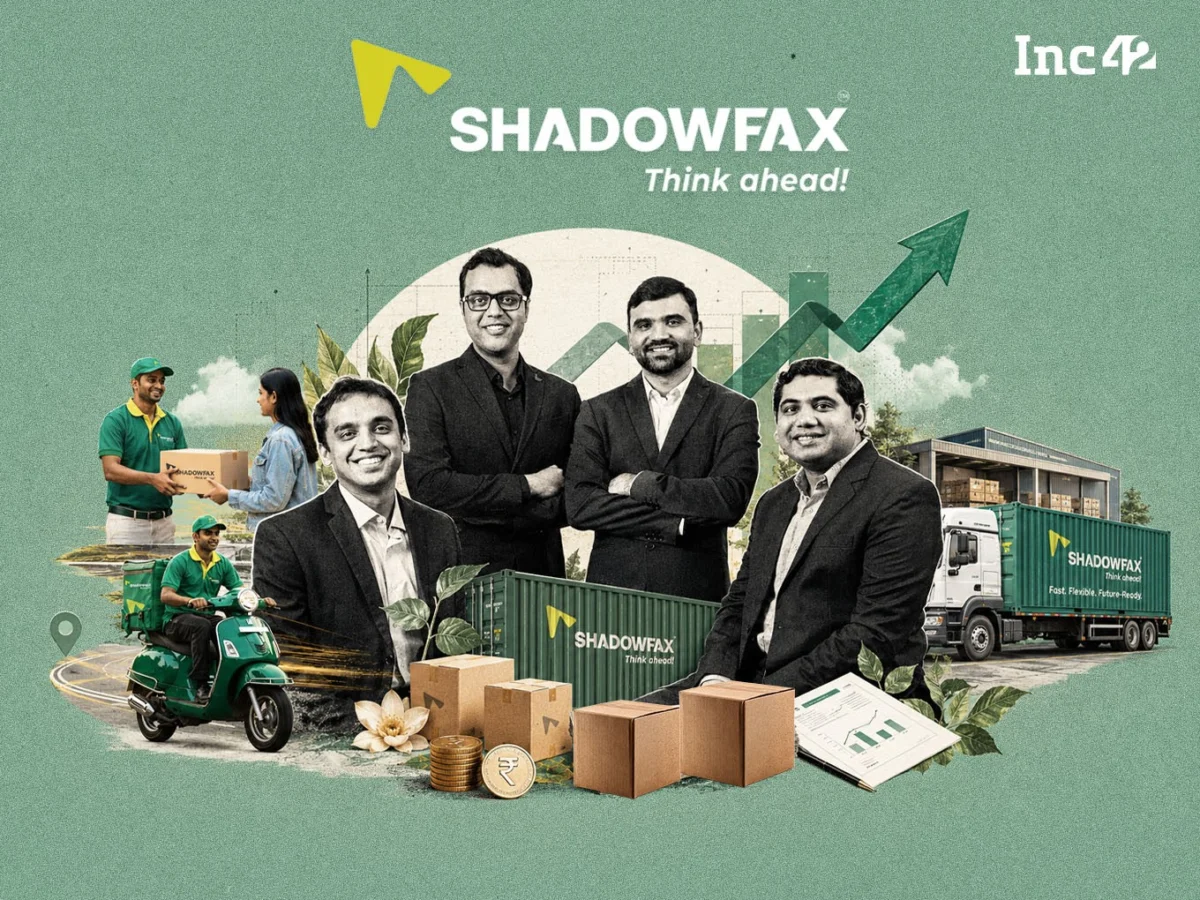
Founded in 2015 by Abhishek Bansal and Vaibhav Khandelwal, Shadowfax entered the market with a vision to streamline the chaotic logistics landscape for ecommerce and D2C brands. By 2018, the company had established enough credibility to secure a $22 Mn Series C funding round, which saw the entry of heavyweight investors including Qualcomm Ventures, Mirae Asset, and Eight Roads Ventures.
2. The Listing and Public Market Debut (Early 2026)
After years of scaling, Shadowfax successfully navigated the transition from a private startup to a publicly listed entity earlier this year. This milestone provided the liquidity window that early investors like Qualcomm and TPG were waiting for.
3. The Recent Selling Spree (August 2026 – Present)
Since the company’s stellar Q1 FY27 performance report, market activity surrounding the stock has intensified. While Qualcomm has been trimming its stake, private equity titan TPG has also been aggressive in its exit, offloading more than ₹700 Cr worth of shares across multiple bulk deals in the past three months.
Financial Performance: The Engine Behind the Rally
The selling pressure from institutional investors is paradoxically fueled by the company’s robust financial health. Investors are not exiting because of a lack of faith in the company; rather, they are exiting to lock in gains generated by the firm’s massive growth.
Q1 FY27 Highlights
- Net Profit: Surged 8X year-on-year (YoY) to ₹65.4 Cr, compared to ₹8 Cr in the corresponding quarter of the previous fiscal year.
- Operating Revenue: Zoomed 65% YoY and 10% quarter-on-quarter (QoQ) to reach ₹1,358 Cr.
- Revised Guidance: Following the strong Q1 results, Shadowfax management upwardly revised its FY27 revenue growth forecast to 38-40%, a notable jump from the previous 28-30% guidance.
This financial trajectory has caught the attention of retail and institutional investors alike, driving the stock up by 29.3% in the last three months and an impressive 122.91% over the last six months.
Operational Expansion: Scaling the Network
Shadowfax’s growth is not merely a product of market sentiment; it is backed by a tangible expansion of its operational footprint. Currently, the company provides logistics services across more than 16,372 pincodes in India.
A critical component of their current growth strategy is the aggressive push into the quick commerce sector. The company plans to scale its network of "dark stores"—micro-fulfillment centers essential for rapid delivery—from its current count of 47 to 100 by March 2027. This expansion is designed to solidify its position as a critical infrastructure provider for the nation’s rapidly evolving D2C and e-commerce ecosystems.
Implications for Stakeholders
For the Investor Community
The exit of Qualcomm and TPG is a classic example of the lifecycle of venture capital. Having entered early, these firms have fulfilled their mandate of supporting the company through its "growth stage" and are now recycling capital for new opportunities. Their exit should not be viewed as a negative signal regarding the company’s future; rather, it provides an opportunity for new institutional players and public market investors to enter the cap table.
For the Company
Shadowfax is currently at a pivotal juncture. Having moved past the "startup" phase, it is now operating as a mature public entity. The management team, led by Bansal and Khandelwal, faces the challenge of maintaining the current growth momentum while balancing the expectations of public market shareholders who demand consistent profitability and clear communication regarding capital allocation.
For the Logistics Sector
The sheer volume of transactions (over ₹700 Cr by TPG and significant chunks by Qualcomm) underscores the liquidity that is now available in the Indian logistics tech sector. It serves as a testament to the fact that Indian logistics companies have moved beyond the "cash-burning" phase and have begun to demonstrate sustainable, profit-generating business models that are attractive to global investors.
Market Sentiment and Future Outlook
As of the close of Monday’s trading session, Shadowfax shares were trading at ₹294.75 on the BSE, representing a marginal decline of 0.12%. Despite the bulk deals that typically put downward pressure on stock prices, the overall sentiment remains bullish.
Analysts suggest that the company’s ability to pivot toward high-growth segments like quick commerce, combined with its improved margins, makes it a resilient player in a competitive market. While the "lock-in" exits from early investors may continue for the next few quarters as their investment horizons expire, the fundamental strength of the company appears to be the primary driver of its long-term valuation.
Moving forward, all eyes will be on the company’s ability to execute its dark store expansion and whether it can maintain its 8X profit growth trajectory as it scales toward its FY27 targets. With the logistics sector expected to play a critical role in India’s $5 trillion economy goal, Shadowfax is positioned as a bellwether for the industry’s success.
Conclusion: A Maturing Ecosystem
The divestment by Qualcomm Ventures, while noteworthy for its scale and the specific names involved, is a standard market evolution. Shadowfax has successfully navigated the difficult journey from a private startup to a publicly listed entity that attracts global capital and generates substantial revenue.
The exit of early backers is the final validation of a successful venture capital cycle. As Shadowfax enters its next phase of growth—characterized by a wider geographic reach, a more sophisticated dark-store network, and a disciplined approach to profitability—the company is likely to attract a new wave of long-term investors looking for stability in India’s fast-paced logistics market. For the founders and the current leadership team, the task now is to ensure that the momentum continues, proving that the firm’s recent financial performance was not a one-off success, but a sustainable pattern of growth.