











As we move toward the final quarter of 2026, the marketing landscape is undergoing a tectonic shift. Artificial Intelligence is no longer merely a tool for generating blog posts or catchy captions; it has become a fundamental infrastructure for brand visibility, creative production, and consumer interaction. From transforming single product photos into expansive asset libraries to the emergence of "agentic" AI that can conduct business on our behalf, the rules of digital engagement are being rewritten in real-time.
In this deep dive, we examine the critical developments in AI marketing—including how to dominate AI-driven search results, the latest hardware integrations from tech giants, and the strategic evolution of content creation.
The Creative Pivot: Turning Single Assets into Infinite Libraries
For years, the creative bottleneck in digital marketing has been production volume. Small teams often find themselves trapped in a cycle of limited resources, particularly when it comes to high-quality product photography. However, the paradigm of "one image, one use" is officially obsolete.
Leveraging Generative AI for Consistency
Modern AI image models have evolved beyond mere generation; they now excel at visual consistency. By feeding a single, high-quality product photograph into an AI tool as a reference point, marketers can now generate an entire "shot library." This includes varied angles, close-ups, and lifestyle settings that maintain the exact lighting, texture, and color palette of the original asset.
The "B-Roll" Strategy
The true strategic breakthrough lies in the mindset shift regarding "rejected" drafts. In traditional workflows, unused images are discarded. In an AI-augmented workflow, these images become part of an ongoing brand library. A close-up shot that doesn’t fit today’s main campaign might become the perfect B-roll for a future social media reel or an email newsletter. By treating AI-generated extras as reusable assets rather than waste, brands can build a massive, cost-effective content repository that extends the lifecycle of every project.
The New SEO: Why Your Content Needs a "Second Audience"
Perhaps the most significant development for long-term growth is the shift in how AI systems discover and recommend businesses. As AI becomes the "trusted advisor" for consumer decision-making, traditional search engine optimization (SEO) is evolving into "Answer Engine Optimization."
The Dual-Audience Imperative
Content creators have long focused on the human reader. However, AI systems consume information differently. Strategists like Liron Segev, founder of AnswerContentEngine.com, emphasize that marketers must now write for two distinct audiences: the human reader and the AI processor. This requires a structural shift in how articles and landing pages are organized, ensuring that data is easily parsable and contextually rich.
The Technical Barriers to AI Citation
Even the best content can be invisible if it is technically inaccessible to AI crawlers. Common barriers—such as improper schema markup, restrictive robots.txt files, or siloed data—often prevent AI models from citing your business. To ensure your brand shows up in AI-generated responses, businesses must:
- Audit their technical infrastructure to ensure AI models can index their site.
- Focus on authority signals that tell AI models why your brand is a credible source.
- Avoid the "AI-generated trap": Simply using AI to write content won’t make you an authority. AI systems prioritize unique, verified, and high-value information that provides answers users can’t find elsewhere.
Chronology of Recent AI Developments
The velocity of AI innovation is unprecedented. Over the last few weeks, the major tech players have pushed forward several key milestones that define the current state of the industry:
- Early September 2026: Google introduces Gemini 3.8 Live and Extended Thinking, focusing on multimodal, real-time voice interaction.
- Mid-September 2026: Meta launches "Muse," a personal AI agent designed to perform tasks, handle forms, and make purchases on behalf of users.
- Late September 2026: OpenAI rolls out GPT-Live-1 for API developers, enabling full-duplex, low-latency voice interaction for customer service and enterprise applications.
- Late September 2026: Google expands its desktop footprint with a dedicated Gemini app for Windows 10 and 11, embedding AI into the OS workflow.
The Rise of Agentic AI: From Chatbots to Action-Takers
We are transitioning from the "Chatbot Era" to the "Agentic Era." Previously, AI was a destination—a place you went to ask a question. Today, AI is becoming an action-taker.
Meta’s "Muse" and the Future of Automation
Meta’s new Muse agent represents a fundamental change in utility. Unlike previous iterations, Muse is designed to handle long-term goals. It can browse the web, manage administrative tasks, and coordinate plans across different services. By focusing on "Action Approvals" and "Audit Trails," Meta is attempting to balance the convenience of autonomous agents with the necessity of user security.
Voice-First Dynamics
The release of OpenAI’s GPT-Live-1 and Google’s Gemini 3.8 Live marks the maturation of voice AI. These systems are no longer hampered by lag or unnatural turn-taking. They can handle interruptions, understand background noise, and—most importantly—delegate complex reasoning to backend tools. For marketing, this means that customer support and sales could soon be handled entirely by AI agents that can "think" through multi-step problems in real-time.

Supporting Data and Industry Implications
The implications for marketers are clear: the barrier to entry for high-quality production is falling, but the barrier to entry for visibility is rising.
The Efficiency Gain
According to industry reports, teams that adopt AI for asset generation see a reduction in production time by as much as 60-70%. By leveraging AI to maintain consistency across visual assets, brands can maintain a high-frequency presence on social media without the corresponding increase in agency costs or production time.
The Trust Gap
As AI-generated content floods the web, the "trust signal" becomes the most valuable currency. AI systems are increasingly being trained to evaluate the source of information rather than just the content itself. Businesses that focus on building an "AI-friendly" footprint—structured, high-quality, and unique data—will be the ones cited when users ask their AI assistants for recommendations.

Official Perspectives: The Path Forward
Industry experts, including Michael Stelzner, founder of Social Media Examiner, suggest that the most successful marketers in 2027 will be those who move past the "hype" stage.
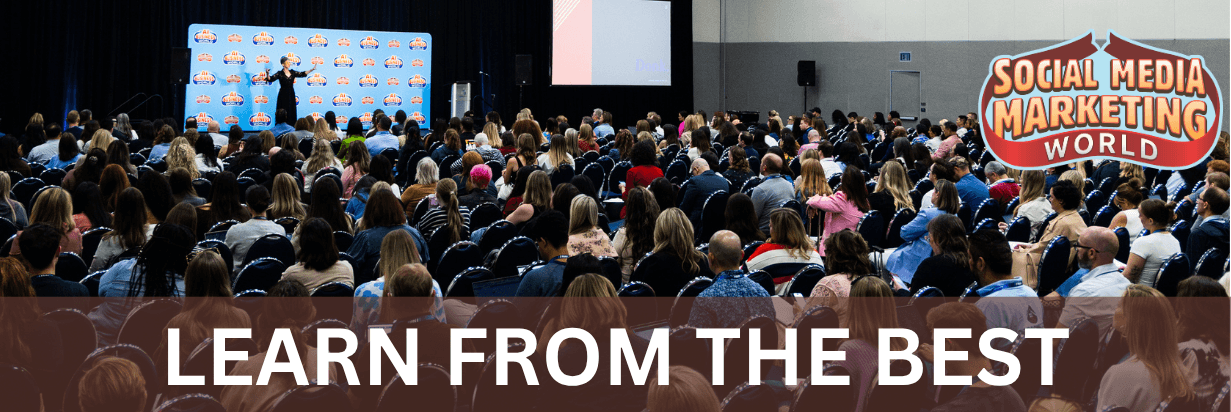
"The goal isn’t just to use AI; it’s to integrate it into your business so that it works while you sleep," says Stelzner. The focus for the upcoming year is on "implementation, not just information." This philosophy is driving the agenda for the 2027 Social Media Marketing World conference, where the focus will be exclusively on actionable, pitch-free strategies for utilizing AI.
Navigating the "AI Gap"
Many businesses are currently suffering from a "middle-tier" malaise: they are using AI daily, but they lack a cohesive strategy. This results in fragmented efforts that don’t yield a competitive advantage. Identifying the specific "AI gap"—whether it is in content production, search visibility, or customer service automation—is the first step toward achieving true scale.

Final Thoughts: Preparing for 2027
As we look toward 2027, the message is one of cautious optimism. The tools available to the modern marketer are more powerful than at any point in history. However, these tools demand a higher level of technical literacy and strategic foresight.
To remain competitive, brands must:
- Diversify their asset libraries by repurposing existing imagery through AI.
- Optimize for "Answer Engines" by restructuring their content to serve both humans and AI models.
- Embrace Agentic AI by testing tools like Muse or GPT-Live-1 to see how they can automate repetitive, high-friction tasks within their customer journey.
The future of marketing is not about choosing between human creativity and machine efficiency. It is about the symbiotic relationship between the two. The brands that win will be those that use AI to amplify their human story, ensuring that when a customer asks an AI for a recommendation, their brand is the only logical answer.



