










As the digital landscape continues to grow in complexity, Google’s strategy for maintaining the Android ecosystem has shifted toward a modular, invisible, yet highly effective approach. The monthly "Google System Release Notes" serve as the primary window into this engine room. These updates, which encompass everything from Google Play services and the Play Store to Android WebView, ensure that millions of devices—spanning smartphones, tablets, Wear OS watches, automotive infotainment systems, and even PCs—remain secure, performant, and feature-rich without requiring a full OS-level update.
For October 2026, Google has pushed a series of updates that highlight the company’s focus on granular security, developer-facing infrastructure, and the seamless integration of digital wallet capabilities. This article explores the recent trajectory of these releases, the mechanics of how these updates reach your device, and the broader implications for the global Android user base.
The Mechanics of Google System Updates
To understand the weight of these release notes, one must first understand what constitutes the "Google System." Unlike the Android OS version (e.g., Android 16 or 17), which is updated by manufacturers and carriers, the Google System components are updated directly by Google via the Play Store. This architecture allows Google to bypass the traditional "bottleneck" of OEM firmware updates, ensuring that critical patches for security, privacy, and core functionality reach users almost instantly.
How to Ensure Your Device is Up to Date
Many users are unaware that their devices are constantly evolving beneath the surface. To manually verify that your system components are current, follow these steps:
- Open the Settings app on your Android device.
- If you are using a Pixel or a device with a similar interface, tap your name or the "Google services" section at the very top.
- Navigate to the "All services" tab.
- Select "Privacy & security."
- Tap on "System services" to check for pending updates.
It is important to note that a feature appearing in the official changelog is not always a guarantee of immediate availability. Google frequently employs "staged rollouts," where a new capability might take weeks, or even months, to reach 100% of the active user base.
Chronology of October 2026 Releases
The October cycle was marked by a steady stream of updates that emphasize stability and backend efficiency. Below is a breakdown of the specific versioning and deployment timeline observed throughout the month.
The Second Week: Versioning Updates
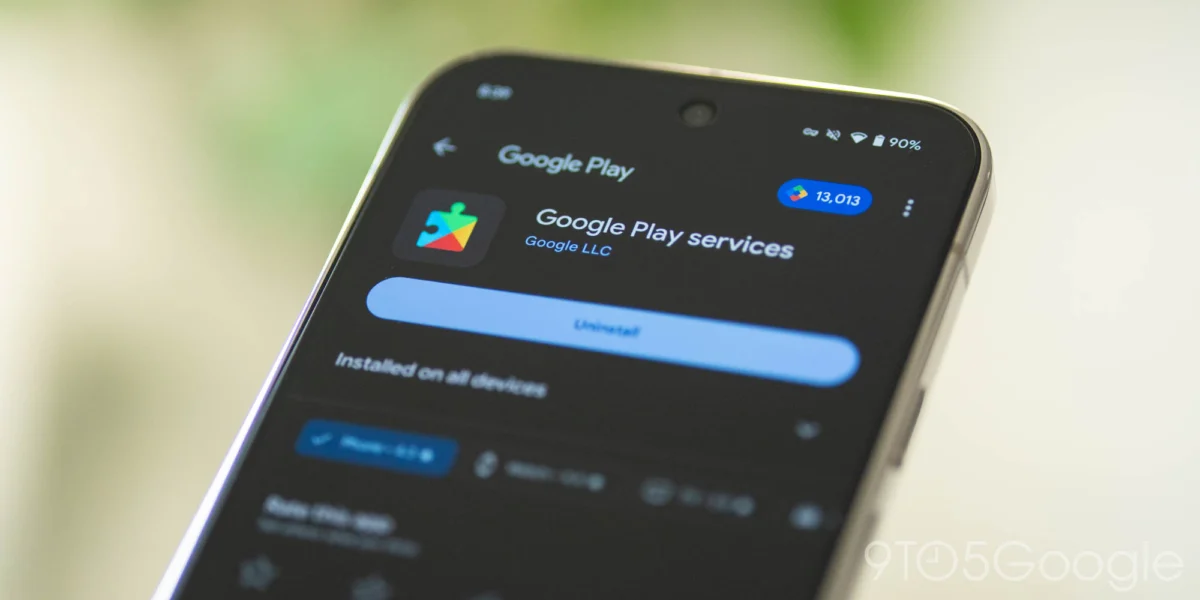
As of October 12, 2026, Google released Google Play services v26.40, Google Play Store v53.6, and Android WebView v156.
![What’s new in Android’s October 2026 Google System Updates [U]](https://9to5google.com/wp-content/uploads/sites/4/2025/01/google-play-services-3.jpg?quality=82&strip=all&w=1600)
- Google Play services v26.40 (October 12, 2026): This release focused heavily on device connectivity and system management. While the changelog remains high-level, these versions typically include optimized Bluetooth handshakes for better interoperability between smart home devices and Android phones.
- Google Play Store v53.6 (October 12, 2026): This update likely addresses backend store performance, focusing on the efficiency of app installations and the reliability of auto-updates for third-party applications.
- Android WebView v156 (October 7, 2026): As the backbone for rendering web content within apps, WebView updates are critical for security. Version 156 likely incorporates patches for Chromium-based vulnerabilities discovered in early October.
The First Week: Foundation Work
Earlier in the month, Google set the stage with foundational updates designed to clear the path for later features:
- Google Play services v26.39 (October 5, 2026): This version brought targeted improvements to Account Management and Developer Services, ensuring that third-party apps have stable hooks into the Google ecosystem.
- Google Play Store v53.5 (October 5, 2026): A precursor to the v53.6 update, focusing on initial optimizations for the October window.
- Android System Intelligence B.29 / C.7 (October 1, 2026): Android System Intelligence is the "brain" behind many local AI features, such as Live Caption and Smart Reply. These versions represent iterative improvements to local machine learning models that do not require cloud processing.
Supporting Data: What’s Under the Hood?
The updates released in October 2026 are not merely cosmetic. They address three critical pillars of modern mobile computing:
1. Developer Services
Google is increasingly prioritizing the "Developer Services" segment of the Play infrastructure. By updating these APIs, Google allows developers to utilize newer features—such as enhanced biometric authentication or advanced location services—without needing to worry about the specific Android version the end user is running. This creates a "level playing field" for app development, reducing fragmentation.
2. Security and Privacy
The "Security & Privacy" updates within Play services are the unsung heroes of the Android experience. These updates include the "Google Play Protect" definitions, which scan millions of apps daily for malicious behavior. By updating these components separately from the OS, Google ensures that a threat identified in the morning can be mitigated on a user’s device by the afternoon, regardless of whether the user has the latest security patch from their device manufacturer.
3. Digital Wallet Integration
The inclusion of "Wallet" in the release notes underscores the importance of Google Wallet as a centralized hub for more than just payments. With ongoing updates, Google is expanding the wallet’s capability to store sensitive digital identity documents, transit passes, and loyalty programs. The stability of these features is paramount, as the reliance on mobile wallets for everyday transactions continues to climb.
Official Responses and Strategic Vision
Google’s documentation on these releases is notoriously brief, a byproduct of the company’s need to balance transparency with the reality of proprietary code. However, the official Google System Release Notes page serves as the single source of truth for the company’s intent.
In recent communications, Google representatives have emphasized that the "modularization of the Android stack" is a multi-year project. By moving core functionality into the Play services layer, Google is effectively "decoupling" the user experience from the hardware lifecycle. This means a phone purchased in 2024 can theoretically run the same version of Google Wallet or Play services in 2027 as a flagship device released that year. This is a massive shift from the early days of Android, where "stale" software was a primary pain point for consumers.
![What’s new in Android’s October 2026 Google System Updates [U]](https://9to5google.com/wp-content/themes/ninetofive/dist/images/google-preferred-source-badge-dark.png)
Implications: The Future of Android
The implications of these October 2026 updates are twofold:
For the End User
The primary benefit is the "evergreen" nature of the device. Users should feel confident that their devices are getting smarter and more secure without having to go through the cumbersome process of downloading massive system updates. The subtle improvements to Android System Intelligence mean that features like text-to-speech, real-time translation, and notification management will continue to improve in accuracy and battery efficiency.
For the Ecosystem
The continued refinement of Google Play services reinforces Google’s dominance in the mobile space. By providing a superior, unified backend, Google makes it difficult for alternative ecosystems to compete. Developers are incentivized to build for Android first, knowing that their apps will have consistent access to high-quality system APIs across the entire market, from low-end budget devices to high-end foldables.
The Path Forward
Looking toward the remainder of 2026 and into 2027, we can expect this cadence to continue. As AI becomes more deeply integrated into the Android experience, the Android System Intelligence component will likely see more frequent and substantial updates. Similarly, as privacy regulations (such as those in the EU and North America) evolve, the Security & Privacy modules within Play services will be the frontline for ensuring compliance and user protection.
In conclusion, while the October 2026 system updates might seem like incremental technical housekeeping to the casual observer, they are the vital pulse of the Android ecosystem. They represent a sophisticated, global engineering effort to maintain a secure, intelligent, and highly connected environment for billions of users. As Google continues to iterate, the line between "hardware" and "software" will continue to blur, leaving the user with a device that—for once—truly gets better with age.
Disclaimer: This report is based on publicly available Google System Release Notes. Features, availability, and specific versioning may vary based on region, device model, and carrier restrictions. As noted, some features may be experimental or in the process of a staged rollout.



