










As the digital landscape transitions into a new season, the web development community continues to push the boundaries of what is possible with CSS and modern browser APIs. Edition #18 of What’s !important rounds up the most significant discussions, experimental features, and architectural breakthroughs shared by top-tier CSS developers and web engineers over the past couple of weeks.
From performance-optimized tooltips and native HTML elements to upcoming layout tricks and syntax highlighters driven entirely by native browser capabilities, the frontend ecosystem is evolving at a breakneck pace. This report examines the main facts, the chronological progression of these discoveries, supporting data, expert insights, and the profound implications these updates hold for the future of web design.
Main Facts: What’s Shaping Modern CSS Today
The past fortnight has introduced several paradigm shifts in how developers handle micro-interactions, layout data extraction, and feature detection:
- Instant-on, Delayed-off Tooltips: Abhishek Jakhar and Chris Coyier have redefined tooltip UX using progressive enhancement and native browser features.
- The
<geolocation>Element: Bridging the gap between cumbersome hardware APIs and native HTML, this new element simplifies location requests while introducing unique styling constraints. - MicroLighter: Dave Rupert has leveraged the cutting-edge CSS Custom Highlight API to build a lightweight, high-performance syntax highlighter.
- CSS Grid to Custom Properties: Temani Afif has unlocked a method for piping grid row/column data directly into CSS variables, opening doors for advanced hover proximity effects.
- The Class Prefix Selector: Bramus has proposed a clean, high-performance syntax (
.something-*) to replace verbose attribute selectors. - Feature Detection with
named-feature(): Chrome is pioneering new ways to query previously undetectable CSS capabilities. - Balanced Flexbox Layouts: Stephanie Stimac and Ahmad Shadeed are bringing structural equilibrium to layouts with
flex-wrap: balance.
Chronology of Recent Discoveries and Debates
To understand how these tools and concepts arrived in the developer zeitgeist, it helps to look at the chronological sequence of releases, articles, and community discourse that defined the last two weeks.
Phase 1: Refining Micro-Interactions (Tooltips)
The conversation kicked off with Abhishek Jakhar’s deep dive into tooltip ergonomics. Jakhar argued that tooltips should feature a delayed trigger followed by an instant dismissal. This dual-state behavior prevents accidental triggers when a user’s cursor merely sweeps across a page, yet ensures the tooltip vanishes instantly once the user moves away.
Shortly after, Chris Coyier responded with a modern implementation using interest invokers. Utilizing the emerging CSS properties interest-delay-start and interest-delay-end, Coyier’s approach provides a native mechanism for handling these interactions. While currently restricted to Chrome, it serves as a textbook example of progressive enhancement in action.
Phase 2: Embracing Native HTML and Highlighting APIs
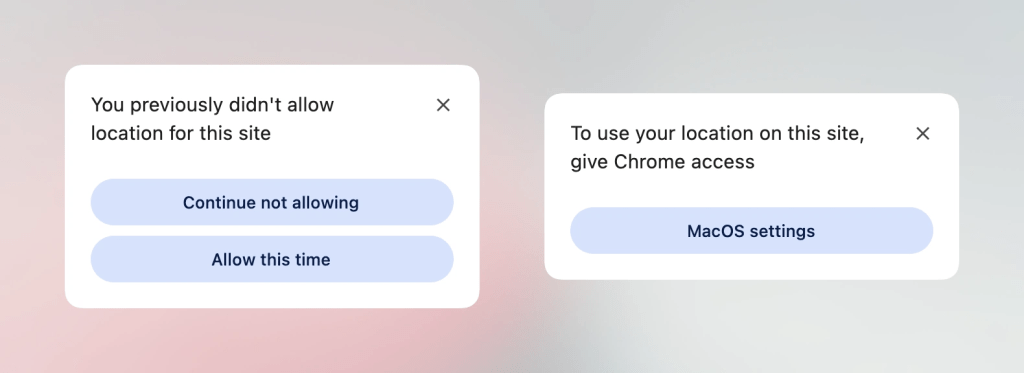
Next came the ongoing discourse surrounding the <geolocation> element. Historically, utilizing geolocation required managing complex hardware states (GPS satellites, Wi-Fi networks, and cellular towers) through JavaScript, leading to frustrating permission reset loops. The experimental <geolocation> element aims to streamline this, though it brings distinct styling restrictions. Developers like those at Piccalilli published guides on combining the new element with legacy APIs to achieve seamless cross-browser utility today.
Concurrently, Dave Rupert released MicroLighter, a syntax highlighter built on the nascent Custom Highlight API. By bypassing traditional DOM manipulation and heavy JavaScript parser libraries, MicroLighter relies entirely on native browser painting mechanisms.
Phase 3: Layout Intelligence and Architecture
As the week progressed, architectural discussions took center stage.
- Grid Variables: Temani Afif demonstrated how to extract structural information—such as row/column counts and cell coordinates—from a CSS grid and store them in custom properties.
- Dark Mode Toggles: A spirited community debate erupted over state management. While Lea Verou advocated for a two-state dark mode toggle, Bramus made a compelling case for a tri-state model (light, dark, and system-default), with developers like Vale.Rocks favoring an auto-until-overridden two-state paradigm.
- Class Prefix Selectors & Feature Queries: Bramus introduced the concept of the class prefix selector (
.something-*), offering a cleaner alternative to clunky attribute selectors like[class^="something-"]. He also droppedsupports named-feature(), a function designed to detect browser support for complex, hyper-specific CSS behaviors.
Supporting Data and Technical Implementation
To appreciate the weight of these updates, we must examine the underlying code structures that make them possible. Modern CSS is steadily shedding its reliance on heavy JavaScript runtimes, favoring declarative, browser-native solutions.
1. Interest Invokers for Tooltips
/* Utilizing upcoming interest-delay properties in supporting browsers */
.tooltip-target
  interest-delay-start: 400ms;
  interest-delay-end: 0ms;
This native approach eliminates complex JavaScript event listeners, offloading performance-critical timeout logic directly to the rendering engine.
2. The Efficiency of the Class Prefix Selector
Traditional CSS styling for utility classes sharing a common prefix often requires brittle attribute selectors:
/* Legacy Approach: Performance heavy */
[class^="something-"]
  /* Matches class="something-xxx" */
The proposed class prefix selector cleanly replaces this with native syntax:
/* Modern Proposed Approach: Clean and performant */
.something-*
  /* Target all classes starting with 'something-' */
3. Balancing Flexbox Containers
Borrowing a concept familiar to typographers via text-wrap: balance, the new flex-wrap: balance property automatically distributes flex items evenly across rows or columns, eliminating awkward orphan items at the tail end of a layout container.
.flex-container
  display: flex;
  flex-wrap: balance;
Official Responses and Community Perspectives
The developer community has responded with a mixture of cautious optimism and enthusiastic experimentation.
- On Progressive Enhancement: Experts continue to emphasize that bleeding-edge features like
interest-delay-*and<geolocation>should not block production deployments. By pairing native implementations with fallback logic, teams can adopt new standards safely without alienating users on legacy browsers. - On Syntactic Sugar: The reception to the class prefix selector has been overwhelmingly positive. Frontend engineers have long complained about the performance overhead of substring-matching attribute selectors (
[class*="..."]). The introduction of.something-*signals a willingness by browser vendors to listen to developer ergonomics. - On Layout Logic: Temani Afif’s work on piping grid data into CSS variables has forced a re-evaluation of what CSS can compute independently of JavaScript. By bridging layout geometry with custom properties, developers can construct advanced interactive effects—such as hover proximity scaling—with pure, declarative CSS.
Implications for the Future of Web Development
The accumulation of these features paints a clear picture of where web development is heading: back to the platform.
For years, the industry relied heavily on JavaScript frameworks and heavy utility libraries to solve problems that CSS and HTML were not yet equipped to handle. However, with the rapid deployment of the Custom Highlight API, native interest invokers, advanced @supports queries, and intelligent layout balancing (flex-wrap: balance), the browser is reclaiming its role as a powerful, self-contained application runtime.
Key Takeaways for Frontend Teams:
- Reduce JavaScript Bloat: Lightweight alternatives like Dave Rupert’s MicroLighter prove that high-performance UI components can be built using native browser APIs, reducing bundle sizes and improving Core Web Vitals.
- Prepare for Next-Gen Selectors: Keep an eye on proposals like the class prefix selector. While not universally supported yet, tracking these proposals allows teams to design more maintainable component architectures today.
- Embrace Intelligent Layouts: Properties like
flex-wrap: balancewill fundamentally change how responsive UI components are constructed, minimizing manual media query tuning for irregular content lengths.
As autumn arrives, the pace of innovation in the CSS ecosystem shows no signs of slowing down. Developers who stay informed on these emerging standards will be uniquely positioned to build faster, cleaner, and more resilient web experiences.



