







The most potent visual concepts in brand design are rarely born from a sudden spark of inspiration within a Figma file. Instead, they are the result of a rigorous, often overlooked, intellectual foundation. When a branding project falters, it almost never happens at the logo-refining stage; it fails in the strategy phase, where ambiguous terminology—words like "modern," "trustworthy," "premium," "friendly," and "disruptive"—are left to the subjective interpretation of stakeholders.
This disconnect creates a widening chasm between what a brand must communicate and what the designer is tasked to produce. To bridge this, professionals are increasingly adopting the "pre-concept" phase—a critical period of discovery and alignment that occurs after the initial project kickoff but before a single pixel of the final brand identity is rendered.
The Anatomy of the Pre-Concept Phase
The pre-concept phase is the practical bridge between abstract business strategy and concrete visual expression. It is a period defined by three pillars: deep-dive research into brand context, the extraction of hidden stakeholder assumptions, and the formation of a shared visual foundation.
Designers often receive a brief, a list of competitor references, and a set of vague adjectives, and are then expected to conjure "the right" look. However, "right" is an impossible metric to gauge without a foundational agreement on what the brand actually stands for. By formalizing this phase, teams can transform broad, hollow goals into specific, actionable design briefs.

Chronology of Discovery: Moving Beyond the Brief
The branding process, when executed with precision, follows a deliberate sequence designed to filter out ambiguity before it can derail the creative process.
Phase 1: Contextual Research and the "Perception" Problem
A brand does not exist in a vacuum; it exists in the mind of the customer. As branding expert Marty Neumeier famously noted, "A brand is a person’s gut feeling about a product, service, or company." Therefore, the goal of the discovery phase is to define the exact perception the team aims to curate.

During the workshop stage, it is not enough to ask, "What are our goals?" The team must pivot to questions that reveal underlying tension. For instance, in a recent health tech project, the client requested a "disruptive" brand identity. While that word usually triggers ideas of bold, loud, and rebellious aesthetics, the client’s actual audience—conservative government medical institutions—required a brand that signaled credibility and reliability. Had the team accepted "disruptive" at face value, the visual outcome would have likely alienated the very audience the company needed to reach.
Phase 2: Competitor Perception Mapping
Before exploring original design, teams should perform a competitor perception map. This is not a critique of the competitors’ design quality, but an analysis of their market position. By placing competitors on a two-axis map (e.g., "Understated vs. Bold" or "Accessible vs. Exclusive"), stakeholders are forced to define where their brand fits within the category. Disagreements that arise during this mapping are invaluable—they expose the reality that one stakeholder’s "premium" is another’s "cold and unapproachable."

Phase 3: The Visual Brand Driver
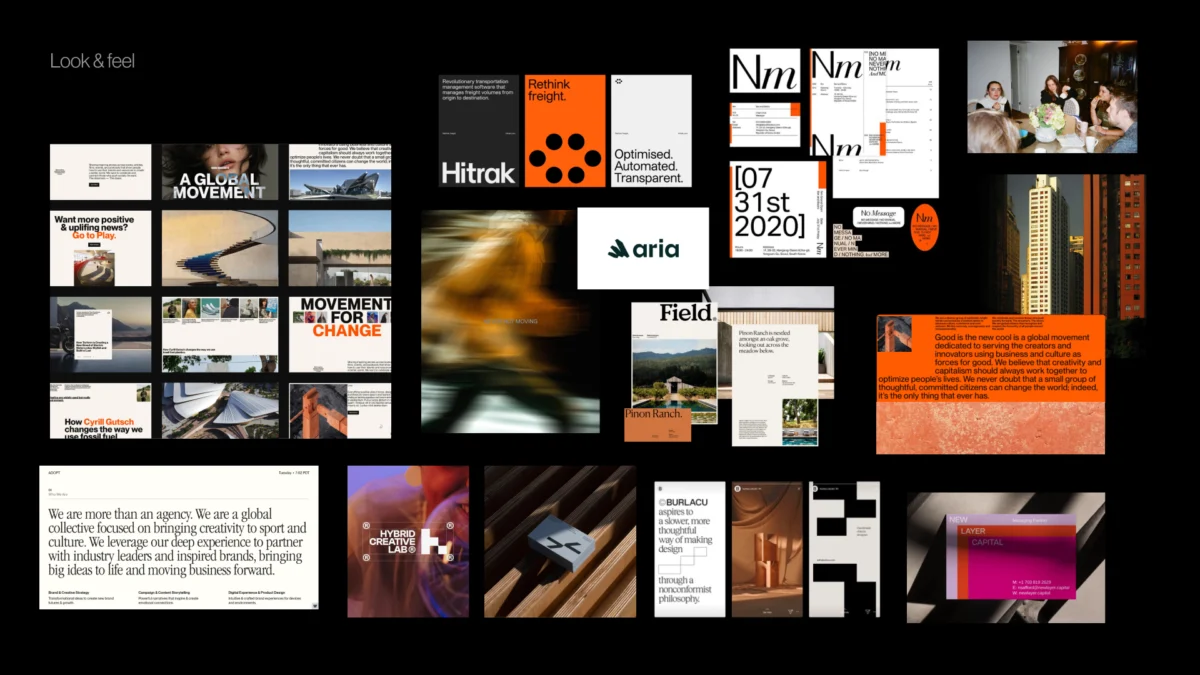
To move from verbal to visual, designers utilize the "Visual Brand Driver" exercise. Stakeholders are asked to select images for disparate categories—architecture, transport, furniture, and even animals—that they feel represent the company’s spirit. This forces participants to move away from personal aesthetic preferences and toward metaphor. A "train" might represent reliability and speed to one person, but a "fixed, rigid path" to another. Uncovering these associations early prevents "design-by-committee" paralysis later in the project.
Supporting Data: Why Alignment Matters
The necessity of the pre-concept phase is supported by the high failure rate of rebranding projects that skip the alignment stage. When stakeholders remain passive observers, they often harbor "hidden" expectations that only manifest during the first design review.

Data from design-led agencies suggests that projects involving early-stage collaborative workshops have a significantly higher "first-round approval" rate. By having stakeholders participate in exercises like selecting image references or defining category axes, their biases are externalized. When a client is forced to justify why an image represents their brand, they become an active participant in the design logic, rather than a passive critic of the final result.
Official Perspectives: The Role of Design Codes
Once the workshop has surfaced the team’s shared goals, the next step is the construction of a "Design Code." This is the translation of key brand ideas into a visual grammar.

For example, a parenting app aiming to provide "personalized support" might translate that idea into specific design codes: organic shapes, warm gradients, and handwritten typography. Conversely, an infrastructure AI startup might express "precision and power" through sharp grid systems, monochromatic color palettes, and bold, industrial typefaces.
These codes are not final designs; they are "boundary setters." They allow the client to react to the intent of the design before the designer invests weeks into developing a full visual system.

Implications for the Creative Workflow
The implications of adopting a rigorous pre-concept phase are profound:
- Reduction of Iterative Friction: By clarifying the visual language early, the "back-and-forth" during the design phase is drastically reduced. The focus shifts from "do we like this?" to "does this meet the agreed-upon design code?"
- Increased Stakeholder Ownership: Because clients have participated in the creation of the brand’s visual foundation, they feel a greater sense of ownership. They are less likely to request drastic, late-stage changes that compromise the brand’s integrity.
- Risk Mitigation: The pre-concept phase identifies potential "blind spots"—such as the health tech client who requested a "disruptive" look that would have terrified their target audience. Detecting these contradictions early saves the project from costly pivots.
- A Clearer "No": Perhaps most importantly, this phase gives the designer a license to say "no." If a proposed design element does not align with the established design code, it is easier to reject it as off-brand, rather than arguing over personal taste.
Conclusion: The First Concept is Never a Guess
The ultimate goal of the pre-concept phase is to ensure that the first concept presented to a client is not a shot in the dark, but a logical, inevitable conclusion of the work that came before it.

When a design team enters the presentation room, they should not be there to "reveal" a surprise. They should be there to show the next, most logical step in a collaborative journey. By moving away from the "big reveal" culture and toward a model of continuous, research-backed alignment, designers can elevate their role from mere service providers to strategic partners.
The first concept should never be a guess; it should be the visual manifestation of a shared vision. When the strategy is sound and the pre-concept foundation is firm, the design work stops being a matter of "opinion" and becomes an exercise in precision, purpose, and professional execution. The best brands are not those that look the most beautiful—they are the ones that are the most intentional.