




By Daniel Imber, Cybersecurity Writer, Specops Software — An Outpost24 Company
Published by Infosecurity Magazine
Main Facts
As organizations navigate the increasingly complex threat landscape of 2026, multi-factor authentication (MFA) has effectively transitioned from a recommended best practice into a mandatory baseline requirement. Virtually every major cybersecurity framework mandates its use, and cyber insurance providers routinely require proof of MFA implementation before issuing or renewing policies.
However, a dangerous disconnect exists between regulatory compliance and actual operational security. Many enterprises treat MFA as a simple "checkbox" exercise, implementing legacy or vulnerable authentication methods that modern threat actors have learned to easily circumvent. While standard MFA successfully thwarts automated, brute-force credential stuffing attacks, it falls critically short against sophisticated, human-driven cyber operations.
Today, the core security dilemma facing chief information security officers (CISOs) is no longer whether MFA is enabled, but whether the specific type of MFA deployed can withstand advanced tactics such as adversary-in-the-middle (AiTM) phishing, SIM-swapping, and prompt bombing. Security leaders are increasingly realizing that transitioning to phishing-resistant authentication—such as FIDO2 security keys and passkeys—is the only viable path forward for protecting sensitive corporate infrastructure.
Chronology: The Evolution of MFA Vulnerabilities
To understand why modern MFA implementations require an urgent overhaul, it is helpful to look at how authentication security has evolved alongside cybercriminal tactics:

- The Pre-MFA Era (Pre-2010s): Single-factor authentication dominated corporate landscapes. Passwords, often weak and reused across multiple services, served as the sole barrier to enterprise networks, leading to widespread credential-stuffing epidemics.
- The Rise of SMS and Basic MFA (2010–2015): Organizations began adopting secondary verification, heavily relying on SMS text messages and static push notifications. While this successfully stopped automated botnets, it created a false sense of security.
- The Exploitation of Legacy Factors (2015–2020): Cybercriminals adapted by weaponizing the telecommunications infrastructure through SIM-swapping attacks. Concurrently, attackers began deploying real-time phishing kits capable of intercepting SMS codes and Time-Based One-Time Passwords (TOTP) on the fly.
- The Era of MFA Fatigue and AiTM (2020–Present): High-profile corporate breaches—including those targeting Uber, Cisco, and Microsoft environments—highlighted the vulnerability of standard push notifications. Attackers weaponized "prompt bombing" (MFA fatigue) to bombard users with approval requests until compliance was achieved out of sheer frustration, prompting international cybersecurity agencies to mandate phishing-resistant standards.
Supporting Data: The MFA Security Hierarchy
While any form of MFA is fundamentally superior to relying on passwords alone, a stark security hierarchy exists among different authentication factors. Security leaders must weigh convenience against cryptographic resilience when evaluating their infrastructure.
1. SMS-Based Codes
- Pros: Highly familiar, universally supported, and requires zero specialized user onboarding.
- Cons: Widely considered the weakest link in modern authentication. Vulnerable to SIM-swapping (where criminals trick telecom carriers into transferring a victim’s phone number to an attacker-controlled SIM card), real-time phishing interceptors, and SS7 protocol vulnerabilities.
- Verdict: Organizations should view SMS-based MFA merely as an absolute minimum baseline rather than a long-term defense strategy.
2. Push Notifications
- Pros: Delivers a frictionless user experience, heavily utilized by mainstream platforms like Microsoft Authenticator and Duo.
- Cons: Highly susceptible to "MFA fatigue" or prompt bombing. If an attacker acquires a user’s primary password, they can trigger endless streams of approval prompts until the fatigued user accidentally or intentionally clicks "Approve."
- Mitigation: Modern implementations must incorporate number matching—requiring the user to input a specific code displayed on their login screen into their authenticator app—drastically mitigating the risk of accidental approvals.
3. Time-Based One-Time Passwords (TOTP)
- Pros: Generated locally via standalone authenticator apps (e.g., Google Authenticator, Microsoft Authenticator), eliminating dependence on vulnerable mobile networks and neutralizing SIM-swapping risks.
- Cons: While much harder to compromise than SMS, TOTP codes remain vulnerable to advanced adversary-in-the-middle phishing pages that capture and relay both passwords and rolling codes in real time.
- Verdict: A practical, widely adopted compromise that offers meaningful improvements over older methods, though still not entirely phishing-proof.
4. Hardware Security Keys and Passkeys
- Pros: Represents the absolute gold standard of enterprise authentication. Utilizing FIDO2 and WebAuthn cryptographic standards, physical devices (such as YubiKeys) tie authentication strictly to the verified domain name of the legitimate website or application. If a user lands on a phishing clone, the hardware key refuses to authenticate because the domain signature fails to match.
- Cons: Primarily operational and logistical hurdles, including the cost of purchasing physical keys, managing inventory replacements, and establishing secure backup workflows for lost hardware.
- Verdict: Widely regarded by cybersecurity authorities as the definitive solution for completely neutralizing credential-based attacks.
Official Responses and Regulatory Guidance
Governments and regulatory bodies worldwide are shifting their stance, explicitly moving away from legacy MFA definitions toward rigorous, phishing-resistant mandates.
The Cybersecurity and Infrastructure Security Agency (CISA), alongside the National Institute of Standards and Technology (NIST), has repeatedly emphasized that traditional, code-based, or push-based MFA implementations are no longer sufficient for securing critical infrastructure or sensitive government networks. Federal agencies in the United States are bound by strict modernization timelines requiring the comprehensive adoption of phishing-resistant authentication methods.
Furthermore, cyber insurance underwriters are tightening their underwriting criteria. Policyholders attempting to claim payouts following a breach are increasingly facing scrutiny over how their MFA was configured. Organizations relying solely on SMS or easily exploitable push prompts find themselves vulnerable to denied claims, shifting the pressure from a purely IT-driven decision to a vital board-level risk management priority.
Implications for Modern Organizations
The writing is on the wall for enterprise security architectures: checking the compliance box with legacy MFA is no longer enough to protect against determined threat actors.

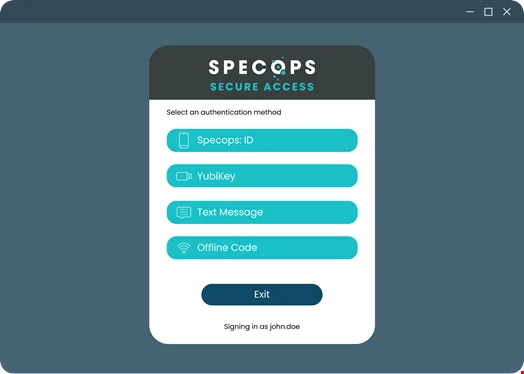
Bridging this security gap requires adopting robust access solutions designed to secure every entry point of the modern enterprise. Tools like Specops Secure Access empower organizations to upgrade their defenses seamlessly. By extending secure, phishing-resistant multi-factor authentication directly to Windows Logon, Remote Desktop Protocol (RDP), and virtual private network (VPN) connections, Specops Secure Access hardens workforce security regardless of where employees are logging in from.
Additionally, such solutions streamline single sign-on (SSO) support for Software-as-a-Service (SaaS) applications via OpenID Connect (OIDC) and SAML, while offering flexible authentication options—ranging from text messages and hardware tokens like YubiKeys to third-party providers like Microsoft Authenticator.
Secure Your Accounts with Specops
As cyber threats continue to pivot toward bypassing outdated security controls, proactive organizations must modernize their authentication strategies. With Specops Secure Access, you can fortify your defenses against Active Directory password attacks, streamline compliance, and satisfy stringent cyber insurance prerequisites.
To evaluate how Specops Secure Access can integrate into your existing IT environment, contact the team today or book a personalized demo.