











The media landscape has undergone a seismic shift over the last ten years, a period defined by the rapid ascension of streaming services and the concurrent, painful decline of traditional linear television. What began as a convenient alternative to the rigid, expensive bundles of cable and satellite television has evolved into a complex, fragmented, and increasingly expensive ecosystem. As we pass the ten-year mark of the mainstream "streaming era," it is time to conduct a forensic analysis of how we arrived here, what the current landscape looks like, and why the "cord-cutting" dream has become a paradox of choice.
The Chronology of Disruption: From Niche to Necessity
To understand the current malaise in the entertainment industry, we must look at the timeline of the digital revolution.
The Golden Age of Convenience (2014–2018)
In the mid-2010s, streaming was synonymous with simplicity. Netflix reigned supreme, providing a vast library of licensed content for a flat, low monthly fee. During this phase, "cord-cutting" became a badge of honor for tech-savvy consumers. The value proposition was undeniable: no contracts, no hardware rental fees, and no appointment viewing. It was the era of the "Netflix and Chill" cultural phenomenon, where a single subscription felt like it contained the entirety of human entertainment.
The Great Fragmentation (2019–2022)
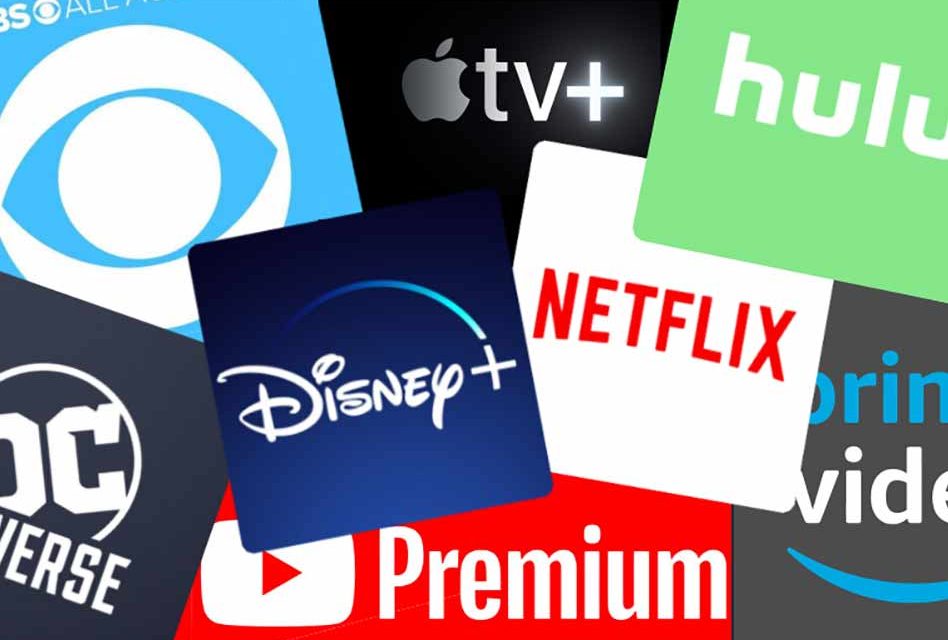
Recognizing the power shift, traditional media conglomerates—Disney, Warner Bros. Discovery, NBCUniversal, and Paramount—eventually pivoted. They began reclaiming their intellectual property from third-party platforms to launch their own direct-to-consumer (DTC) services. This marked the end of the "one-stop-shop" model. Consumers were suddenly forced to manage subscriptions across Disney+, HBO Max, Peacock, and Paramount+, effectively recreating the expensive "cable bundle" they had sought to escape, only now in a disjointed, digital format.
The Profitability Pivot (2023–Present)
The current era is defined by a desperate search for profitability. After years of burning billions on content production to acquire market share, Wall Street stopped rewarding subscriber growth and started demanding bottom-line results. This has led to the introduction of ad-supported tiers, aggressive password-sharing crackdowns, and a massive reduction in content output—a phenomenon often referred to as "Peak TV" hitting a wall.
Supporting Data: The Economics of the Screen
The metrics behind the industry’s panic are stark. According to industry tracking data, traditional pay-TV providers have lost millions of subscribers annually, with the penetration rate of cable households dropping to levels not seen since the 1990s.
However, the cost to the consumer has risen sharply. While a single subscription in 2015 might have cost $8–$10, a household today attempting to replicate a "cable-like" experience across multiple premium platforms (including live sports and ad-free tiers) can easily exceed $150 per month.
Furthermore, data suggests that "churn"—the rate at which users cancel services—is at an all-time high. Consumers have become tactical, subscribing to a platform for one month to binge a specific series and then canceling immediately. This behavior, known as "subscription hopping," has made it nearly impossible for streaming services to forecast revenue, leading to the current push for annual contracts and bundled offerings (like the Disney/Hulu/Max bundle).

Official Responses: The Media Giants’ Dilemma
The executives of traditional media companies are currently walking a tightrope. On one side, they face the erosion of their legacy business—the high-margin affiliate fees paid by cable providers. On the other, they are struggling to achieve profitability in the streaming space.
In recent earnings calls, leadership teams across the industry have pivoted their rhetoric. Where they once spoke of "subscriber growth at all costs," they now emphasize "ARPU" (Average Revenue Per User) and "content discipline."
"We are no longer in the business of just filling a library," a senior media executive recently noted during an industry summit. "We are in the business of maximizing the return on every dollar of production spend."
This corporate shift has had real-world consequences: the cancellation of finished projects for tax write-offs, the removal of catalog content to save on residuals, and a pivot back to licensing content to competitors—essentially returning to a pre-streaming model of syndication, proving that the industry is circling back to traditional methods to stay afloat.

The Third Degree: The Hidden Costs of Modern Media
Beyond the balance sheets, there is the user experience (UX) to consider. The "first impressions" of streaming—the seamless, intuitive UI—have been replaced by cluttered interfaces, auto-playing trailers, and advertisements that are increasingly intrusive.
The Paradox of Choice
Psychologically, the sheer volume of content has led to "decision fatigue." When a user has access to 20,000 titles, they often spend more time scrolling through menus than actually watching content. The curation that cable once provided—curated channels and reliable programming blocks—has been lost.
Technical Debt and Infrastructure
The technical burden of streaming is also immense. Delivering 4K video to millions of concurrent users requires a massive investment in global content delivery networks (CDNs). As services like Request Metrics suggest, the performance of the web and streaming platforms is increasingly tied to user retention. If a platform buffers or takes too long to load, the consumer leaves. The pressure on developers to maintain high-performance, low-latency streaming experiences is higher than ever.
Implications for the Future
As we look toward the next decade of media, several trends appear inevitable:

- The Re-Bundling of Services: We are seeing a return to the "bundle." By packaging disparate services together, companies hope to reduce churn and increase the perceived value for the consumer. This is effectively cable 2.0, wrapped in a digital interface.
- The Rise of FAST Channels: Free Ad-supported Streaming TV (FAST) channels are exploding in popularity. These channels mimic the "linear" experience of cable—where content is programmed for you—proving that many consumers actually crave the simplicity of "background" television.
- Content Consolidation: The sheer number of streaming services is unsustainable. Expect more mergers and acquisitions, where smaller, niche services are absorbed into larger "super-apps."
- The Ad-Supported Reality: The era of "ad-free" streaming as a standard is fading. Advertising is now the primary lever for keeping subscription prices from skyrocketing further.
Conclusion: Reflections on a Decade of Change
Looking back, the "cord-cutting" revolution achieved its primary goal: it broke the monopoly of the local cable provider. However, it also introduced a new, more fragmented set of challenges. We traded a rigid, expensive bundle for a flexible but chaotic ecosystem that requires constant management.
The streaming landscape is not "broken," but it is maturing. It is shedding the reckless, experimental phase of its youth and entering a period of corporate consolidation and fiscal responsibility. For the consumer, this means the honeymoon phase is over. We are now in a period where we must decide what content is worth paying for, how much of our time we are willing to trade for advertisements, and whether the convenience of "on-demand" is worth the rising cost of entry.
As always, the market will eventually settle into a new equilibrium. But for now, the streaming war remains a battle of attrition—one where the consumer’s wallet is the ultimate casualty.
What are your thoughts on the current state of streaming? Have you found yourself returning to "linear" habits, or are you still fully committed to the on-demand lifestyle? Share your experiences in the comments below.



