










The modern digital economy is built on a foundation of glass and silicon, but beneath the sleek veneer of streaming services, instant messaging, and global e-commerce lies a ravenous, energy-intensive reality. As the world experiences an unprecedented data center building boom, the environmental toll is mounting. These massive facilities, housing thousands of power-hungry servers, are placing an unsustainable strain on electrical grids and tethering global technology growth to carbon-heavy fossil fuel reliance.
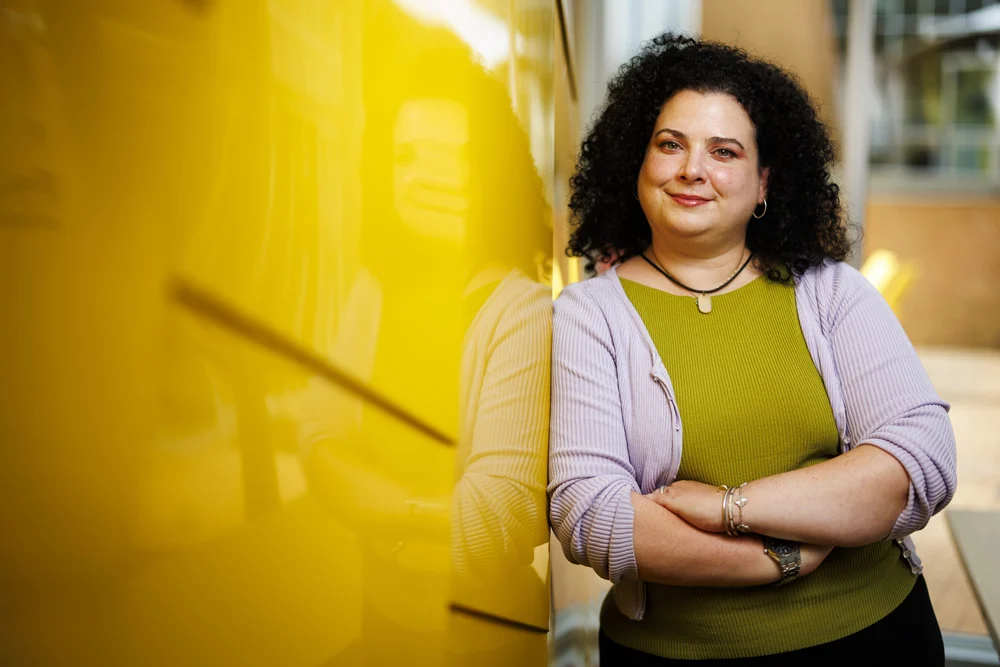
Enter Christina Delimitrou, a newly tenured associate professor at MIT, who is spearheading a quiet revolution in computer architecture. By reimagining how servers and networking equipment operate, Delimitrou is proving that we do not necessarily need more data centers—we simply need smarter ones. Through the application of machine learning (ML), her research group at the Computer Science and Artificial Intelligence Laboratory (CSAIL) is eliminating the "bloat" inherent in cloud infrastructure, paving the way for a more sustainable, performant digital future.
The Crisis of Underutilization
To understand the urgency of Delimitrou’s work, one must look at the math behind the cloud. While the average consumer assumes that massive data centers operate at peak efficiency, the reality is far bleaker. During her doctoral research at Stanford University alongside mentor Christos Kozyrakis, Delimitrou discovered a staggering inefficiency: while global demand for computing power was skyrocketing, most data centers were operating at a mere 15% capacity.
"You would expect, with all the demand for these systems, that they should be running close to 100 percent capacity," Delimitrou notes. "But we found that most were running at only about 15 percent capacity. This is not a resource-efficient or sustainable way of scaling these systems."
This massive gap between power draw and actual computational output is the "bloat" Delimitrou seeks to excise. When hardware is left idling or is poorly managed, it consumes electricity that is essentially wasted. By applying machine learning to automate resource management, her team is identifying paths to efficiency that human developers—overwhelmed by the sheer scale of modern systems—often miss.
A Mathematical Pedigree: From Greece to MIT
Delimitrou’s trajectory toward becoming a leading voice in computer architecture began in the vast, historic plains of northern Greece. Her intellectual curiosity was nurtured in an environment that bridged ancient tradition and modern science. Inspired by the geometric rigor of Euclid and Pythagoras—figures who defined the very language of her field—she developed an early affinity for mathematical problem-solving.
Her parents, a chemical engineer and a pharmacist, fostered an environment where inquiry was encouraged. This led her to the National Technical University of Athens, where she pursued computer engineering. It was during her final-year diploma thesis that she first encountered the "scale problem"—the challenge of managing multiple applications running on a single computer. Even then, she was looking toward the horizon, wondering how these logic puzzles would hold up if, instead of one system, she had to manage 100,000.
After completing her undergraduate studies, she moved to Stanford to pursue a PhD. It was there that she pivoted from traditional systems engineering to the then-nascent intersection of machine learning and cloud infrastructure. Her decision to use AI to manage hardware was considered a risky, "non-traditional" approach at the time. "Applying machine learning to solve a large-scale system problem was a novel approach at the time," she recalls. "It was a bit risky because people had not yet shown that these techniques would work."
Her success in this endeavor led her to Cornell University, where she served as an assistant professor, before joining the faculty at MIT in 2022. Today, as the KDD Career Development Associate Professor in the Department of Electrical Engineering and Computer Science (EECS), she stands at the vanguard of a discipline that is increasingly critical to the climate agenda.
The Science of Streamlined Computing
Delimitrou’s methodology relies on two primary pillars: enhancing the efficiency of existing hardware and proactively managing application performance. Her team has developed sophisticated AI tools, such as "Seer," a deep-learning system that anticipates and prevents bottlenecks in web applications before they manifest as downtime.
By predicting failure states, Seer allows cloud systems to reallocate resources dynamically. This prevents the "cascading failures" that typically require manual intervention, saving both time and, crucially, energy.
Furthermore, as cloud applications have shifted toward a "microservices" architecture—where software is broken into smaller, more modular pieces—the hardware beneath has often struggled to keep pace. Delimitrou’s group has pivoted to build ML-driven systems specifically designed to optimize these modern, fragmented application styles.
Bridging the Gap: The "Ditto" Initiative
One of the greatest challenges for academic researchers in cloud computing is access. Unlike the early days of the industry, today’s tech giants rely on proprietary, opaque hardware that is inaccessible to university labs. This creates a "black box" problem where academic solutions may fail when deployed in the real world.
To circumvent this, Delimitrou and her team developed "Ditto." This tool functions as a high-fidelity clone, mimicking the structure and performance characteristics of proprietary systems. By creating these digital twins, researchers can test and refine their algorithms in environments that accurately represent the complexities of massive, modern data centers. This bridge between academic theory and industry reality is essential for ensuring that her research leads to actual, large-scale implementation.
Implications for the Future of Technology
The implications of Delimitrou’s work extend far beyond laboratory benchmarks. By "removing the bloating" from cloud software, her research offers a direct pathway to reducing the carbon footprint of the digital world. If data centers can be coaxed to operate closer to their true capacity, the need for new construction—and the massive energy draw that accompanies it—diminishes significantly.
However, Delimitrou remains cautious about the role of AI itself. As she integrates more machine learning into her systems, she is prioritizing "explainability."
"One of the challenges when it comes to applying AI to these systems is that the AI is not interpretable," she explains. "A lot of the work we are doing now involves adding explainability into these AI tools so people can get useful feedback from the system."
For Delimitrou, AI must be an audit-able tool, not a black-box oracle. Developers need to understand why a system is making a resource-allocation decision to ensure that performance gains are not achieved at the cost of security or system integrity.
Education and Mentorship: Shaping the Next Generation
Beyond her research, Delimitrou is deeply committed to the pedagogy of engineering. Her role as an instructor for MIT’s 6.191 (Computation Structures) course allows her to shape the minds of hundreds of undergraduates annually. She actively works to dismantle the "formulaic" approach to computer science education, favoring open-ended challenges that force students to think critically about system architecture.
Her goal is to foster a generation of engineers who view software and hardware not as separate silos, but as a unified system—one that must be designed with both performance and environmental sustainability in mind.
A Human Perspective on Technical Complexity
Despite the intensity of her professional life, Delimitrou finds balance in pursuits that reconnect her with the physical world. A classical pianist and painter, she often seeks inspiration in nature, particularly the waterfalls near the Cornell campus she frequented during her time there.
These creative outlets serve as more than just a hobby; they offer a necessary respite from the abstract, high-speed world of cloud computing. "Whether she is working in the garden or painting, Delimitrou says she finds spending time outdoors to be a relaxing escape from the technical nature of her work, but also an important reminder of the role her research plays in sustainability."
As the world continues to demand more digital connectivity, the tension between technological advancement and environmental preservation will only increase. Through her work, Christina Delimitrou is providing the architectural blueprint for a world where we can have the benefits of a robust, high-performance cloud without sacrificing the health of our planet. She is not just optimizing code; she is optimizing our future.



