The digital commerce landscape is undergoing a profound paradigm shift. As consumer expectations shift toward hyper-personalization, instantaneous fulfillment, and frictionless interactions, merchant technology providers are scrambling to adapt. The latest industry developments—featuring breakthrough advancements in agentic checkouts, AI-powered marketing infrastructure, next-generation fulfillment networks, and unified data architecture—demonstrate a definitive move toward automation and intelligence.
This report delivers a deep-dive analysis of the most critical merchant product releases, categorizing their core functionalities, chronological milestones, underlying performance data, strategic responses from industry leaders, and the broader implications for the future of global retail.
1. Main Facts: The New Wave of Merchant Enablement Tools
The current wave of merchant technology solutions focuses heavily on removing friction across three distinct vectors: checkout and payments, logistics and last-mile delivery, and AI-driven discovery and advertising.

Frictionless Checkouts and Agentic Commerce
The boundary between product discovery and financial settlement is rapidly dissolving. Traditional shopping funnels—which forced users to navigate product pages, add items to carts, create accounts, and manually enter shipping and billing data—are being replaced by conversational, agent-driven workflows.
- Constructor’s Agentic Checkout: Powered by Stripe, this new solution enables shoppers—both human users and autonomous AI shopping agents—to seamlessly transition from product discovery to final purchase entirely within a single conversational AI interface. Utilizing Stripe’s Link digital wallet, the tool removes multi-page checkout hurdles.
- Crossmint Agent Commerce Toolkit: Designed specifically for developers, this toolkit allows autonomous AI agents to pay with any credit card and complete purchases across online stores via a single self-serve integration.
- Shopify and Shop App Integration: The Shop app now actively verifies shoppers while they browse independent merchant storefronts. This creates synchronized carts across devices, faster sign-ins, pre-filled "Buy with Shop Pay" buttons, and automated behavioral retargeting for abandoned carts.
Logistics and Cross-Border Optimization
Fulfillment remains the ultimate battleground for customer loyalty. Innovations this week aim to compress delivery timelines and simplify multi-carrier orchestration.
- Ecom Logistics’ "Ecom Now": Bringing same-day delivery directly to Canadian Shopify storefronts, Ecom Now bridges order management and last-mile logistics. Eligible orders placed before noon are delivered by 9:00 p.m. across Toronto, Montreal, Vancouver, and Calgary.
- Zenkraft’s Shipping for Agentic Commerce: Launched for Salesforce B2C Commerce’s Storefront Next, this app provides turnkey multi-carrier shipping, estimated delivery dates, and return capabilities tailored for modern automated storefronts.
- FedEx Dataworks and Stripe Partnership: This global collaboration pairs FedEx’s physical logistics and intelligence network with Stripe’s robust financial infrastructure, expanding financing options for small and medium-sized businesses (SMBs) while embedding over 50 alternative payment methods into FedEx checkouts.
AI-Powered Marketing, Attribution, and Brand Intelligence
Marketers are increasingly reliant on predictive AI, causal measurement, and real-time customer data integration to navigate privacy-first data environments.

- Meta’s Commercial AI Suite: Meta expanded its Ads Creative Studio and Advantage+ suites with advanced generative AI video tools (capable of turning static product images into video), deeper business memory capabilities via the Meta AI assistant, and AI-enabled audience discovery.
- Sellforte Incremental Pixel: Combining customer journey data with causal incrementality experiments and marketing mix modeling, this tool provides ecommerce brands with daily attribution accuracy to optimize paid media investments.
- Razorpay and OpenAI Collaboration: Aimed at the Indian market, this partnership allows brands to seamlessly design, launch, and measure ChatGPT Ads via Razorpay Engage.
2. Chronology of Recent Product Releases
To understand the rapid acceleration of these technologies, it is helpful to examine the timeline of deployments across late 2026:
- Early October 2026:
- FedEx Dataworks and Stripe announce their strategic partnership to streamline global commerce and expand SMB financing options.
- SyncSpider launches B2Bware to replace legacy spreadsheets with a centralized B2B commerce data portal.
- Kantar debuts Experience Impact, integrating brand and operational data through the Qualtrics platform.
- Mid-October 2026:
- Constructor rolls out Agentic Checkout in partnership with Stripe.
- Shopware introduces the Agentic Commerce Maturity Index to evaluate merchant AI readiness.
- Sellforte launches the Incremental Pixel for causal ecommerce attribution.
- Crossmint releases the Agent Commerce Toolkit to enable agentic payment workflows.
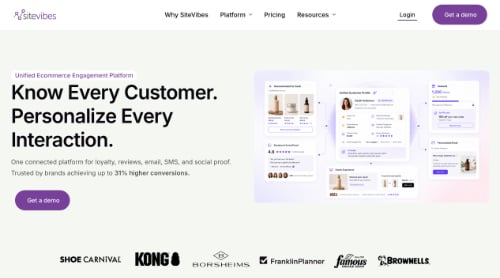
- Listrak expands its real-time integration with SiteVibes to unify loyalty and cross-channel messaging.
- Typeform debuts AI Landing Pages, bringing conversational form-building and payment processing into a single workflow.
- Ecom Logistics launches Ecom Now, bringing same-day fulfillment to Canadian Shopify merchants.
- BigCommerce Payments by PayPal officially expands its embedded checkout solution into the United Kingdom.
- Meta unveils new advertising and commerce AI capabilities at Advertising Week New York.
3. Supporting Data and Technical Specifications
A closer examination of the technical frameworks behind these releases reveals a clear prioritization of API-first architectures, real-time event streaming, and modular infrastructure.
- Typeform AI Landing Pages: Designed for rapid deployment, the platform leverages conversational prompts to construct publish-ready web pages. It integrates native form generation, payment collection, and performance analytics into a singular dashboard, minimizing the need for disparate front-end development tools.
- SyncSpider B2Bware: By integrating directly with enterprise resource planning (ERP) and ecommerce systems like Odoo, Shopware, and Shopify via webhooks and native APIs, B2Bware maintains real-time synchronization of inventory, dynamic B2B pricing, customer directories, and fulfillment documentation.
- Listrak and SiteVibes Integration: The technical architecture relies on low-latency webhooks to pass customer behavior, review activity, and loyalty milestones between platforms instantly. This ensures that triggers for email and SMS marketing campaigns fire concurrently with the user’s on-site actions, maintaining a single, unified customer data profile.
- Shopware Agentic Commerce Maturity Index (ACMI): This self-assessment diagnostic tool runs across a standardized framework of 24 distinct questions. Taking approximately 25 minutes to complete, it grades participants across four functional pillars:
- Discovery (AI search and semantic visibility)
- Transactions (Agentic checkout compatibility)
- Fulfillment (Automated, predictive logistics)
- Operations (Data warehousing and headless readiness)
4. Official Responses and Industry Commentary
Technology providers and platform executives have emphasized that these launches are designed to future-proof merchants against rapid changes in consumer behavior.

"As shopping habits evolve from traditional keyword searches to conversational agent interactions, brands must ensure their digital infrastructure is capable of handling automated transactions securely and efficiently," noted representatives close to the Constructor and Stripe partnership.
Industry analysts tracking the Meta and Razorpay integrations have underscored the growing importance of conversational interfaces. With consumers increasingly completing purchases directly inside chat applications or AI-guided assistants, the traditional web browser is no longer the sole point of conversion.
Furthermore, supply chain innovators like Ecom Logistics and Zenkraft emphasize the operational necessity of localized fulfillment.
"Merchants can no longer afford the friction of multi-day delivery windows when competing against localized giants. Bringing fulfillment networks directly into the merchant’s native storefront dashboard is the only way to retain modern digital consumers," logistics experts noted regarding the rollout of Ecom Now.
5. Strategic Implications for Merchants and Retailers
The convergence of these diverse tools carries profound strategic implications for digital commerce practitioners over the next 3 to 5 years:
The Shift Toward Zero-UI and Agentic Workflows
The emergence of tools like Constructor’s Agentic Checkout and Crossmint’s Agent Commerce Toolkit signals the dawn of "Zero-UI" commerce. Retailers must shift their optimization strategies away from human-centric user experience (UX) design toward machine-readable data structures. If an AI shopping agent cannot accurately parse a product’s schema, interpret contextual SKU benefits, or execute an API-driven payment securely, that brand will effectively cease to exist in autonomous retail environments.

The Death of Data Silos
Solutions such as SyncSpider’s B2Bware and Listrak’s expanded SiteVibes integration highlight an urgent enterprise need: the unification of fragmented data. Merchants operating on disconnected spreadsheets and legacy inventory systems will struggle to compete with automated, real-time operational environments. Unified data streams are no longer a luxury; they are a baseline requirement for omnichannel personalization and predictive merchandising.
Privacy-Compliant Measurement and Attribution
With traditional attribution models buckling under privacy regulations and third-party cookie deprecation, tools like Sellforte’s Incremental Pixel represent the future of marketing spend accountability. By fusing marketing mix modeling with causal incrementality experiments, brands can accurately identify true ROI rather than relying on flawed, platform-reported attribution metrics.
Conclusion
The latest wave of ecommerce product releases proves that the future belongs to the agile, the automated, and the AI-ready. Merchants who successfully integrate these advanced logistics networks, agentic payment systems, and unified data platforms will be uniquely positioned to capture market share in an increasingly automated commercial ecosystem.