MUMBAI — A renewed, high-stakes conversation surrounding Artificial Intelligence (AI) sovereignty is rapidly gaining momentum across global tech capitals. This urgency follows recent, sweeping restrictions on access to some of Anthropic’s most advanced artificial intelligence models. The unexpected curtailment has dramatically reignited long-standing anxieties regarding structural dependence on foreign-controlled technology platforms, data pipelines, and foundational computing infrastructure.
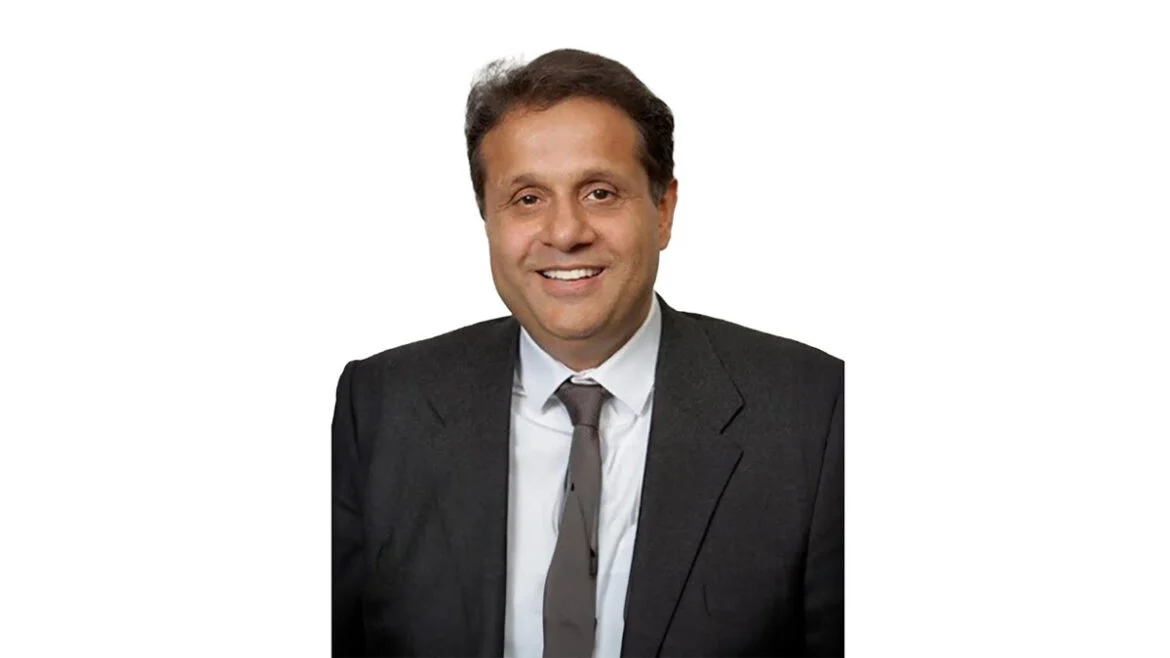
As geopolitical tensions increasingly intersect with the digital economy, industry leaders are warning that relying on overseas ecosystems for critical technological capabilities poses an acute threat to national security and cultural sovereignty. Among the most vocal critics of this dependency is Kishore Lulla, founder and executive chairman of Eros Innovation. Weighing in on the unfolding crisis, Lulla asserted that the limitations placed on international access to Anthropic’s frontier models should serve as a stark, unequivocal warning for nations that fail to cultivate domestic AI infrastructure.
This watershed moment has brought the complex interplay between geopolitics, intellectual property, national security, and technological self-reliance into sharp focus. For emerging tech powerhouses like India, the episode is being viewed not merely as a commercial inconvenience, but as a critical catalyst for accelerating the shift toward indigenous AI development.
1. Main Facts: The Catalyst Behind the Sovereign AI Push
At the heart of the current international discourse is Anthropic’s recent administrative and operational pivot, which abruptly suspended regional access to two of its most advanced frontier AI systems: the Fable 5 and Mythos 5 models.
According to industry insiders, the suspension was triggered by a direct directive from the United States government. The directive subjected these sophisticated artificial intelligence models to significantly tighter export-control requirements, invoking sweeping national security grounds. While Anthropic complied with the regulatory order to maintain legal compliance, the company has publicly distanced itself from the narrative, indicating that it does not necessarily share the government’s underlying assessment of the specific security risks posed by these models.
Nevertheless, the immediate real-world consequence was swift: users, researchers, and developers in several key international markets—including India—found themselves abruptly locked out of tools they had integrated into their workflows.
This development underscores a profound strategic vulnerability. When critical technological capabilities—ranging from advanced natural language processing and automated reasoning to creative content generation—depend entirely on infrastructure, platforms, and models governed outside a country’s borders, local industries remain perpetually vulnerable to foreign regulatory shifts, political realignments, and unilateral corporate decision-making.
For critics like Kishore Lulla, the incident validates warnings that have been sounded for years within technological and policy circles: reliance on foreign tech monopolies strips developing nations of agency over their digital futures.
2. Chronology: How the Crisis Unfolded
To understand the gravity of the current debate, it is essential to trace the sequence of events that transformed a regulatory dispute into a global conversation on technological sovereignty:
- The Rise of Frontier Models: Over the preceding years, American AI labs—including OpenAI, Anthropic, and Google—raced to develop increasingly powerful foundation models, capturing a near-monopoly on global frontier AI capabilities. Platforms like Anthropic’s Claude series became indispensable tools for businesses, educational institutions, and creators worldwide.
- The Regulatory Tightening: As generative AI began to influence critical infrastructure, cybersecurity, and national security, Western governments grew increasingly uneasy about the proliferation of dual-use technologies. Legislative bodies and security agencies initiated reviews into export controls for high-end computing chips and advanced algorithmic weights.
- The U.S. Security Directive: Tensions culminated in a formal U.S. government directive forcing compliance with stringent export controls on specific advanced architectures, specifically targeting models with high-level autonomous reasoning capabilities such as Anthropic’s Fable 5 and Mythos 5.
- The Sudden Blackout: Complying with the mandate, Anthropic implemented geographic and user restrictions, cutting off international access points. The sudden blackout sent shockwaves through international tech ecosystems.
- The Backlash and Call to Action: Prominent technology figures, policy advisors, and institutional leaders immediately seized on the blackout to highlight the dangers of over-reliance on foreign tech platforms. In Mumbai and other global hubs, leaders like Kishore Lulla publicly framed the restriction as an inevitable consequence of systemic technological dependency, pushing sovereign AI initiatives back to the top of the national agenda.
3. Supporting Data & Perspectives: The Vulnerability of Digital Colonialism
The economic and cultural implications of relying on foreign AI models extend far beyond simple service outages. Industry analysts point out that artificial intelligence is no longer just a software tool; it is the fundamental medium through which modern commerce, education, legal systems, and cultural narratives are mediated.
When a nation’s digital infrastructure is built entirely on foreign foundations, several systemic risks emerge:
- Cultural Homogenization and Bias: Foreign AI models are predominantly trained on datasets reflecting Western cultural norms, linguistic nuances, and historical perspectives. Consequently, they often struggle to accurately interpret, respect, or generate content aligned with the rich cultural tapestries of the Global South.
- Economic Extraction: Developing nations risk falling into a perpetual cycle of digital consumerism—importing expensive API access and computing power while exporting raw data and domestic talent, without building enduring local equity or intellectual property.
- Strategic Vulnerability: As demonstrated by the Anthropic episode, access to foundational technology can be revoked overnight due to geopolitical shifts, trade wars, or foreign domestic policy changes over which local governments have zero influence.
Kishore Lulla captured this sentiment starkly in his public statements regarding the incident:
"I have said this before and I will say it again, this was inevitable. When a nation’s cultural expression depends on foreign platforms, foreign models, and foreign infrastructure, those platforms will always make decisions that reflect their own priorities, not ours," Lulla stated.
"Claude restricting access to Indian users is not a surprise. It is a consequence of a structural dependency that India must urgently address."
4. Official Responses & Indigenous Solutions: The Rise of Eros LCM
As the limitations of foreign-controlled models become painfully clear, concerted efforts are underway to build localized alternatives. In India, a multi-pronged approach involving government backing, academic partnerships, and private-sector innovation is taking shape to establish true technological independence.
Highlighting Eros Innovation’s proactive stance, Lulla pointed to the company’s proprietary Eros LCM family of models as a prime example of successful sovereign AI development. Designed from the ground up to reflect regional contexts, the initiative represents a major stride toward self-reliance.
Significantly, the Eros LCM initiative has garnered formal recognition from India’s Ministry of Electronics and Information Technology (MeitY). Anchored at the prestigious Indian Institute of Technology (IIT) Madras, the models are trained extensively on datasets that are owned, curated, and managed strictly within India’s borders. This ensures data privacy, cultural accuracy, and complete immunity from foreign regulatory interference.
"This is precisely why we built the Eros LCM family as a sovereign AI initiative," Lulla emphasized. "India cannot afford to be a consumer of AI built elsewhere. Every time a foreign platform restricts access, changes terms, or simply decides that India is not a priority, we are reminded of what is at stake."
Beyond Eros Innovation, India’s broader AI landscape is witnessing an influx of state-backed compute initiatives, open-source foundational model projects (such as Sarvam AI and various Bhashini-backed linguistic models), and massive public-private partnerships aimed at securing domestic semiconductor supply chains and data center capacities.
5. Strategic Implications: The Future of Global Technological Independence
The fallout from the Anthropic access restrictions is driving a fundamental paradigm shift in how governments and corporations view artificial intelligence. No longer treated purely as an optimization tool for business productivity, frontier AI is now recognized as a core pillar of national sovereignty—on par with energy security, defense, and telecommunications.
Geopolitical Realignment
As advanced AI becomes inextricably linked with national security and economic competitiveness, the global technology landscape is fracturing. Nations are increasingly realizing that unhindered access to cutting-edge AI cannot be taken for granted in a multipolar world characterized by trade protectionism and technological nationalism.
Consequently, countries across the Global South are re-evaluating their tech stacks. Governments are introducing stricter data localization laws, subsidizing domestic silicon and cloud infrastructure, and prioritizing indigenous foundational models that can operate safely within sovereign borders.
The Imperative of Speed and Urgency
For India, a nation boasting a massive developer ecosystem, world-class engineering talent, and a rapidly expanding digital economy, the path forward is clear. However, experts stress that success depends entirely on execution speed.
Concluding his assessment, Lulla issued a rallying cry for accelerated domestic investment:
"Sovereign AI is not a policy ambition. It is a national necessity. India has the data, the talent, the institutions, and the government commitment to build it. The question is urgency. I hope this moment accelerates it."
Conclusion
The restriction of Anthropic’s frontier models to international users serves as a historic inflection point. It strips away the illusion of a borderless, frictionless global digital commons, exposing the fragile dependencies that tie emerging economies to foreign tech giants.
As policymakers, startups, and industrial titans digest the lessons of this disruption, one reality remains indisputable: technological self-reliance is no longer an economic aspiration; it is a fundamental strategic requirement. For India and other forward-looking nations, the mission ahead is to transition swiftly from being passive consumers of foreign innovation to active architects of their own sovereign digital destinies. In the age of artificial intelligence, control over the underlying code, data, and infrastructure will ultimately define who writes the future.