By TechCrunch Staff
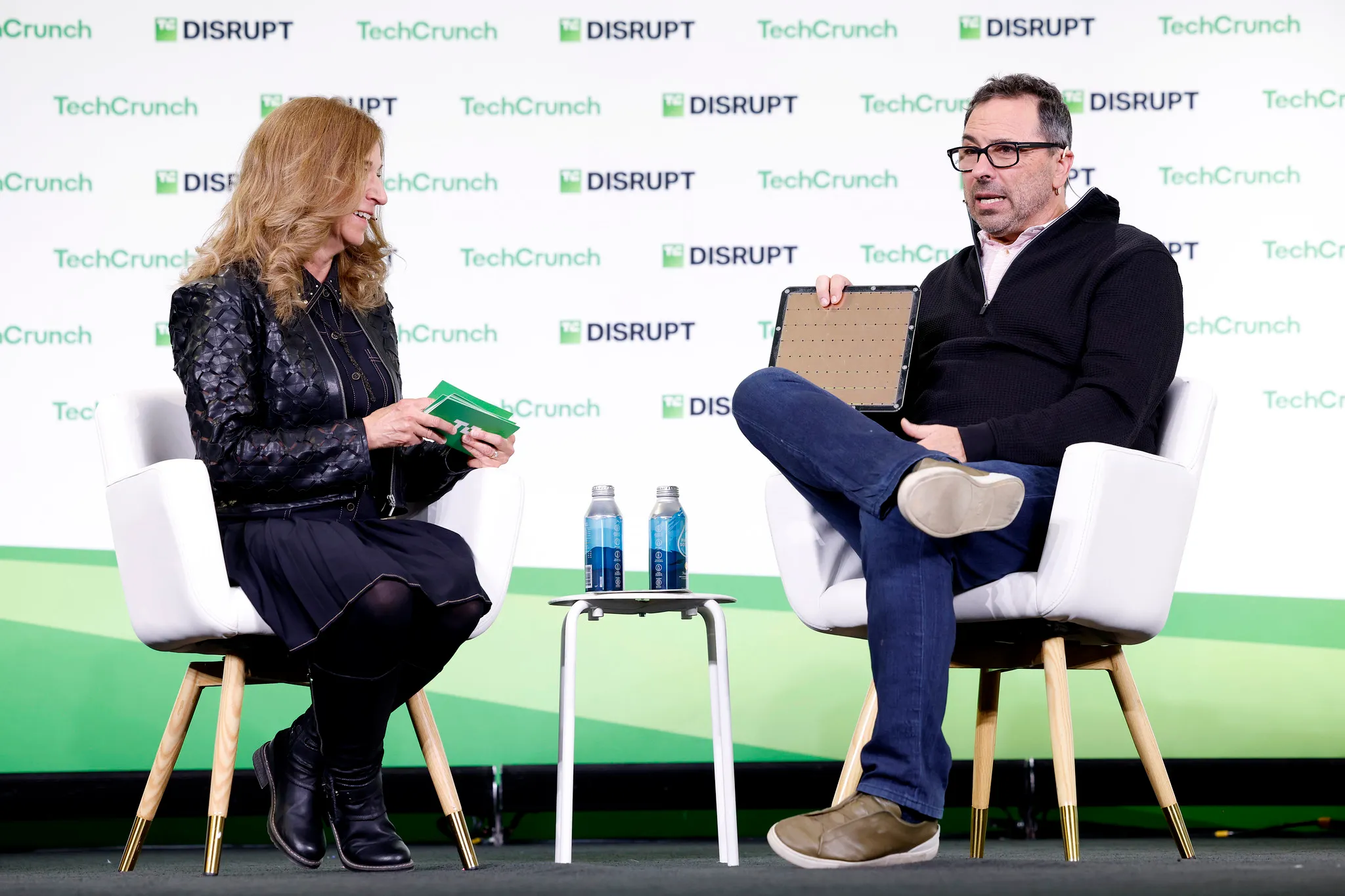
The boundary between human convenience and machine intelligence is rapidly dissolving. At the TechCrunch Disrupt 2026 stage this Tuesday, Andrew Feldman, the CEO and co-founder of AI chip powerhouse Cerebras Systems, delivered a bold prophecy: the era of the "AI home appliance" is not a distant sci-fi dream—it is an imminent reality.
For decades, the concept of a home assistant was limited to basic voice commands or smart thermostats. However, as compute power scales and agentic models become more sophisticated, the industry is shifting toward a model where AI acts not just as a tool, but as a personalized, local executive for the household.
Main Facts: The Vision of Localized Intelligence
The core of Feldman’s argument rests on the evolution of "agentic" technology. Unlike static chatbots that respond to prompts, AI agents are designed to execute tasks, navigate digital environments, and make decisions on behalf of the user. Feldman asserts that these systems will eventually move from massive data centers into our living rooms, functioning as localized appliances.
"I don’t think that’s very far away," Feldman told the audience at Disrupt 2026.
The architecture of this future, according to Feldman, will mirror the hybrid model currently utilized by modern smartphones. These home AI units will perform a significant portion of their processing locally—ensuring privacy and reducing latency—while offloading more complex, compute-heavy tasks to the cloud. This dual-layered approach is essential for the level of intimacy Feldman envisions: an AI that "knows you very well" and operates within a hardened security perimeter.
Chronology: From Experimental Labs to Domestic Integration
To understand how we arrived at this pivotal moment, we must look at the rapid maturation of the AI sector over the last 24 months:
- 2024–2025: The Rise of the Agents. The industry moved beyond Large Language Models (LLMs) toward Large Action Models (LAMs). Startups began experimenting with agents capable of browsing the web, managing software suites, and performing multi-step workflows.
- Early 2026: The Valuation Surge. The market saw a massive influx of capital into agent-first companies. Firms like Instinct reached $10 billion valuations, signaling to investors that the "agentic" era was the next logical step in the AI gold rush.
- Mid-2026: The Infrastructure Pivot. With models becoming more efficient, the focus shifted from "how do we train these models?" to "how do we deploy them everywhere?" Cerebras and other hardware leaders began optimizing chips specifically for inference at the edge, paving the way for the home appliance concept.
- Present Day (Disrupt 2026): The conversation has shifted from "can AI do this?" to "what are the societal and physical implications of an AI living in every home?"
Supporting Data: The Infrastructure Underpinning the Revolution
Feldman’s optimism is not merely anecdotal; it is grounded in the hardware realities that Cerebras Systems helps define. The bottleneck for home-based AI has historically been compute density. To have a "smart" appliance that doesn’t rely solely on the cloud, one needs high-performance silicon capable of processing complex neural networks locally without melting a device or consuming excessive power.
The Role of Edge Computing
The "AI appliance" requires a shift in how we perceive edge computing. Currently, edge devices are often limited to basic sensor data. However, the next generation of AI chips—the ones Feldman and his peers are designing—are capable of handling the "context window" of a user’s entire life.
- Security and Privacy: By keeping personal data (schedules, health records, financial transactions) on a physical device within the home, the "security perimeter" Feldman mentions becomes a tangible reality.
- Latency: For an AI to feel like a true assistant, it must react at the speed of human thought. Relying on remote servers creates lag; local inference eliminates it.
The economic data supports this transition as well. As the cost of inference drops, the barrier to entry for embedding AI in everyday consumer electronics—refrigerators, dedicated hubs, or home servers—is plummeting.
Official Responses: Navigating the Ethical Frontier
Feldman’s vision is not without its skeptics. When an AI is given the authority to manage credit cards and "buy things for you," the conversation immediately shifts to security and liability.
Feldman acknowledged these concerns, framing the "security perimeter" as a fundamental requirement rather than an optional add-on. "They will certainly have access to credit cards and be able to buy things for you," he noted. The implication here is that the appliance will act as a fiduciary agent, a digital proxy with strict parameters set by the owner.
Industry analysts at the event noted that the success of these home appliances will depend entirely on consumer trust. If an appliance makes a fraudulent purchase or leaks private data, the entire market for "Home AI" could be set back by years. Consequently, hardware manufacturers are expected to prioritize "Privacy-by-Design" frameworks as they prepare for the first wave of commercial AI hardware.
Implications: A New Way of Living
The implications of widespread AI home appliances extend far beyond simple convenience. Feldman himself utilizes a "collection of agents" to manage his professional life—sweeping his calendar, researching participants for meetings, and handling administrative burdens.
1. The Death of the Admin Task
Feldman envisions a world where humans are liberated from the "manual" nature of modern existence. If an AI can coordinate your schedule, order groceries based on your inventory, and handle routine correspondence, the nature of work and home life will fundamentally change. We are moving toward a paradigm of "Management by Exception," where the human only intervenes when the AI flags a high-level decision.
2. The Infrastructure Economy
Feldman’s preference for the "infrastructure" side of the business highlights a critical shift in the tech industry. He explicitly stated, "I don’t need the consumer-facing idea… I like building the platforms that other people’s ideas take flight on." This reveals a clear hierarchy in the new economy:
- The Hardware Tier: Companies like Cerebras building the "engines."
- The Model Tier: Developers creating the cognitive agents.
- The Application Tier: The consumer-facing products that will arrive in our homes.
3. The "Unknown" Potential
Perhaps the most exciting, yet nebulous, aspect of Feldman’s vision is the "things that weren’t possible before." We are currently in the phase of using AI to do what we already do, but faster. The next phase—which Feldman is leaving to the next generation of founders—will involve entirely new behaviors. Will we have AI that proactively optimizes our home’s energy consumption in real-time? Will we have AI that serves as a personal concierge for our social lives?
Conclusion: The Path Forward
As the dust settles on TechCrunch Disrupt 2026, the message is clear: the AI revolution is leaving the screen and entering the room. Andrew Feldman’s vision of a home AI appliance is a testament to the rapid pace of hardware innovation.
We are not merely looking at a smarter speaker or a faster tablet. We are looking at a fundamental change in the relationship between man and machine. As these appliances become standard, the question will no longer be "what can AI do?" but "what should we allow it to do for us?"
For now, the infrastructure is being built. The platforms are being laid. And as Feldman suggests, the founders who will define the next decade of domestic life are likely already hard at work in garages and labs, preparing to turn the home into a hub of autonomous, personalized intelligence. The future is coming home, and it’s going to be far more integrated than we ever imagined.