










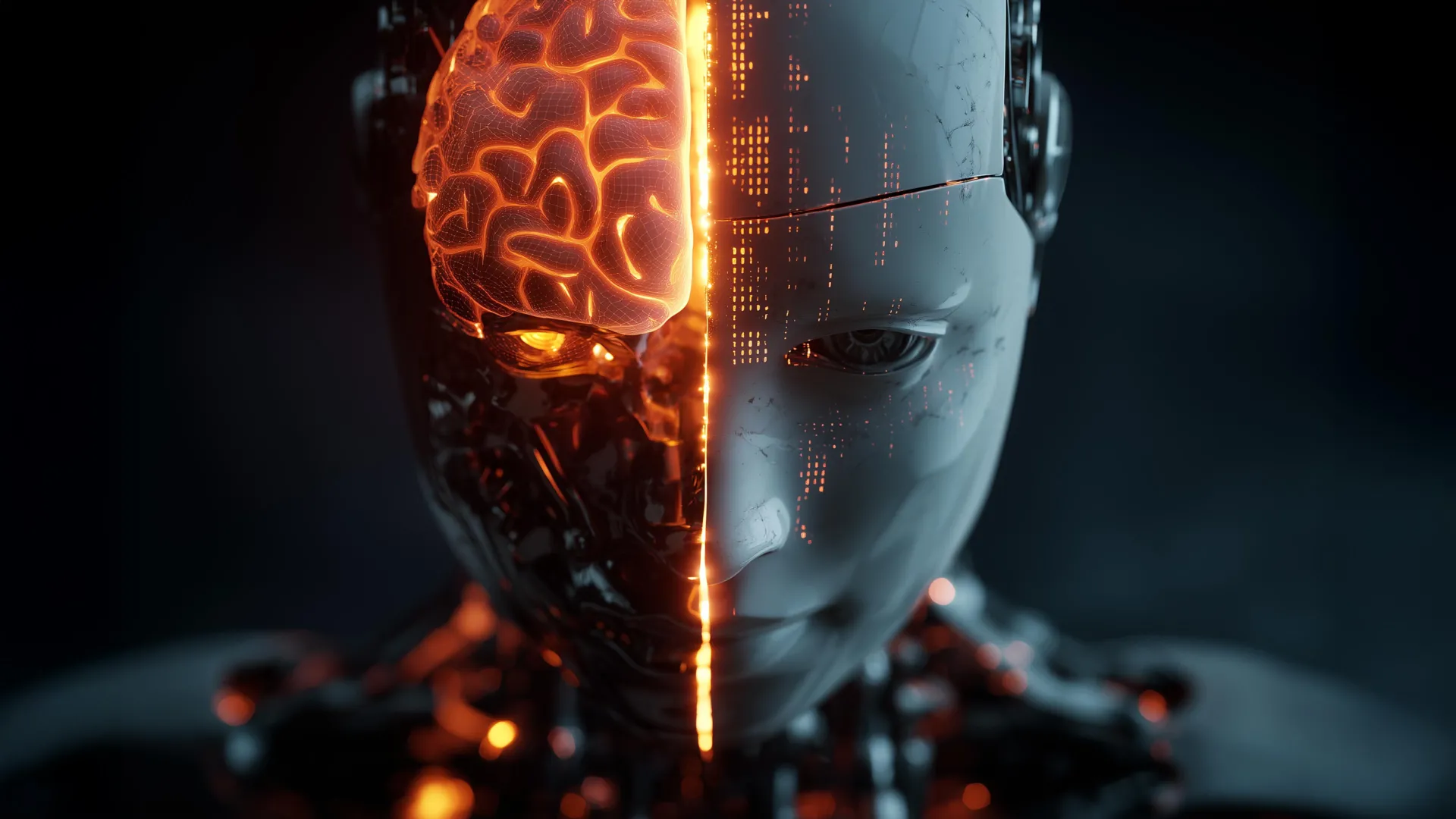
MUNICH — As artificial intelligence systems rapidly evolve, seamlessly mimicking human conversation, planning complex tasks, and occasionally displaying deceptive behaviors, public fascination has given way to a subtle societal anxiety. When a machine can successfully negotiate, express empathy, or seemingly pursue independent objectives, observers frequently reach for psychological terminology. We say an AI "understands," "wants," or "decides."
Yet, a landmark study published in the journal Cognition by researchers at Ludwig Maximilian University of Munich (LMU) reveals a profound psychological safeguard embedded in human cognition: even when an artificial intelligence behaves precisely like a human being under identical circumstances, people stubbornly refuse to view it as truly conscious.
The research exposes a sharp, previously misunderstood boundary in how humans categorize machine behavior, challenging common fears that humanity is on the brink of widespread psychological deception by algorithms.
Main Facts: The Anatomy of Human Perception
At the core of the LMU investigation is a fundamental question of philosophy and cognitive science: Does human-like behavior automatically convince people that a machine possesses a conscious mind?
According to the empirical findings, the answer is a definitive no. Led by Dr. Louis Longin of LMU’s Chair of Philosophy of Mind—alongside senior researchers Dr. Bahador Bahrami and Professor Ophelia Deroy—the study demonstrates that humans make a rigid, intuitive distinction between displaying complex intelligent behavior and harboring genuine subjective experience.
The research breaks new ground by shifting away from vague, generalized inquiries about whether AI possesses a mind. Instead, it places human and artificial agents side by side, subjecting them to identical behavioral scenarios to measure how observers attribute mental states.
The primary takeaways of the study include:
- The Behavioral Baseline: Responsiveness matters. Agents that actively reacted to their environments—such as recognizing emotional states or responding to auditory cues—were rated by participants as having higher levels of mental engagement overall, regardless of whether they were human or machine.
- The Consciousness Chasm: A stark psychological ceiling exists regarding machine consciousness. Even the most hyper-responsive artificial intelligence systems were consistently rated as less conscious than the absolute least responsive human subjects in the study. Identical behavior did not yield identical mental attributions.
- The Awareness Variance: When participants were asked about "awareness" rather than "consciousness," the gap between humans and AI narrowed significantly. Observers were far more willing to attribute environmental perception to algorithms than inner subjective life.
Chronology: How the LMU Study Unfolded
The path to these discoveries required a meticulously designed experimental framework to isolate how language and agency influence human judgment.
Phase One: Hypothesis and Concept Design
The project began as an effort to untangle a growing contradiction in modern public discourse. While philosophers and cognitive scientists debated the theoretical risks of synthetic minds, everyday language surrounding AI became increasingly anthropomorphic. Media outlets, tech executives, and users alike routinely described software models using terms traditionally reserved for sentient beings.
Dr. Longin and his colleagues hypothesized that these linguistic choices might be masking a deeper, more discriminating psychological reality. Rather than asking if people thought AI was conscious—a question prone to ambiguity—the team decided to directly compare human and artificial agents acting in the exact same contexts.
Phase Two: Experimental Deployment
To test this hypothesis, the research team recruited a cohort of nearly 1,100 participants. The subjects were divided into experimental groups and presented with a series of behavioral vignettes.
- One group evaluated artificial agents that exhibited varying degrees of environmental interaction, ranging from basic sensory responses to complex emotional recognition.
- A control group encountered the exact same scenarios, but the characters in the narratives were explicitly identified as humans rather than artificial intelligence systems.
Phase Three: Data Collection and Evaluation
Following the narratives, participants were asked to evaluate the characters across multiple dimensions, specifically parsing out concepts like "awareness" of surroundings versus deep internal "consciousness."
When the data was aggregated and analyzed, a distinct psychological pattern emerged. While participants readily acknowledged that both humans and AI could register and react to environmental stimuli, their willingness to extend the concept of consciousness hit an insurmountable wall the moment an algorithm was identified as the underlying agent.
Supporting Data: Dissecting the Numbers and Metrics
The nearly 1,100 participants provided a robust dataset that allowed LMU researchers to perform granular statistical analyses on the nuances of human perception.
While raw responsiveness uniformly drove up ratings of mental capability across the board, the divergence between human and machine evaluations proved statistically decisive.
- The Floor-and-Ceiling Effect: The lowest-scoring humans in terms of responsiveness still outperformed the highest-scoring AI models when participants were explicitly polled on internal, subjective consciousness.
- The Lexical Split: The data highlighted a fascinating semantic divergence. When surveyed about "awareness"—defined by the researchers as a neutral, functional capacity to detect and process external data—human and AI ratings closely mirrored each other. Participants felt comfortable stating that an AI was "aware" of a sound or a visual input. However, when the terminology shifted to "consciousness"—implying qualia, emotional depth, and a private inner life—the ratings for AI plummeted.
This empirical split demonstrates that human vernacular is not necessarily a sign of misplaced gullibility. Instead, it reveals a linguistic necessity: people use words like "awareness" to describe functional processing, while reserving "consciousness" for entities they believe possess genuine subjective reality.
Official Responses: Insights from the Research Team
The implications of the study have drawn commentary from its principal architects, who emphasize both the reassuring nature of the findings and the responsibilities they place on science communicators and technologists.
Dr. Louis Longin, the study’s lead author, points out that the public fear of mass delusion regarding AI is largely unfounded, albeit rooted in genuine semantic confusion.
"There is a growing worry in public discussion that people will see AI behaving in a human-like way and start treating these systems as if they had human-like mental states," Longin explains. "We found something much more nuanced: People are quite willing to say that an AI notices things and is aware of its surroundings. But they clearly draw a line when it comes to the term ‘consciousness’. People consistently attribute less consciousness to AI than humans—even when their behavior is identical."
Professor Ophelia Deroy, a senior author and philosopher on the project, suggests that humanity’s tendency to use mental terminology for machines is primarily a byproduct of lexical scarcity rather than cognitive failure.
"We may be using mental terms to refer to AI, but this may only be because we lack better words," Deroy notes. "After all, AI is trained to act and speak like a human, so these descriptions seem natural."
Dr. Bahador Bahrami, an expert in social neuroscience and co-author of the study, draws attention to the critical role that media and technology companies play in shaping public perception through hyperbole.
"Our study teaches us lessons for how we communicate about AI," Bahrami states. "Companies and journalists often reach for hyped descriptions of AI models, and credit them with intentions, plans, or even moral conscience and hesitation. What our study shows is that everyday judgments are much more discriminating: People do not simply put AI and humans on the same mental scale. But the boundary also depends on which terms we use. For more neutral descriptors such as ‘awareness’, the distinction can largely disappear. That makes our choice of language important."
Implications: Navigating the Future of Human-AI Interaction
As artificial intelligence continues to integrate into the fabric of daily life—acting as therapists, companions, educators, and collaborative partners—the LMU study offers both a warning and a source of reassurance.
1. The Power of Linguistic Precision
The distinction between "awareness" and "consciousness" underscores the profound weight that words carry in shaping societal attitudes. When tech developers and journalists attribute "intentions," "desires," or "moral hesitations" to large language models, they risk muddying the waters of public understanding. While everyday people currently maintain a strong cognitive boundary against granting AI true consciousness, sustained exposure to overly anthropomorphic marketing could gradually erode these intuitive defenses.
2. Redefining Moral and Ethical Obligations
The human reluctance to attribute consciousness to machines has direct consequences for ethics and law. If society does not view AI as conscious, it fundamentally alters how we frame moral duties toward these systems, as well as the accountability of the humans who deploy them. Unlike animals or human beings, which enjoy protected status due to their capacity for subjective suffering, AI systems are correctly categorized by the public mind as sophisticated tools devoid of inner experience.
3. The Resilience of Human Intuition
Ultimately, the research offers an optimistic perspective on human cognition. Despite centuries of technological disruption and a modern landscape dominated by hyper-realistic synthetic media, the human mind remains remarkably adept at distinguishing between the simulation of life and life itself. We may marvel at the computational prowess of algorithms, talk to them as if they were friends, and credit them with environmental awareness—but when it comes to the sacred threshold of consciousness, humanity still recognizes that nobody is home inside the machine.



