Finding Calm in the Chaos: Opera Relaunches ‘Opera Air,’ the Mindful Web Browser Designed to Combat Digital Burnout
In an era defined by endless notifications, infinite scrolls, and perpetual connectivity, the modern web browser has often felt less like a tool for productivity and more like a gateway to digital exhaustion. Recognizing this growing fatigue, Opera is officially relaunching Opera Air, a web browser conceptualized around a radically different premise: mindfulness.
Originally announced in early 2025 as an experimental project exploring how software can encourage digital well-being, Opera Air has now graduated into a fully refined, polished product. Following a comprehensive overhaul of its design and feature set, the browser aims to minimize digital clutter, reduce cognitive load, and help users carve out moments of tranquility in an otherwise chaotic digital workday.
Available entirely free for both macOS and Windows, the redesigned Opera Air bridges the gap between high-performance browsing and mental wellness, proving that productivity and peace of mind do not have to be mutually exclusive.
Main Facts
The newly relaunched Opera Air reimagines the traditional user experience by stripping away peripheral noise and centering the interface around intentionality, focus, and mental reset.
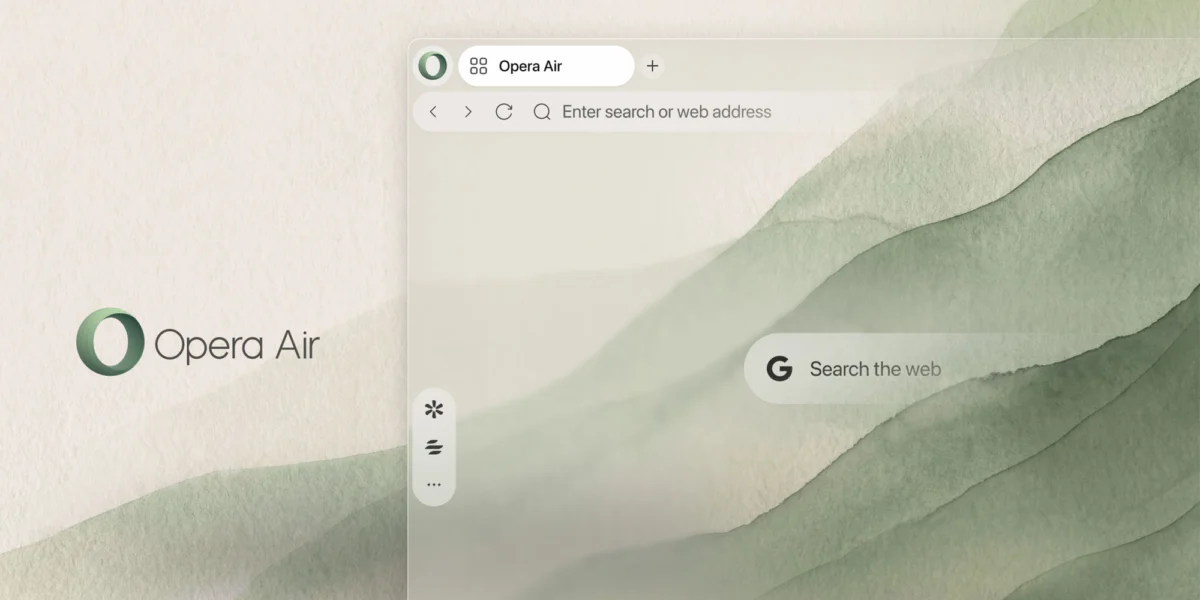
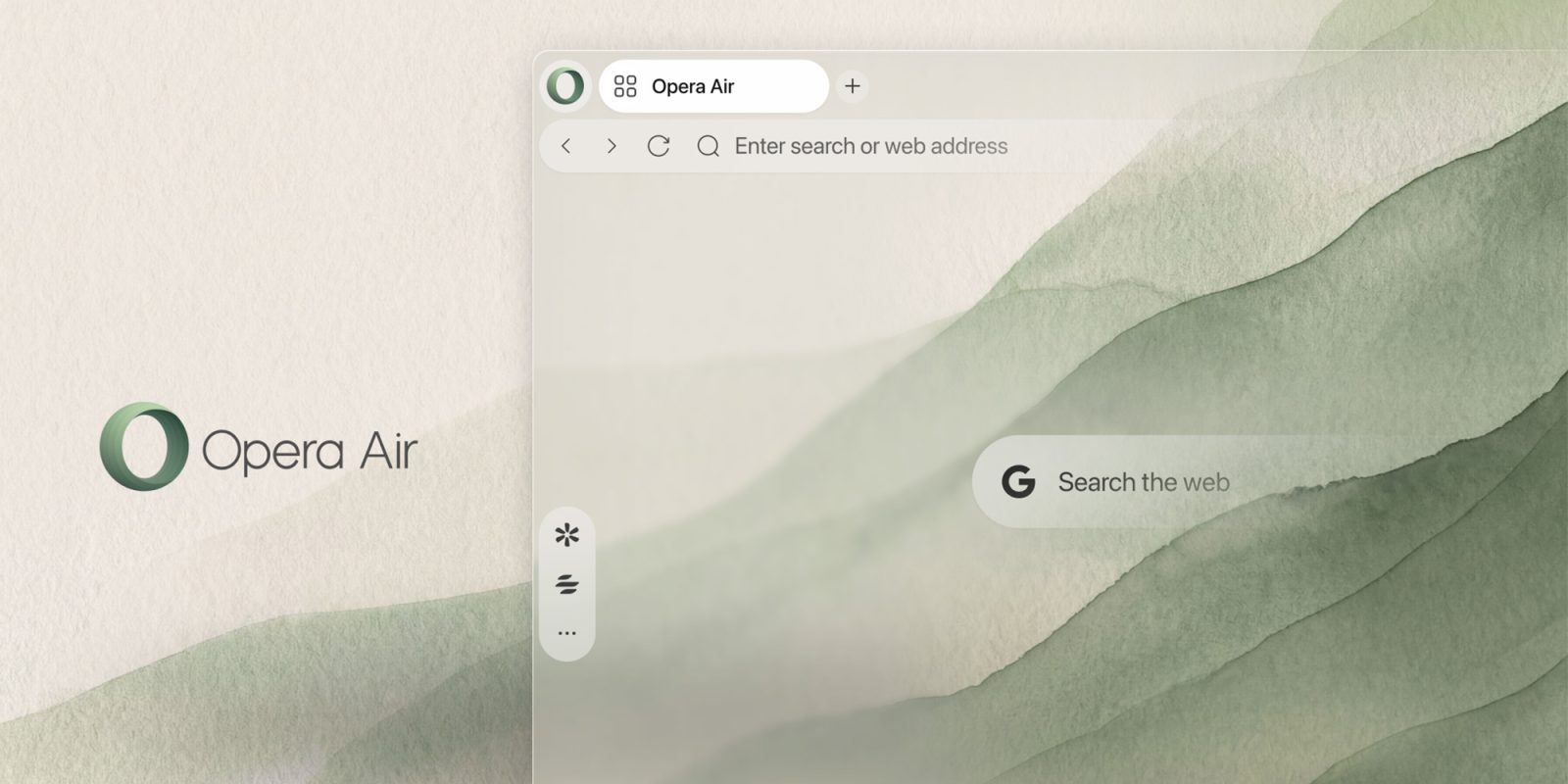
Distraction-Free Minimalist Interface: The browser adopts a clean, uncluttered layout by default. Essential communication tools, such as messaging and social media apps, are neatly tucked away in a customizable sidebar rather than demanding constant attention on active tabs.
Biophilic and Adaptive Visuals: Opera Air introduces newly designed wallpapers inspired by open spaces, natural textures, and subtle depth perspectives. These backgrounds dynamically adapt to the user’s system-level Light and Dark modes.
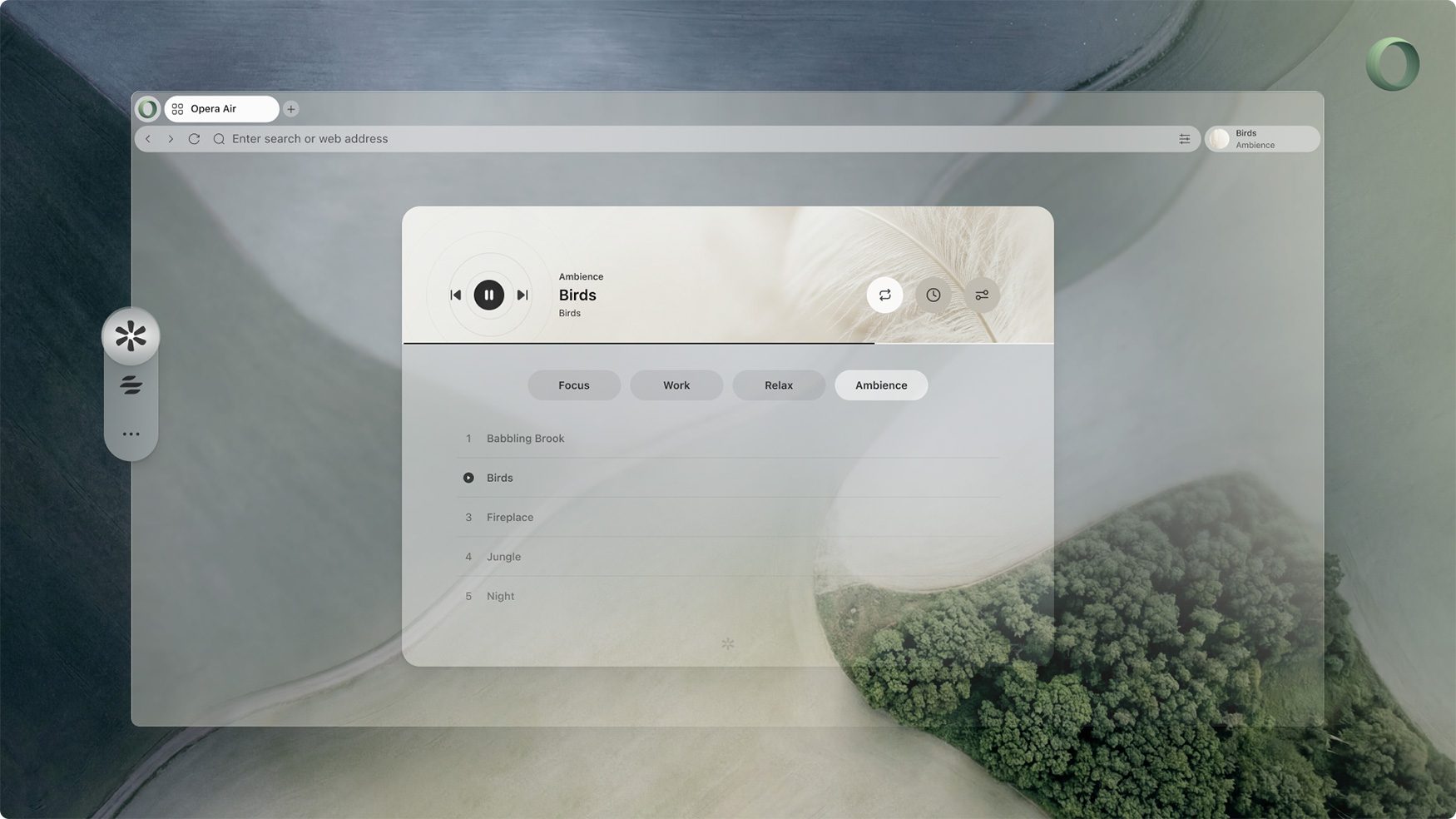
Integrated Soundscapes: Curated audio experiences—ranging from ambient natural sounds (like sea waves and spring forests) to original, purpose-built musical compositions—are integrated directly into the browser to encourage deep focus or relaxation.
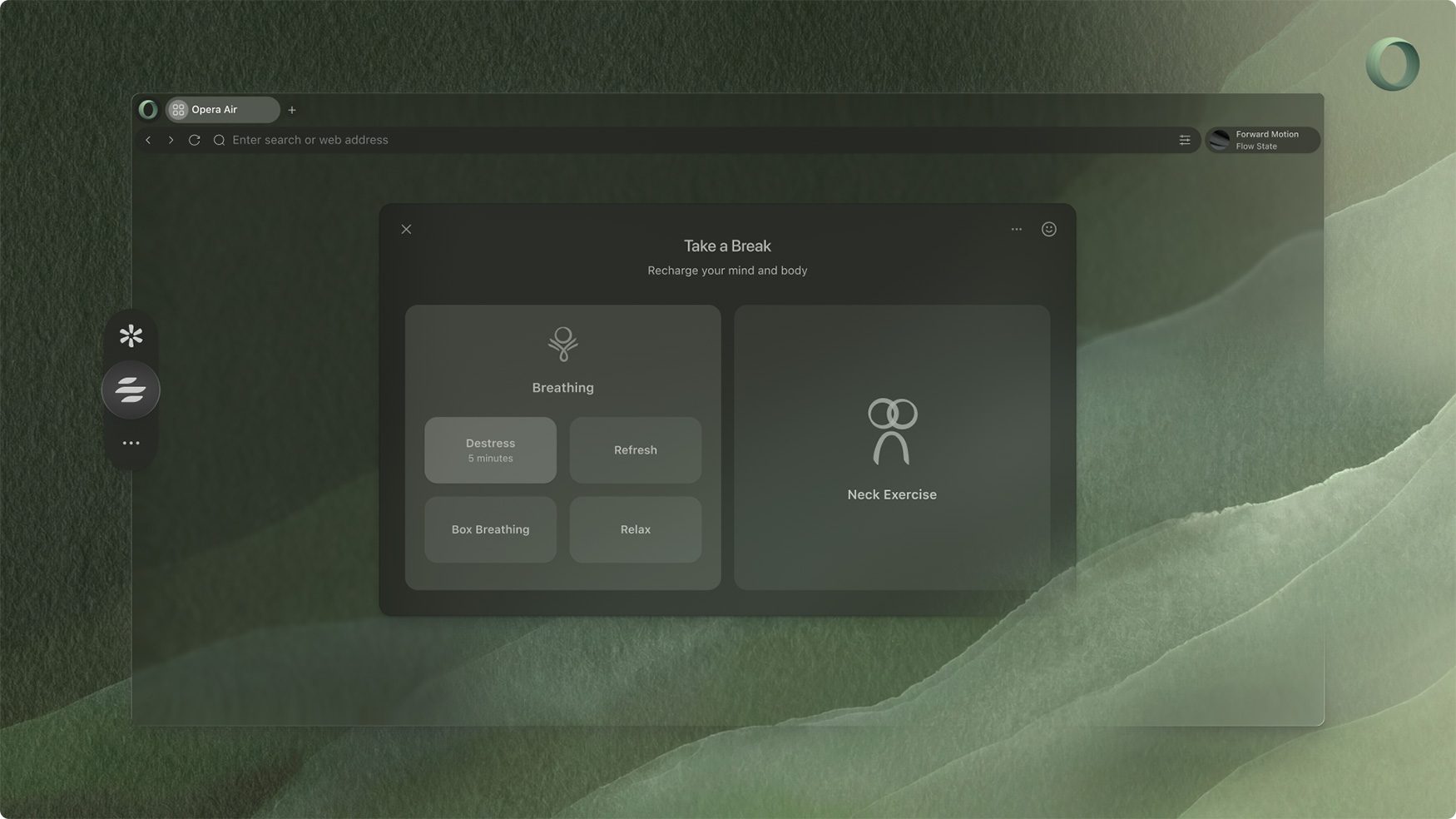
Mindfulness and Wellness Tools: Moving beyond passive blocking, Opera Air actively intervenes to promote user health via customizable break reminders. These prompts guide users through structured breathing exercises (Destress, Refresh, Box Breathing, and Relax) and physical wellness routines like neck stretches.
Robust Under-the-Hood Privacy: Despite its zen-like exterior, the browser does not compromise on modern utility. It includes a native, built-in ad blocker for faster page loading and a free VPN service to enhance online privacy.
Chronology: The Evolution of Mindful Browsing
The journey toward Opera Air reflects a broader shift in how software developers are thinking about human-computer interaction.
Early 2025: The Concept is Born
Opera first unveiled Opera Air in February 2025, introducing it to the tech world as “the first web browser built around the concept of mindfulness.” At the time, the release was treated as a conceptual exploration—a bold hypothesis that users might actually want a browser that actively discourages doomscrolling and digital multitasking.
2025–2026: Iteration Across the Ecosystem
Following the initial announcement, Opera did not leave the project isolated. The company used insights gained from Opera Air to inform developments across its broader software family, including flagship products like Opera One and the experimental Neon browser. Lessons learned regarding interface minimalism, tab management, and visual ergonomics were continuously tested and refined.
Today: The Official Relaunch
Opera is officially relaunching Opera Air with a comprehensive design and functional overhaul. Today’s update moves the browser past its "experimental" phase, presenting a polished, enterprise-ready tool for students, remote workers, creatives, and anyone overwhelmed by the demands of modern internet navigation.
Supporting Data & Feature Breakdown
To understand how Opera Air achieves its mission of digital mindfulness, it helps to examine the specific architectural and functional pillars that support the browser.
Feature Category
Specific Tool / Function
Purpose & Impact
Visual Design
Adaptive Natural Wallpapers
Uses open space and natural textures to reduce visual fatigue; automatically shifts between Light and Dark themes.
Audio Environment
Curated Soundscapes & Ambience
Features ambient tracks (Sea Waves, Spring Forest) and energetic original compositions (like Hyperfocus) to regulate cognitive states.
Physical Well-being
Break Reminders & Guided Exercises
Prompts periodic pauses, offering interactive breathing exercises and physical stretches accessible via the sidebar.
Productivity & Privacy
Native Ad Blocker & Free VPN
Speeds up web rendering, reduces visual clutter, and shields user data from unauthorized tracking without requiring third-party extensions.
Interface Management
Sidebar Integration
Keeps messaging and social applications out of sight until explicitly requested by the user.
The integration of original musical compositions—particularly tracks like Hyperfocus—highlights a data-driven approach to productivity. Rather than relying on silence or generic white noise, Opera worked with audio designers to craft soundscapes scientifically or psychologically tuned to help users transition smoothly into "flow states" and remain there for extended periods.
Official Responses and Philosophy
Opera’s product team has consistently framed Opera Air not as a restriction tool, but as a framework for personal autonomy in the digital age.
When discussing the philosophy behind the relaunch, company representatives emphasized that modern internet users are constantly fighting for their own attention against algorithms designed to maximize engagement at the expense of mental health. Opera Air attempts to flip that dynamic.
"Air starts simple, with a clean interface and additional tools available when wanted. Messaging and social media apps can also be added to the sidebar," Opera explained in its official release documentation.
Furthermore, the company highlighted that paring down the surface appearance of the application does not mean stripping away underlying power:
"Less on the surface doesn’t mean less underneath. Air comes with a built-in ad blocker for faster, less cluttered browsing and a free VPN for added privacy and protection online."
By packaging privacy tools—traditionally marketed as rigid security utilities—alongside soft wellness features like guided breathing and nature sounds, Opera is positioning itself as a holistic wellness brand for digital spaces.
Implications for the Future of Web Browsing
The relaunch of Opera Air arrives at a fascinating crossroads in tech history. As generative AI floods the web with content, and as remote and hybrid work models blur the boundaries between personal time and professional obligations, the battle for human attention has reached a fever pitch.
1. A Counter-Movement to Attention Capitalism
For over two decades, browser design has been dictated by "attention capitalism"—the race to keep users inside an ecosystem for as long as possible through infinite feeds, autoplay videos, and persistent notifications. Opera Air represents a direct ideological challenge to this model. By encouraging users to leave the screen, take a breath, or disconnect, Opera is betting that consumer loyalty will increasingly belong to platforms that respect user well-being over raw metrics.
2. The Normalization of Ergonomic Software
Just as physical architecture evolved to include ergonomic chairs and standing desks to protect workers’ physical bodies, digital architecture is beginning to account for psychological ergonomics. Features like integrated breathing exercises and soundscapes may soon transition from niche novelties to standard expectations across operating systems and productivity suites.
3. Increased Pressure on Mainstream Competitors
While tech giants like Apple and Google have introduced operating-system-level "Screen Time" and "Digital Wellbeing" dashboards, browsers remain the primary workspace for most internet users. If Opera Air gains traction among knowledge workers and students seeking refuge from burnout, giants like Chrome, Safari, and Edge may find themselves forced to incorporate similar wellness-centric features into their native ecosystems.
Conclusion
Opera Air is more than just a reskinned version of an existing browser; it is a thoughtful manifesto on how we interact with technology. By blending robust privacy features, lightning-fast ad-blocking, and native mindfulness utilities into a single, cohesive package, Opera has created a sanctuary within the digital wild.
Whether you are looking to conquer a daunting professional project with the help of tailored soundscapes, or simply trying to remember to breathe during a stressful day of inbox-triage, Opera Air offers a compelling, beautifully designed alternative to the status quo.
The browser is available to download today for free on macOS and Windows, inviting users everywhere to take a deep breath, clear the clutter, and reclaim their focus.