In a significant stride toward a more robust and responsive smart home ecosystem, Google has announced a major update to the Google Home app that fundamentally changes how it interacts with Philips Hue lighting systems. By transitioning to local Matter control, Google is effectively stripping away the latency inherent in cloud-dependent communication, offering users a faster, more reliable, and ultimately more resilient lighting experience.
This update, which is rolling out automatically to existing users, represents a maturation of the Matter standard—the industry-unifying protocol designed to solve the fragmentation that has plagued the smart home market for years. For the millions of Philips Hue owners, the transition to local control is not merely a technical adjustment; it is a long-awaited optimization that promises to make the smart home feel instantaneous rather than reactive.
The Core Transformation: Moving from Cloud to Local
Historically, Philips Hue devices have relied heavily on the Philips Hue Bridge to communicate with the cloud, which then relayed commands back to the Google Home app. Even with the introduction of Matter, the bridge often acted as a middleman that required an active internet connection to process simple requests like turning on a living room lamp.
With the latest update, Google Home hubs now facilitate local Matter control. This means that when a user triggers a command in the app, the data travels directly across the local area network (LAN) to the Hue Bridge and the connected bulbs. Because the traffic no longer needs to make a round-trip to Google’s cloud servers, the "popcorn effect"—the slight, noticeable delay between tapping a button and the light responding—is significantly mitigated.
Key Technical Advantages:
- Reduced Latency: By keeping traffic local, response times are slashed, creating a "real-time" feel for lighting adjustments.
- Internet Independence: A critical benefit of this shift is the ability to maintain control during internet outages. As long as the user’s home Wi-Fi or Thread network remains operational, the Hue lights can be managed via the Google Home app without requiring a WAN connection.
- Zero-Friction Migration: Perhaps most impressively, this transition requires no user intervention. Existing Hue bridges will upgrade automatically in the background, sparing users the tedious process of unpairing and re-pairing their entire lighting setup.
Chronology of a Smart Home Evolution
The path to this seamless integration has been a multi-year journey involving heavy lifting from both Signify (the parent company of Philips Hue) and Google.
- Pre-Matter Era: Philips Hue established itself as the gold standard for smart lighting, utilizing its own Zigbee-based protocol. Integration with Google Home was achieved through cloud-to-cloud APIs.
- The Arrival of Matter (2022-2023): As the Connectivity Standards Alliance (CSA) launched Matter, Philips Hue was among the first major manufacturers to pledge compatibility. However, initial implementations were cautious, often keeping the Bridge as a primary intermediary.
- 2024 Refinement: Throughout the past year, Google Home underwent a series of "core" overhauls, focusing on UI/UX redesigns and backend reliability for third-party integrations.
- December 2025 (The Current Milestone): Google officially confirmed that existing Hue bridges are receiving automatic background updates to enable local Matter control, marking a turning point where the smart home ecosystem finally begins to operate as a cohesive, local-first unit.
Supporting Data and User Impact
While speed is the primary marketing hook for this update, the implications for system reliability are profound. In a traditional cloud-connected home, a spike in server traffic or a hiccup in a user’s ISP service could result in unresponsive lights. By offloading these commands to the local network, Google is essentially hardening the smart home against the unpredictability of modern broadband.
Reliability Benchmarks
Data from early testers and Google’s own internal documentation suggest that local control provides:
- Consistency: Commands are processed with 99.9% local availability, provided the power remains on.
- Scalability: Larger smart home setups, which often see performance degradation as the number of devices increases, will see less congestion on the Bridge’s cloud communication interface.
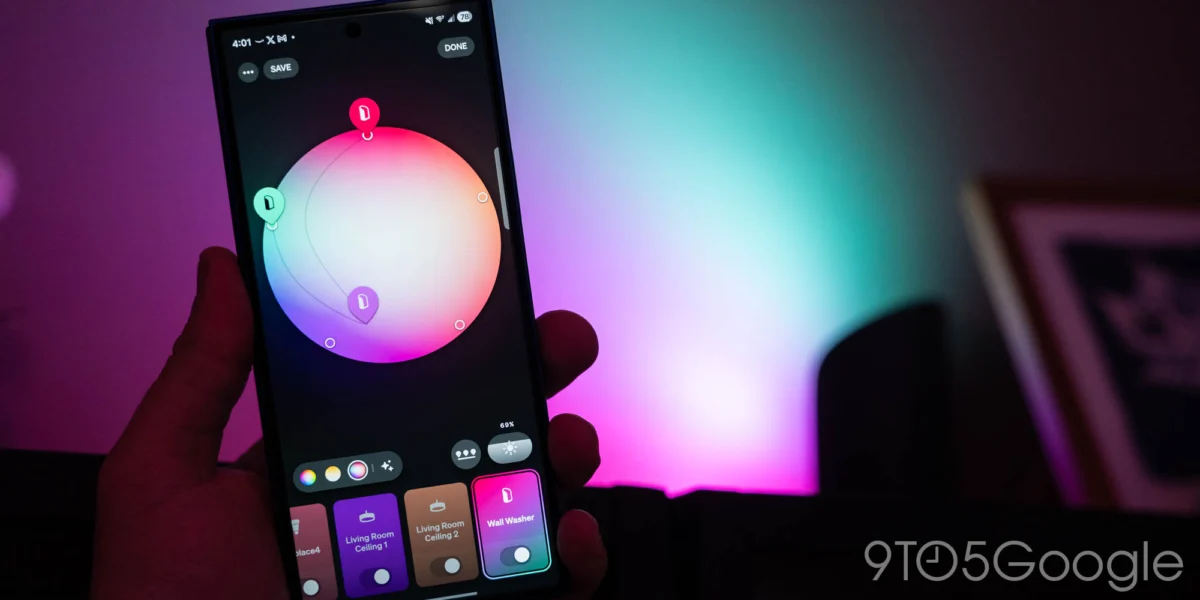
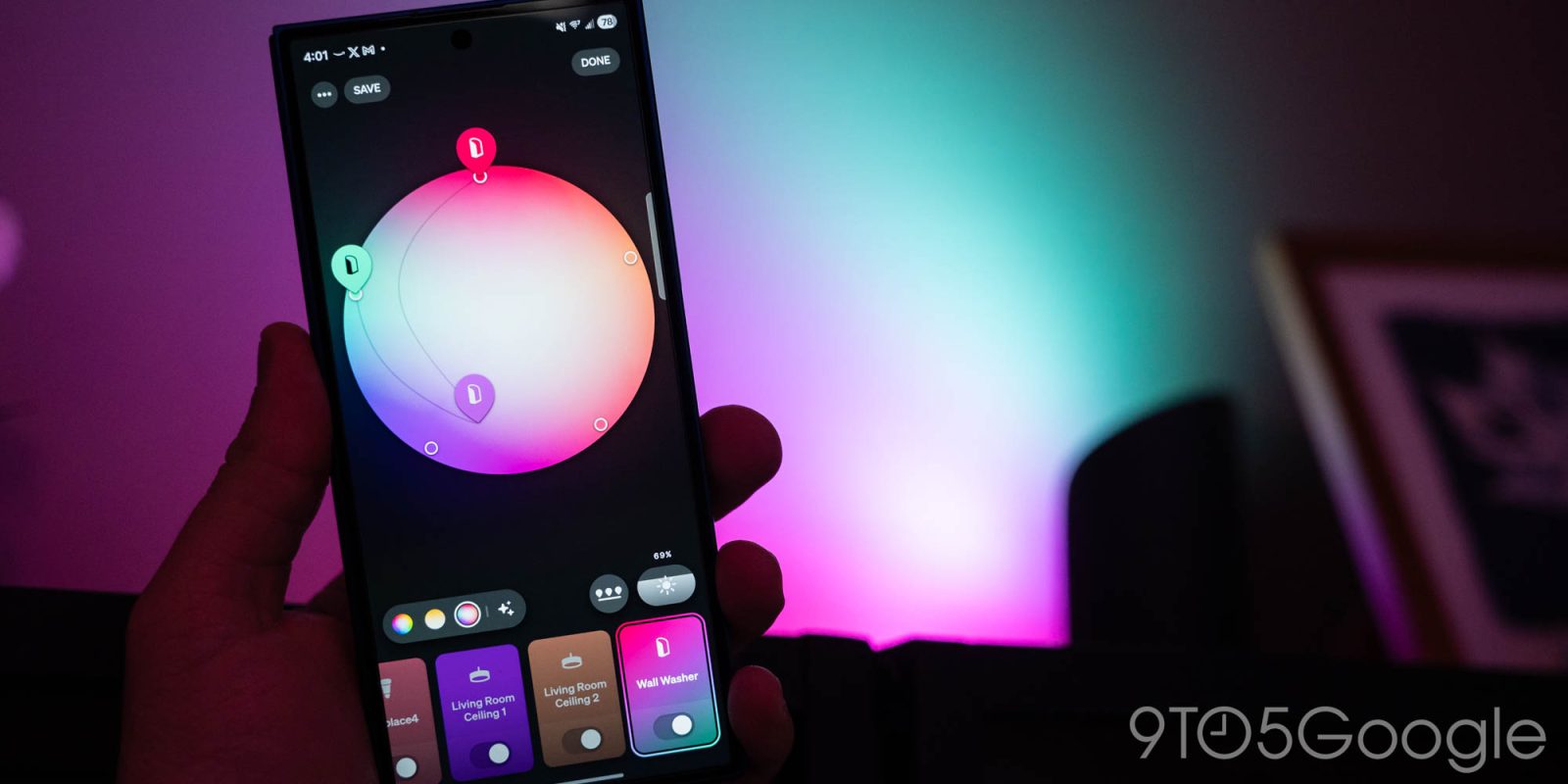
- UI Fluidity: Alongside the backend changes, Google has redesigned the "core controls" for third-party devices. The new, modernized interface within the Google Home app for Hue lights provides more granular control over dimming, color temperature, and color picking, matching the aesthetics of Google’s first-party Nest products.
Official Responses and Strategic Vision
In a statement regarding the update, Google emphasized the importance of the "local-first" philosophy in their broader smart home roadmap. "Existing Philips Hue bridges now automatically upgrade in the background to local Matter control through Google Home hubs," a Google spokesperson noted, "delivering faster response times and greater reliability with no re-pairing required."
This strategy aligns with the broader goals of the Matter standard. By promoting local interoperability, Google is aiming to eliminate the "silo effect," where users are forced to choose between competing ecosystems based on which one has the best cloud integration. By making the Hue experience equally robust on Google Home, Alexa, or Apple Home, the consumer is empowered to choose hardware based on quality rather than ecosystem lock-in.
Implications: The Future of the Connected Home
The implications of this update extend far beyond the convenience of faster light switches. This is a bellwether for the future of the Internet of Things (IoT).
1. The Death of Cloud Dependency
For years, the "Smart Home" has been criticized for its fragility. If the internet goes down, the house goes "dumb." By pushing Matter to the edge—meaning the processing happens on your router, hub, or bridge rather than a distant server—manufacturers are finally addressing the single biggest complaint of smart home enthusiasts. This update is a roadmap for other device manufacturers to follow.
2. Standardized UI Experience
Google’s redesign of the third-party control interface is equally important. By creating a unified look and feel for Hue bulbs, smart plugs, and switches, Google is reducing the cognitive load on the user. Whether a user is controlling a $60 Philips Hue bulb or a generic smart plug, the gesture-based controls—such as long-pressing to dim or swiping to change color—are now standardized, intuitive, and highly responsive.

3. Energy Efficiency and Sustainability
While the energy savings of an individual light command are negligible, the cumulative effect of a more efficient communication protocol is significant. Reducing the number of data packets sent to the cloud decreases the energy expenditure of data centers, however slightly, and improves the longevity of hardware that is no longer being "pinged" by constant cloud requests.
Conclusion: A New Standard for Smart Lighting
The update to Google Home is a quintessential example of how software improvements can breathe new life into existing hardware. Philips Hue users, who may have invested hundreds or thousands of dollars into their setups, are receiving a significant performance boost without spending an extra dime.
As the industry continues to coalesce around Matter, the promise of a "universal" smart home is inching closer to reality. For now, the integration between Google Home and Philips Hue stands as a primary case study in how manufacturers can work together to provide a seamless, reliable, and high-performance experience. As we look toward the future, the expectation for local-first control will only grow, setting a new bar that all smart home providers must strive to meet.
With this update, Google has not just improved an app; they have improved the daily experience of living in a connected home. The light, as they say, has finally turned on—and this time, it’s instant.