MUMBAI — In what is shaping up to be a watershed moment for India’s corporate and technological landscape, Jio Platforms Ltd.—the digital services and telecommunications behemoth housed under Reliance Industries Limited (RIL)—is gearing up for one of the largest initial public offerings (IPOs) in the nation’s history. Slated to hit the market with a targeted fundraise exceeding ₹37,000 crore, the upcoming public offering is not merely a capital-raising exercise; it is a strategic maneuver designed to anchor Jio at the epicenter of India’s burgeoning digital economy, which projections estimate will skyrocket to a staggering $1.4 trillion by the financial year 2030-31.
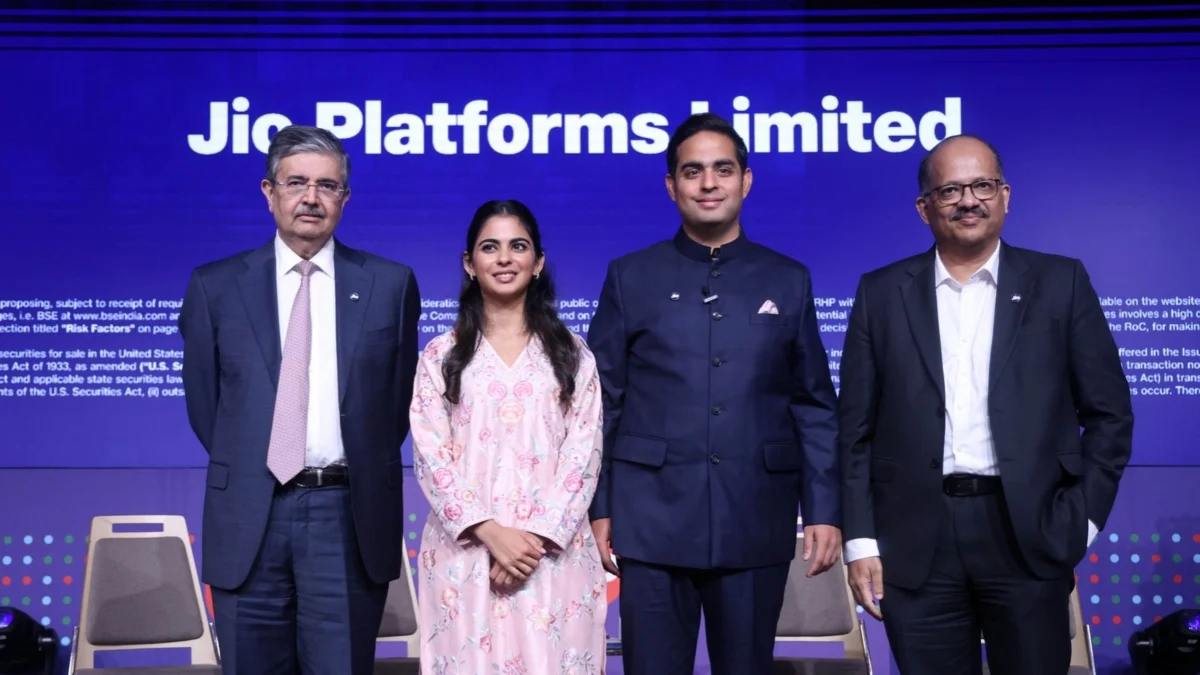
Addressing a high-stakes press briefing ahead of the public launch, Jio Platforms Managing Director Akash Ambani outlined a visionary roadmap for the company. The narrative woven by the leadership underscores a transition from a pure-play telecom disruptor to a diversified technology giant. Crucially, Ambani announced that the entire net proceeds from the IPO will be channeled toward wiping out the company’s remaining liabilities, paving the way for Jio Platforms to emerge as an entirely debt-free corporate entity.
As the market braces for this monumental financial event, the backdrop is fraught with high-stakes geopolitical scrutiny, fierce competitive posturing, and ambitious plans for international technology exports.
1. Main Facts: The Anatomy of Jio’s Blockbuster IPO and Financial Strategy
The impending public offering of Jio Platforms represents a pivotal milestone in the evolution of Reliance Industries’ digital ambitions. Key foundational elements of the IPO and the company’s current financial health include:
- Massive Capital Raise: Jio Platforms is preparing to launch a public offering projected to raise over ₹37,000 crore, making it one of the largest IPOs ever witnessed on Indian bourses.
- Wiping the Slate Clean: The primary objective of the IPO proceeds is balance-sheet optimization. According to Akash Ambani, the company currently carries approximately $3 billion in net debt. The entirety of the capital raised through the share sale will be deployed to eliminate this liability, rendering Jio Platforms a net debt-free company.
- Self-Sustaining Growth: Moving forward, Jio intends to decouple its capital expenditure from external debt markets. Future growth investments, network expansions, and technological innovations will be funded organically through operating revenues and robust cash flows.
- Exceptional Cash Generation: Ambani highlighted that roughly 30% of Jio’s total revenue flows directly into free cash flow, providing the firm with substantial liquidity to continuously reinvest in customer acquisition, infrastructure upgrading, and next-generation technologies.
- Margin Expansion: Over the past three fiscal years, Jio has successfully expanded its Earnings Before Interest, Taxes, Depreciation, and Amortization (EBITDA) margin from 50% to an impressive 53%. Management anticipates further margin enhancement driven by technology-led operational optimization and the scaling of non-telecom services.
2. Chronology: The Journey to Public Markets and Regulatory Headwinds
To fully understand the gravity of Jio’s current positioning, it is essential to trace the trajectory of its growth and the recent sequence of events leading up to the public offering:
- 2016–2019 (The Disruption Phase): Reliance Jio entered the Indian telecommunications market with aggressive, low-cost data pricing, effectively democratizing internet access and upending legacy telecom operators. This phase required massive capital expenditure to build a greenfield, pan-India 4G LTE network.
- 2020 (The Strategic Validation): Amid the COVID-19 pandemic, Jio Platforms attracted a staggering $20 billion in equity investments from global tech titans and institutional investors, including Google, Meta, Qualcomm, and private equity giants like Silver Lake and Vista Equity Partners. This period validated Jio’s valuation and set the stage for its digital ecosystem play.
- 2021–2024 (Infrastructure Maturation): Jio heavily invested in rolling out a standalone 5G network across India, alongside developing enterprise solutions, home broadband (JioFiber and JioAirFiber), and proprietary wireless technologies like Unlicensed-Band Radio (UBR).
- Late 2024 to Early 2025 (The IPO Preparations): RIL leadership fast-tracked internal restructuring and financial audits in anticipation of floating Jio Platforms. Market rumors intensified regarding an October rollout for the IPO price band and market debut.
- Recent Weeks (Geopolitical and Regulatory Friction): Concurrently, the landscape saw heightened friction involving foreign entrants. Global satellite internet player Starlink, backed by billionaire Elon Musk, voiced strong public grievances regarding administrative delays in obtaining final security clearances from Indian authorities. Musk publicly accused the Indian government and RIL Chairman Mukesh Ambani of deliberately stalling Starlink’s entry to safeguard Reliance Jio’s dominant domestic market share—allegations that have been categorically denied by the Centre.
3. Supporting Data: Capturing the $1.4 Trillion Digital Economy
Jio’s strategic pivots are backed by macroeconomic tailwinds and rigorous internal metrics. India’s digital economy is on an exponential growth curve, projected to hit $1.4 trillion by FY2031, fueled by rising smartphone penetration, government-backed digital public infrastructure (such as Aadhaar, UPI, and ONDC), and a digital-first young demographic.
To capture a significant slice of this pie, Jio’s operational metrics demonstrate considerable muscularity:
- Subscriber Dominance: Jio commands the largest subscriber base in India, giving it an unmatched data distribution network.
- Expanding Addressable Market: Through the deployment of its proprietary Unlicensed-Band Radio (UBR) technology, Jio has dramatically widened its home broadband horizon. While traditional wired infrastructure limited the company’s addressable market to roughly 40 million homes, UBR technology has expanded this figure to 100 million homes.
- Rapid Deployment Capabilities: Network equipment rollouts for UBR are complete, enabling Jio to execute last-mile wireless home broadband connections within 48 hours of a customer’s request.
- Value Over Price: Rather than relying exclusively on per-gigabyte data pricing hikes to drive top-line growth, Jio is banking on ARPU (Average Revenue Per User) expansion through bundled digital services. Management notes that the company retains the "price lever" to raise tariffs given its status as the provider of the most affordable plans in India, but it deliberately chooses to prioritize service diversification.
4. Official Responses and Industry Reactions
The announcements made by Akash Ambani have sent ripples through the global telecommunications and financial sectors. Stakeholders across the spectrum have reacted to Jio’s aggressive posture, debt-elimination strategy, and international ambitions.
The Leadership Perspective
Emphasizing the company’s financial prudence, Akash Ambani stated during the press conference:
"We have almost $3 billion of net debt on our books. The full proceeds take us to be a net debt-free company, and the growth capital is something that will flow from our revenues."
Addressing the delicate balance between monetization and consumer affordability, Ambani added:
"We have the most affordable plans in India, and we have the price lever that we can always play. But our first endeavour is to deliver more services to our users and extract value that our competitors have left. Tariffs are only one of the several ways to increase value."
Navigating Global Controversies
The IPO announcement has also forced the company to navigate external controversies, most notably the sparring match involving SpaceX’s Starlink. Elon Musk’s assertions that regulatory delays are designed to protect Reliance Jio have thrust the regulatory environment into the spotlight. The Indian government has forcefully rejected these claims, maintaining that standard security and spectrum allocation protocols apply uniformly to all applicants, domestic and foreign alike. Industry analysts view the timing of Jio’s IPO as a display of immense confidence, signaling that domestic market leaders are pressing forward with their strategic objectives regardless of external corporate lobbying.
5. Strategic Implications: Where Jio Goes From Here
The transformation of Jio Platforms from a debt-laden infrastructure builder into a debt-free digital powerhouse carries profound implications for India’s technology sector, domestic consumers, and the global telecommunications industry.
Domestic Market Consolidation and Service-Led Growth
By utilizing IPO proceeds to clear its debt, Jio frees up hundreds of millions of dollars previously earmarked for interest payments. This capital can now be directly funneled into research and development, artificial intelligence integration, cloud infrastructure, and enterprise solutions.
Furthermore, Jio’s refusal to engage in aggressive, recurring tariff hikes—opting instead to bundle entertainment, enterprise productivity tools, financial services, and home broadband—places immense pressure on remaining competitors like Bharti Airtel and Vodafone Idea. Jio’s strategy is designed to capture market share by absorbing the residual value and service gaps left by rivals.
Wireless Innovation and the Home Broadband Revolution
The successful deployment of Unlicensed-Band Radio (UBR) technology is a game-changer. Traditional fiber-to-the-home (FTTH) rollouts are notoriously capital-intensive, time-consuming, and subject to municipal right-of-way hurdles. By conquering the wireless last-mile delivery challenge, Jio can scale its home broadband footprint at a fraction of the cost and time, turning what was once a urban-centric luxury into a mass-market utility accessible across Tier-2 and Tier-3 Indian cities.
Global Ambitions Through Technology Partnerships
Perhaps the most forward-looking component of Jio’s post-IPO strategy is its approach to international expansion. Eschewing the traditional playbook of acquiring foreign telecom operators or engaging in costly greenfield launches abroad, Jio has adopted a B2B technology licensing model.
Ambani confirmed that the company intends to identify strategic partners across both developing and developed economies to deploy Jio’s comprehensive, end-to-end technology stack. By positioning itself as a managed-services and software provider rather than a hardware vendor, Jio aims to monetize its intellectual property globally. This allows local operators in foreign markets to leverage Jio’s battle-tested network architectures while insulating Reliance from direct regulatory and operational risks overseas.
Conclusion
As Jio Platforms steps up to the altar of public markets, it does so from a position of profound industrial strength. Backed by a rapidly growing domestic digital economy projected to reach $1.4 trillion, armed with advanced proprietary wireless technologies, and poised to enter the elite club of debt-free corporate giants, the company is transcending its origins as a telecom disruptor.
The upcoming ₹37,000+ crore IPO will not only rewrite the valuation benchmarks for Indian tech companies but will also provide Jio with the sovereign financial independence required to dictate the next decade of digital evolution—both within the Indian subcontinent and across the global stage.