










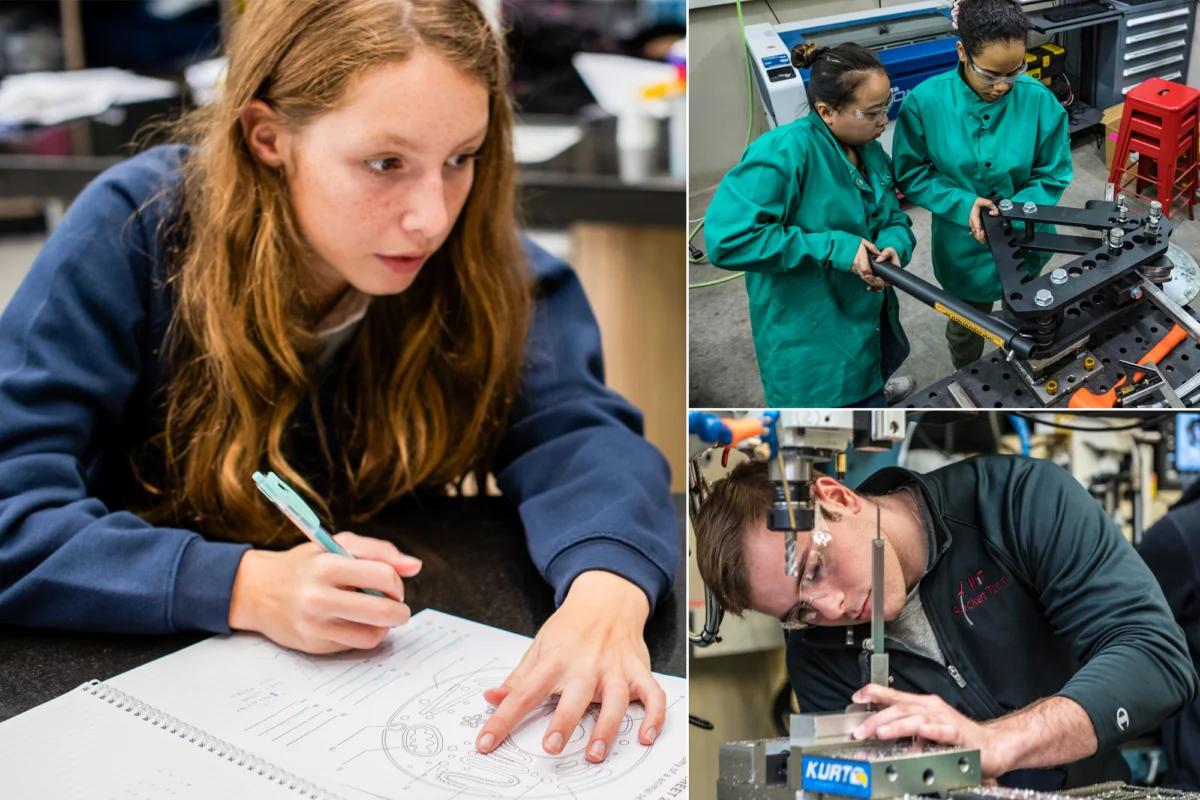
In an era defined by rapid technological disruption and an increasing demand for sophisticated workplace skills, the Massachusetts Institute of Technology (MIT) has launched a landmark, Institute-wide endeavor: MIT for America. This comprehensive initiative represents a strategic pivot in how one of the world’s premier research institutions engages with the American educational landscape, aiming to address the systemic disparities in STEM (Science, Technology, Engineering, and Mathematics) education from kindergarten through community college.
By leveraging its deep-rooted expertise in research, design, and pedagogical innovation, MIT is moving beyond the confines of its Cambridge campus to provide scalable, high-impact educational resources to communities across the United States. The initiative is not merely a collection of outreach projects; it is a fundamental commitment to democratizing access to the tools of the future.
The Mandate: Addressing the National STEM Deficit
The impetus for MIT for America stems from a stark reality: despite the country’s innovation-driven economy, access to high-quality STEM education remains unevenly distributed. Statistical data underscores a significant "participation gap." Currently, only 29 percent of U.S. students in grades 9–12 have the opportunity to engage in hands-on STEM activities, such as building electronic circuits. Furthermore, while approximately 60 percent of high schools technically offer computer science courses, actual enrollment remains critically low, at just 6 percent.
MIT for America is designed to bridge this divide. The initiative focuses on building the necessary "bandwidth" in local communities—equipping educators with resources, students with mentorship, and districts with the infrastructure to foster technical literacy. The core philosophy driving the program is simple but profound: "Talent is everywhere, but opportunity is not." By fostering local capacity, the Institute aims to ensure that a student’s zip code does not dictate their ability to participate in the modern economy.
A Three-Pillar Approach to Educational Transformation
The initiative organizes its efforts around three high-priority areas, each designed to address a specific bottleneck in the current educational pipeline:
1. Mathematical Thinking and Problem Solving
Mathematics serves as the foundational language of STEM. To strengthen this foundation, MIT is scaling the MIT for America Calculus Project. Launched as a pilot program just one year ago, the project leverages a network of MIT undergraduates and alumni to provide virtual and in-person calculus tutoring to students in under-resourced school districts. The model has proven highly effective, providing high-touch academic support that is both scalable and sustainable. As more school districts seek to offer advanced math coursework, this project provides a proven blueprint for academic enrichment.
2. Living, Learning, and Working with AI
Artificial Intelligence is no longer a peripheral technology; it is a societal force. The MIT RAISE (Responsible AI for Social Empowerment and Education) program sits at the heart of this pillar. Rather than viewing AI with apprehension, MIT is training teachers to integrate AI literacy into the classroom in productive, ethical ways.
This effort includes the Pathways for AI Training and Hiring (PATH) initiative, launched in October in partnership with Georgia State University. PATH is specifically designed to bring AI vocational training to two-year and four-year colleges, ensuring that students—regardless of their academic track—gain the practical AI skills required for the modern workforce.
3. Designing, Making, and Innovating
The third pillar focuses on experiential learning. By utilizing "fab labs" (fabrication laboratories) and makerspaces, MIT is encouraging students to move from passive consumers of technology to active creators. This includes supporting national design challenges and fostering environments where students can collaborate on real-world problems. The program builds upon the success of the Fab Foundation and MIT’s Regenerative Futures Challenge, which tasks students with designing sustainable solutions to climate and environmental issues.
Chronology and Evolution: From Pilot to National Program
The development of MIT for America has been a deliberate, multi-year process of refining outreach models and testing pedagogical strategies.
- Initial Phase (2023–2024): MIT begins formalizing its pK-12 and community outreach strategies, launching pilot programs like the Calculus Project and expanding the footprint of the MIT RAISE initiative.
- Expansion Phase (Early 2025): The Institute observes the success of fab labs in bringing advanced manufacturing education to diverse regions of the U.S., prompting a broader conversation about consolidating these efforts under a unified national brand.
- The Launch (September 2026): Faculty leaders officially present the "MIT for America" framework to alumni at the MIT Alumni Leadership Conference, signaling the shift from fragmented projects to a cohesive institutional priority.
- October 2026: The program officially expands its reach into the higher education sector with the launch of the PATH initiative at Georgia State University, marking the beginning of a systematic rollout to colleges across the country.
Perspectives from Leadership
The success of the initiative rests on the synergy between top-tier research and "on-the-ground" community engagement. Faculty co-directors Professor Eric Klopfer and Professor Cynthia Breazeal emphasize that the initiative is designed to be both "scalable and high-touch."
"The goal is to provide programs that are both scalable and high-touch, and make an impact across the country," says Professor Klopfer, who also serves as the director of the Education Arcade at MIT. "All our programs take advantage of things we are well-positioned to do at MIT, and can be distributed around the country. That’s our guiding light."
Professor Breazeal, a leading voice in media arts and sciences, views the initiative as a moral and economic imperative. "We live in an innovation-driven world, and it’s important to have an education that gives you access to it, whether that’s so you can be a fully engaged citizen or have the opportunity for economic mobility," she notes. "This effort is about really rolling up sleeves and getting out there and engaging communities."
Implications for the American Educational Landscape
The implications of MIT for America are far-reaching. By creating a sustainable model for teacher professional development, the initiative helps mitigate the "teacher burnout" associated with trying to teach rapidly evolving subjects like AI without adequate support.
Furthermore, the focus on community colleges and vocational schools is a significant departure from traditional university outreach, which often focuses solely on high-achieving, university-bound high schoolers. By targeting the two-year college system, MIT is acknowledging that the future of the American workforce requires a diverse range of technical skills—from advanced manufacturing and digital fabrication to AI-augmented technical labor.
The involvement of the alumni network is expected to be a force multiplier. With thousands of graduates working in technical and leadership roles across the U.S., the potential for mentorship, local advocacy, and resource donation is immense.
Conclusion: Shaping the Future Together
As MIT for America moves into its next phase, the focus remains on local impact. Claudia Urrea, head of the MIT pK-12 Initiative, captures the spirit of the project: "Across the U.S., we want to unlock opportunities and experiences where students are. We want to find people who have not had the opportunity to discover their talent."
By combining the rigorous academic culture of MIT with a commitment to national equity, the Institute is setting a new standard for how universities should serve the public good. The initiative is not merely about importing MIT to the rest of the country; it is about building a nationwide network of educators, makers, and thinkers capable of navigating the complexities of the 21st century. As the programs continue to flourish and evolve, they offer a promising vision for an America where educational opportunity is not a privilege, but a consistent, accessible reality for every student.



