







By Financial News Desk
Published: Oct 15, 2026 | Updated: Oct 15, 2026
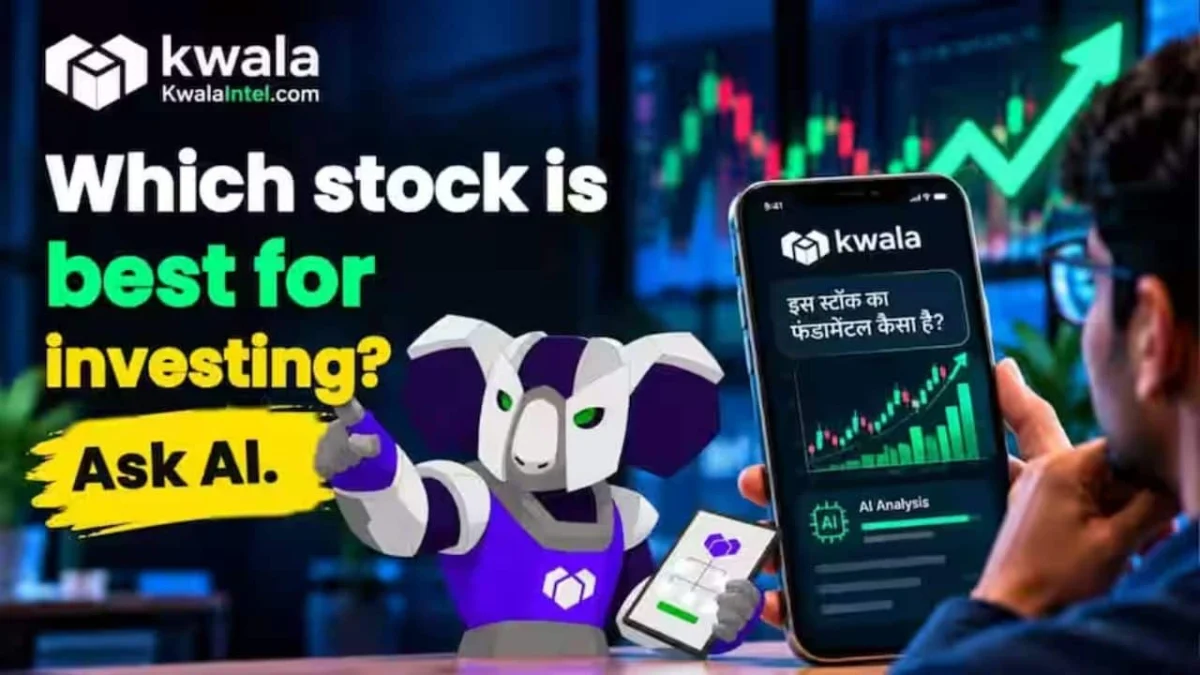
The Indian stock market, specifically the high-octane Futures and Options (F&O) segment, has long been the domain of institutional giants and seasoned algorithmic traders. For the average retail participant, navigating the labyrinth of volatility, open interest fluctuations, and rapid-fire price shifts has historically been akin to drinking from a firehose. However, as of late 2026, a paradigm shift is underway. With the integration of advanced Artificial Intelligence (AI) platforms like Kwala Intel, the barrier between complex data and actionable strategy is thinning, fundamentally altering how wealth is generated—and protected—on Dalal Street.
The New Frontier: Decoding Market Complexity
Dalal Street operates at a breakneck speed that is difficult for human cognition to process in real-time. In the F&O segment, where derivative contracts expire with ruthless frequency and market sentiments can pivot on a single macroeconomic headline, the difference between profit and loss is often measured in milliseconds.
Traditionally, traders relied on a patchwork of technical indicators, news feeds, and excel spreadsheets to make sense of the chaos. This "analog" approach is increasingly obsolete. AI platforms such as Kwala Intel represent the next generation of financial technology (FinTech). By leveraging machine learning models that process gigabytes of live market data, these platforms filter out the noise, presenting traders with simplified, actionable insights. The goal is no longer just "more data," but "better signal."
Chronology of a Tech-Driven Market Evolution
To understand the current dominance of AI-assisted trading, one must look at the rapid evolution of India’s retail trading ecosystem over the past five years:
- 2021–2022: The Retail Explosion. The post-pandemic era saw a massive influx of retail traders into the F&O segment, largely driven by the democratization of trading apps. However, the lack of sophisticated analytical tools led to a high attrition rate among amateur traders.
- 2023–2024: The Data Saturation Point. As data availability increased, so did complexity. Traders were overwhelmed by "analysis paralysis," struggling to synthesize open interest (OI) changes with fluctuating volatility indices.
- 2025: The Rise of Generative AI in Finance. The maturation of Large Language Models (LLMs) and predictive analytics allowed for the development of tools that could interpret market patterns and generate natural-language trading alerts.
- Mid-2026: The Kwala Intel Integration. By mid-2026, platforms like Kwala Intel moved from niche beta products to essential utility tools, offering real-time sentiment analysis and predictive modeling that was previously accessible only to hedge fund managers.
- October 2026 (Present): The market is seeing a widespread adoption of "Human-in-the-loop" AI systems, where traders use AI as a co-pilot to manage risk and identify breakout opportunities in the F&O segment.
Supporting Data: Why Speed and Clarity Matter
The volatility inherent in the F&O market is not merely a challenge; it is a mathematical certainty. Data from the National Stock Exchange (NSE) indicates that trading volumes in the derivatives segment have grown by over 40% year-on-year through 2026.
However, the "success rate" of retail traders remains a subject of intense regulatory concern. According to recent market reports, over 90% of individual traders in the F&O segment end up making losses over a financial year. The primary culprit? Poor risk management and an inability to process market signals during high-volatility events.
AI platforms address this through three key technical pillars:
- Sentiment Mapping: Analyzing news, social media, and institutional flows to determine the "mood" of the market before it reflects in price.
- OI Interpretation: Providing instant analysis of "Long Buildup," "Short Covering," or "Long Unwinding," which are critical indicators of where "smart money" is moving.
- Risk-Reward Visualization: Automatically calculating stop-loss and take-profit levels based on current volatility, ensuring that retail traders adhere to disciplined capital allocation.
Official Perspectives: The Regulatory and Corporate View
Market regulators, including the Securities and Exchange Board of India (SEBI), have expressed a cautious but forward-looking stance on the integration of AI in retail trading. While they encourage technological innovation, there is a strong emphasis on "algorithmic transparency."
A spokesperson for a leading financial technology association noted, "The goal of platforms like Kwala Intel is to level the playing field. When a retail trader has access to the same quality of analytical insights as a proprietary desk, the market becomes more efficient. However, we urge traders to remember that AI is a tool, not a crystal ball. Risk management must remain a human responsibility."
Industry experts argue that these platforms are essentially "democratizing intelligence." By removing the need for a degree in quantitative finance to understand derivative structures, these tools allow the average investor to participate in the market with a degree of sophistication that was previously unattainable.
Implications for the Future of Dalal Street
The rise of AI in the F&O space has profound implications for the future of Indian capital markets:
1. The Death of Information Asymmetry
For decades, institutional investors held an advantage simply because they could afford high-speed data feeds and specialized analysts. AI platforms act as a bridge, essentially "renting" this level of analytical power to the retail segment at a fraction of the cost.
2. Market Efficiency and Liquidity
As more traders use AI to identify patterns, the market is likely to reach equilibrium faster. This reduces "irrational" price spikes and creates a more liquid environment. While this might slightly compress the profit margins of day traders, it creates a more stable market overall.
3. The New Skill Set for Traders
The definition of a "good trader" is shifting. In 2026, technical chart reading is no longer enough. Traders now need to be "prompt engineers" and "data interpreters." The ability to query an AI, understand the limitations of a machine-generated signal, and apply human intuition to risk management is the new hallmark of a professional.
4. Risk of Over-Reliance
One of the darker implications is the risk of "algorithmic herding." If too many retail traders use similar AI models to interpret the same data, it could lead to automated, simultaneous buying or selling, potentially exacerbating "flash crashes" or artificial market swings. Investors must remain wary of relying solely on the software without maintaining a foundational understanding of market mechanics.
Conclusion: Embracing the Algorithmic Co-Pilot
The narrative of Dalal Street is no longer written solely by the floor brokers or the institutional desks; it is being rewritten by the code that runs in the background. As we move deeper into the final quarter of 2026, the success stories coming out of the F&O segment are increasingly tied to those who have embraced AI as an essential companion.
Platforms like Kwala Intel are not replacing the trader; they are empowering them. By stripping away the jargon and distilling complex market movements into simple, actionable insights, these tools are fostering a new generation of informed participants. For the retail trader, the message is clear: the future of investing is not about being faster than the machine—it’s about knowing how to work with it.
As Dalal Street continues to evolve at breakneck speed, those who leverage AI to maintain clarity amidst the chaos will likely define the next decade of Indian financial success. The complexity of the market will never vanish, but for the first time in history, the ability to decode it is within everyone’s reach.