







In the rapidly evolving landscape of web design, the integration of artificial intelligence has moved beyond simple text generation to the realm of active, autonomous page construction. Elegant Themes has introduced Divi AI agents, a sophisticated toolset that allows users to build, edit, and restyle entire web pages through plain-language prompts. As web developers and site owners increasingly rely on these tools, understanding the nuances of agent pricing, performance tiers, and cost-optimization becomes essential for maintaining both a professional site and a balanced budget.
The Evolution of AI-Driven Web Design
The introduction of Divi AI agents represents a paradigm shift in how users interact with the Divi Visual Builder. Unlike traditional static plugins, these agents act as a collaborative partner, interpreting intent and executing complex structural changes directly within the WordPress environment.
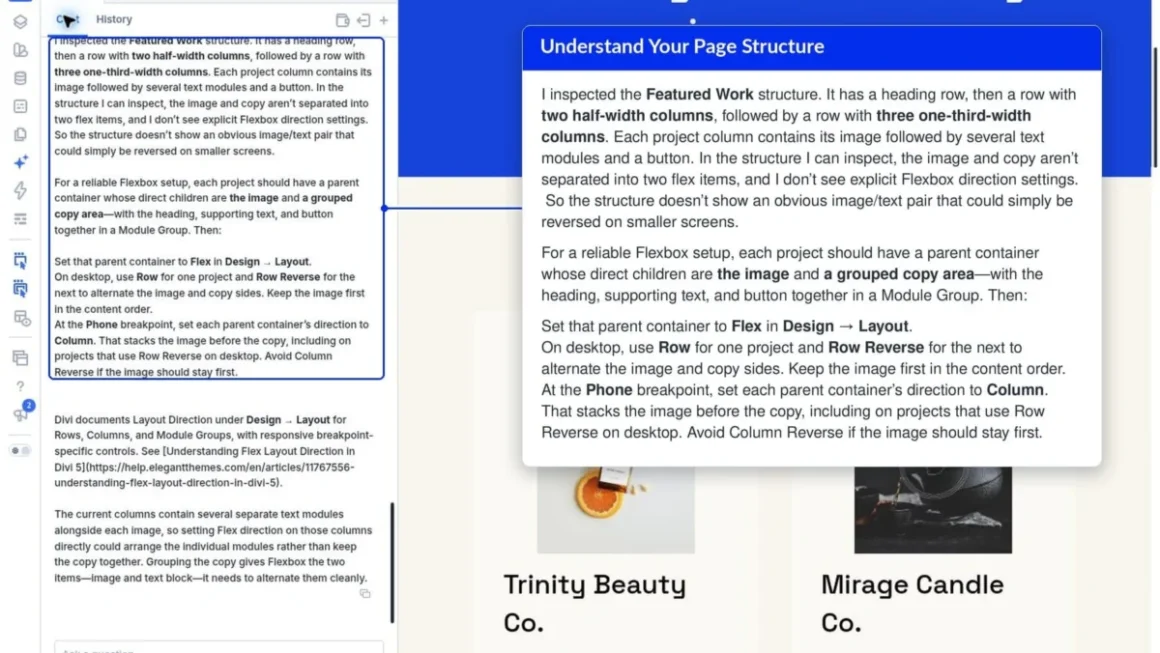
When a user issues a command—such as "Create a professional experience section with a timeline layout"—the agent engages in a multi-step process. It interprets the prompt, inspects the existing page context, plans the architectural implementation, and finally generates the code and layout components. Because this process is computationally intensive and relies on external AI models accessed via OpenRouter, usage is metered on a consumption-based model, ensuring that users only pay for the processing power they actually utilize.
Decoding the Financial Architecture: How Costs Are Calculated
Understanding the economics of AI agents requires a shift in perspective from fixed-subscription pricing to token-based consumption. Every interaction with a Divi AI agent is governed by two primary factors: input tokens and output tokens.
The Anatomy of a Request
- Input Tokens: These represent the data sent to the model, including your specific prompt and the contextual information about your website’s current layout, styles, and existing content.
- Output Tokens: These are the units of data generated by the AI in response to your request, which ultimately manifest as the elements added or modified on your live site.
It is a common misconception that a single prompt equals a single model call. In reality, a complex instruction often triggers multiple internal calls as the agent iterates through its planning and execution phases. Consequently, pricing is dynamic rather than fixed. A simple content edit might cost a fraction of a cent, while the construction of an entire, multi-section landing page will naturally involve more context and generation time, leading to higher costs.
The $5 Monthly Foundation
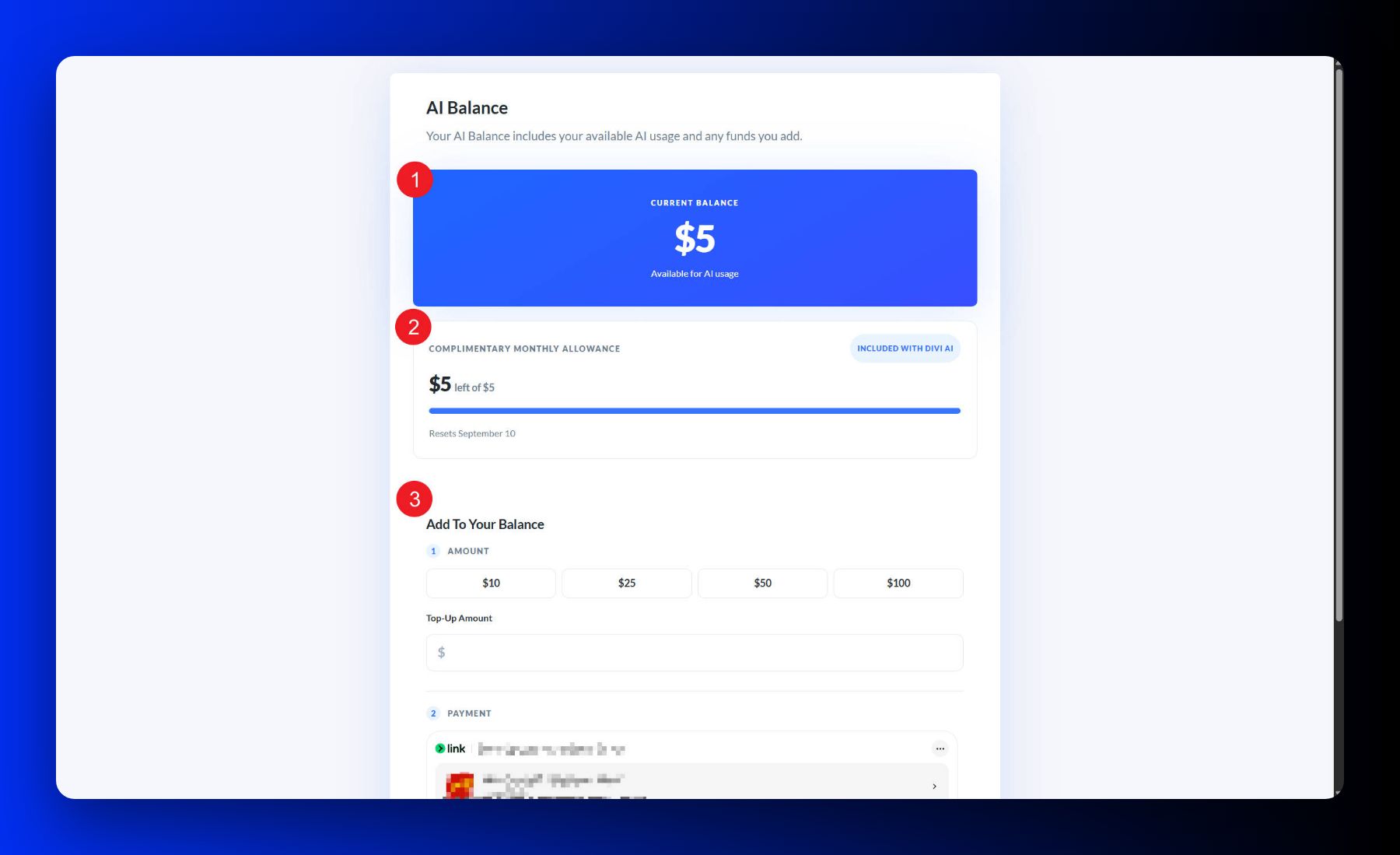
To facilitate experimentation, every Divi AI and Divi Pro subscription includes a $5 monthly balance dedicated specifically to agent usage. It is critical to note that this $5 credit is distinct from the standard Divi AI tools used for text, image, and code generation, which remain included in the core subscription.
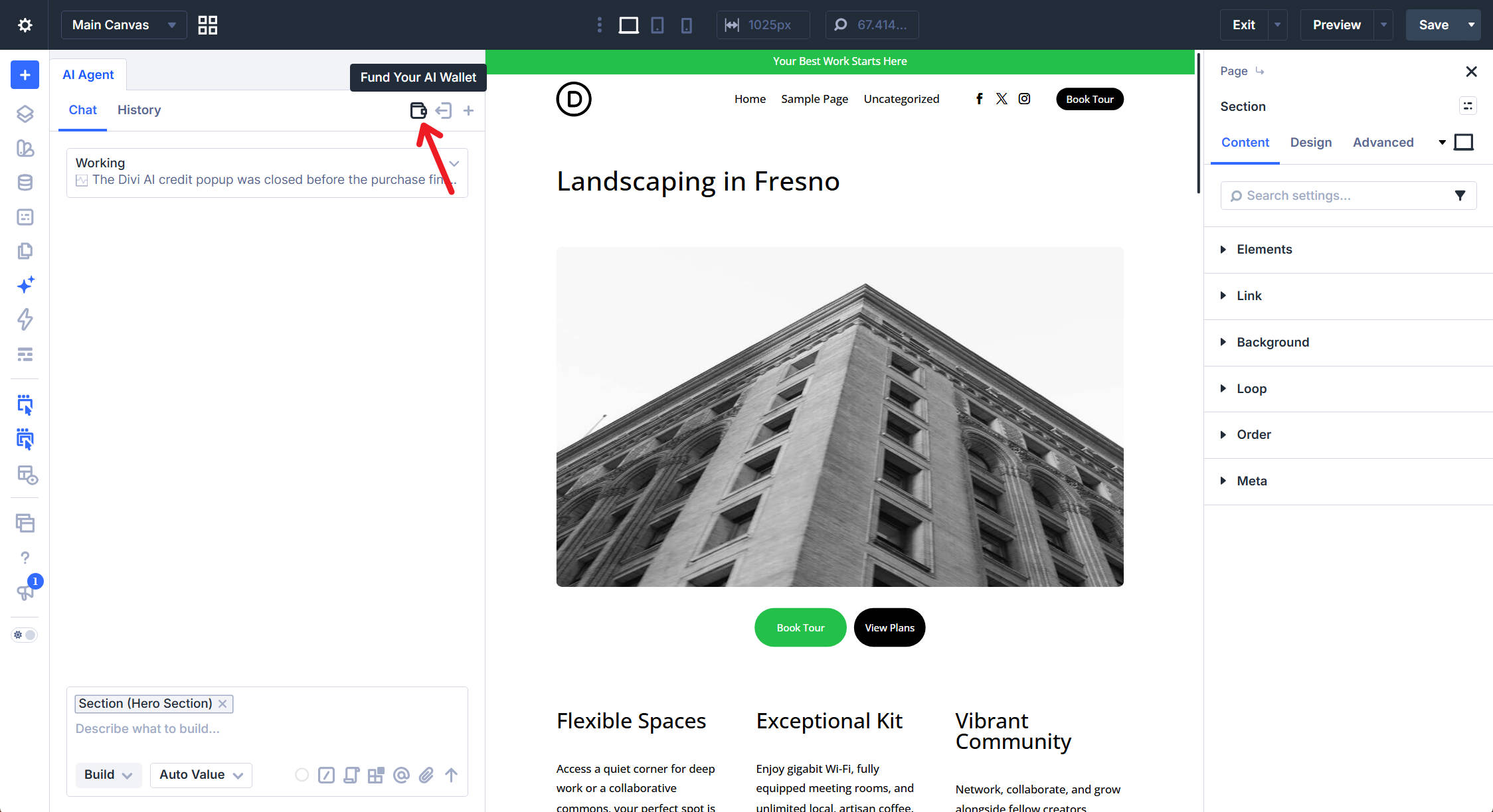
This "complimentary tier" is designed to allow users to stress-test the agents’ capabilities without committing additional capital. The credit resets on the user’s specific billing renewal date, meaning the funds do not carry over. Should a user exhaust this balance, the system allows for flexible top-ups, ensuring that work on critical projects is never interrupted. Users can monitor their remaining balance in real-time through the wallet icon located in the top-right corner of the agent panel within the Visual Builder.
Strategic Tiers: Choosing the Right "Auto" Level
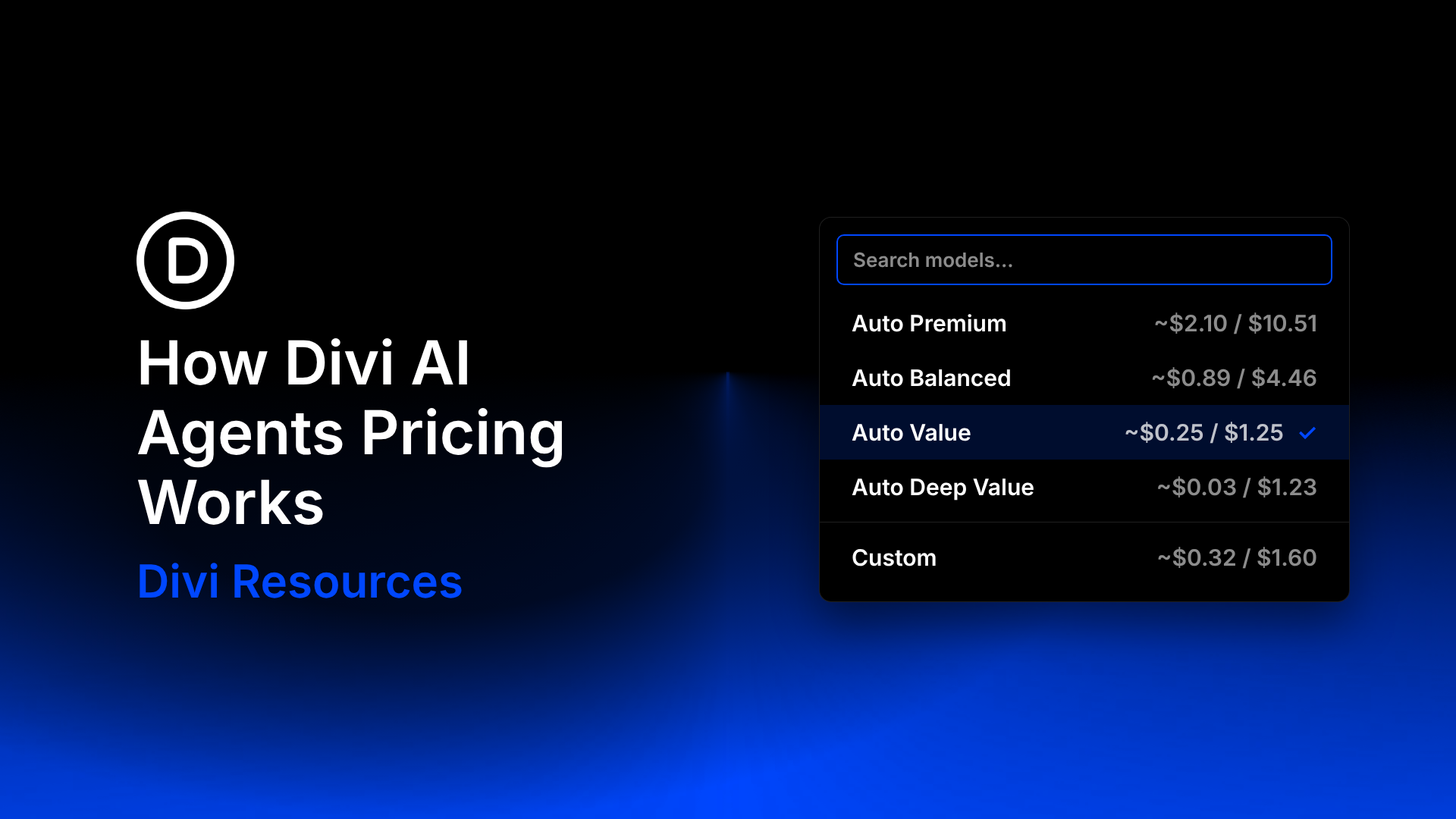
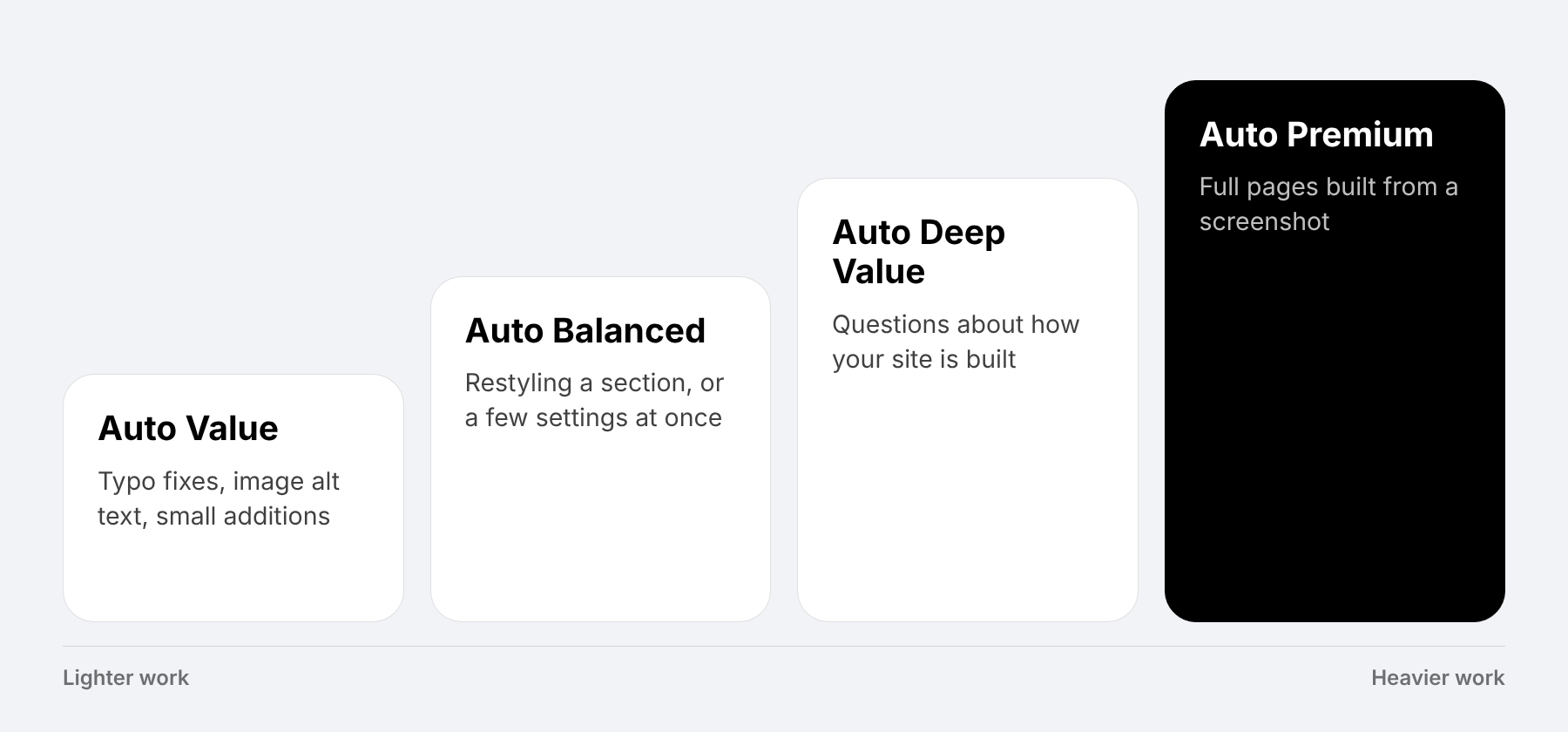
Elegant Themes has categorized its AI offerings into four distinct "Auto" tiers. These tiers are not fixed to specific models; rather, they represent a curated balance of cost and capability that the platform updates to ensure optimal performance.
1. Auto Value: The Efficiency Expert
Designed for high-frequency, low-complexity tasks, Auto Value is the default setting. It is the ideal choice for routine maintenance, such as:
- Updating text or correcting typos.
- Generating image alt text for SEO.
- Simple CSS adjustments.
- Content refreshes.
2. Auto Balanced: The Intermediate Bridge
For users requiring a step up in logic without the premium price tag, the Balanced tier serves as a reliable middle ground. It is particularly effective for restyling existing sections where the user needs a fresh look but doesn’t require a complete overhaul from scratch.
3. Auto Deep Value: The Structural Analyst
When the task involves understanding the deeper architecture of a site—such as querying which specific global presets or variables are governing a particular page element—Deep Value provides the necessary reasoning depth. It offers a sophisticated balance, capable of handling substantial builds (such as a nine-section layout) for a nominal cost.
4. Auto Premium: The Precision Instrument
Premium is the flagship tier for high-stakes projects. It is designed for tasks that require high adherence to design briefs, such as building a full page from a screenshot or executing complex, multi-element timelines that must remain responsive across various devices.
Performance Case Study: The "Professional Experience" Test
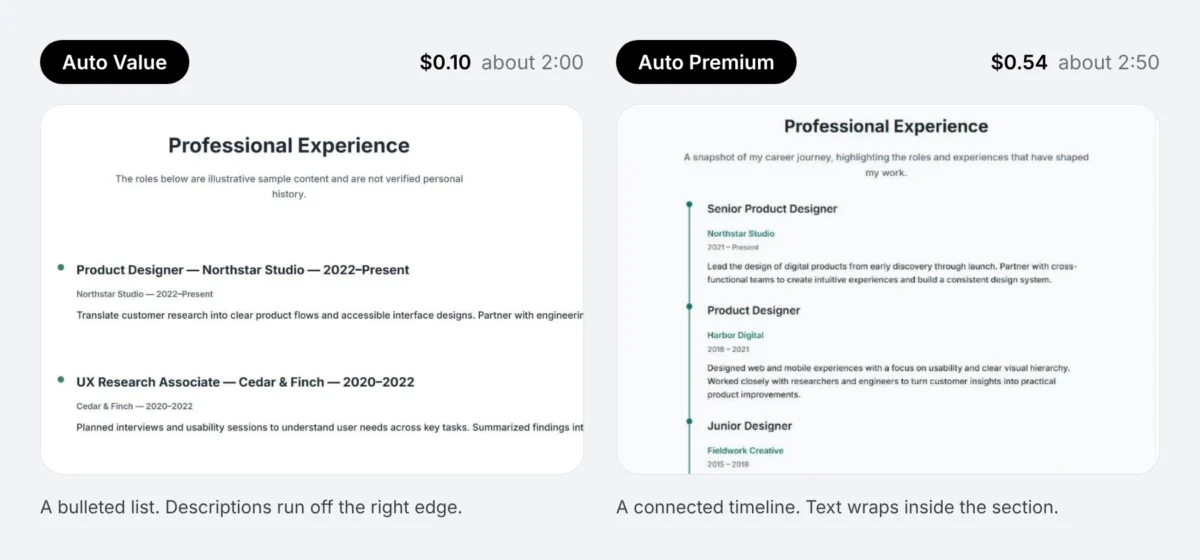
To quantify the value proposition of these tiers, researchers performed a side-by-side comparison using a specific request: "Build a Professional Experience section… include a centered heading, a one-sentence intro, and a vertical timeline of three roles… [with] a clean, modern look."
- The Auto Value Result: Completed in two minutes for approximately $0.10. While fast and affordable, the result required manual intervention, as the layout struggled with text wrapping and basic formatting.
- The Auto Premium Result: Completed in two minutes and 50 seconds for approximately $0.54. Although the cost was 5.4 times higher, the output was near-production-ready. It included a functional timeline, proper spacing, and superior mobile responsiveness.
The Implication: The "Premium" cost is not merely an expense; it is an investment in time. By paying $0.44 more, the user avoided 15–20 minutes of manual layout correction, effectively increasing productivity through higher-quality initial outputs.
Advanced Customization: Beyond the Tiers
For power users, the "Configure Custom Models" feature offers granular control. Within the chat window, users can assign different models for specific roles, such as:
- Planning: The logical engine that maps out the project.
- Layout Generation: The creative engine that builds the structure.
- Refinement: The "polishing" agent that reviews code.
Furthermore, users can adjust "Reasoning Effort" (Low to XHigh). Increasing effort allows the AI to "think" longer about complex or ambiguous instructions. While this increases the cost and time per request, it is an invaluable tool for complex, non-standard web design requests.
Maintaining Predictability in Spending
The key to successful AI-assisted web development is strategic resource allocation. To keep project costs predictable:
- Define Scope Clearly: Instead of asking the AI to "redesign the site," target specific sections.
- Use "Ask" Mode: If you are unsure about the implementation, use the agent’s "Ask" mode to receive an explanation of the proposed changes before authorizing the spend for implementation.
- Review Before Scaling: Start every new project type on Auto Value. If the results are consistently falling short of your design standards, pivot to a higher tier for that specific task type.
Final Implications
The integration of Divi AI agents marks a transition from "manual building" to "curated creation." By leveraging the four-tier system, developers can align their budget with the complexity of the project. Whether it is a quick typo fix on a landing page or the high-fidelity construction of a complex professional portfolio, the agents provide a scalable, transparent, and highly efficient solution for the modern web professional. As the technology continues to evolve, the ability to effectively manage these AI resources will undoubtedly become a core competency for successful web designers in the years to come.