




By Tech Wire Daily
Published October 25, 2026
Main Facts
In an era dominated by voice assistants, touchscreens, and smartphone apps, the humble wall-mounted light switch has remained largely unchanged for over a century. While smart home enthusiasts obsess over color temperatures, lumens, and RGB bulb aesthetics, the physical interface for interacting with connected ecosystems has often felt like an afterthought.
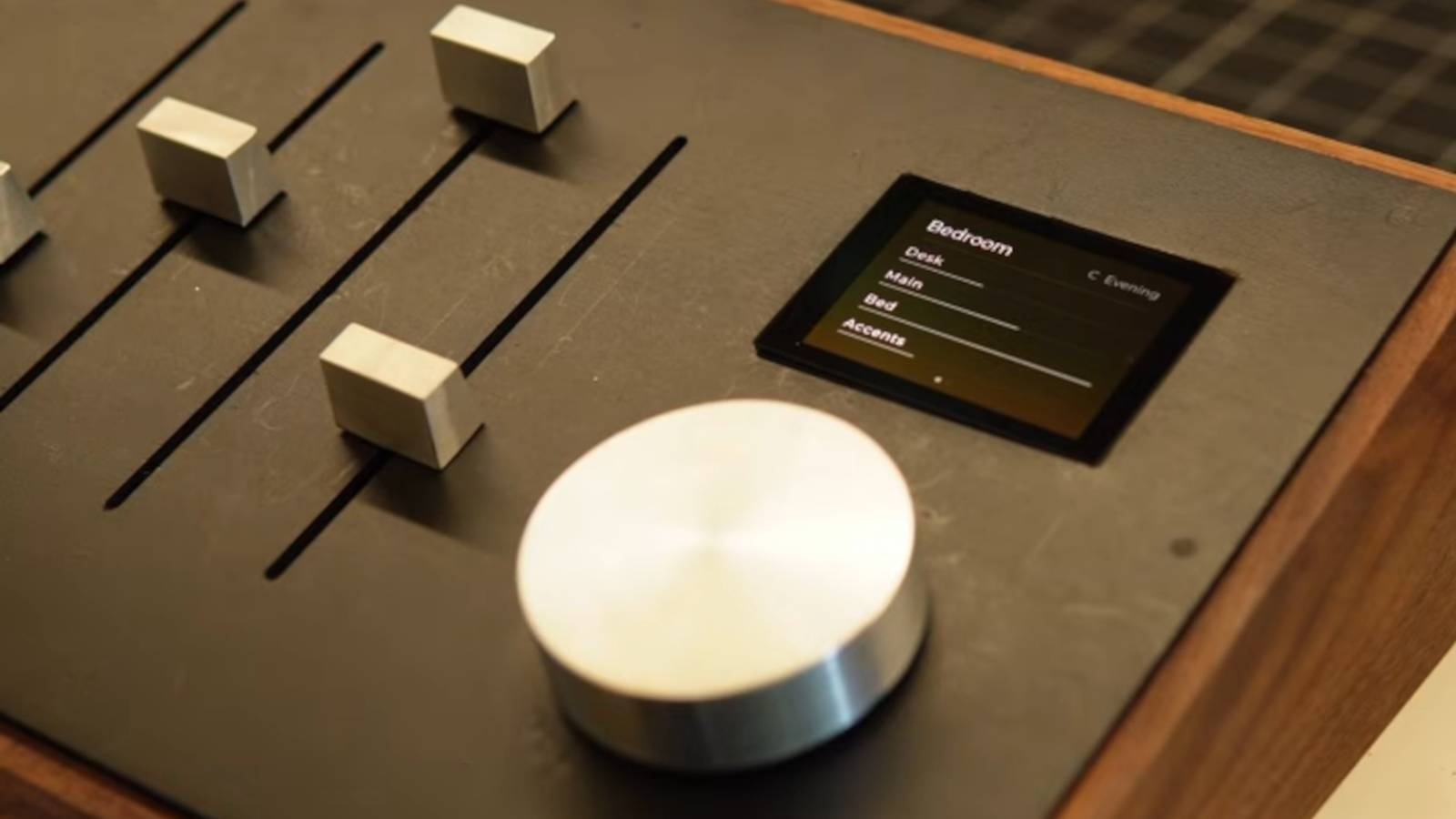
Enter Sacrebleu Studio, an independent hardware design outfit that has captured the imagination of the DIY electronics and smart home communities. Showcasing their latest creation on the popular Reddit community r/esp32 and via YouTube, the creator unveiled a bespoke, motorized fader console driven by an ESP32-S3 microcontroller.
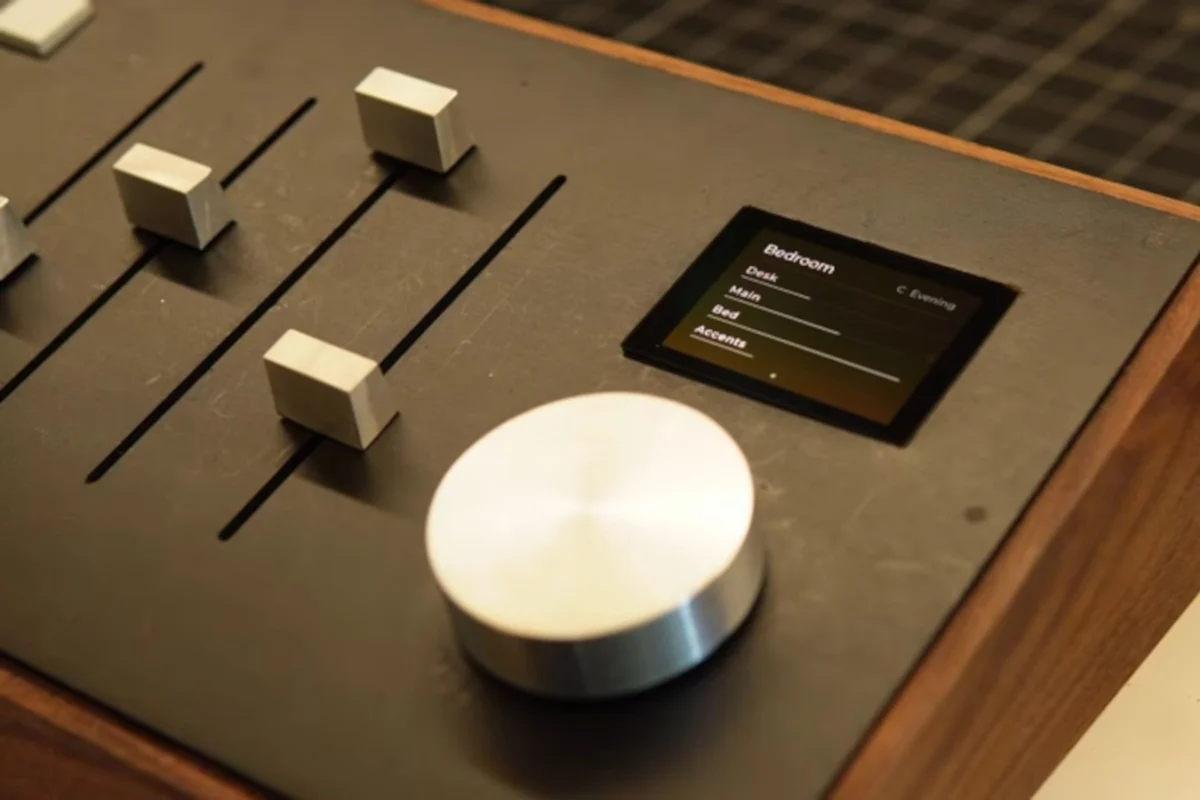
Unlike traditional switches or software sliders, this hardware console merges the tactile satisfaction of an audio mixing board with advanced IoT (Internet of Things) automation. Featuring physical motorized sliders, a dedicated room-selection dial, and custom preset buttons, the device offers fluid, real-time control over smart lighting systems.
Key highlights of the system include:
- ESP32-S3 Core: Utilizing a powerful, low-cost microcontroller capable of robust Wi-Fi and Bluetooth connectivity.
- Motorized Faders: Physical sliders that not only control light dimness manually but automatically adjust their physical positions to match the current state of home lighting when switching between rooms.
- Smart Plug Adaptation: Clever programming that allows physical faders to mimic binary wall switches (on/off) when mapped to non-dimmable smart plugs, complete with mechanical-feeling resistance.
- Room Selectors and Presets: Integrated dials and macro buttons enabling granular, multi-room zone management directly from a single hardware dashboard.
While the project remains a hobbyist creation rather than a readily available commercial DIY kit, Sacrebleu Studio has launched an official interest page on their website, hinting at potential future productization.
Chronology of Innovation: From Basic Prototyping to Motorized Precision
The journey toward this tactile smart home controller highlights the iterative nature of modern DIY hardware development.
Phase 1: The Initial Concept and YouTube Reveal
Months before the viral Reddit update, Sacrebleu Studio dropped an early prototype video on YouTube. This initial build established the foundational premise: replacing software-based sliders with physical audio faders. In this early iteration, each vertical potentiometer was directly hard-mapped to control the dimming curve of specific smart bulbs. Moving a fader upward increased luminescence, while pulling it down dimmed the light. The feedback loop was instant, offering a satisfying physical weight to home automation that digital touchscreens simply cannot replicate.
Phase 2: Solving the Smart Plug Dilemma
As the project evolved, the creator encountered a common smart home hurdle: not all connected devices support dimming. Many affordable smart home setups utilize basic smart plugs that only handle binary states—fully open or fully closed (on or off).
To integrate these into a fader-based console without causing user confusion, Sacrebleu Studio refined the firmware. They programmed the faders to recognize the hardware limitations of connected endpoints. If a slider was assigned to a smart plug, forcing the fader past a specific threshold would trigger a digital state change, making the physical slider snap or behave like a traditional toggle switch.
Phase 3: The Motorized State-Sync Breakthrough
The most recent showcase on the r/esp32 subreddit introduced motorized faders—a massive leap forward in user experience. In multi-room smart home setups, lighting states change constantly via automation routines, voice commands, or other household members.
With non-motorized faders, returning to a room meant the physical position of the slider would mismatch the actual brightness of the lights until manually reset. By integrating motorized faders, Sacrebleu Studio solved this synchronization problem. When a user turns a dial to select a new room, the console’s internal motors actively drive the physical faders into the exact positions required to match the live state of that room’s lights.
Supporting Data: The Rise of ESP32 in Modern IoT Development
To understand why this project has resonated so deeply within the tech community, it is essential to examine the underlying hardware driving it: the ESP32 series of microcontrollers, manufactured by Espressif Systems.
| Feature / Metric | ESP32 Original | ESP32-S3 (Used in Console) |
|---|---|---|
| CPU Architecture | Dual-core Tensilica Xtensa LX6 | Dual-core Xtensa LX7 |
| Clock Speed | Up to 240 MHz | Up to 240 MHz |
| Wireless Connectivity | Wi-Fi 802.11 b/g/n + Bluetooth 4.2 | Wi-Fi 802.11 b/g/n + Bluetooth 5 (LE) |
| AI / ML Acceleration | None | Vector instructions for machine learning |
| USB Support | Limited / UART bridge required | Native USB On-The-Go (OTG) support |
| GPIO Availability | Up to 36 | Up to 45 |
The ESP32-S3 has quickly become a darling of the DIY electronics community due to its balance of high processing power, rich peripheral interfaces (crucial for reading multiple analog faders and driving motor controllers simultaneously), and native USB capabilities.
Furthermore, the project highlights a broader industry shift: consumer fatigue with "pure glass" interfaces. Market data and consumer feedback forums consistently show a growing demand for tactile feedback in smart homes. While voice control (Alexa, Google Assistant) and mobile apps offer convenience, they introduce friction for simple, granular tasks like adjusting a light level by 10% without waking up a phone screen.
Official Responses and Community Reception
The reaction from the maker and smart home communities has been overwhelmingly positive. The Reddit thread on r/esp32 garnered substantial engagement, with hundreds of users praising the aesthetic, mechanical execution, and clever engineering.
"This makes you feel less like a modern homeowner and more like a lighting technician running a live stage show," noted one top-voted comment on the discussion board. Users frequently compared the satisfaction of the motorized faders to high-end audio mixing consoles used by professional DJs and sound engineers.
Industry observers have also weighed in on the design philosophy. Ergonomics experts note that physical controls reduce cognitive load. A user does not need to unlock a device, navigate an app hierarchy, and locate a specific room toggle; muscle memory allows a person to reach out in the dark and adjust a fader by feel alone.
While Sacrebleu Studio has kept proprietary details close to the chest—opting not to release an open-source guide or GitHub repository just yet—the creator acknowledged the community’s demand by launching an official landing page on the Sacrebleu Studio Website. The page allows interested enthusiasts to sign up for updates, fueling speculation that a commercial kit, DIY PCB layout, or pre-assembled hardware run could be on the horizon.
Implications for the Smart Home Industry
The viral success of the ESP32 fader console points to several critical trends and potential disruptions in the consumer electronics and smart home sectors:
1. The Renaissance of Tactile Smart Interfaces
For over a decade, smart home ecosystems have chased minimalism, stripping walls of physical buttons in favor of clean drywall and smartphone dependency. This project demonstrates that consumers actively crave physical interaction models. Major smart home manufacturers (such as Lutron, Philips Hue, and Home Assistant hardware partners) may take inspiration from this DIY ethos, introducing more nuanced, analog-style control surfaces into official product lineups.
2. Bridging the Gap Between Custom Microcontrollers and Home Automation
Platforms like Home Assistant have made local, privacy-first smart homes more accessible than ever. However, custom hardware integration usually requires deep programming knowledge (ESPHome, Arduino IDE, MQTT protocols). Projects like Sacrebleu Studio’s fader console bridge the gap between high-end industrial design and accessible IoT microcontrollers, proving that DIY devices do not need to look like breadboard prototypes wrapped in 3D-printed plastic—they can look like luxury studio equipment.
3. The Power of Motorized State Feedback
The inclusion of motorized faders is perhaps the most significant engineering takeaway. In automation, "state drift"—where physical controls and digital states fall out of sync—is a persistent challenge. By solving this with motorized feedback loops, creators can now build complex, multi-zone control panels that dynamically update in real-time. This paves the way for advanced home automation dashboards featuring motorized rotary knobs, force-feedback switches, and dynamic displays.
Outlook
Whether Sacrebleu Studio transforms this viral prototype into a commercial product or keeps it as a boutique artistic endeavor, the message to the smart home industry is clear: the future of home automation isn’t just voice-activated or screen-tapped. It’s physical, tactile, and engineered to make everyday interactions deeply satisfying.