


By Tech & AI Industry Desk
Published: October 2023 / Updated for Industry Analysis
Introduction: The Dawn of the Agentic Era
The artificial intelligence landscape is shifting beneath our feet. For over two decades, the blueprint of the internet has remained remarkably consistent: users open a browser, type a query into a search engine, scan a list of blue links, and manually click through to various websites to consume, synthesize, and act upon information.
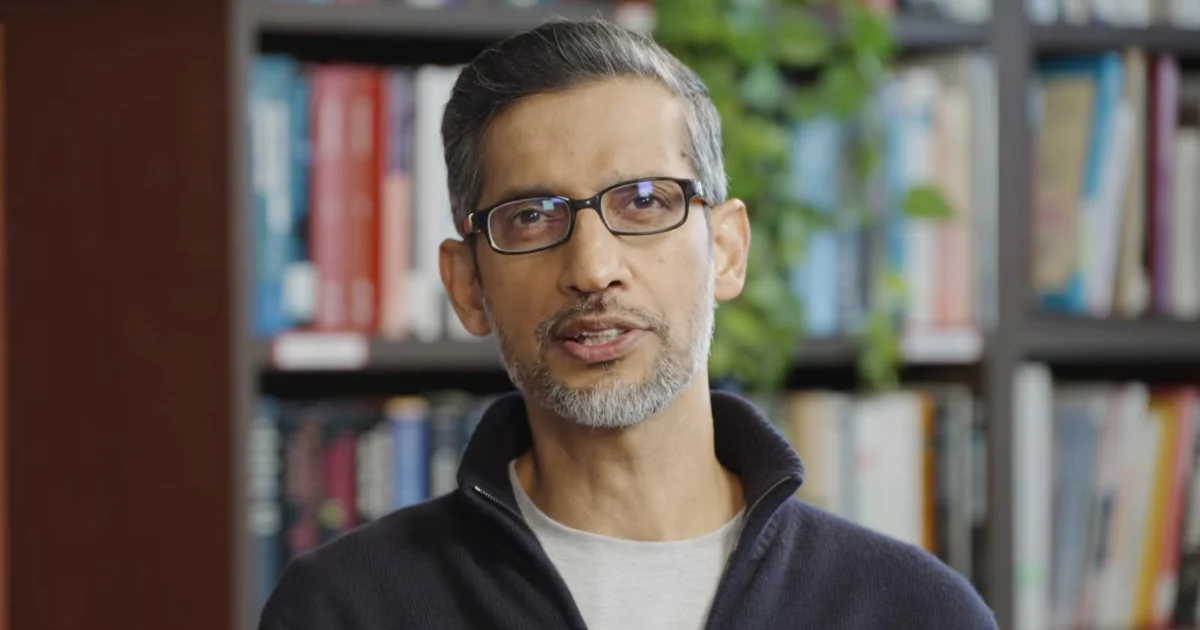
However, according to a recent, far-ranging interview between tech journalist Alex Heath and Google CEO Sundar Pichai, that paradigm is approaching its twilight.
Pichai outlined a bold, transformative vision for Google’s future—one where traditional search results, chat interfaces, and standalone software products are bound together not by manual navigation, but by an intelligent “agentic layer.” Rather than merely answering questions or generating text, Google’s next-generation AI models are being engineered to execute complex, multi-step tasks autonomously in the background, fundamentally redefining how humans interact with technology, information, and the open web.
1. Main Facts: What Google is Building
At the core of Pichai’s announcement is a massive architectural pivot. Google is no longer viewing AI as a simple feature add-on or a standalone chatbot; it is designing a unified agent infrastructure capable of serving both enterprise clients and everyday consumers.
- The "One Box" Philosophy: Google’s ultimate destination for the consumer experience is a single, cohesive interface—"one box"—where conversational chat, task execution, and deep web search converge seamlessly.
- Shared Infrastructure Across Sectors: Google utilizes the exact same foundational model, execution harness, and runtime environment for both its enterprise-grade Workspace tools and its consumer-facing Gemini applications. The only variable is the contextual data supplied by the user.
- Enterprise-Grade Security for Consumers: Technologies initially engineered to meet rigorous corporate compliance standards—such as isolated micro-virtual machines (microVMs) running 24/7 with real-time monitoring and strict governance—are filtering down to consumer products to safely execute tasks on behalf of users.
- The Rise of Agentic Queries: Google’s internal usage data shows a steady, compounding upward trend in "agentic queries"—searches and prompts that demand action, execution, and problem-solving rather than just static informational links.
- The Agentic Layer as the Great Unifier: Rather than forcing a messy mechanical merger between wildly popular, billion-user pillars like Google Search and Gemini, Google intends to let an intelligent agentic layer bridge the gap organically.
2. Chronology of the Shift: From I/O to the Agentic Era
To understand how Google arrived at this strategic pivot, it is helpful to trace the timeline of product deployments and executive statements leading up to Pichai’s latest remarks:
- Google I/O (May): Google first began signaling its deeper ambitions in proactive automation by showcasing Google Spark, a cloud-based personal agent tightly integrated with Search. Spark leveraged search information agents to conduct complex web research while simultaneously bridging Search and Chrome functionality.
- Summer/Early Fall Enterprise Push: Google shifted its primary messaging toward enterprise applications, introducing advanced Gemini Workspace integrations equipped with robust identity management, data privacy controls, and auditability features.
- The Launch of Advanced Models (Ultra, Pro, and Argon): Google began rolling out its most capable models to high-end users, demonstrating massive step-changes in reasoning capabilities, speed, and contextual awareness.
- The Recent Pichai-Heath Interview: In his conversation with Alex Heath, Pichai formally connected the dots between consumer features, enterprise security, and the future of Search, confirming that Google’s underlying architecture is designed to handle autonomous, long-running agent tasks on a global scale.
3. Supporting Data and Industry Context: The Race for Personal Agents
The race to capture the consumer personal agent market is arguably the most fierce and high-stakes battleground in modern technology. As Heath noted during the interview, tech giants and innovative startups alike are rushing to build proactive assistants. Products like Anthropic’s ecosystem updates, OpenAI’s voice and agent capabilities, and specialized tools like Muse have accelerated competitive pressure across the sector.
Google’s strategic advantages in this race lie in scale and integration:
- Billions of Endpoints: Google commands two massive, independent product ecosystems with over a billion active users each: Google Search and the Gemini AI platform.
- Real-Time Data Indexing: Unlike closed AI systems, Google retains the world’s most sophisticated, real-time index of the open web, giving its agents unparalleled factual grounding.
- Empirical Usage Shift: Google’s internal metrics confirm that user behavior is organically evolving. People are no longer content with typing keywords for research; they are issuing directives. They want itineraries planned, code written and deployed, emails summarized and replied to, and research papers synthesized automatically.
As Pichai noted, the newer generation of Argon models has delivered a "huge step change" in the model’s ability to handle these heavy computational and reasoning loads reliably.
4. Official Responses: Inside Pichai’s Vision
Pichai’s commentary during the interview sheds light on the philosophy guiding Silicon Valley’s search giant. When pressed on whether Google needs to aggressively capture market share in the consumer agent space, Pichai emphasized that the groundwork laid at Google I/O and subsequent enterprise events represents a unified roadmap.
On the Unity of Enterprise and Consumer Tech:
"To be very clear between enterprise and consumer, it’s the same model, same harness, same runtime. It is just the context of what you have in a business or your personal context is different… And everything we announced in the event, because we’re building it for enterprise, has world-class security governance. Every task there, we are provisioning essentially a micro VM to go complete the task, running securely 24-7… We’re bringing all that to consumers as well."
On the Convergence of Search and Task Execution:
"Empirically, when we look at what people are doing in Gemini, if you were to go back and classify it, we see the trend already. So the percentage of… queries, which are more agentic, has been steadily increasing over time. And we’re going to make all of that more widely available as we go through the next few months… you will be able to, again, as a consumer, talk to Gemini, not just in the app, but in the context of… search, and we are focused on it in a pretty deep way."
On Why Products Don’t Need to "Merge":
When asked if search and conversational AI products will eventually fuse into a single product, Pichai rejected the premise of a forced mechanical merger, pointing instead to software architecture:
"I expect our agents to provide that unifying experience across these products. In fact, that agentic layer, rather than try to converge or think about different products and how they come together, I think the agentic layer naturally ends up doing that… Because your agents, they’re running in the cloud, they’re running 24/7, they have your context. And so they can pick up things where you left off… I think the agentic layer offers us a chance to bring a unified product experience better than ever before."
5. Implications: What the "Agentic Layer" Means for the Future of the Web
While Pichai’s vision paints a picture of effortless, proactive convenience for the everyday consumer, it introduces profound questions—and existential threats—for the broader digital ecosystem.
The End of Traditional SEO and Referral Traffic?
For decades, Search Engine Optimization (SEO) has dictated the economics of the internet. Millions of publishers, independent journalists, e-commerce stores, and service providers rely on human visitors clicking links delivered via search engines to generate revenue through ads, subscriptions, and direct sales.
If Google’s agentic layer successfully absorbs Search, AI Overviews, and personal assistants into a single "one box" experience where cloud-based agents execute tasks 24/7:
- Disintermediation of Content: If an AI agent executes a user’s request—such as booking a vacation, comparing insurance policies, or summarizing a complex news event—by scraping data directly and synthesizing the output internally, the human user may never actually visit the source website.
- The Death of the Click: When machines negotiate with machines on behalf of humans, traditional web traffic metrics could plummet. Webmasters will no longer be optimizing for human eyeballs; they will be optimizing to ensure their data APIs are readable and actionable by Google’s autonomous microVM agents.
- Monetization Uncertainty: If referral traffic dries up, how will independent content creators, niche publishers, and small businesses monetize their work? Google has yet to provide a clear economic framework for how content creators will be compensated when AI agents act as the gatekeepers of human attention.
Conclusion
Sundar Pichai’s recent statements confirm that Google is moving past the conversational chatbot era and charging headfirst into the age of autonomous AI execution. By weaving advanced security, persistent cloud-based runtimes, and deep search integration into a universal agentic layer, Google is preparing to redefine digital interaction.
However, as this technology transitions from high-end developer previews to ubiquitous consumer reality, the tension between frictionless AI convenience and the economic survival of the open web will become the defining conflict of the digital age. Whether the agentic layer can coexist with a vibrant, human-driven web—or consume it entirely—remains the ultimate unanswered question.