






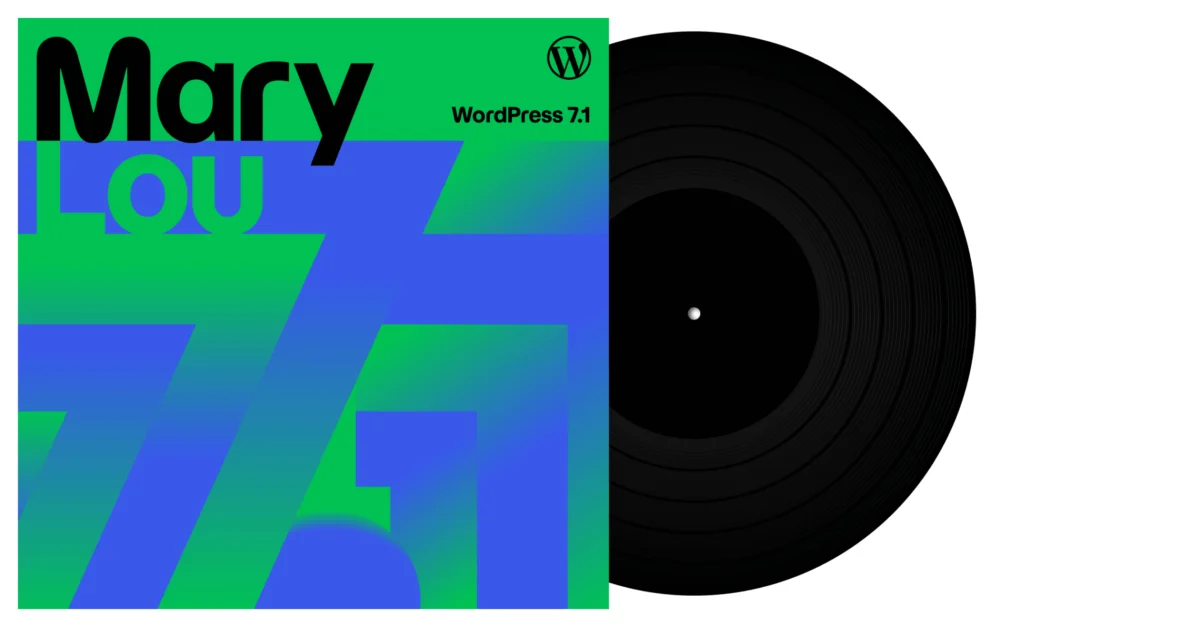
August 2026 — The WordPress open-source project has officially announced the release of WordPress 7.1, code-named "Mary Lou" in honor of the pioneering jazz pianist, arranger, and composer Mary Lou Williams. Continuing the project’s tradition of dedicating major software versions to iconic musical artists, this latest iteration introduces a sweeping array of features designed to refine editorial workflows, enhance site performance, and expand developer toolsets.
Backed by a massive collaborative effort spanning over 800 contributors globally, WordPress 7.1 delivers more than 1,500 enhancements and bug fixes. This report provides a comprehensive breakdown of the release, detailing the core facts, chronological development, supporting telemetry, official perspectives, and the broader industry implications of the software.

Main Facts: What’s New in WordPress 7.1
WordPress 7.1 centers its updates around four primary pillars: editorial navigation, design flexibility, team collaboration, and client-side media optimization. Key highlights of the release include:
- Persistent Admin Bar: The WordPress admin bar now remains visible across all editors, creating a unified navigational bridge between the standard dashboard and the Site Editor.
- Advanced Responsive Styling: Site creators can now manipulate block layouts for varying viewport sizes directly via Global Styles or individual block settings, entirely bypassing the need for custom CSS.
- Unified Media Editor: A revamped media modal combines freeform cropping, aspect-ratio adjustments, horizontal/vertical flipping, precise rotation, and metadata editing into a single, streamlined workflow.
- Enhanced Collaborative Notes: Content notes are no longer restricted to whole blocks. Users can highlight specific text passages, utilize rich text formatting (bold, italic, code, links), and trigger notifications via
@mentions. - Client-Side Image Processing: Leveraging a WebAssembly build of libvips, WordPress 7.1 processes image compression, resizing, and thumbnail generation directly in the browser, mitigating server timeouts and PHP memory exhaustion.
- New Native Blocks and APIs: The release introduces native Playlist (complete with audio waveforms) and Tabs blocks. Furthermore, developers gain a public SVG Icon API for custom collections and an expanded Abilities API tailored for AI-driven automation.
Chronology: The Journey to "Mary Lou"
The development cycle for WordPress 7.1 followed a rigorous, community-driven roadmap typical of major Core releases.

Early Ideation and Musical Dedication
Following the foundational work established in version 6.9, core maintainers began conceptualizing 7.1 with an emphasis on modern web development paradigms—specifically browser-side processing and granular responsive design. Aligning with the project’s cultural ethos, the release was dedicated to Mary Lou Williams, whose legendary Harlem apartment in the 1940s served as a crucible where jazz icons like Thelonious Monk and Dizzy Gillespie gathered to exchange ideas and invent bebop. The themes of cross-pollination, reinvention, and collaboration directly informed the architectural goals of version 7.1.
Alpha, Beta, and Release Candidate Phases
- Core Feature Freezes: Throughout mid-2026, the Gutenberg team integrated heavily requested features, transitioning the post editor to a fully iframed environment for all themes to mirror the stability and isolation of the Site Editor.
- Testing and Localization: By early August 2026, the software entered its hardening phase. More than 20 locales achieved 100% translation coverage by launch day, making "Mary Lou" one of the most rapidly localized releases in WordPress history.
- Official Launch: WordPress 7.1 became globally available for download and automatic updates in August 2026, accompanied by comprehensive documentation via the official Field Guide and Release Notes.
Supporting Data: Community Engagement and Metrics
The scale of WordPress 7.1 reflects the continued vibrancy of its open-source ecosystem. Telemetry and contribution data provided by the project underscore the massive coordination required to ship the release:

- Global Contributor Count: Over 800 individual contributors hailing from countries worldwide participated in writing code, filing issues, testing patches, and documenting changes.
- First-Time Contributors: Demonstrating healthy ecosystem renewal, the release welcomed more than 170 first-time contributors to the WordPress Core codebase.
- Ticket Resolution: Contributors successfully delivered more than 1,500 distinct enhancements, feature additions, and security patches.
- Localization Reach: Day-one support spanned over 20 fully translated languages, reinforcing the software’s accessibility to a global user base operating across more than 200 distinct locales.
- Performance Benchmarks: Browser-based media handling successfully eliminated common shared-hosting pitfalls, such as HTTP 500 errors caused by memory limits during bulk uploads of high-resolution HEIC and AVIF files captured by modern smartphones.
Official Perspectives and Statements
Project leaders and core contributors emphasized that WordPress 7.1 represents a maturing of the Block Editor ecosystem, shifting the focus from structural paradigm shifts to deep refinement and user-experience polish.
In project documentation accompanying the release, core leads highlighted how the integration of the Abilities API builds directly upon infrastructure laid down in prior versions:

"The Abilities API makes it significantly easier to build sophisticated integrations and automation on top of WordPress, opening the door for robust, secure AI-powered tooling without sacrificing core stability."
Regarding developer ergonomics, the expansion of the SVG Icon API was lauded as a long-awaited milestone. Designers and agency developers can now seamlessly register custom icon libraries via programmatic functions such as wp_register_icon_collection(), ensuring brand consistency across complex enterprise builds without relying on third-party plugin bloat.

Accessibility advocates within the project also noted critical victories in version 7.1. The introduction of core functions like wp_get_tooltip() and wp_get_toggletip() standardizes assistive technology interactions across post meta boxes and login screens, while screen reader compatibility within post list tables has been substantially optimized.
Implications: What WordPress 7.1 Means for Users and Developers
The release of WordPress 7.1 carries significant ramifications for content creators, site administrators, and enterprise development agencies alike.

1. For Content Creators and Marketers
The ability to collaborate via rich-text inline notes and direct @mentions transforms WordPress into a viable alternative to dedicated proprietary document-editing platforms like Google Docs or Notion. Editorial teams can now manage reviews, debates, and copywriting revisions directly inside the publishing canvas. Furthermore, the inclusion of native Tabs and Playlists reduces reliance on third-party plugin ecosystems, improving long-term site maintainability.
2. For Theme Authors and Designers
By introducing native responsive styling controls into Global Styles and block settings—backed by the ability to define custom breakpoints within theme.json—designers possess unprecedented layout control. The standardization of pseudo-state styling (hover, focus, active states) for buttons directly within the user interface empowers non-technical users to build interactive, polished web experiences safely.

3. For Developers and System Administrators
The migration of image processing to WebAssembly (Wasm) via libvips is a quiet revolution for server resource management. By shifting CPU-intensive image compression and thumbnail generation to the visitor’s browser prior to final server intake, hosting overhead drops precipitously. This architecture virtually eradicates memory exhaustion errors on shared hosting environments, ensuring a smoother publishing pipeline for media-heavy publications.
Conclusion
WordPress 7.1 "Mary Lou" successfully bridges the gap between deep user-facing flexibility and advanced developer architecture. By honoring a musical pioneer who constantly reinvented her craft, the WordPress open-source community has delivered an update that proves the platform’s enduring capacity for innovation, collaboration, and performance excellence.