







In an era where cyber threats are becoming increasingly sophisticated, the average internet user finds themselves in a precarious position. The rise of artificial intelligence has empowered malicious actors to deploy automated vulnerability scanning, craft hyper-realistic phishing emails, and even utilize deepfake technology to bypass traditional security measures. What was once a landscape dominated by targeted corporate espionage has shifted into a theater of war for the individual’s digital identity.
In response to this growing digital volatility, cybersecurity companies are consolidating their offerings. Enter the "all-in-one" suite—a singular subscription designed to tackle data privacy, identity protection, and network security simultaneously. One such contender is IDX, whose "Complete" bundle aims to provide a comprehensive shield for individuals and families. But does convenience come at the cost of performance? We put IDX through its paces to determine if it truly lives up to its promise.
Main Facts: What is IDX Complete?
IDX Complete is a tiered cybersecurity subscription service designed to centralize personal security. Rather than forcing users to juggle a standalone VPN, a password manager, and a separate data removal service, IDX integrates these functions into a unified dashboard.
Core Features at a Glance:
- ForgetMe Data Removal: An automated tool designed to scan data broker websites for your personal information and request its removal.
- Password Manager: A secure vault that stores credentials, facilitates easy login, and monitors for potential data breaches.
- Virtual Private Network (VPN): Encrypts your internet traffic to hide your IP address and protect your data on public Wi-Fi.
- Dark Web Monitoring: Scans the deeper layers of the internet for leaked personal data.
- Identity Theft Recovery & Insurance: Provides professional guidance and financial reimbursement coverage for U.S.-based users in the event of identity theft.
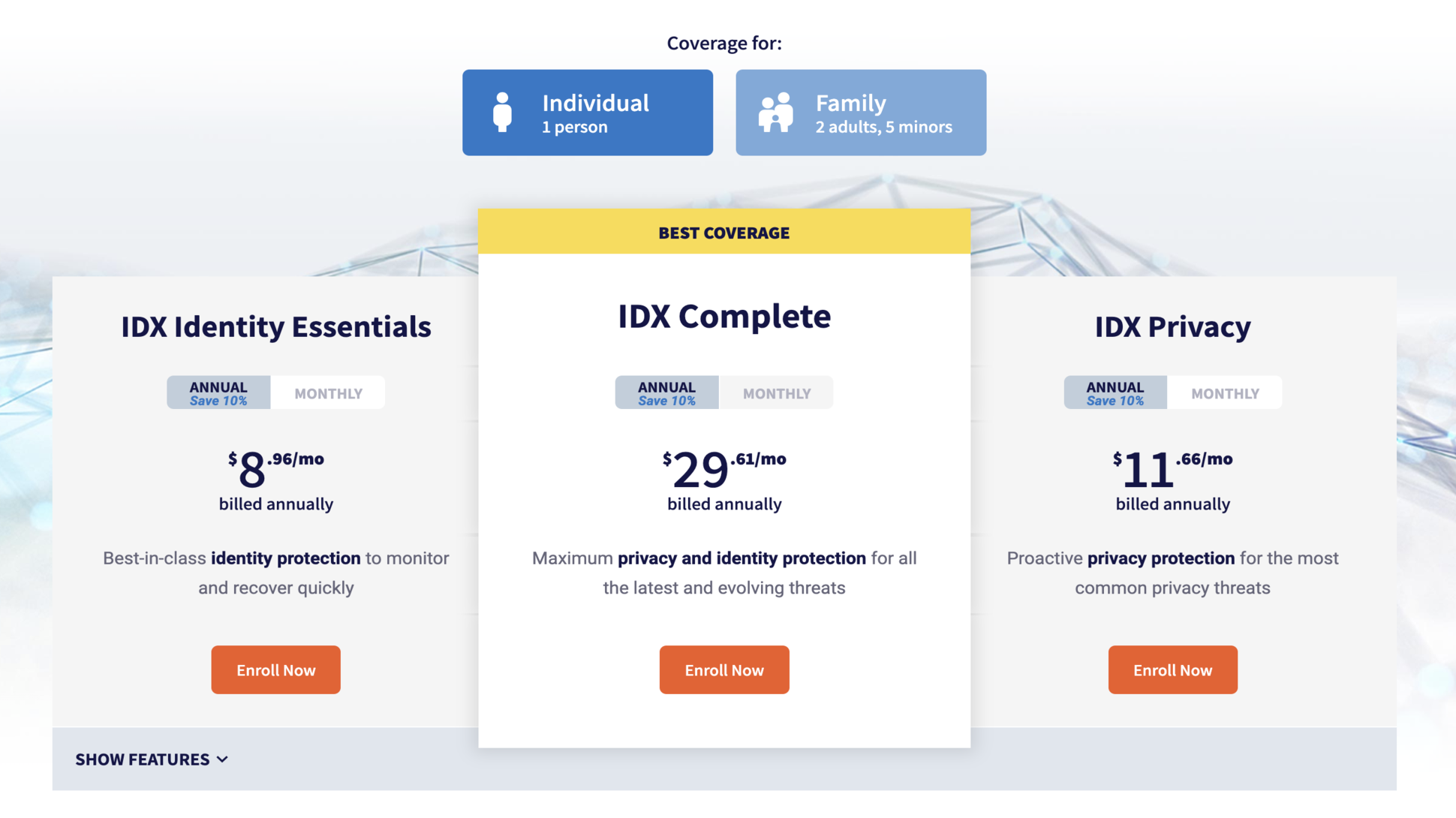
For an individual, the cost is set at $33 per month, while a family plan—covering two adults and up to five dependents—is available for $65 per month.
Chronology of the Modern Threat Landscape
To understand why services like IDX have gained traction, one must look at the evolution of cybercrime over the last decade.
Phase 1: The Era of Manual Phishing (2010–2015)
During this period, cyber threats were largely recognizable. Phishing emails were riddled with grammatical errors, and data breaches were infrequent enough that consumers often ignored basic password hygiene.
Phase 2: The Proliferation of Data Brokers (2016–2020)
As social media platforms matured, the data brokerage industry exploded. Personal information—from addresses to income brackets—became a commodity sold to advertisers and, occasionally, malicious actors. This necessitated the birth of "data removal" services, which act as intermediaries to scrub individual footprints from the web.
Phase 3: The AI-Driven Frontier (2021–Present)
The current climate is defined by speed and scale. AI tools now allow hackers to conduct thousands of automated scans against individual home networks in seconds. Furthermore, the "Identity Theft as a Service" model has lowered the barrier to entry for criminals, making robust, multi-layered protection not just a luxury, but a necessity for the average digital citizen.
Supporting Data: Performance and Comparisons
When we evaluate a suite like IDX, we look at the individual performance of its components compared to "best-in-class" standalone products.
The Data Removal Gap
IDX’s "ForgetMe" service covers approximately 100 data broker sites. While this is helpful for the average user, it falls short of specialized competitors like DeleteMe or PrivacyHawk, which often monitor 500+ sources. While IDX covers the "big players," those seeking total digital erasure may find its scope somewhat limited.
VPN Reliability
The included VPN offers roughly 20 server locations. In testing, the connection was stable and sufficient for browsing and light streaming. However, compared to dedicated VPN providers (such as NordVPN or ExpressVPN) that offer thousands of servers across 100+ countries, IDX’s network is clearly designed for basic privacy rather than high-performance gaming or bypassing complex geo-blocks.
Cost-Efficiency Analysis
The primary selling point of IDX is, undeniably, the price.
- Standalone costs (estimated):
- Premium VPN: $10–$15/month
- Password Manager: $3–$5/month
- Data Removal Service: $10–$20/month
- Total: $23–$40/month
At $33 per month for the bundle, IDX is competitively priced. However, users must be aware that by opting for a bundle, they are trading the "best" features in each category for a "good enough" standard across the board.
Official Responses and Accessibility
One of the most notable aspects of the IDX experience is its rigid "paywall" approach. Unlike many competitors that offer a 7-day free trial or a 30-day money-back guarantee, IDX requires an immediate commitment.
When queried regarding this, representatives often point to the complexity of the identity theft insurance and recovery services, which are active from day one. However, from a consumer advocacy perspective, this lack of a "try-before-you-buy" model is a significant friction point. In an industry where trust is built through transparency, forcing a payment before a user can test the UI or the efficacy of the data removal scan is a strategy that alienates a segment of potential customers.
Implications: Who is IDX For?
The implication of using an all-in-one suite like IDX is a trade-off between convenience and granular control.
The Case for the Average User
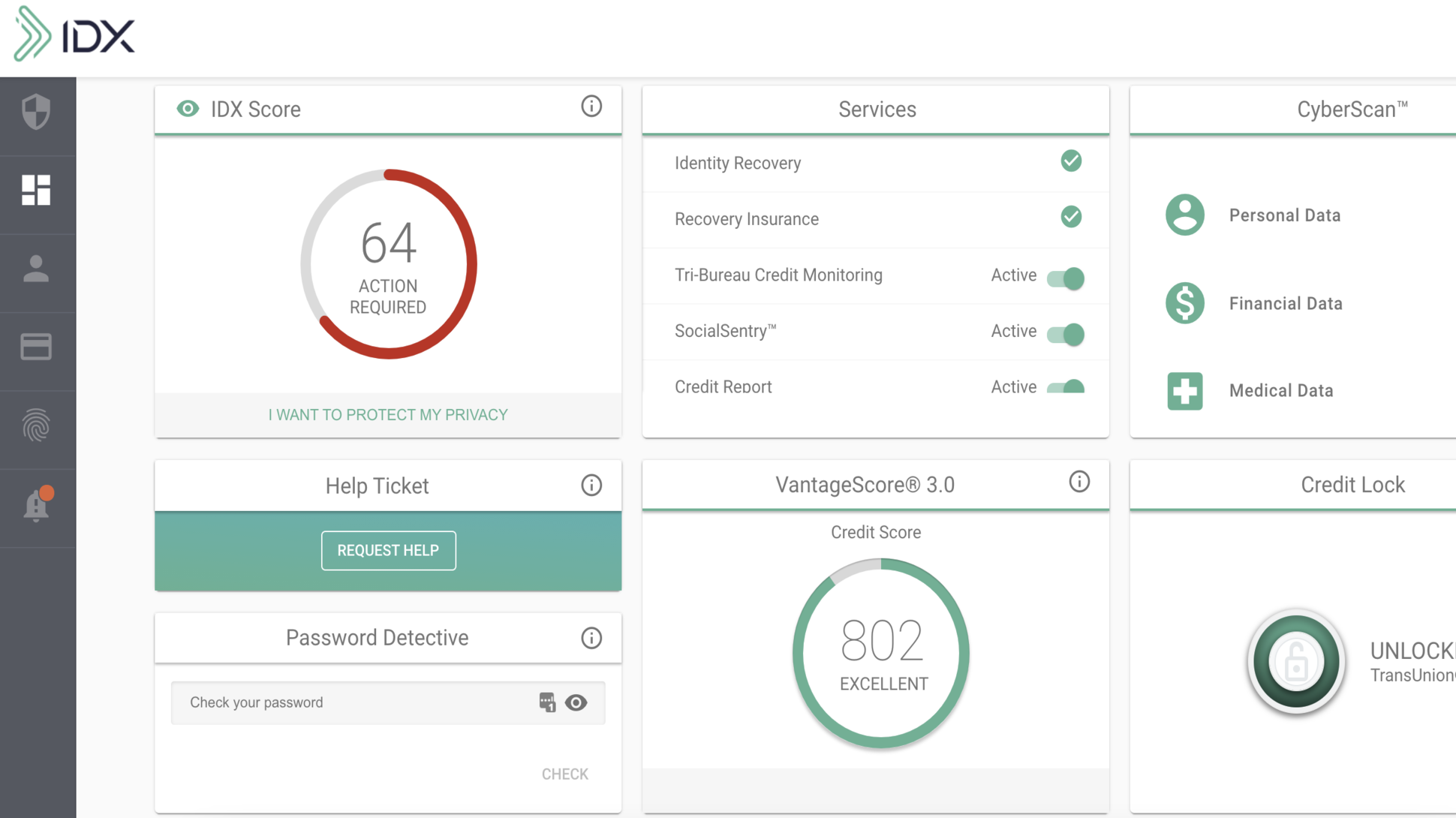
If you are someone who finds managing five different security subscriptions overwhelming, IDX is an excellent solution. The "minimalist" interface is a major win for non-technical users. You can log into one dashboard, view your security status, check for alerts, and enable your VPN with a single click.
The Case Against for the Power User
If you are a privacy advocate who requires specific VPN protocols (like WireGuard or OpenVPN), or if you are concerned about specific niche data brokers not covered by the standard 100-site scan, IDX will likely feel insufficient. Power users will almost always prefer a "best-of-breed" stack, where they select the top-rated VPN, the top-rated password manager, and the top-rated data removal service separately.
Final Verdict: Is it a Worthwhile Investment?
IDX Complete is a robust, well-integrated, and highly convenient package. It succeeds in its mission to simplify the complex web of personal cybersecurity. By bundling identity protection with active tools like a VPN and a password manager, it provides a "safety net" for families and individuals who might otherwise be unprotected.
However, the lack of a free trial and the relatively small number of data broker sources are significant drawbacks. To remain competitive with rising stars like PrivacyHawk—which offers better trial conditions and similar functionality—IDX must evolve its pricing model and expand its scan capabilities.
Pros:
- Excellent, clean user interface that simplifies complex security tasks.
- Strong value proposition for users who want to consolidate their subscription costs.
- Valuable identity theft recovery and insurance services for U.S. residents.
Cons:
- No free trial or money-back guarantee makes it a "blind" purchase.
- Data broker coverage is limited (100+ sites) compared to specialized rivals.
- VPN server network is small compared to dedicated providers.
Conclusion:
IDX Complete is an ideal "entry-level" cybersecurity suite for families. It provides a significant upgrade over doing nothing, and the convenience of a single dashboard cannot be overstated. If you value time and simplicity over absolute granular control, it is a smart investment. If, however, you are a security-conscious professional seeking the absolute bleeding edge of privacy tools, you may find the individual components of the IDX suite to be slightly underwhelming.