





For years, digital creators, motion designers, and video editors looking to break away from the steep subscription costs of Adobe Creative Cloud have faced a persistent bottleneck. While finding open-source or free alternatives for Photoshop (such as GIMP, Photopea, or Affinity) and Premiere Pro (like various free timelines and lightweight editors) has become relatively straightforward, Adobe After Effects has remained the final frontier. Replicating its complex layer management, keyframing ecosystem, advanced motion physics, and extensible architecture has proven historically difficult.
While tools like Pikimov have attempted to bridge the gap, they often leave professional creators wanting more. Now, a disruptive new open-source contender is changing the conversation: EffectCraft, the flagship motion design and visual effects application within the broader ArtCraft suite.
Developed almost entirely by AI agents in a matter of days under the guidance of developer and former storyteller.ai CEO Brandon Thomas, EffectCraft is making waves across the creative technology sector. Built via a "clean-room" approach—relying entirely on public documentation and observational behavior rather than copying proprietary Adobe code—EffectCraft promises an unprecedented level of familiarity for longtime After Effects users.
Main Facts: What is EffectCraft?
EffectCraft is an open-source, heavily AI-generated motion graphics and visual effects application designed to mirror Adobe After Effects. It sits as one of the 13 applications within the ambitious ArtCraft suite, a project spearheaded by Brandon Thomas.
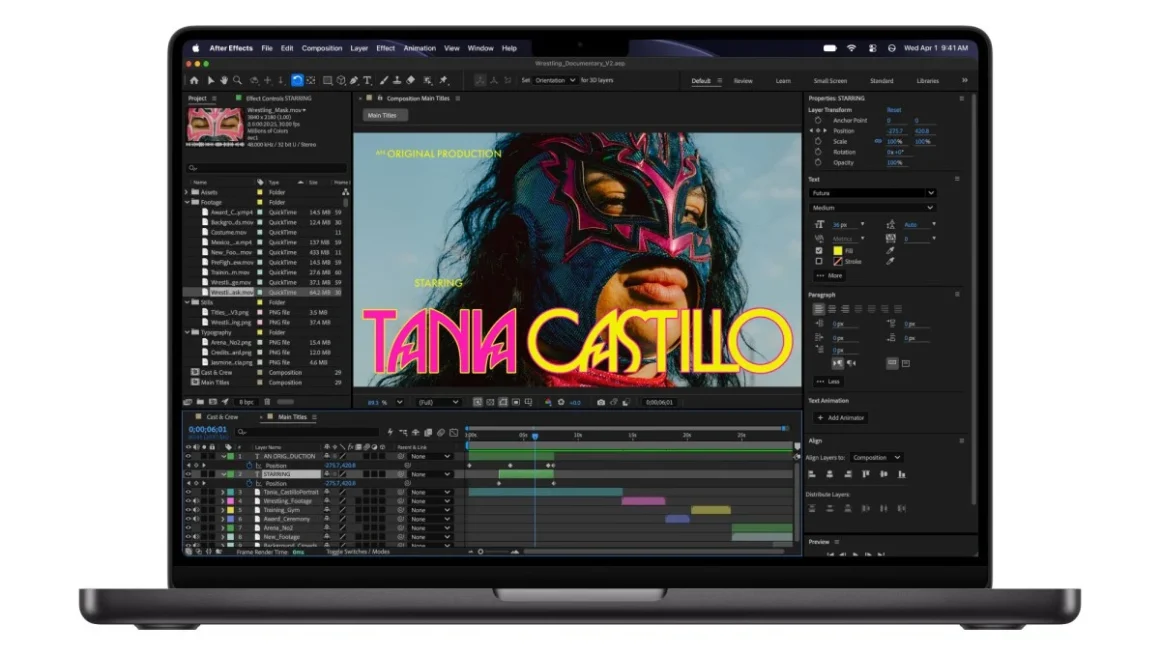
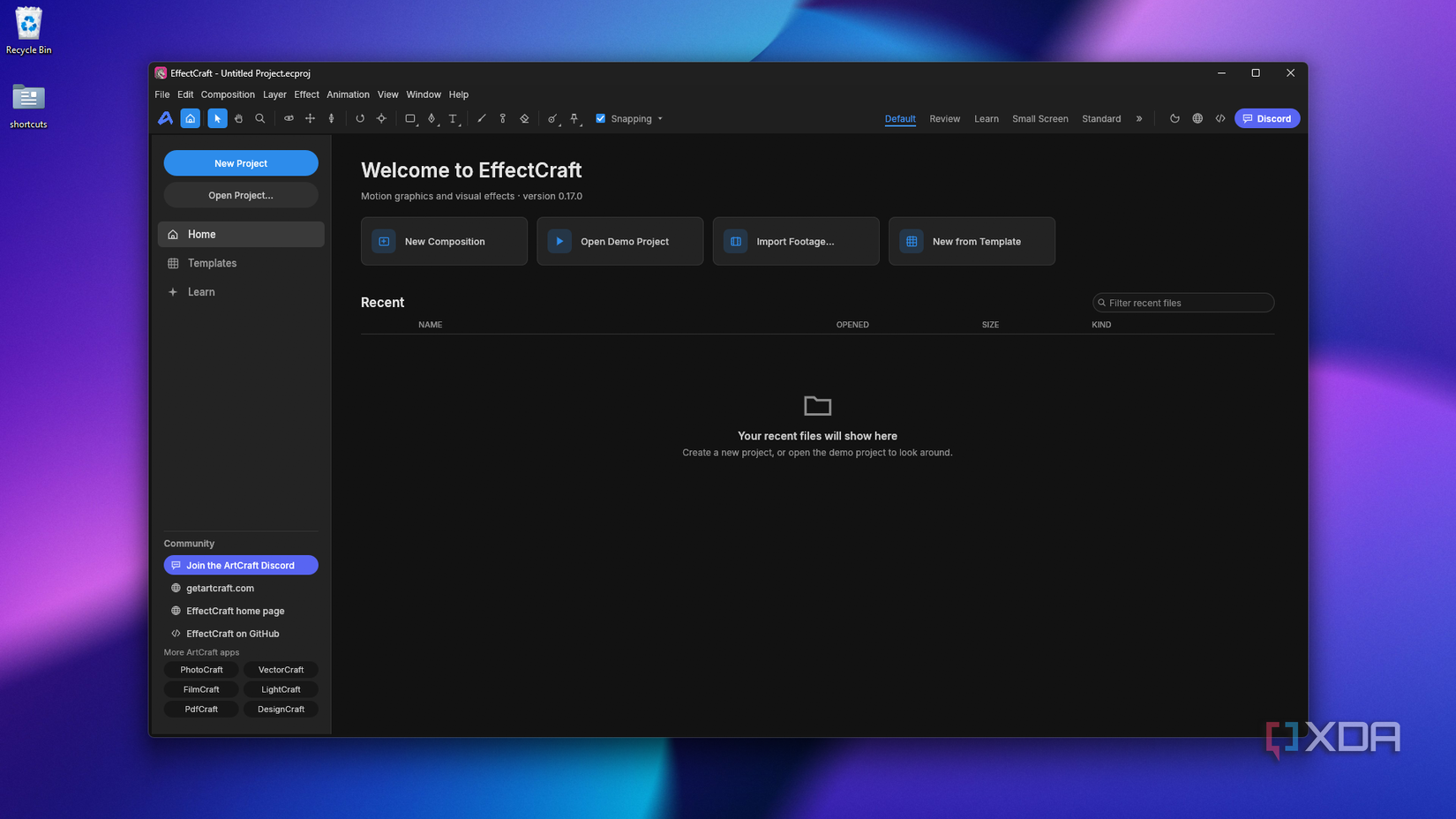
The application is written primarily in Rust and is designed to replicate the user interface, keyboard shortcuts, effects parameters, and structural paradigms of After Effects down to the finest detail. Rather than forcing veteran animators to adopt an entirely new workflow—such as learning a complex node-based compositing system—EffectCraft aims to act as a 1:1 behavioral clone.
Key attributes of EffectCraft include:
- The Foundation: Built using Claude Opus 5.5, leveraging multiple concurrent AI coding agents.
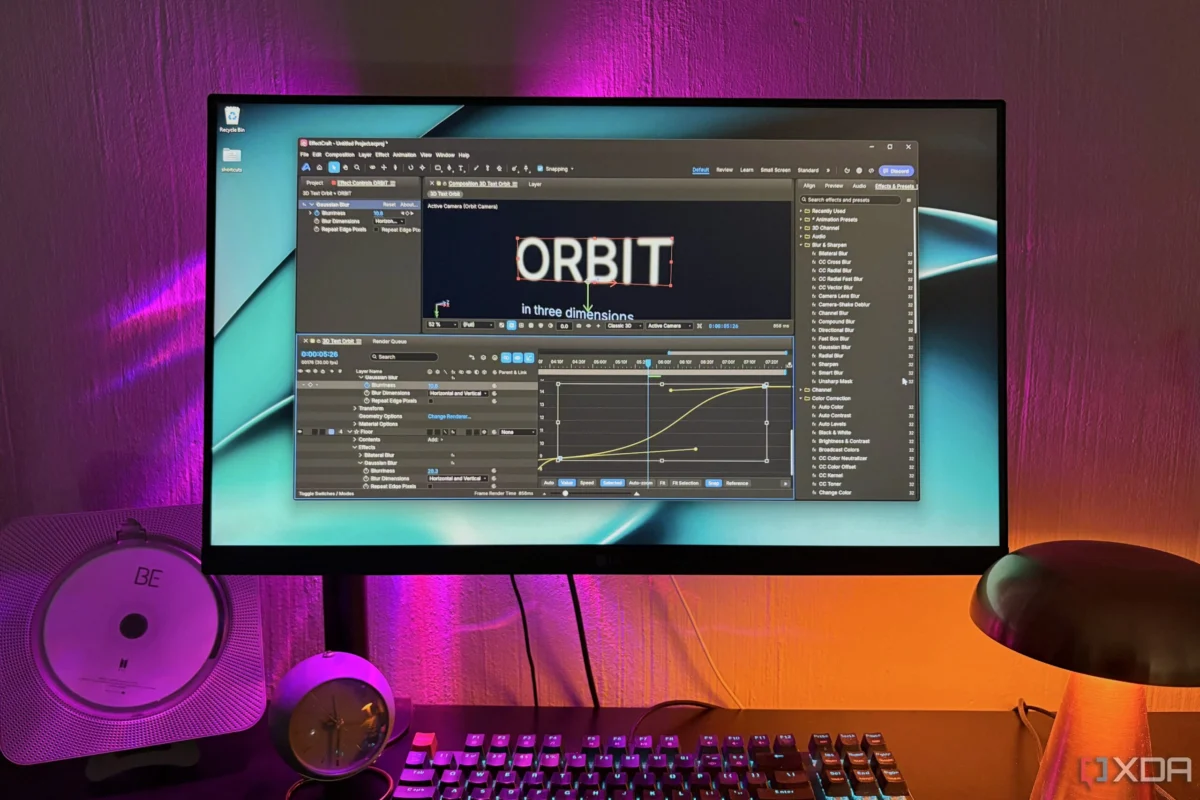
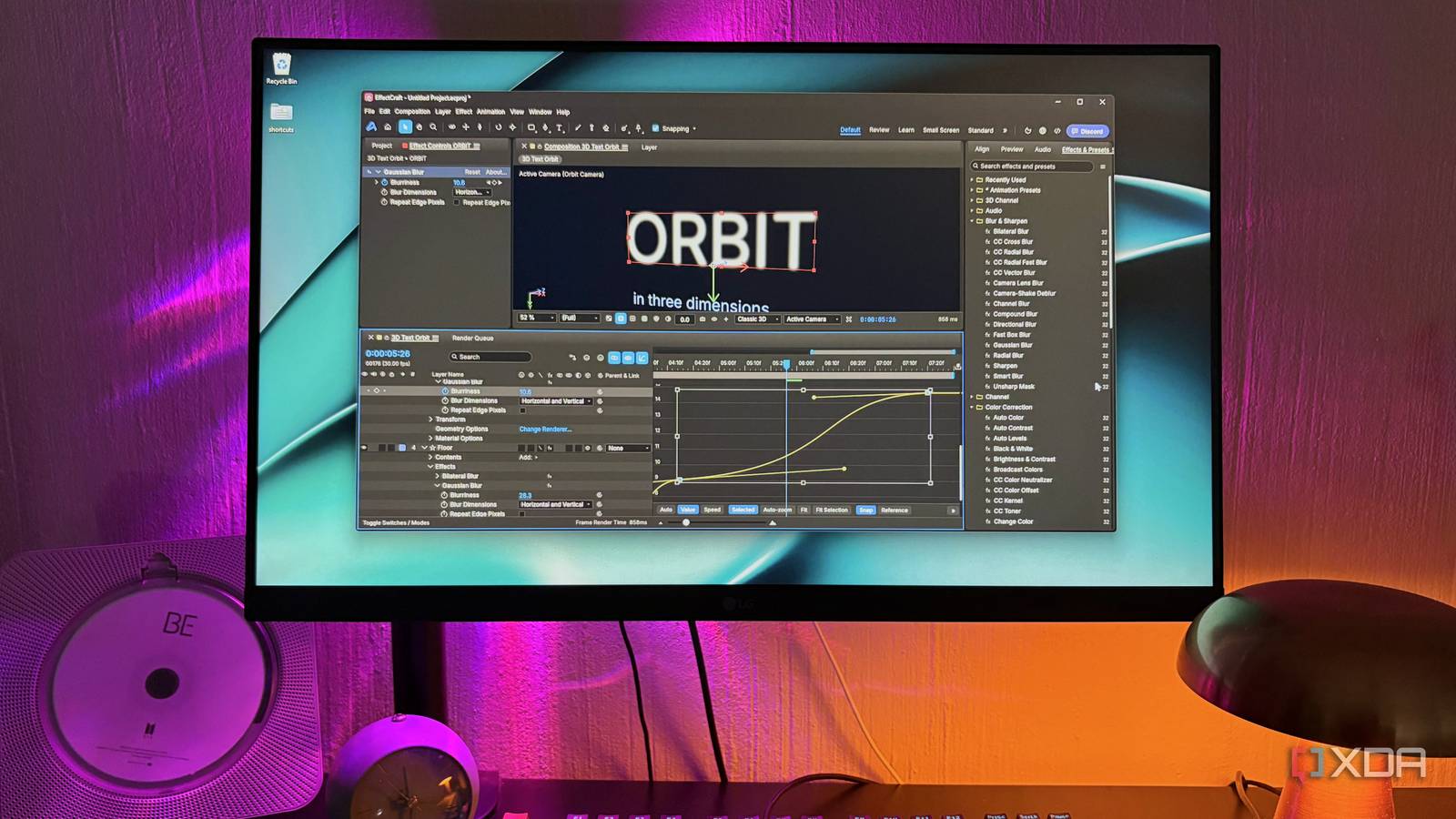
- Core Animation Parity: Full inclusion of essential After Effects animation mechanics, including Hold Keyframes, standard keyboard shortcuts (such as double-tapping ‘U’ to reveal modified properties), and a deeply integrated Graph Editor.
- Effects Library: Features 306 built-in effects that mirror After Effects’ naming conventions, parameter orders, and default values.
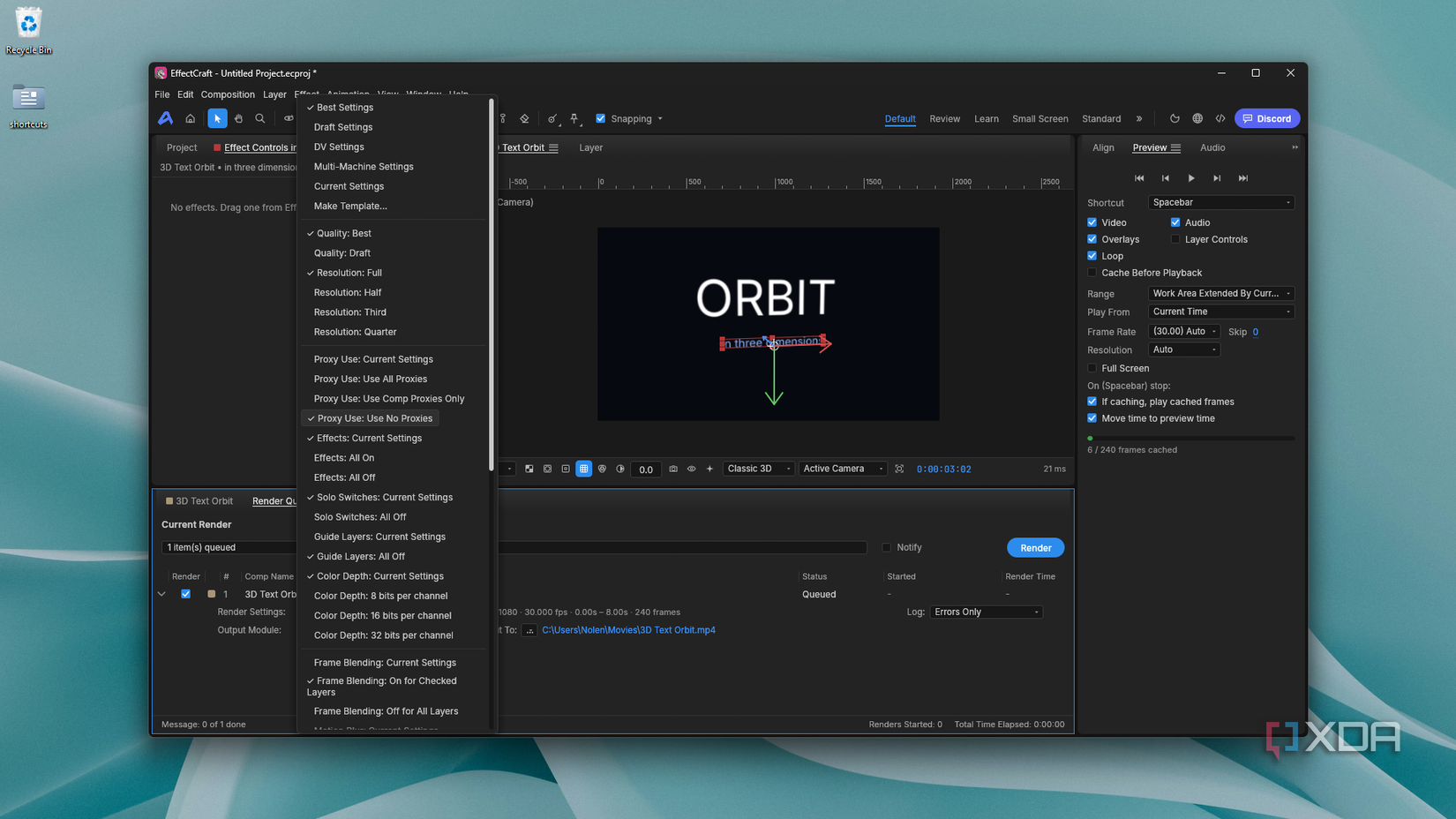
- Color Management: Supports 8-bit, 16-bit, and 32-bit per channel processing, alongside modern OCIO and ACES color management systems.
- Export Capabilities: Native support for Lottie file import and export out of the box, alongside a robust Render Queue supporting H.264, ProRes with alpha, HEVC, AV1, WebM, EXR sequences, and GIFs without relying on FFmpeg.
Chronology: From Concept to a 330,000-Line Codebase in Ten Days
The development timeline of EffectCraft reads like a science fiction novel, highlighting the raw velocity enabled by modern generative AI coding agents.
- October 1, 2026: The first commit lands in the EffectCraft repository, marking the official beginning of the project.
- Early October 2026 (Days 1–10): Operating with roughly 4 to 8 AI coding agents running concurrently, the project rapidly scales. Within a mere 10 days, the repository swells to approximately 330,000 lines of Rust code.
- Mid-October 2026: The development team internalizes its progress through automated checklists, initially grading the application at a staggering 99% feature parity with After Effects. However, recognizing that the evaluation metrics were self-generated by the same AI agents building the software, the team re-evaluates the platform against After Effects 2026.
- Late October 2026: Adjusted assessments place functional feature presence at roughly 91%, with real-world readiness for paid client work hovering closer to 45%.
- Public Release & Community Reaction: Brandon Thomas initially sparks intense discussions on Reddit by claiming the suite will match Adobe’s entire application ecosystem within a single month. He later moderates those timelines on Hacker News, suggesting a more realistic window of a couple of months to reach sustained 99% parity. Currently sitting at version 0.17, the application is in an active alpha phase.
Supporting Data: Under the Hood of an AI-Built Suite
To understand how EffectCraft performs in practice, it is necessary to examine how its underlying systems stack up against industry standards.
The Animation Engine and Graph Editor
The true litmus test for any After Effects alternative is its handling of keyframing and motion easing. EffectCraft successfully incorporates classic mechanics, including the crucial F9 shortcut for "Easy Ease," which smooths out the acceleration and deceleration of objects across a timeline.
Furthermore, EffectCraft implements a dual-mode Graph Editor:

- Value Graphs: Displaying the exact numerical property changes over time.
- Speed Graphs: Visualizing velocity curves with adjustable bezier handles on individual keys.
Remarkably, the development team cross-verified EffectCraft’s easing curves against After Effects at 168 distinct points in time, reporting a direct mathematical match. Additionally, the software bundles an integrated Ease Preset panel, eliminating the need for motion designers to purchase third-party plugins (such as Flow) for advanced curve manipulation.
Effects, 3D Capabilities, and Color Pipelines
- Effects Parity: The app ships with 306 built-in effects. While they share names, parameter sets, and default configurations with Adobe equivalents, rigorous cross-rendering verification is still ongoing. Pre-made animation presets are currently sparse, representing only a fraction of what Adobe offers.
- 3D Space: EffectCraft features a robust 3D environment equipped with virtual cameras, depth of field controls, and lights capable of casting soft ray-traced shadows. It natively imports 3D models via glTF and OBJ formats (though industrial formats like FBX and USD are not yet supported). Third-party plugin ecosystems like Trapcode or Element 3D are currently unsupported.
- Color Depth: Projects can be processed at 8, 16, or 32 bits per channel, denoted by the familiar "32" badge interface element. While OCIO and ACES pipelines are supported for high-end cinematic workflows, 32-bit blend modes do not yet match Adobe’s proprietary math identically.
Official Responses and Developer Transparency
One of the most refreshing aspects of the EffectCraft project has been the candor of its creator and contributors regarding the limitations of AI-assisted software engineering.
When development velocity led to early, highly optimistic claims of total feature replication within a 30-day window, the creative community reacted with a mix of awe and healthy skepticism. Recognizing the danger of over-promising, Brandon Thomas quickly tempered expectations on forums like Hacker News, acknowledging that enterprise-grade stability and production readiness require iterative bug fixes, edge-case handling, and rigorous performance profiling.
The development documentation openly addresses potential pitfalls:
- The Self-Evaluation Trap: Creators admitted that initial high-scoring feature parity metrics were biased because the tracking checklists were generated by the same AI agents writing the code.
- Performance Realities: The development team is fully transparent about rendering limitations. For instance, the Render Queue operates entirely independently of FFmpeg but lacks hardware encoding support, meaning exports cannot currently offload processing to a GPU’s dedicated video encoder block. Consequently, compressed formats like HEVC and AV1 produce larger file sizes than mature, highly optimized enterprise encoders.
Implications for the Creative Industry
The emergence of EffectCraft and the broader ArtCraft suite signals a monumental shift in how software development intersects with digital art.
1. The Democratization of Professional Tools
For independent creators, freelancers, and students in developing markets, the monthly subscription cost of the Adobe Creative Cloud suite represents a massive financial barrier. By leveraging AI agents to build clean-room, open-source equivalents of high-end software in weeks rather than decades, projects like ArtCraft hint at a future where professional-grade creative tools are universally accessible and free.
2. The Threat—and Catalyst—for Legacy Giants
While EffectCraft is not yet ready to completely displace After Effects in a high-pressure, commercial VFX pipeline (sitting at roughly 45% production readiness for paid client work), its existence applies competitive pressure to legacy software developers. Companies like Adobe have long enjoyed a quasi-monopoly over high-end motion design. The sudden appearance of a functional, open-source clone built in ten days proves that technological moats are shrinking.
3. Workflow Continuity vs. Interoperability Hurdles
A major hurdle facing EffectCraft is project migration. The software cannot natively open legacy After Effects project files (.aep or .aepx), Motion Graphics templates, or third-party preset packages. Creators must save projects in EffectCraft’s native .ecproj format—which interestingly utilizes a readable, plain JSON text structure.
However, EffectCraft’s native integration of Lottie file import and export out of the box gives it an unexpected edge for web and UI animators, bypassing the need for third-party extensions that Adobe software still relies on.
Conclusion: A Glimpse Into the Future of Motion Design
We are currently witnessing the awkward, brilliant, and rapidly evolving alpha phase of AI-driven software development. EffectCraft is far from perfect; its Graph Editor still grapples with minor interface jitters, third-party plugin support is non-existent, and heavy rendering tasks lack hardware acceleration.
Yet, for anyone who has spent years locked into an Adobe subscription simply because no other tool understood how keyframes, easing curves, and layers are supposed to feel, EffectCraft feels like a magic trick. It is the first free alternative that does not require an animator to unlearn their muscle memory.
As version 0.17 matures toward a stable 1.0 release, the creative software landscape may never look the same again. Whether you choose to test it out for experimental motion graphics today or keep a close eye on its GitHub repository from the sidelines, EffectCraft has proven one undeniable truth: the monopoly on complex motion design tools is officially on notice.