




For the modern professional, the laptop is the ultimate tool of liberation. It allows for work in transit, meetings in coffee shops, and creative sessions on the go. Yet, the moment that laptop returns to a permanent workstation, the "friction of connectivity" begins. Cables sprawl across the desk, dongles go missing, and the simple act of sitting down to work becomes a ten-minute exercise in cable management.
Baseus is aiming to solve this perennial pain point with the release of the Spacemate RD1 Plus, a 14-in-1 docking station that attempts to rethink the traditional desktop hub by integrating high-wattage power delivery, advanced monitoring, and a flexible physical design.
Main Facts: The New Standard for Desktop Connectivity
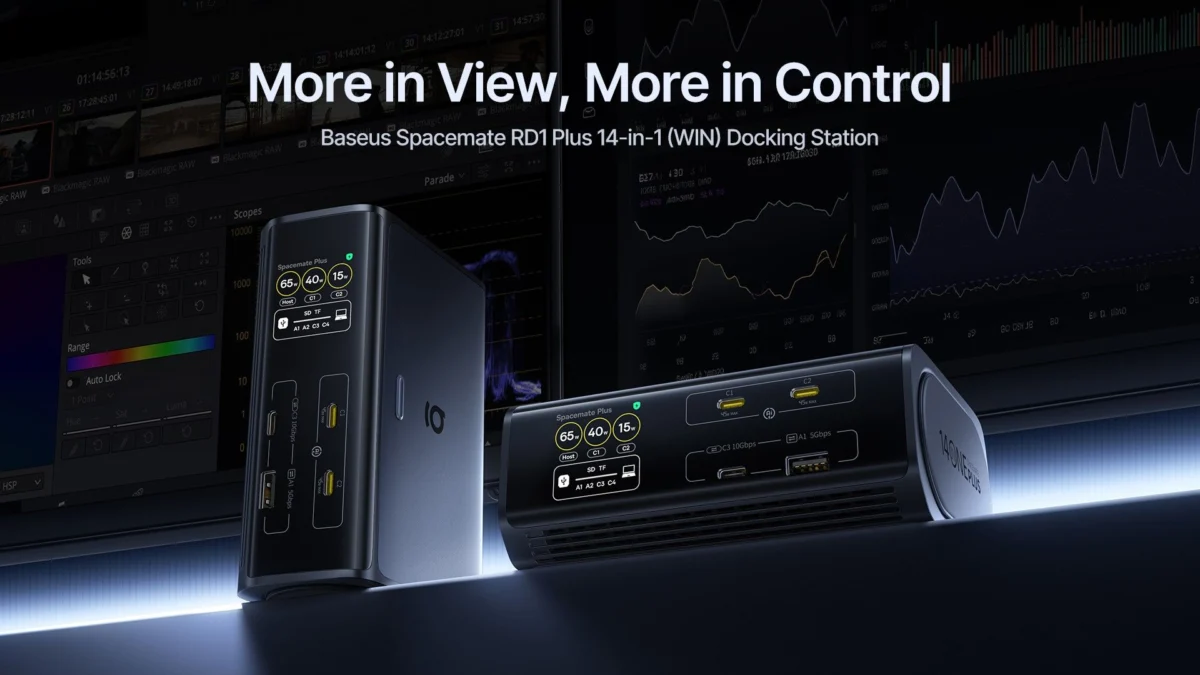
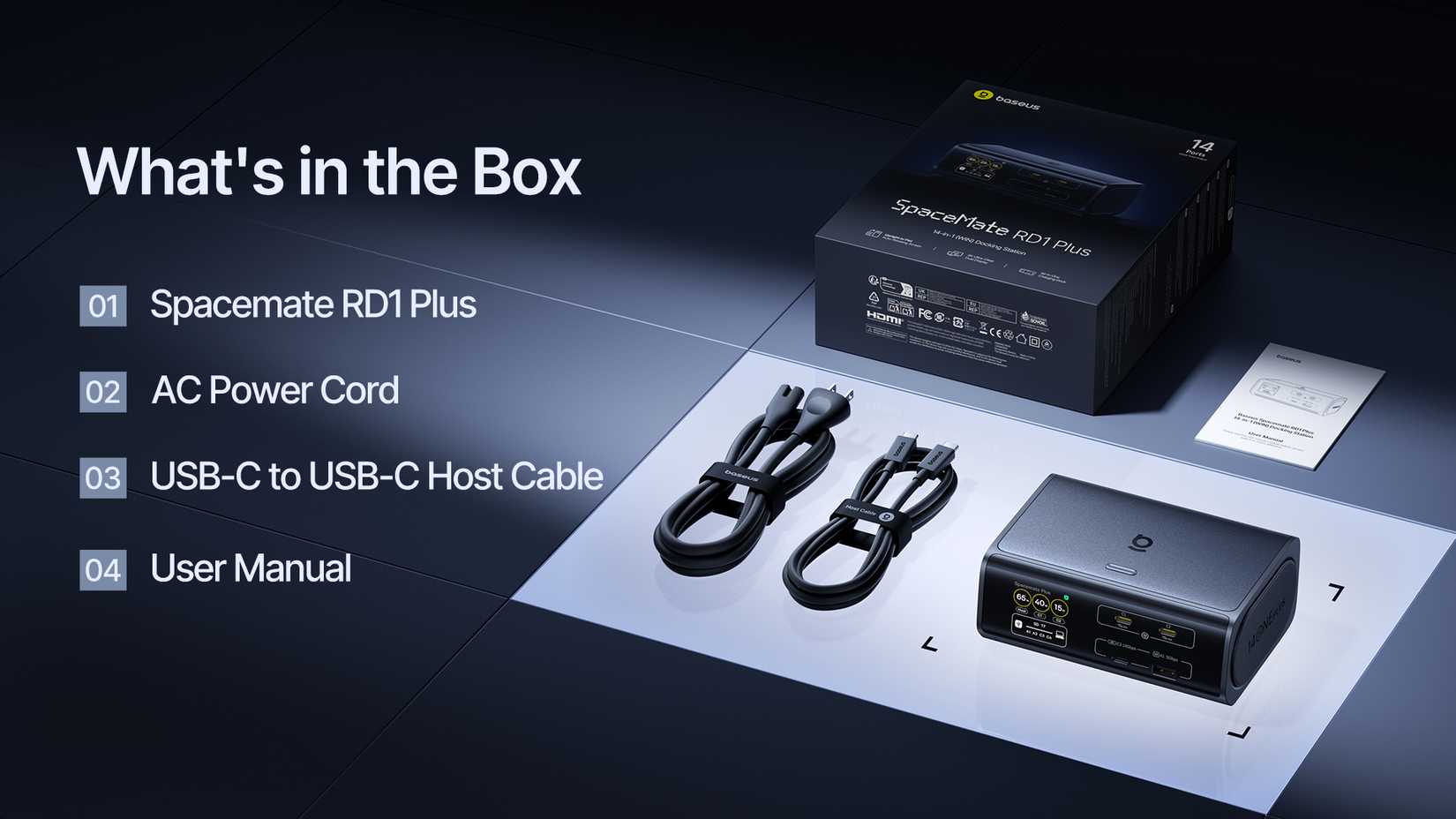
The Baseus Spacemate RD1 Plus is not merely a port expander; it is a central command unit designed to consolidate a high-performance workstation into a single USB-C cable connection. At its core, the device addresses the three primary pillars of modern computing: power, data throughput, and visual fidelity.
Key specifications include:
- 14 Ports: A massive array of I/O, including high-speed USB-C, USB-A, HDMI, SD/microSD card slots, and Gigabit Ethernet.
- Integrated Power: A built-in 140W GaN (Gallium Nitride) power supply eliminates the need for bulky external power bricks.
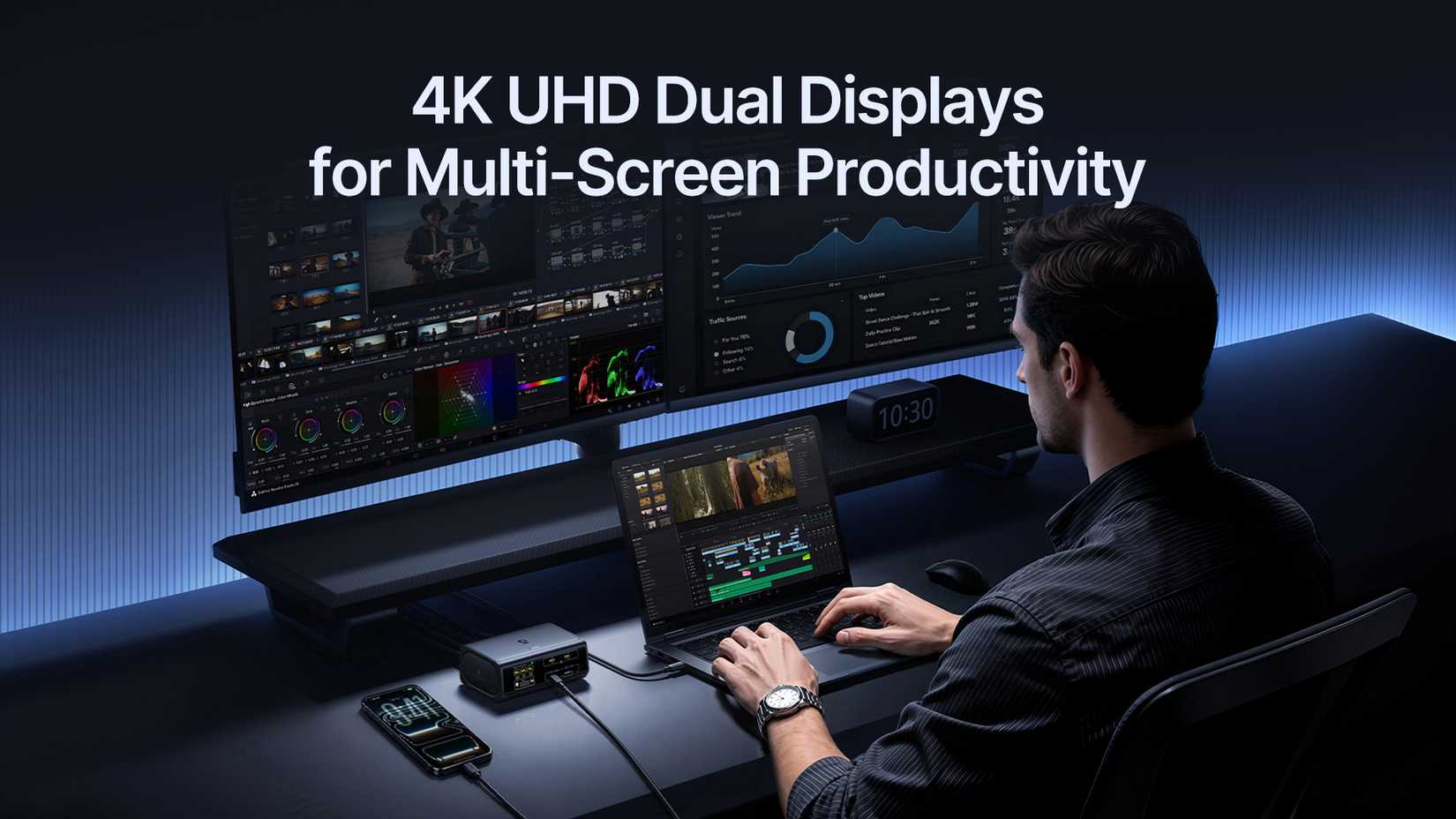
- Visual Performance: Support for 4K resolution at 120Hz via a dedicated HDMI port, catering to high-refresh-rate workflows.
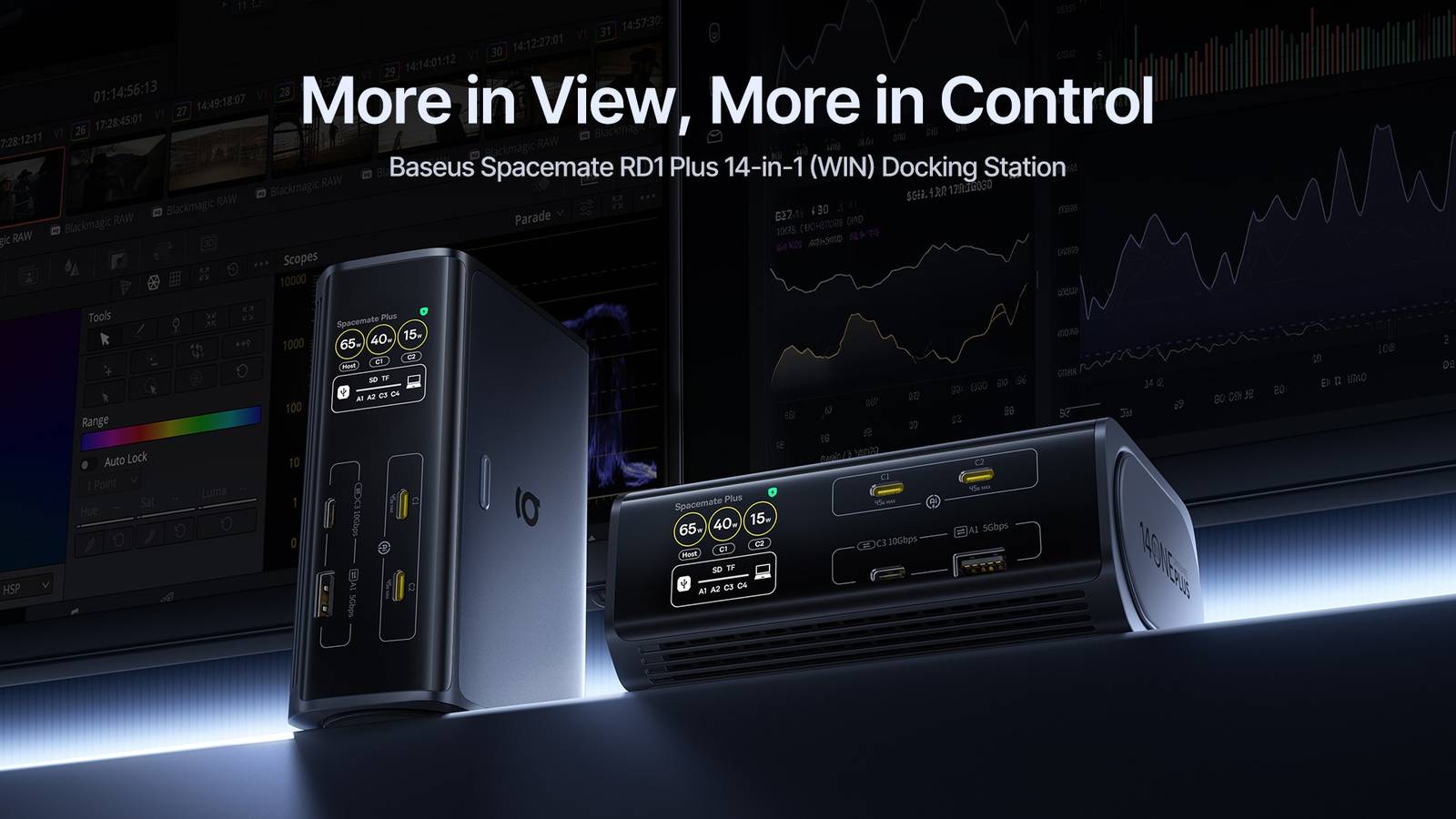
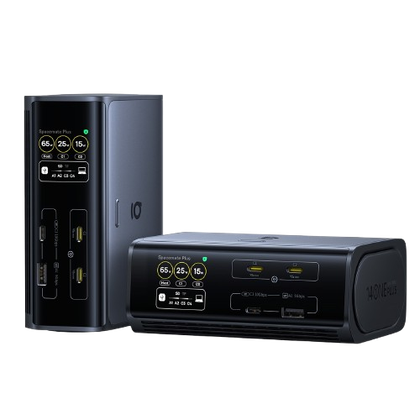
- Status Monitoring: An integrated LCD screen that provides real-time data on power draw and port status.
- Adaptive Orientation: A convertible chassis that allows for vertical "tower" placement or a traditional horizontal flat orientation.
By moving the power supply inside the unit, Baseus has effectively reclaimed desk real estate, providing a clean, minimalist aesthetic that appeals to the "desk setup" community—a demographic that values both form and function.
A Chronological Perspective: The Rise of the Docking Ecosystem
To understand why the Spacemate RD1 Plus is significant, one must look at the evolution of laptop connectivity.
The Era of Port Fragmentation (2010–2018)
In the early 2010s, laptops were equipped with dedicated ports for almost everything: VGA, HDMI, DisplayPort, Ethernet, and various USB standards. As manufacturers pivoted toward thinner chassis designs, they systematically stripped away these ports. This ushered in the "dongle life" era, where users were forced to carry proprietary adapters, leading to the proliferation of inexpensive, unreliable USB-C hubs.
The Rise of the "One-Cable" Philosophy (2019–2024)
As USB-C and Thunderbolt 3/4 standards matured, the industry began to shift toward single-cable solutions. However, these early docks were often plagued by overheating, limited power delivery (leaving users with "slow charging" warnings), and unstable display connections.
The Modern "Command Center" (2025–Present)
The Spacemate RD1 Plus represents the latest iteration of this evolution. It acknowledges that users are no longer just connecting a mouse and a monitor; they are connecting external NVMe SSDs, high-fidelity audio interfaces, multiple 4K monitors, and power-hungry mobile devices. By integrating GaN technology, Baseus has solved the heat and efficiency problems that plagued earlier, less sophisticated docks, marking a transition from "simple hub" to "intelligent peripheral."
Supporting Data: Performance Under Pressure
The engineering behind the Spacemate RD1 Plus is designed to withstand the rigorous demands of power users.
Power Management and PowerTune 3.0
The inclusion of a 140W GaN power supply is the device’s greatest strength. GaN semiconductors are significantly more efficient than traditional silicon, allowing for smaller, cooler, and more powerful charging units. The proprietary PowerTune 3.0 system is the brain of the device, intelligently allocating power.
- Prioritization: The system prioritizes the laptop’s requirements, ensuring that demanding tasks—such as video rendering or compiling code—do not result in battery depletion.
- Dynamic Distribution: If the laptop is drawing less power, the dock dynamically reallocates wattage to the two front-facing USB-C ports (up to 45W each), ensuring that tablets and smartphones are charged at optimal speeds.
Data Throughput
The port selection is balanced for speed and compatibility:
- 10Gbps USB-C ports: These satisfy the requirements of modern external SSDs, which are essential for creative professionals working with large 4K or 8K video files.
- Gigabit Ethernet: Despite the ubiquity of Wi-Fi 6E/7, a physical Ethernet connection remains the gold standard for latency-sensitive tasks and massive data transfers.
- Card Slots: The support for 2TB SD and microSD cards is a direct nod to photographers and cinematographers who need to offload footage rapidly.
Official Responses and Strategic Vision
In recent communications, Baseus has emphasized that the "RD1 Plus" is not a "one-size-fits-all" solution. It is specifically tuned for the modern professional.
Baseus spokespeople have noted that the device was designed with the "Win" in its DNA—implying that while it is a powerful tool for all, it is optimized for the Windows ecosystem. The ability to run a 4K monitor at 120Hz is a feature heavily requested by the gaming and professional creative sectors.
Regarding the unique LCD screen, the company stated: "Docks have historically been black boxes. When a peripheral fails, users don’t know if the issue is the cable, the port, or the device. By providing visual feedback on our display, we are democratizing diagnostics, allowing users to troubleshoot in seconds rather than hours."
This commitment to transparency extends to the hardware’s safety features. The dock’s ability to flag overvoltage or short-circuit events via a red alert on the LCD screen provides a level of peace of mind that is rarely seen in consumer-grade peripherals.
Implications: Changing How We Work
The launch of the Spacemate RD1 Plus carries several implications for the future of workspace design.
1. The Death of the "Slow Charging" Warning
By centralizing power, the dock removes the ambiguity of laptop charging. For employees in hybrid work environments, this creates a seamless "dock-and-go" experience. The implication is that the desk is no longer a site of struggle, but a site of immediate productivity.
2. The Ergonomic Shift
The decision to offer a vertical "tower" orientation is a subtle but critical design choice. Many modern creative desks are cluttered with drawing tablets, speakers, and specialized lighting. By verticalizing the docking station, Baseus helps users maintain a "clean desk" policy, which has been scientifically linked to reduced stress and improved focus.
3. The "Privacy Button" Innovation
The inclusion of a dedicated button to lock the computer is an underrated feature. In open-office settings or even in shared home offices, the ability to instantly lock a machine without fumbling for a keyboard shortcut (or leaving the screen active while walking away) is a simple but effective security upgrade.
4. Market Positioning
The current promotional pricing of $149.99 (a 42% discount from the $259.99 MSRP) signals an aggressive push into the professional market. Baseus is effectively challenging established, higher-priced enterprise docks by offering comparable performance at a consumer-accessible price point.
Final Considerations: Is It Right for You?
The Baseus Spacemate RD1 Plus is a robust, well-engineered solution for a specific type of user: the person who spends their life between the mobility of a laptop and the power of a desktop.
- For Windows/Linux Power Users: This device is arguably a "must-have." The ability to drive a 4K/120Hz display while managing 14 other connections is a feat that many more expensive docks struggle to maintain.
- For Mac Users: It is important to note the limitation regarding dual-monitor support. While macOS users will benefit from the high-refresh-rate single monitor support and the massive power delivery, they will need to accept that a dual-monitor setup will result in mirrored displays.
- For the "Casual" User: If your needs are limited to a single monitor and a couple of peripherals, the RD1 Plus may be overkill. Smaller, less expensive travel hubs will suffice.
Ultimately, the Spacemate RD1 Plus is an admission that the "work from anywhere" culture is here to stay, but that "anywhere" still needs a place where everything just works. By focusing on intelligent power, high-speed data, and real-time monitoring, Baseus has successfully shifted the docking station from a passive accessory to an essential component of the professional toolkit.