






In the rapidly evolving landscape of the creator economy, the dream of building a sustainable career through digital content has never been more attainable—nor more competitive. For many, the journey begins with an outward gaze, searching for trends and algorithmic hacks to capture fleeting attention. However, industry leaders and successful independent creators are increasingly shifting their focus inward, arguing that the most enduring niches are not found in market gaps, but in the intersection of personal passion, professional skill, and lived experience.
Creating a living from your creative output is not merely about production; it is about lifestyle design. By aligning your daily habits with your long-term creative vision, you can cultivate a professional identity that remains resilient in a crowded digital marketplace. This report explores the foundational pillars of the creator economy, examining how to identify your niche, overcome the paralysis of perfectionism, and foster deep, emotional resonance with your audience.
I. Defining the Niche: The Internal Search for Value
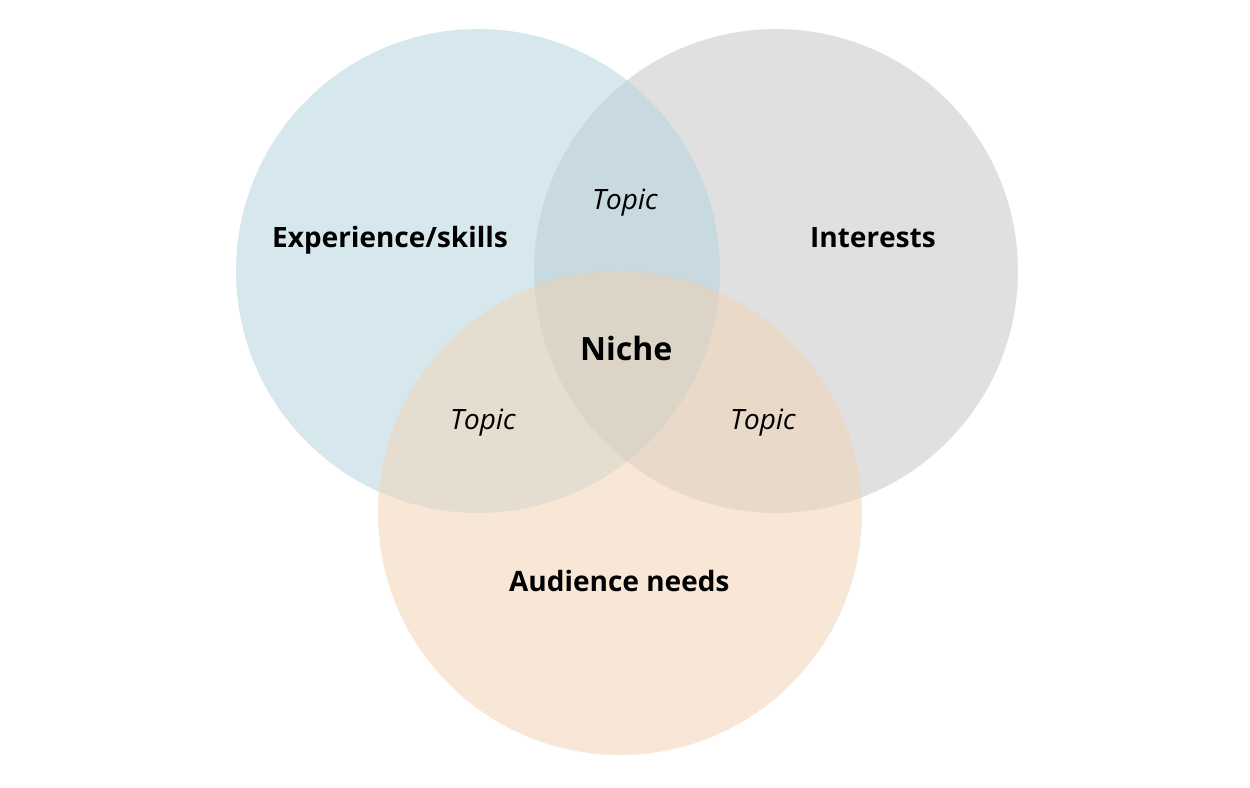
A "niche" is often misunderstood as a simple topic or a specific industry category. In reality, a sustainable niche is a multifaceted construct. It represents the unique synthesis of your expertise, your specific values, and the problems you are uniquely equipped to solve for your audience.
Identifying the Overlap
To find a niche that can sustain a career for decades, creators must conduct a self-audit. This process requires answering foundational questions:

- What drives your curiosity? What subjects keep you engaged long after the workday ends?
- What is your competitive advantage? Which skills do you possess that can be applied to your passion to create something truly distinctive?
- What serves the market? How does your unique perspective solve a pain point or provide value to a specific segment of the population?
When these elements overlap, you move beyond being a "jack of all trades" and become a specialist in your own right. This differentiation is the primary hedge against the volatility of the creator economy. By focusing on the intersection of personal joy and audience utility, creators can build an authoritative voice that is difficult for AI-generated content or generic competitors to replicate.
II. The Anatomy of Consistency: Overcoming Perfectionism
While identifying a niche is the starting line, consistency is the marathon. Data suggests that a significant percentage of aspiring creators abandon their projects within their first year, often due to the crushing weight of unrealistic expectations. The "perfection trap"—the belief that every piece of content must be flawless—is the single greatest inhibitor of long-term success.
The Chronology of Growth
The path to mastery is rarely linear. It typically follows a predictable trajectory:
- The Inception Phase: The creator starts with high enthusiasm but lacks technical proficiency and a clear workflow.
- The Friction Phase: Reality sets in. The difficulty of producing high-quality work consistently leads to burnout or self-doubt.
- The Normalization Phase: The creator adopts healthy routines, accepts that early work will be mediocre, and prioritizes volume and iteration over perfection.
- The Maturity Phase: The creator develops a unique "voice" and a sustainable pipeline of ideas, leading to genuine audience growth.
Marketer Jon Loomer, a prominent voice in content strategy, emphasizes that the primary goal of any content piece is to communicate a message effectively. Technical polish, high-end equipment, and aesthetic perfection are secondary to the clarity of the core value proposition.

Supporting Data and Best Practices
Research into content creator habits highlights six essential strategies for maintaining output without sacrificing mental well-being:
- Prioritize Message Over Polish: If the audience understands and benefits from your message, the production value is a secondary concern.
- Eliminate Technical Roadblocks: Obsessing over camera gear or editing software before having an audience is a form of procrastination. Focus on the message first.
- Accept Mediocrity as a Rite of Passage: Your first fifty pieces of content will likely be your worst. Embracing this allows you to iterate toward excellence.
- Cultivate a Content Pipeline: Look to your community, past successes, and global trends to ensure you never run out of ideas.
- Establish Non-Negotiable Routines: Treat content creation as a professional duty rather than an occasional hobby.
- Scheduled Creation: Do not wait for inspiration. Creating on a schedule builds the "creative muscle" necessary to produce high-quality work even on days when motivation is low.
III. The Psychology of Connection: Why People Follow People
Once a creator has established a niche and a consistent publishing schedule, the next challenge is humanizing the brand. In an era of automation, the most valuable currency is authenticity. Audience members do not want to follow faceless corporations; they want to connect with human beings who share their struggles, values, and triumphs.

The Mechanics of Emotional Resonance
The experts at Holistic Public Speaking suggest that the secret to a loyal, obsessive audience lies in vulnerability and intentional engagement.
1. The Power of Repetition and Hooks
Establishing a unique brand identity requires subtle, consistent touchpoints. Whether it is a specific tagline, a unique way of opening a video, or a recurring segment, these elements create a sense of familiarity. However, this must feel organic to avoid coming across as forced or "corporate."
2. The "Us" Mentality
Successful creators bridge the gap between themselves and their audience by using inclusive language. By shifting the narrative from "I am teaching you" to "we are learning this together," the creator positions themselves as a companion rather than a distant expert. This fosters a sense of belonging among followers.
3. Strategic Vulnerability
While many believe that success requires projecting an image of perfection, the opposite is true. Audiences connect with stories of struggle, failure, and growth. When a creator shares their challenges, they become relatable. This does not mean sharing every intimate detail of one’s life—keeping some elements private maintains a sense of mystery—but it does mean being honest about the process.

4. Active Engagement
The final step in building loyalty is the acknowledgment of the community. Highlighting supporters, sharing their stories, and responding to feedback transforms a passive audience into a community of advocates. When followers feel seen and valued, they become the primary engine for the creator’s growth, sharing the content with their own networks and creating a viral loop of engagement.
IV. Implications for the Future of Independent Media
The shift toward individual-led media is not a temporary trend; it is a structural change in how information and entertainment are consumed. The implications for the modern creator are significant:
- Professionalization of Passion: As barriers to entry drop, the "creator" title is becoming a legitimate career path. This requires creators to adopt business-like mindsets, treating their content as a product and their audience as a community of stakeholders.
- The Rise of the "Micro-Community": Large, general-interest audiences are becoming less valuable than smaller, highly engaged communities. A loyal following of 1,000 people who deeply trust the creator is more valuable than 100,000 passive subscribers.
- The Sustainability Imperative: The most successful creators will be those who balance high-volume output with personal well-being. Burnout is the enemy of the long-term creator; therefore, developing sustainable, healthy routines is not just a self-care strategy—it is a business strategy.
Conclusion
Finding your niche, staying consistent, and building a genuine connection with your audience is a journey of self-discovery. It requires the courage to be imperfect, the discipline to maintain a routine, and the empathy to treat your audience as partners. As you move forward in your creative journey, remember that your greatest asset is not your equipment or your platform—it is your unique perspective.
By grounding your work in your own passions and maintaining a consistent, authentic presence, you can build a career that doesn’t just pay the bills, but provides a lifetime of creative fulfillment. Whether you are just starting or looking to refine your current strategy, the blueprint remains the same: Look inward, simplify your processes, and show up for your audience every single day. The creator economy is waiting for your voice.