





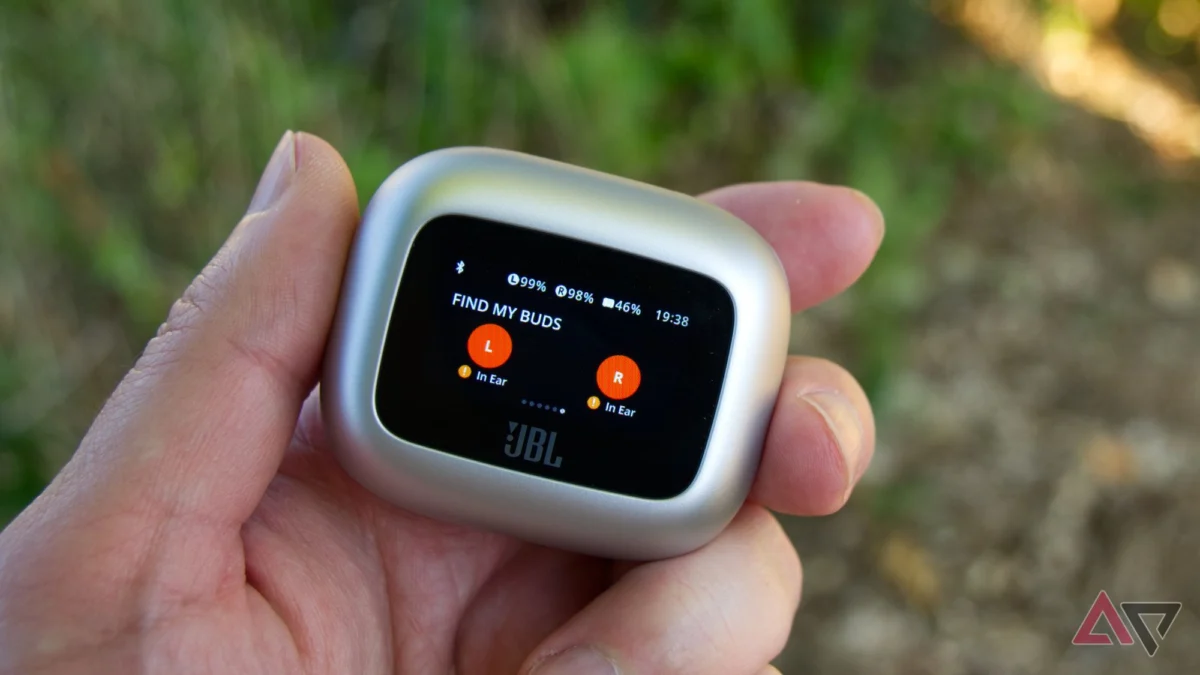
In the ever-evolving landscape of personal audio, the humble charging case has long been treated as a utilitarian necessity—a simple vessel to store and replenish power. However, JBL is fundamentally altering that paradigm with the Live Buds 3. By integrating a fully functional 1.45-inch touchscreen directly into the charging case, the audio giant has transformed a passive accessory into an active command center.
As wireless earbuds become increasingly complex, users often find themselves juggling smartphone apps, finicky touch controls, and Bluetooth pairing menus. The JBL Live Buds 3 offer a refreshing departure from this software-dependent experience. With a significant 42% discount currently hitting Amazon—dropping the price from $200 down to a compelling $115—this is an opportune moment to analyze why these earbuds are not just another generic audio accessory, but a significant step forward in hardware-integrated user interfaces.
The Evolution of the Smart Case: A Technological Leap
For years, the "wireless earbud" category has suffered from a lack of innovation regarding the physical interface. While sound quality and active noise cancellation (ANC) have improved incrementally, the method of interaction remained stagnant. JBL’s decision to embed a high-resolution touchscreen into the case is a bold move that addresses a common pain point: the reliance on external devices for minor adjustments.
When we consider the modern tech ecosystem, we are often overwhelmed by the need to pull out a smartphone to change an EQ setting, toggle transparency mode, or manage a connection. The JBL Live Buds 3 eliminate this friction. By offering a 1.45-inch screen on the case, JBL provides a "heads-up" control panel that allows users to manage their audio environment in seconds. Whether it’s adjusting the bass profile on the fly or checking battery status for each individual bud and the case itself, the tactile and visual feedback provided by the case screen is unparalleled.
Chronology of JBL’s "Smart Case" Strategy
The journey toward the Live Buds 3 did not happen in a vacuum. JBL has spent the last several years refining the concept of a smart charging case, iterating based on user feedback and technological feasibility.
The Early Prototyping Phase
The concept began with the realization that the "app fatigue" associated with modern IoT devices was becoming a deterrent for casual users. Early internal concepts focused on simple OLED displays that provided battery percentage updates. However, engineering teams quickly realized that if a screen was to be included, it needed to offer more than just numbers.
The Launch of the Live Series
The introduction of the Live series marked the shift toward high-fidelity sound paired with smart features. The previous generation of "smart case" earbuds set the foundation, but the Live Buds 3 represent the refinement of the software stack. The interface is now more responsive, the latency between a screen tap and an earbud action has been minimized, and the OS running on the case has been optimized for power efficiency, ensuring that the screen doesn’t cannibalize the battery life needed for the buds themselves.

Supporting Data: Specs and Performance
Beyond the novelty of the screen, the JBL Live Buds 3 are robust performers in the mid-to-high-tier wireless market. When evaluating a pair of earbuds, it is easy to get distracted by flashy features, but the underlying hardware remains the true test of quality.
Audio Fidelity and Driver Technology
At the heart of the Live Buds 3 are 10mm dynamic drivers. In the world of portable audio, 10mm is considered a "sweet spot" size. It provides enough surface area to push significant air for deep, resonant bass, yet is small enough to remain agile for clear, crisp mids and highs. JBL’s signature sound profile—often praised for its punchy low end and energetic soundstage—is well-represented here.
Connectivity and Battery Longevity
The technical specifications are equally impressive:
- Total Battery Life: 40 hours (10 hours in the buds, 30 in the case). This is industry-leading, especially considering the case is powering a screen.
- Noise Cancellation: Adaptive Noise Cancelling (ANC) that adjusts in real-time based on ambient noise levels.
- Microphone Array: Six beamforming microphones. This is a critical feature for professionals who use their earbuds for conference calls, as it ensures voice isolation even in chaotic environments like busy cafes or windy streets.
- Durability: IP55 rating, offering robust protection against sweat and light rain, making these suitable for active users and gym-goers.
Official Perspectives: The Design Philosophy
JBL’s design team has spoken frequently about the "frictionless listening" philosophy. The goal is to ensure that the hardware gets out of the way of the music.
According to product briefings, the decision to integrate the screen was driven by user analytics showing that most consumers only interact with their companion apps to change EQ or toggle ANC. By porting these settings to the physical case, JBL isn’t just adding a screen—they are reducing the "time to sound." In an age where every second counts, being able to toggle between "Podcast" mode and "Bass" mode without unlocking your phone is a significant quality-of-life upgrade.
Furthermore, the "Find My Buds" feature, which utilizes the screen to guide users, is a direct response to the anxiety of losing a $200 piece of technology. By making the case an active participant in device management, JBL has created a sense of security that standard charging cases simply cannot offer.
Implications for the Audio Market
The success of the JBL Live Buds 3 carries significant implications for the wider audio industry. We are likely entering an era where the "smart case" becomes the standard rather than the exception.

The Commoditization of Screens
As the cost of small OLED displays continues to drop, other manufacturers will inevitably follow suit. However, the hurdle is not just the hardware—it is the software integration. Developing a stable, low-power OS for a charging case requires significant investment. JBL’s early entry into this space gives them a distinct competitive advantage, as they have already ironed out the bugs that will inevitably plague "me-too" products from smaller, less experienced manufacturers.
The Shift in User Expectations
Consumers are starting to demand more from their hardware. If a company releases a new pair of flagship earbuds today, the "smart case" feature will become a point of comparison. Does the case provide information? Can it control the audio? If not, the product may be viewed as "behind the times." This puts pressure on legacy audio brands to innovate or risk becoming irrelevant in a landscape dominated by tech-forward audio solutions.
The Sustainability Factor
One potential criticism of adding a screen to a case is the environmental impact. A screen is an extra electronic component that adds to the device’s complexity. However, if the screen improves the longevity of the device by helping users track battery health, manage charging cycles, and avoid losing their buds, it could be argued that it actually contributes to a longer product lifecycle. Users who are more informed about their battery health are more likely to charge their devices responsibly, potentially extending the total lifespan of the lithium-ion batteries.
Conclusion: Is the Investment Worth It?
For the current price of $115, the JBL Live Buds 3 are an exceptional value. You are not just buying a pair of wireless earbuds; you are buying into a new way of interacting with your personal audio. The 42% discount brings this device into the "must-buy" category for anyone who values convenience, high-quality sound, and cutting-edge tech.
While the market is flooded with competitors, few offer the unique blend of utility and innovation found in the Live Buds 3. Whether you are a daily commuter, a fitness enthusiast, or simply someone who appreciates the finer details of hardware design, these earbuds are a testament to how far the category has come. The "smart case" is no longer just a gimmick—it is a functional, elegant solution to the complexities of modern wireless audio. As we look toward the future, it is clear that the interaction between the user and their device is changing, and with the Live Buds 3, JBL is leading the charge.