





By: Editorial Staff
Published: October 2023
Introduction & Main Facts
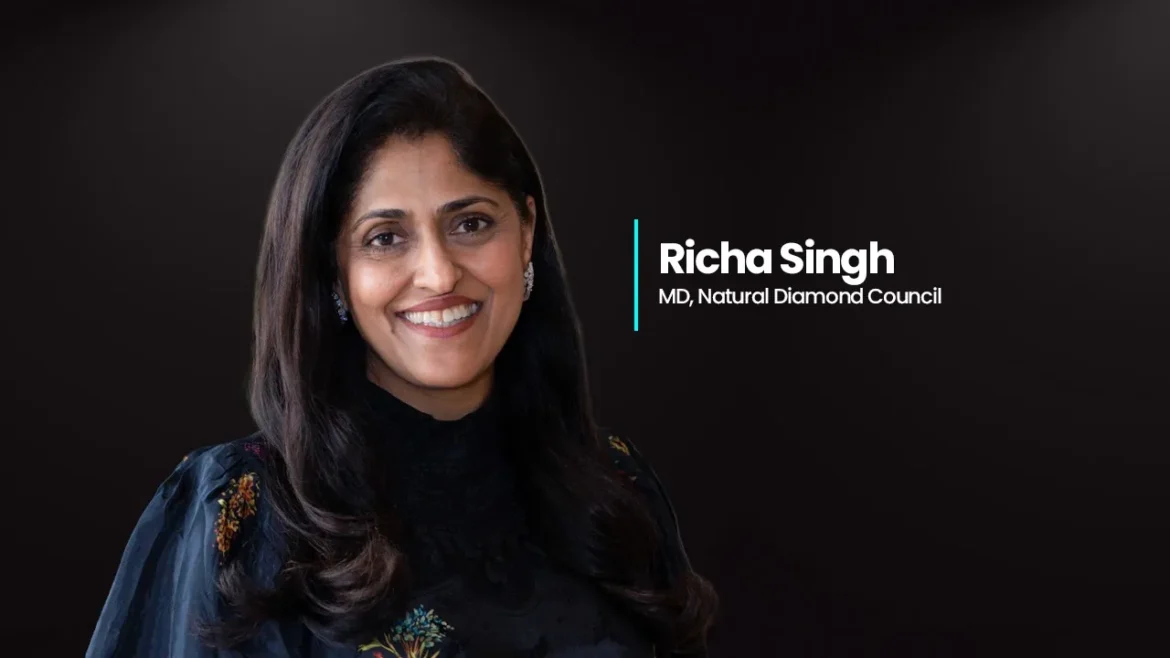
For nearly three decades, Richa Singh has navigated the high-stakes, fast-paced worlds of advertising, marketing, and business leadership. Today, as the Managing Director of the Natural Diamond Council (NDC), Singh sits at the helm of a traditionally male-dominated global industry, commanding influence with an understated, earned authority. Her tenure is marked by a profound structural evolution: she has built an all-women executive team, reframed corporate flexibility not as a concession but as a core philosophy, and championed the timeless value of natural diamonds in an era dominated by rapid consumption.
At its core, Singh’s professional trajectory is a masterclass in resilience. Moving through corporate environments that did not always welcome diversity with open arms, she balanced late nights, high-profile product launches, and the internal friction of working motherhood. Rather than accepting the antiquated notion that professional excellence must come at the expense of personal fulfillment, Singh has consistently rejected the dichotomy.
In this comprehensive interview, Singh reflects on the evolution of consumer behavior, the marketing mechanics behind the multi-billion-dollar diamond industry, the surging influence of Millennials and Gen Z, and the imperative for women to dismantle the internal ceilings they inadvertently place upon themselves.
A Three-Decade Chronology: From Advertising Novice to Industry Vanguard
To understand Richa Singh’s leadership style today, one must retrace a career that began nearly thirty years ago. Entering the workforce at the age of 20, Singh cut her teeth in the rigorous world of advertising before transitioning into broad-spectrum marketing and, ultimately, executive leadership.
The Consumer-Centric Foundation
Reflecting on her early days in advertising, Singh identifies a single, unchanging anchor that has guided her through every corporate transition: the consumer.
"I began working at 20, which means I’ve been in this world for almost 30 years now," Singh recalls. "My career started in advertising, then moved into marketing, and eventually into business leadership. Across very different organisations, one thread remained constant: the consumer. I quickly understood that the consumer sits at the centre of everything—how they think, how they shift, how their lives evolve, and how their expectations evolve with them."
The Shift from Individual Contributor to Ecosystem Builder
A critical milestone in Singh’s career was the psychological and professional pivot from measuring success solely by individual output to evaluating it through team cohesion. Moving into management forced her to abandon the pursuit of hiring the "strongest individual" in every silo in favor of curating chemistry, balance, and complementary skill sets.
Furthermore, the advent of motherhood introduced an entirely new dimension to her leadership philosophy. It catalyzed a deliberate effort to construct workplaces that view employees as whole humans rather than corporate assets. For Singh, the ultimate goal has always been to build an environment where professionals can thrive across all facets of their lives without being forced to sacrifice one identity for another.
Supporting Data: The Modern Diamond Market and Consumer Shifts
As Managing Director of the Natural Diamond Council, Singh faces a unique marketing challenge: promoting a category rather than a single retail brand. While individual jewelry houses focus on distinct designs, pricing tiers, and direct-to-consumer experiences, the NDC is tasked with preserving and elevating the overarching narrative of natural diamonds—spanning provenance, ethical mining, sustainability, and long-term value.
The Rise of Conscious Luxury: Millennials and Gen Z
The luxury landscape has experienced a seismic demographic shift. According to market data discussed by industry leaders, Millennials and Generation Z now account for over 70% of the global luxury goods market. These younger demographics evaluate purchases through a distinctly different lens than their predecessors, prioritizing transparency, ethical supply chains, and emotional resonance over mere brand status.
Supporting this trend, insights from Deloitte indicate that roughly 58% of consumers aged 20 to 25 view natural diamonds as a reliable long-term value category.
"In recent years—especially through global uncertainty—there has been a clear shift toward things that feel lasting," Singh explains. "Natural diamond jewellery fits into that shift naturally. It is not fast fashion; it is enduring, transferable, and value-retaining. Each piece carries a narrative that can be passed down across generations."
The Digital-First Discovery Journey
The methods by which consumers discover and evaluate luxury items have also undergone a digital revolution. Modern buyers rarely walk into a boutique blind; instead, they conduct exhaustive digital research across social media platforms, creator reviews, and educational content long before making a physical purchase.
Singh notes that the modern marketing approach cannot rely on linear, single-channel campaigns or isolated celebrity endorsements. Instead, the category must maintain a ubiquitous presence across multiple touchpoints simultaneously. The contemporary creator ecosystem—comprising independent designers, lifestyle influencers, and cultural commentators—plays a vital role in translating traditional luxury codes into relatable, personalized modern narratives.
Official Perspectives: Cultural Shifts in Gifting and Daily Wear
Beyond Western markets, the cultural footprint of diamonds in regions like India remains deeply tied to generational milestones, weddings, and festivals. However, Singh points out that even within deeply traditional markets, consumer habits are quietly modernizing.
Moving Out of the Locker and Into Daily Life
For generations, high-value diamond jewelry in South Asia was viewed primarily as an investment to be secured in bank lockers, reserved strictly for monumental life events such as weddings. Today, that paradigm is changing rapidly.
- Everyday Integration: Consumers increasingly favor versatile, lightweight pieces that can be worn daily rather than locked away.
- Styling Evolution: Trends such as jewelry layering, stacking, mixing metals, and incorporating smaller, adaptable designs have surged.
- The Pandemic Effect: Singh highlights how the COVID-19 pandemic and the subsequent era of virtual communication ("the Zoom era") accelerated a focus on face-framing accessories, such as expressive earrings and delicate daily wear, cementing the idea that jewelry should move in tandem with daily life rather than sit apart from it.
Implications: Dismantling the Perception Penalty and Redefining Flexibility
Perhaps the most resonant aspects of Richa Singh’s leadership philosophy center on breaking down systemic and self-imposed barriers for women in the corporate world. Having built an all-women executive team at the Natural Diamond Council, Singh speaks candidly about the hidden taxes women pay in ambition, guilt, and the pursuit of work-life integration.
The Cost of Silence and the Myth of Flexibility
Singh argues that many professional women hesitate to advocate for their personal needs out of an ingrained fear that doing so will brand them as less committed. This hesitation creates a silent tax on mental well-being.
"We often assume that asking for flexibility is a sign of weakness—and that assumption stops many before they even speak," Singh notes. "If I need to leave early because my child has an exam and I don’t say it, I end up compromising either my work honesty or my personal responsibility. There is no need for that trade-off. Saying, ‘I need to work from home today because my child has an exam.’ is not an admission of limitation—it is clarity."
True corporate flexibility, according to Singh, is built on mutual trust. It acknowledges that there are times when professional deadlines demand absolute priority, and conversely, times when personal life must take precedence.
The Shifting Lens on Ambition
Historically, ambitious women faced a punishing "perception penalty"—an underlying societal assumption that professional success required sacrificing personal happiness or family stability. Singh observes that this narrative is finally fracturing. Capability is increasingly recognized as gender-neutral, and modern organizations are gradually learning to evaluate talent based on output and potential rather than rigid, outdated assumptions about life stages.
Conclusion and Leadership Advice
As a juror for prominent platforms recognizing female excellence, such as Social Samosa’s Superwomen, Richa Singh offers a clear, empowering message to the next generation of women stepping into leadership roles:
- Own Your Achievements: Be fiercely proud of your journey and refuse to minimize your accomplishments. Women frequently self-edit and question their readiness for promotions far more often than their male counterparts.
- Eliminate Self-Imposed Ceilings: Stop building invisible barriers. Ask for what you need, voice your boundaries, and seek help without guilt.
- Be Your Own Advocate: Step away from being your harshest critic. Acknowledge your capabilities and extend the same institutional and emotional generosity to other rising women that you hope to receive.
Through nearly thirty years of steady perseverance, Richa Singh has not only carved out a formidable path for herself but has fundamentally reshaped the architecture of the spaces she occupies. By proving that high-level executive success can coexist with empathy, family, and holistic well-being, she stands as a blueprint for the modern corporate leader.