










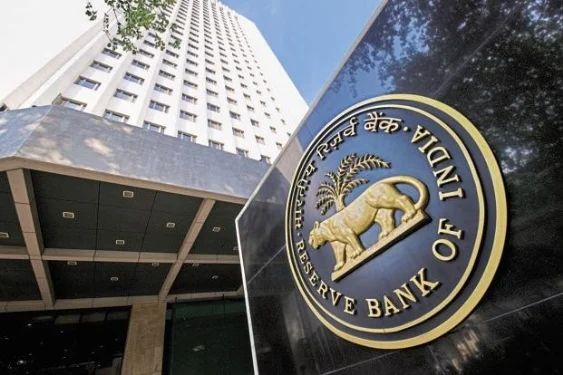
In a sweeping move designed to streamline India’s digital financial ecosystem, the Reserve Bank of India (RBI) has announced a series of major structural reforms. These policy changes target frictionless data sharing, enhanced consumer convenience, and broader visibility for retail investors. While the central bank continues to fine-tune the architecture of the country’s burgeoning fintech infrastructure, these latest directives promise to remove long-standing friction points for individuals navigating loans, credit cards, and multi-institutional investments.
Central to these announcements is a much-anticipated push toward absolute interoperability within the Account Aggregator (AA) ecosystem, alongside updates to the Consolidated Account Statement (CAS) for demat and mutual fund holders.
Main Facts
The Reserve Bank of India’s recent press release outlines critical updates aimed at modernizing India’s financial data-sharing infrastructure. The core elements of the announcement include:
- Universal Interoperability for Account Aggregators: Customers will soon be able to seamlessly access and share financial information stored across various Financial Information Providers (FIPs)—such as banks, non-banking financial companies (NBFCs), and insurance providers—using a single Account Aggregator of their choice.
- Elimination of Redundant Sign-Ups: Previously, if a user’s bank or lender was not integrated with their chosen AA, they were forced to open multiple accounts across different AAs. The new framework aims to eliminate this requirement, allowing a single-handle experience.
- Demat Deposits in the Consolidated Account Statement (CAS): The scope of the CAS—which historically tracked transactions and holdings across demat accounts with CDSL and NSDL, alongside Statement of Account (SOA) mutual fund units—is expanding to include demat deposits.
- Implementation Timeline: The primary structural changes concerning data sharing and consumer onboarding are slated for implementation by December 31, 2026.
- Technology Policy Committee: The RBI has announced the formation of a dedicated tech policy committee. Its precise composition and terms of reference will be notified at a later date.
Chronology: The Evolution of India’s Consent-Based Data Architecture
To understand the weight of the RBI’s recent announcements, it is necessary to trace how India’s digital consent infrastructure has evolved over the past decade.
- 2016 (The Blueprint): The RBI, alongside other financial sector regulators (SEBI, IRDAI, PFRDA) under the aegis of the Financial Stability and Development Council (FSDC), laid the groundwork for Account Aggregators. The goal was to create a digital public good that empowers individuals to control their financial data.
- 2017–2020 (Licensing and Infrastructure): The RBI introduced the NBFC-AA master directions. Several entities began receiving licenses to operate as intermediaries, building out open application programming interfaces (APIs) under the technical standards laid down by Sahamati and ReBIT (Reserve Bank Information Technology Pvt Ltd).
- 2021–2024 (Rapid Adoption): Major public and private sector banks onboarded as FIPs (Financial Information Providers) and FIUs (Financial Information Users). The ecosystem witnessed exponential growth in loan originations, personal finance management apps, and wealth advisory services leveraging AAs.
- March 2025 (Industry Bottlenecks Highlighted): Industry alliance Sahamati openly pointed out friction in the ecosystem, noting that FIPs were not legally mandated to work with every single AA. Operational, technical, and compliance hurdles meant that patchy integration plagued the framework, frustrating both lenders and consumers.
- Late 2026 (The Current Interoperability Overhaul): Seeking to address these structural bottlenecks, the RBI stepped in with a mandate to guarantee true cross-system operability, targeting full implementation by the close of 2026.
Supporting Data and the Mechanics of the Account Aggregator Ecosystem
To appreciate the significance of the RBI’s mandate, one must examine how the underlying architecture functions—and where it historically fell short.
How Account Aggregators Work
Account Aggregators are RBI-regulated Non-Banking Financial Companies (NBFCs) that operate on a strict consent-first model. They do not read, view, or store customer data; they merely act as a secure encrypted data pipeline between:
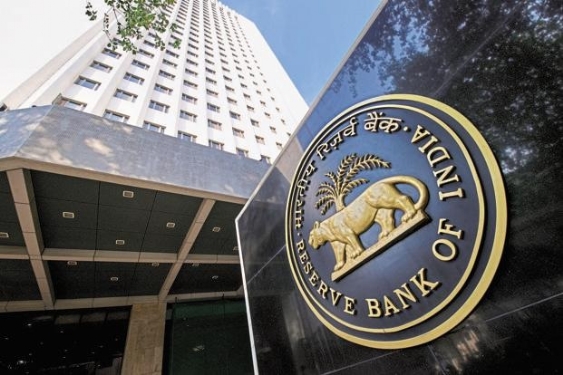
- Financial Information Providers (FIPs): Institutions holding consumer data (e.g., commercial banks, cooperative banks, asset management companies, pension funds).
- Financial Information Users (FIUs): Institutions requesting data to evaluate a consumer’s financial standing (e.g., lending institutions, wealth managers, credit card issuers).
The "Silo" Problem and the Sahamati Intervention
Despite the elegant design of the federated interoperability framework, a critical operational gap persisted. Because FIPs were not legally forced to integrate with every licensed AA, banks routinely cherry-picked which AAs they partnered with.
As noted by industry alliance Sahamati in their March 2025 assessment:
"FIPs are not mandated to work with all AAs and cite operational and compliance challenges as a hurdle to work with all AAs."
This created a fragmented user experience. If a consumer used Bank A (which partnered exclusively with "AA-Alpha") but signed up for a loan with Lender B (which partnered with "AA-Beta"), the data pipeline would break down. The consumer would be forced to open a secondary account on "AA-Beta" just to complete the credit underwriting process.
The RBI’s new directive fundamentally solves this by enforcing universal interoperability. Under the upcoming framework, open protocols and standardized APIs will ensure that any AA can interface with any FIP or FIU without administrative roadblocks.
Official Responses and Perspectives
The central bank’s forward-looking statements signal a decisive shift toward reducing consumer friction. Speaking on the integration goals, RBI Governor Sanjay Malhotra noted that customers will ideally need to onboard with only one AA to manage their entire financial footprint across institutions, drastically lowering the cognitive load of digital banking.

Concurrently, industry bodies and legal experts have welcomed the clarity, though fine details remain awaited. The comparison between the RBI’s Account Aggregator framework and the Ministry of Electronics and Information Technology’s (MeitY) Consent Manager (CM) framework under data protection laws has also sparked regulatory discussions. Industry associations have emphasized that as long as underlying technical specifications—such as those dictated by ReBIT and the Data Protection Board (DPB)—are harmonized, seamless cross-system interoperability is entirely achievable.
Implications for Consumers, Fintechs, and the Financial Sector
The RBI’s directives carry profound implications across multiple verticals of the Indian economy:
1. For the Everyday Retail Consumer
- Frictionless Credit Assessments: Applying for a personal loan, home loan, or credit card will become significantly faster. Consumers will no longer need to manually download PDF bank statements, upload them, or maintain multiple AA handles to satisfy disparate lender requirements.
- Enhanced Financial Hygiene with CAS Updates: By integrating demat deposits into the Consolidated Account Statement, retail investors gain a holistic, single-page view of their equity holdings, mutual fund units of account (SOAs), and demat-held assets. This reduces the risk of dormant accounts and unclaimed assets going unnoticed.
2. For Fintech Startups and Account Aggregators
- Level Playing Field: Smaller AAs that previously struggled to onboard tier-1 banks as direct partners will no longer be disadvantaged. Universal interoperability ensures that market reach is determined by user experience and software efficiency rather than back-end banking alliances.
- Lower Customer Acquisition Costs (CAC): With the elimination of the "second sign-up" barrier, drop-off rates during loan journeys and digital onboarding processes will plummet.
3. For Banks and Financial Information Providers (FIPs)
- Compliance and Infrastructure Upgrades: Traditional banks and financial institutions will be required to harden their APIs and infrastructure to ensure robust, real-time response capabilities for all licensed AAs by December 31, 2026. While this demands upfront compliance investment, it will ultimately lower the cost of loan underwriting and fraud detection.
Conclusion
The Reserve Bank of India’s latest regulatory package marks a mature milestone in the country’s digital public infrastructure journey. By tackling structural interoperability head-on and expanding asset visibility through the Consolidated Account Statement, the central bank is signaling that convenience, consumer control, and system resilience are paramount.
As the December 31, 2026 implementation deadline approaches—and as the newly minted tech policy committee details its roadmap—the Indian financial sector stands on the precipice of a truly unified, frictionless data economy. For consumers, the promise is clear: your financial data belongs to you, and moving it should be as simple as sending a text message.



