





By Lauren Forristal | Tech & Social Media Desk
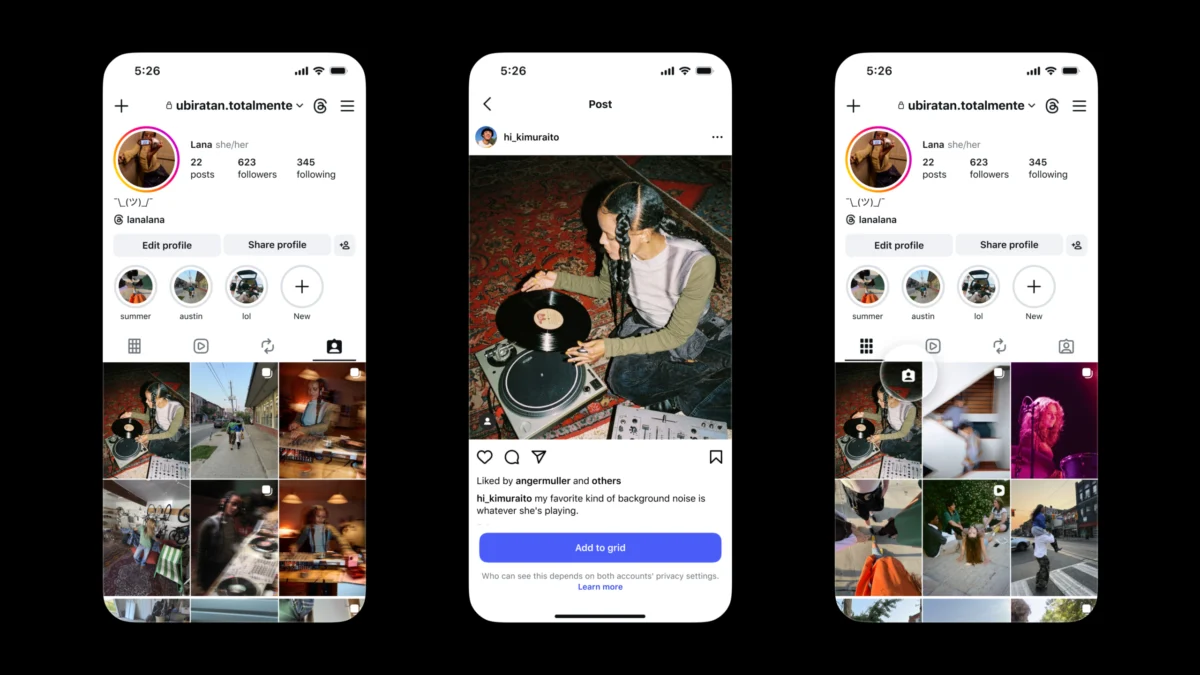
Instagram is rolling out a small yet remarkably useful feature designed to give users unprecedented control over their digital aesthetic and how content appears on their personal profiles. Starting today, users can officially add posts in which they have been tagged directly to their main profile grid, eliminating the long-standing social dilemma of duplicate uploads and awkward photo sharing.
While the update may not fundamentally alter the core mechanics of the Meta-owned social media platform, it addresses a ubiquitous user grievance. For years, navigating group events—such as parties, concerts, vacations, or casual nights out—meant a frantic race to see who could upload the best group photos first. Frequently, a friend beats everyone to the punch, posting a stellar group shot and tagging you in the process. Previously, your options were limited: you could either leave the photo buried in your separate "Tagged" tab, or awkwardly repost the exact same image to your own grid, resulting in duplicate content flooding your followers’ feeds.
Now, Instagram has introduced a seamless, elegant solution that bridges the gap between shared memories and individual profile curation.
Main Facts: How the New Feature Works
Under the new rollout, Instagram users can selectively pull tagged content straight onto their primary profile grids without going through the awkward ritual of duplicating media.
According to product details released by the platform, adding a tagged post to your grid can be accomplished seamlessly from multiple access points:
- Direct Messages (DMs): Directly from the notification you receive when a friend or follower tags you in a post.
- The Post Itself: By viewing the specific post and utilizing the updated menu options.
- The Tagged Tab: Through your traditional profile settings under your dedicated Tagged media tab.
Crucially, the feature is designed with flexibility and content integrity in mind. The original post remains entirely under the control and ownership of the original poster. Adding a tagged post to your personal grid does not create a duplicate post, nor does it generate a separate copy on the server side. Furthermore, if you change your mind later—whether due to a falling out, a change in aesthetic, or simply wanting to declutter your feed—you can easily remove the post from your profile grid at any time. Doing so will not remove the post from your Tagged tab, nor will it impact the original creator’s post.
Chronology: Instagram’s Ongoing Quest for Profile Customization
This latest update does not exist in a vacuum. Over the past year, Instagram has systematically prioritized giving users deeper, more granular control over their digital presence, shifting away from rigid, algorithmic timelines and toward hyper-personalized curation tools.
- July 2026: Instagram rolled out the "Replace Audio" tool, granting users the freedom to swap out the background music on existing, older posts whenever they desired, allowing older content to stay fresh and relevant.
- August 2026: The platform introduced "First Draft," an automated video-editing feature designed to streamline the Reels creation process by automatically trimming selected video clips, removing dead air or awkward pauses, and synthesizing the best moments into a polished initial cut.
- June 2026: Instagram launched the highly anticipated "Reorder Your Grid" feature, which finally allowed users to break free from strict chronological order and manually rearrange content on their main profile grids to curate a specific look or highlight favored milestones.
- Today: The introduction of direct grid placement for tagged posts, marking the latest iteration in Instagram’s ongoing UX overhaul aimed at user-driven profile aesthetics.
Supporting Data and Utility: Beyond Personal Use
While casual users will undoubtedly appreciate the tool for managing photos from weekend outings and celebrations, Instagram’s product teams emphasize that the feature has significant utility for professional creators, influencers, and brand marketing campaigns.
In official statements accompanying the rollout, Instagram highlighted several use cases:
- Creator Collaborations: Creators often partner on content, appearances, or joint projects. This new feature offers an alternative pathway for creators to showcase posts they have been tagged in without forcing them to republish the identical piece of content or navigate the formal (and sometimes restrictive) "Invite Collaborators" workflow.
- Brand Campaigns and Partnerships: Marketing campaigns frequently feature multiple influencers and brand ambassadors simultaneously. With this update, participating creators can effortlessly highlight a central piece of campaign content on their individual profile grids, multiplying visibility and engagement for the brand without cluttering their feeds with native duplicates.
- Event Coverage: Press events, product launches, and conferences where multiple attendees capture the same moments can now be curated on a primary profile much more fluidly, allowing attendees and hosts alike to curate the best angles onto their grids.
Official Responses and Platform Strategy
Meta has increasingly leaned into user-empowerment frameworks across its ecosystem, acknowledging that modern social media consumption requires fluid, flexible boundaries between personal sharing, curated aesthetics, and collaborative content creation.

While standalone executive interviews regarding this specific mini-feature were sparse, industry analysts point out that Instagram is actively attempting to win back users who have migrated toward highly curated, ephemeral, or niche platforms. By reducing friction—such as the annoyance of duplicate posting—Instagram encourages higher engagement rates and longer in-app session times.
Competitors like TikTok and Lemon8 have long offered various forms of content curation, video stitching, and reposting mechanics. Instagram’s latest adjustments demonstrate a keen awareness of these shifting user habits, ensuring that the platform remains the premier destination for visual identity and portfolio-style self-presentation.
Implications for the Digital Landscape
The implementation of direct grid integration for tagged posts carries several broader implications for digital culture, privacy, and online identity management on social media.
1. The Death of the "Duplicate Post" Dilemma
For years, social media etiquette has dictated unwritten rules regarding reposting. Uploading a photo that a friend already posted was often viewed as redundant or "thirsty" for engagement. By allowing users to display tagged content natively on their grids, Instagram removes the social friction of duplication. Users can now maintain a unified visual narrative of an event without spamming their followers’ feeds with identical images uploaded by multiple accounts.
2. Heightened Curation and Aesthetic Control
Gen Z and younger millennial demographics treat their Instagram grids like digital mood boards or curated portfolios. Every photo must fit a specific color palette, mood, or thematic coherence. Because users can now pull in high-quality photos taken by others—perhaps where lighting was better or composition was superior—they can maintain a pristine aesthetic without relying solely on selfies or self-timed tripod shots.
3. Collaborative Marketing Evolution
For influencers and digital marketers, the lines between personal endorsement and brand partnership continue to blur. This feature provides a frictionless mechanism for influencer marketing. Brands can deploy a hero asset via a primary brand account or lead creator, and secondary creators can instantly pull that asset onto their profiles. This optimizes cross-promotional reach and aggregates engagement metrics directly onto multiple profiles simultaneously, providing brands with broader visibility across interconnected follower networks.
4. Privacy and Granular Boundaries
Crucially, because users retain total control over what appears on their grids—and can remove tagged posts at will without severing the original upload—the feature respects individual digital boundaries. In an era where online safety, image rights, and digital footprint management are paramount, giving users a simple "one-click undo" for tagged grid appearances ensures that accidental tags or unwanted associations do not permanently mar a user’s primary profile presentation.
Looking Ahead
As Instagram continues to push out iterative updates throughout the year, the overarching philosophy is clear: make creation faster, editing smarter, and profile presentation entirely customizable. Whether these incremental changes will fundamentally shift how dominant creators utilize the platform remains to be seen, but for the average user, the ability to effortlessly showcase a friend’s great photo without the hassle of duplicate posting is a welcome relief.
The update is rolling out globally starting today across both iOS and Android devices. Users are encouraged to update their applications to the latest version via the App Store or Google Play Store to access the new grid-integration tools.
When you purchase through links in our articles, we may earn a small commission. This doesn’t affect our editorial independence.
About the Author:
Lauren covers media, streaming, apps, and platforms at TechCrunch. You can contact or verify outreach from Lauren by emailing [email protected] or via encrypted message on Signal at laurenforris22.25.
View Bio