







In the corridors of corporate leadership, Artificial Intelligence (AI) is often discussed in the clinical, cold language of efficiency: cost-cutting, automated workflows, and predictive analytics. Yet, for Prabha Jha, a seasoned professional at Verizon with a robust background in information technology and business administration, AI represents something far more profound. It is not merely a tool for fiscal optimization, but a transformative bridge between complex technological capabilities and the human experience.
Jha’s journey—from an inquisitive leader seeking to master the "once-in-a-lifetime" shift of AI to becoming an author and advocate for human-centric technology—offers a compelling case study for executives struggling to navigate the rapid evolution of the digital landscape. Her story is one of resilience, the power of peer-to-peer learning, and the vital necessity of shifting our definition of success in the age of the machine.
The Genesis of an AI Visionary
Prabha Jha’s relationship with technology is rooted in a lifelong respect for academic excellence. With a bachelor’s degree in information technology from the University of Calcutta and an MBA earned while ascending the ranks at Verizon, Jha has always viewed continuous learning as a professional mandate. When the AI revolution began to dominate the global business agenda, Jha found herself at a crossroads.
While many of her contemporaries were paralyzed by the uncertainty of AI’s trajectory, Jha felt a different impulse: curiosity. She asked herself the pivotal question: "How do I become part of this once-in-a-lifetime thing?"
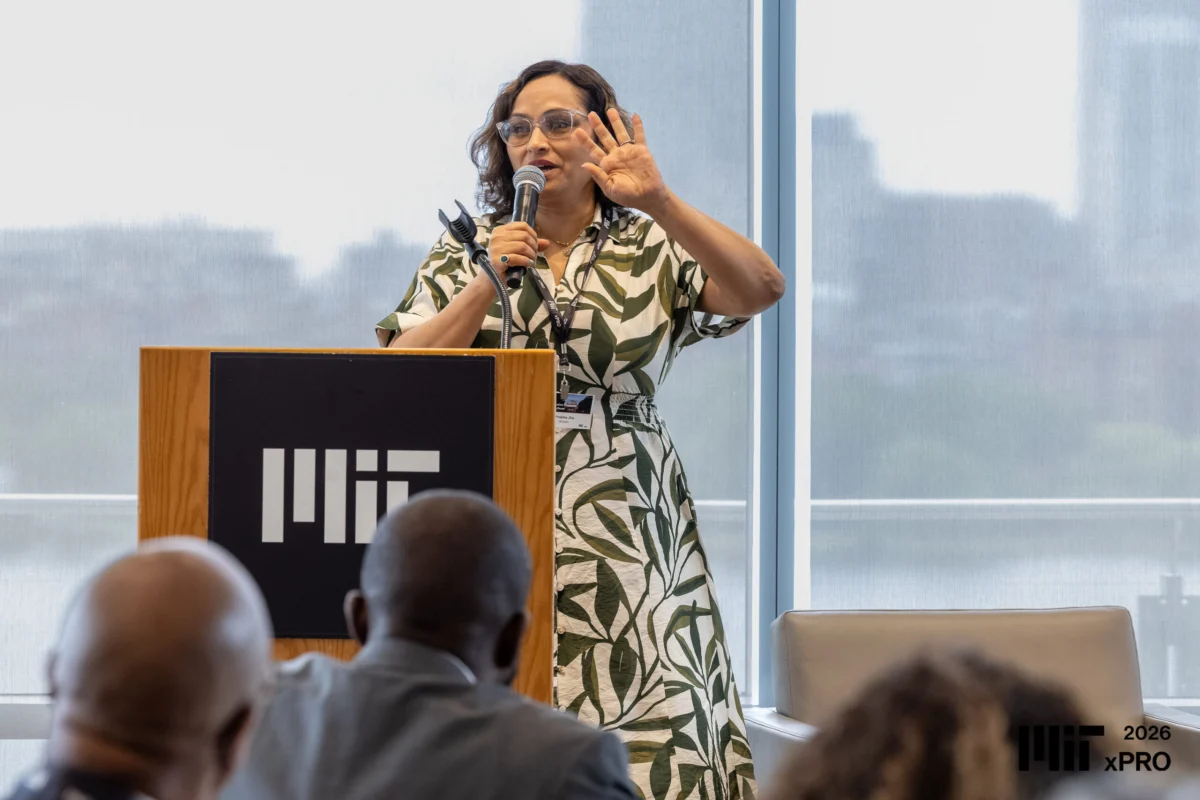
Her search for answers led her back to the hallowed halls of the Massachusetts Institute of Technology (MIT). To Jha, MIT was the "mecca" of engineering, the gold standard for anyone seeking to ground their career in technical rigor. However, she was not looking for a passive, screen-based tutorial. She sought an environment that would challenge her, push her, and expose her to diverse perspectives. She found this in the MIT xPRO AI for Senior Executives program. What separated this program from its peers was the tangible, in-person component—a requirement for Jha, who understood that true innovation is rarely born in a vacuum, but in the friction of face-to-face collaboration.
Chronology of a Learning Journey
The Initial Commitment
Jha entered the program fully aware of the significant investment—both in terms of time and capital. Looking back, she classifies the decision as one of the best of her professional career, stating unequivocally that she would repeat the experience without hesitation. It was an investment in herself, a deliberate choice to prioritize long-term growth over short-term operational comfort.
The Curveball: A Test of Resilience
Life, however, rarely follows a linear path. Two months before her scheduled graduation, Jha faced a severe medical emergency. A debilitating infection forced her into a two-week hospital stay, rendering her unable to complete the program with her original cohort.
This moment could have marked the end of her journey, but instead, it became a catalyst for a deeper experience. With the support of MIT staff, Jha was integrated into the next cohort. This pivot granted her an additional five days on campus, an unexpected opportunity to immerse herself in the curriculum a second time, this time with 100 new peers.
The Synthesis
The repetition of the program turned out to be a stroke of serendipity. Because the curriculum had been refreshed in the intervening six months, Jha gained a more current, nuanced understanding of the evolving AI landscape. By the time she completed the program, she had not only strengthened her technical acumen but had also forged deep professional bonds that would define her next chapter.
The Power of the Peer Network
One of the most striking aspects of Jha’s account is her estimation of the program’s value distribution: 30 percent came from the formal curriculum and faculty, while 70 percent was derived from her peers.
In a field often defined by code and silicon, Jha found that the most transformative learning happened at the "human level." The cohort consisted of individuals from disparate geographical and professional backgrounds, each bringing their own unique anxieties and questions about the future of AI. This diversity of thought allowed Jha to see beyond the corporate jargon of AI implementation.
The turning point occurred during a "salon gathering" at the home of Professor Manolis Kellis. During an intimate discussion, one peer shared a deeply personal story: her motivation to study AI was not to increase market share, but to find a potential cure for her mother’s Alzheimer’s and dementia.
For Jha, this was a "goosebumps" moment. It crystallized the reality that AI is fundamentally human. It is a tool that, when wielded with empathy, can address the most painful vulnerabilities of the human condition. This realization fueled her desire to broaden the discourse around AI, leading to the creation of The AI Anthology—a collaborative book co-authored with 20 of her peers that documents how AI influences various industries and society at large.
Rethinking Success in Corporate America
A central theme in Jha’s work, both at Verizon and in her writing, is the need to abandon "traditional measurements of success."
The Critique of Traditional Metrics
Modern corporations are tethered to a rigid scorecard: revenue growth, cost-cutting, and time-saving. While Jha acknowledges that these metrics are essential for fiscal health, she argues that they are insufficient for the AI era. If leaders focus only on the bottom line, they miss the broader potential of AI to enhance the human experience.
The New Value Proposition
Jha suggests that future generations are moving toward a different set of priorities. They are asking:
- How can technology improve the quality of my life?
- How can I use my time in a way that is genuinely fulfilling?
By aligning AI initiatives with these questions, businesses can move beyond mere efficiency to true empowerment. Jha notes that this is particularly relevant for her work at Verizon, where the company provides critical infrastructure to first responders and vulnerable populations. In this context, AI is not just about profit; it is about fulfilling a "privileged obligation to protect society."
Implications: A Roadmap for Small and Medium Businesses
Having successfully navigated the complexities of AI, Jha is now turning her attention to small and medium-sized businesses (SMBs). These organizations often feel alienated by the high-cost, high-complexity AI narratives coming from Silicon Valley.
Democratizing AI Implementation
Jha’s new initiative aims to demystify AI for the SMB sector. Her goal is to move the conversation from "what is AI?" to "how does this fit into my operational model?" By focusing on specific tools and measurable, meaningful outcomes, she hopes to help these businesses focus on their core strengths.
The Future of Leadership
The implications of Jha’s journey for the broader business community are clear:
- Embrace Discomfort: AI is not an optional add-on; it is a foundational transformation. Leaders who resist this evolution do so at their own peril.
- Invest in People, Not Just Systems: Jha’s experience highlights that the most significant gains in AI often come from peer collaboration and the sharing of diverse, human-centric perspectives.
- Broaden the Lens: Success must be redefined to include qualitative metrics—such as employee fulfillment, societal impact, and improved quality of life—alongside traditional revenue metrics.
Conclusion: The Transformation Ahead
Prabha Jha’s career trajectory serves as a testament to the idea that technological advancement does not have to come at the expense of human values. By treating AI as a "transformation unlike any other," she has managed to turn a potential source of anxiety into a vehicle for professional growth and societal contribution.
As she continues to mentor businesses through the maze of AI implementation, Jha’s message remains consistent: the most effective way to lead in an era of machine intelligence is to become more, not less, human. Her work stands as an invitation to all leaders to step out of their silos, engage with their peers, and rethink what it means to create value in a world where technology and humanity are increasingly intertwined.
For those currently feeling the "fear, uncertainty, and confusion" that Jha once felt, her advice is simple: lean into the unknown. The "once-in-a-lifetime" opportunity is not in the algorithm itself, but in the potential of the humans who have the courage to guide it.