










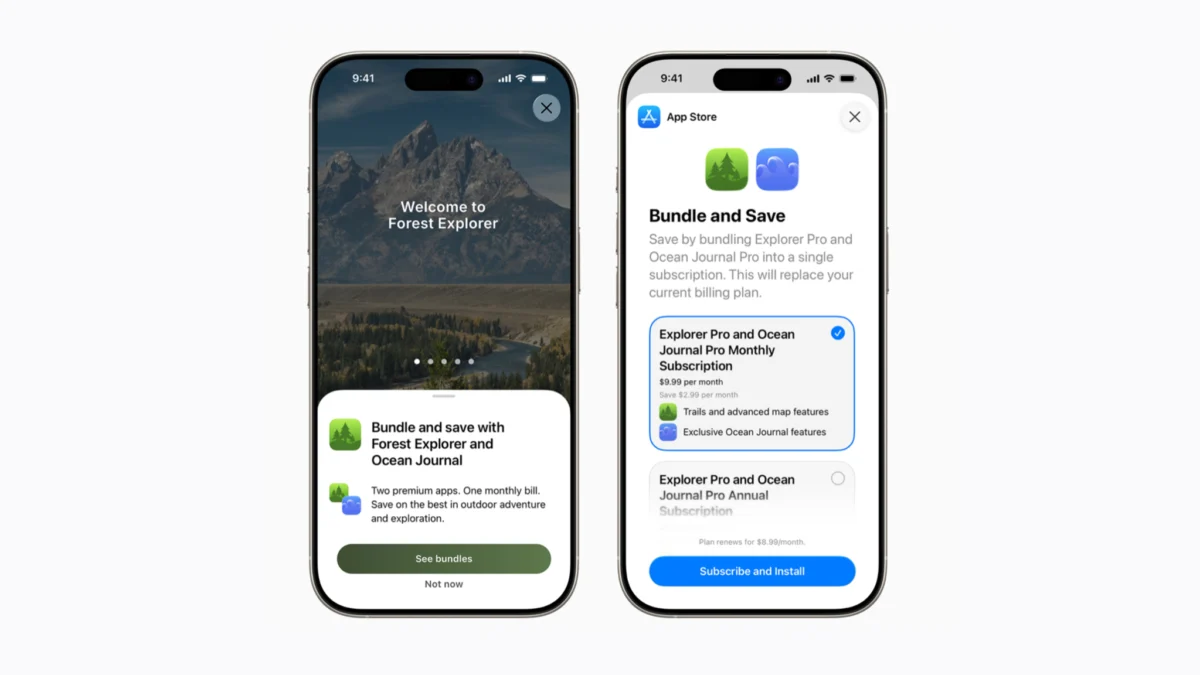
Cupertino, California — In a move set to transform the economics of the mobile app ecosystem, Apple has announced a sweeping set of features for iOS 27 and its broader software ecosystem aimed at revolutionizing how developers monetize subscriptions. Unveiled on September 16, 2026, the updates introduce two primary monetization vehicles—Bundles and Suites—alongside a powerful new multiseat purchasing framework designed to capture enterprise, educational, and collaborative group markets.
The announcements signal Apple’s most aggressive effort to date to help developers maximize customer lifetime value, reduce subscriber churn, and bridge the gap between individual consumer applications and enterprise-grade deployment. By modernizing the underlying purchasing architecture—which requires developers to implement StoreKit 2—Apple is positioning the App Store as a more versatile commercial engine than ever before.
Main Facts: What Developers Need to Know About iOS 27 Monetization
The rollout of iOS 27 brings structural shifts to in-app purchases, giving developers unprecedented flexibility in how they package and sell their digital services. The update is divided into two revolutionary pillars: collective subscription packaging and group/enterprise licensing.
1. Bundles and Suites
For years, developers have sought streamlined ways to market complementary apps or features together without forcing users to navigate fragmented checkout processes. Apple’s new Bundles and Suites architecture solves this problem directly within the App Store infrastructure.
- Bundles: This capability allows multiple subscriptions to be offered as a single Apple In-App Purchase. Crucially, these bundles are not restricted to a single developer’s catalog. They can span a single app, multiple apps from the same developer, or even collaborative bundles across multiple independent developers.
- Suites: Designed specifically for single-developer ecosystems, Suites offer users access to a single, cohesive subscription that works seamlessly across an entire suite of applications built by the same creator.
- Unified Checkout: The App Store manages the entire purchase and promotional journey. When a user views a bundle or suite, the App Store’s native purchase sheet clearly displays all included applications, allowing users to download and access their content immediately upon payment confirmation.
2. Multiseat Purchasing (Volume and Group Purchases)
Historically, the App Store’s subscription model was optimized almost exclusively for single, individual users. Work teams, small businesses, and study groups frequently had to resort to shared Apple IDs or cumbersome corporate procurement workflows to license apps for multiple people.
The new multiseat purchasing framework natively introduces bulk buying to the App Store:
- Volume Purchasing: Targeted at organizations utilizing Apple Business Manager and Apple School Manager, this feature allows enterprises to purchase multiple subscription seats via a single In-App Purchase and seamlessly distribute them using an integrated device management (MDM) provider. Volume Purchasing officially launches on October 22, 2026.
- Group Purchases: Aimed at smaller teams, departments, and casual collaborators, Group Purchases allow an individual subscriber to buy multiple seats in one transaction and directly invite peers to join. Apple manages the seat assignment and invitation workflows natively, eliminating administrative friction.
- Default Settings and Control: Multiseat purchasing is enabled by default for all auto-renewable subscriptions in App Store Connect starting immediately. However, developers retain granular control, with the ability to disable the feature entirely or selectively toggle availability across the public App Store, Apple Business Manager, and Apple School Manager. Group Purchases are scheduled to roll out fully this winter.
Chronology: The Road to iOS 27’s Commercial Frameworks
To understand the significance of this announcement, it is helpful to trace the evolution of Apple’s subscription and commerce infrastructure over recent years:
- June 2024 (WWDC24): Apple heavily promotes the adoption of StoreKit 2, laying the foundational security, asynchronous transaction handling, and modern API structures required for advanced subscription management. Developers begin migrating away legacy StoreKit 1 implementations.
- June 2026 (WWDC26): Apple previews the foundational frameworks for iOS 27 during its Worldwide Developers Conference. Sessions such as “Bundles and Suites” (Session 210) and “Offer subscriptions to groups and organizations” (Session 391) give early technical insights into how cross-developer monetization and multiseat mechanics will operate.
- September 16, 2026: Apple formally opens access requests for Bundles and Suites, updates the App Store developer documentation, and enables multiseat purchasing capabilities by default within App Store Connect.
- October 22, 2026: The official launch date for Volume Purchasing integrations via Apple Business Manager and Apple School Manager.
- Winter 2026: The slated rollout window for consumer-facing Group Purchases, enabling ad-hoc team and departmental licensing across the public App Store.
- Late 2026 / Early 2027: iOS 27, iPadOS 27, macOS 27, and tvOS 27 become widely available to the public, bringing native front-end support for the new purchase flows to hundreds of millions of devices worldwide.
Supporting Data: Economic Drivers and Market Demands
The decision by Apple to introduce these expansive features is underpinned by shifting macroeconomic trends within the app economy:
- Subscription Fatigue vs. Value Packaging: Market research consistently indicates that consumers are increasingly wary of accumulating dozens of isolated, single-app micro-subscriptions. By facilitating cross-developer and multi-app bundling, Apple is enabling creators to pool their audience reach, lowering perceived consumer costs while maintaining healthy average revenue per user (ARPU).
- The Prosumer and SME Gap: Millions of small-to-medium-sized enterprises (SMEs) operate in spaces that fall between individual consumer use and massive enterprise IT deployment. Creative agencies, local construction firms, medical practices, and academic departments frequently need productivity, design, or utility apps for 3 to 15 people. Previously, forcing these users to buy individual accounts created massive friction. Multiseat purchasing directly addresses this multi-billion-dollar mid-market tier.
- Technical Prerequisite: The mandate for StoreKit 2 is a critical data point. StoreKit 2’s Swift-native design, cryptographic receipt verification, and real-time transaction status monitoring are mandatory to handle the complex state management of multi-app entitlements and dynamic seat assignments. Developers who have delayed their transition to StoreKit 2 face an urgent technical upgrade cycle.
Official Responses and Developer Guidance
Apple’s engineering and product leadership have emphasized that these updates are built entirely around developer feedback and ecosystem growth.
In official documentation and WWDC briefing sessions, Apple representatives stressed that the new tools are engineered to be frictionless for both creators and end-users. "By allowing developers to partner across boundaries and enabling organizations to bypass traditional procurement bottlenecks, we are opening entirely new avenues for software businesses of all sizes to thrive on our platforms," noted an Apple App Store engineering spokesperson.
Apple has directed developers to take immediate action:
- Migrate to StoreKit 2: Ensure all existing auto-renewable subscriptions are modernized to support StoreKit 2 APIs to guarantee compatibility with bundles and multiseat token verification.
- Review Configuration Requirements: Consult the newly published Bundles and Suites developer portal, which outlines eligible content configurations, technical boundaries, and submission request forms.
- Configure App Store Connect: Review default multiseat settings in App Store Connect. Developers must decide whether they wish to participate immediately in Volume and Group purchasing or customize availability according to their business models.
Implications: What This Means for the Future of the App Economy
The introduction of cross-developer bundles, single-developer suites, and multiseat purchasing has profound implications for various stakeholders across the technology sector.
1. For Independent Developers and Small Studios
Independent creators often struggle with customer acquisition costs (CAC) when competing against venture-backed monoliths. The ability to form cooperative bundles with non-competing developers in the same niche (for example, a productivity suite combining a note-taking app, a calendar utility, and a PDF editor from three different indie studios) allows small players to pool their marketing power and cross-pollinate user bases.
2. For Enterprise and B2B Software Developers
Software-as-a-Service (SaaS) developers who previously avoided the App Store due to its rigid single-user consumer bias now have a clear pathway to target small businesses. Because organizations can purchase seats through Apple Business Manager or allow a team lead to handle a Group Purchase with zero IT intervention, the friction of enterprise sales is drastically lowered for mobile-first applications.
3. For Consumers
Users will benefit from more cohesive pricing models. Instead of managing five separate monthly charges for complementary tools, consumers can subscribe to curated suites or bundles at a potential discount, managed through a single Apple ID subscription management hub. Furthermore, collaborative groups can share tool access seamlessly without violating app terms of service or sharing sensitive personal login credentials.
Conclusion
As iOS 27 approaches its full public rollout, Apple’s overhaul of App Store subscriptions represents a mature acknowledgment of how modern software is consumed, shared, and monetized. By blending consumer-friendly packaging with enterprise-grade distribution mechanics, Apple has set a new standard for digital commerce—one that promises to reward collaboration, expand market access, and redefine the boundaries of app monetization for years to come.



