










Main Facts
With the official release of the Google Pixel 11 series, consumers and tech enthusiasts alike are faced with a familiar upgrade dilemma: should they invest in the cutting-edge flagship or capitalize on the generation-old hardware now sitting at a reduced price point? To answer this, we look closely at a head-to-head comparison between the newly launched Google Pixel 11 Pro and its predecessor, the Google Pixel 10 Pro.
The price disparity is the most glaring initial factor. The base model of the Google Pixel 11 Pro (featuring 256GB of storage) commands a hefty starting price of around €1,100. In contrast, the baseline Google Pixel 10 Pro (equipped with 128GB of storage) has dropped to a far more palatable €770. This €330 gap begs a critical question: does the Pixel 11 Pro offer enough generational leaps to justify the extra cost, or is the Pixel 10 Pro the smarter financial play?
Across design, display, performance, battery, and camera systems, the two phones share a striking amount of DNA, yet diverge in key architectural and endurance metrics.

Chronology and Evolution of the Pixel Pro Line
Google’s smartphone trajectory over the past two years showcases a strategy of refinement rather than radical reinvention.

- Late 2025: Google introduces the Pixel 10 Pro, establishing a new baseline for its premium tier with a 3nm Tensor G5 chip, 16GB of standard RAM, and a polished aluminum-and-glass construction protected by Gorilla Glass Victus 2.
- Late 2026: The Pixel 11 Pro arrives. It preserves the exterior chassis dimensions, water resistance ratings, and display formats of its predecessor while shifting internal priorities—introducing the Tensor G6 chip, tweaking core configurations, boosting wireless charging capabilities, and updating camera sensors.
- Present Day: As the Pixel 11 Pro hits shelves globally, retail discounts on the Pixel 10 Pro make it an aggressive alternative for budget-conscious buyers seeking flagship-tier performance without the top-tier price tag.
Supporting Data and Detailed Comparative Analysis
To truly understand how these two devices stack up, we have broken down their core performance metrics across multiple categories.

1. Design, Build, and Dimensions
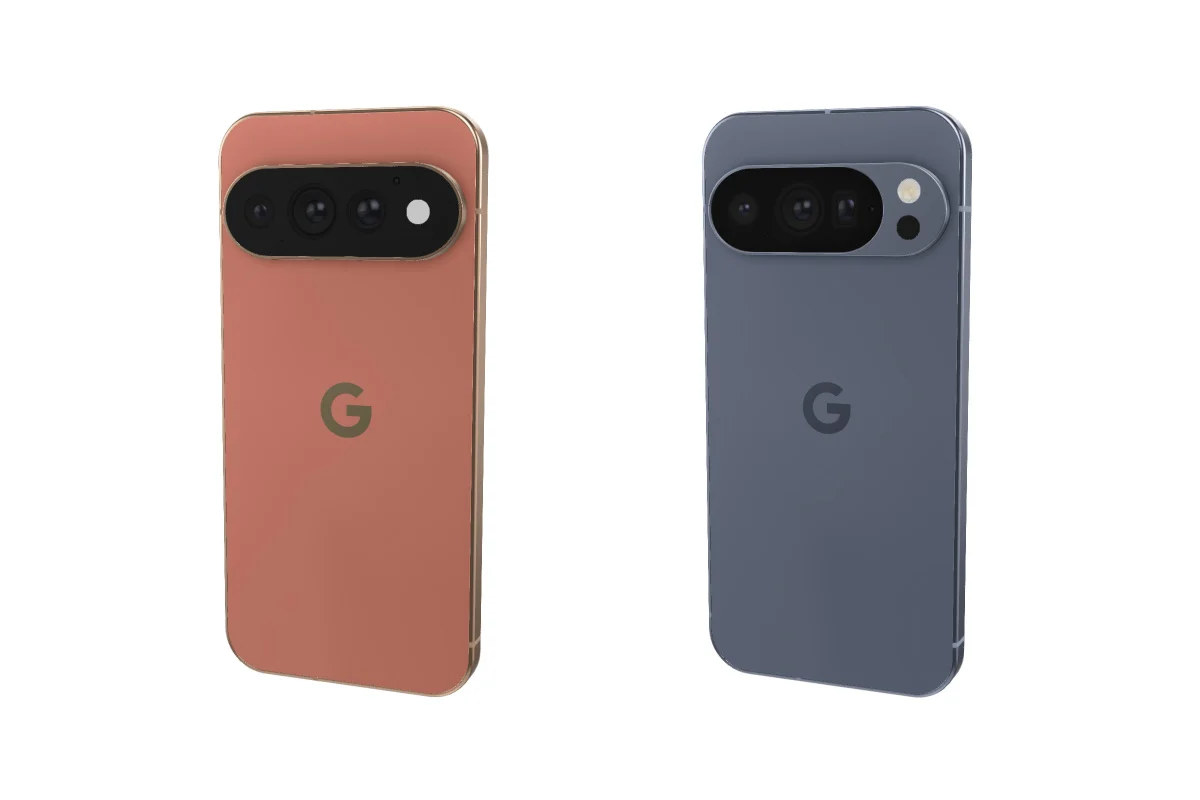
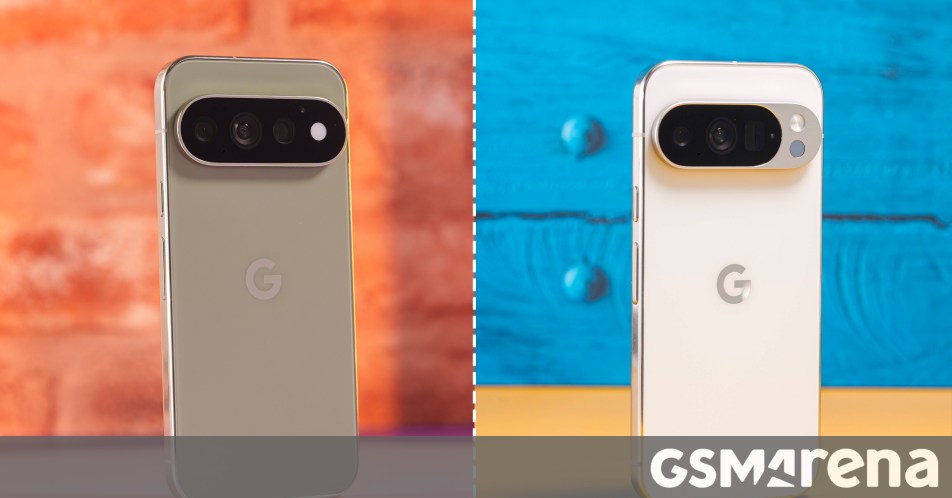
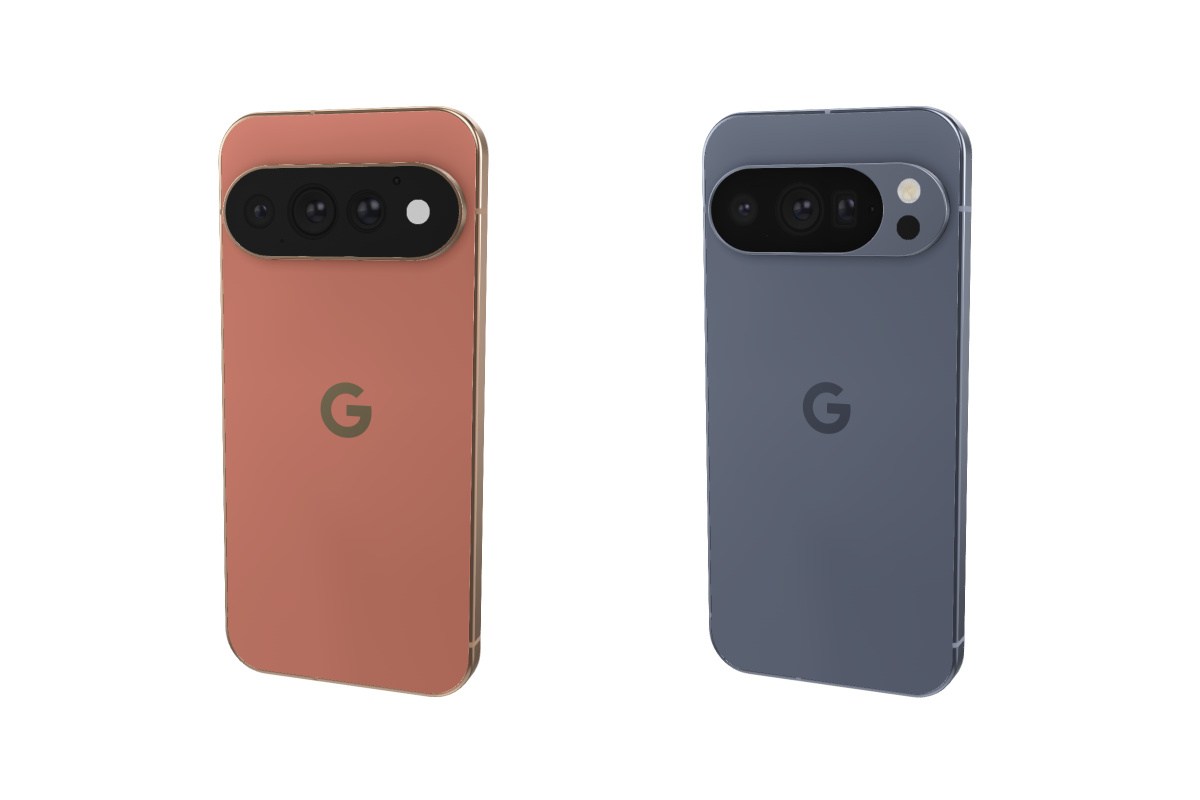
At first glance, telling the Pixel 11 Pro and Pixel 10 Pro apart is nearly impossible. Both devices share virtually identical dimensions and weight profiles. They rely on the same robust materials: Gorilla Glass Victus 2 front and back panels melded into a sturdy aluminum frame.

- IP Rating: Both feature industry-standard IP68 dust and water resistance.
- Aesthetics: The layout is consistent, save for subtle variations in color palettes and a flush edge-to-edge glass treatment found on the newer model’s camera housing.
- Verdict: Tie. There is no physical ergonomic advantage gained by upgrading.
2. Display Technology
Google utilizes what appears to be the exact same 6.3-inch LTPO OLED panel on both handsets, offering a 1280 x 2,856 resolution, dynamic 120Hz refresh rates (scaling smoothly from 1Hz to 120Hz), and full HDR10+ support.

- Brightness Claims: Official specifications indicated the Pixel 11 Pro would achieve a slightly higher maximum automatic brightness (2,400 nits vs. 2,200 nits) and peak brightness (3,600 nits vs. 3,300 nits).
- Real-World Testing: Our laboratory tests confirm the Pixel 11 Pro hits 2,426 nits (compared to 2,351 nits on the Pixel 10 Pro) and a peak of 3,283 nits (vs. 3,165 nits).
- Verdict: Tie. While the numbers favor the newer panel slightly, the real-world difference is imperceptible to the human eye.
3. Battery Life and Endurance
Battery capacity sees a microscopic shift: the Pixel 11 Pro features a 4,850 mAh cell, which is a mere 20 mAh smaller than the 4,870 mAh battery inside the Pixel 10 Pro. However, real-world longevity is shaped by silicon efficiency rather than raw capacity.

- Tensor G6 Efficiency: Google’s new processor architecture trades away one CPU core, shifting power management dynamics.
- Active Use Scores: The Pixel 11 Pro posted a stellar Active Use Score of 15 hours and 38 minutes—surpassing the Pixel 10 Pro by a notable 3 hours and 33 minutes. While talk and web browsing times remain comparable, video streaming and gaming endurance show dramatic improvements.
- Verdict: Winner: Pixel 11 Pro. The efficiency gains on the new chip translate into tangible day-to-day longevity.
4. Charging Speeds
Both devices support 30W wired charging via USB Power Delivery, and the Pixel 11 series introduces an "Extreme Charging mode" designed for rapid top-ups when the battery dips below 50%.

- Wired Charging: Despite the new software mode, wired charging speeds remain largely equivalent between generations.
- Wireless Charging: The Pixel 11 Pro steps up its game by supporting 25W wireless charging, a significant leap over the Pixel 10 Pro’s 15W ceiling (provided you utilize compatible Qi2.2 magnetic chargers).
- Verdict: Winner: Pixel 11 Pro, purely for its faster wireless charging capabilities.
5. Audio and Speakers
Both phones feature hybrid stereo setups—utilizing a dedicated bottom-firing speaker alongside the earpiece acting as the second audio channel.

- Acoustic Profile: The Pixel 11 Pro is fractionally quieter, registering a "Good" loudness score, but it counters with a richer, warmer sound profile and deeper bass presentation.
- Verdict: Tie. A minor trade-off between absolute loudness and audio fidelity.
6. Performance and Hardware Architecture
Performance is where the generation gap becomes most pronounced. The Pixel 11 Pro runs on Google’s custom Tensor G6 chipset, built on the same 3nm process as the Tensor G5 found in the Pixel 10 Pro. However, Google has reconfigured the core layout.

- CPU Upgrades: The Tensor G6 uses a 7-core CPU configuration (1x ARM C1-Ultra at 4.1 GHz, 4x ARM C1-Pro at 3.4 GHz, and 2x ARM C1-Pro at 2.65 GHz). This represents a significant clock-speed and architectural jump over the Tensor G5. Multi-core benchmark scores jump by over 20%, with single-core metrics climbing by nearly 20%.
- GPU Stagnation: Interestingly, the GPU shifts from the Tensor G5’s modern Series D graphics architecture to an older Imagination Series C GPU (IMG CXTP-48-1536). While game compatibility issues at launch have thankfully been resolved, raw graphical performance remains largely flat, and ray-tracing support is absent.
- RAM and Storage Configurations: The Pixel 11 Pro doubles its base storage to 256GB (paired with 12GB of RAM), with 512GB and 1TB variants stepping up to 16GB of RAM. The Pixel 10 Pro starts at a tighter 128GB, but all of its storage tiers come standard with 16GB of RAM.
- Verdict: Winner: Pixel 11 Pro (with caveats). Its CPU capabilities are vastly superior, but the lower baseline RAM on the entry-level model and stagnant GPU performance keep it from being a clean sweep.
7. Camera System and Image Quality
Google’s computational photography remains industry-leading, but hardware tweaks yield mixed generational results.

- Hardware Setup: Both phones utilize a triple-lens rear array (main, ultrawide, telephoto) alongside high-resolution selfie cameras. The Pixel 11 Pro upgrades its telephoto module with a larger 1/1.95" sensor (up from 1/2.51"), though its minimum focusing distance is extended to 39cm.
- Daylight Photography: The main 50MP sensor produces exceptional images on both devices. The Pixel 11 Pro exhibits marginally finer detail structures, slightly less aggressive sharpening, and a slightly warmer color bias. However, at 2x and 5x zoom levels, differences are mostly academic. Surprisingly, ultrawide images captured in low light on the Pixel 10 Pro often appeared noticeably sharper than those from the Pixel 11 Pro, an unexpected regression for the newer flagship.
- Video Capabilities: Both phones support 4K60 video across all focal lengths and 8K30 via cloud processing. However, the Pixel 11 Pro introduces HDR recording up to 4K60, whereas the Pixel 10 Pro caps HDR at 4K30.
- Verdict: Tie. While the Pixel 11 Pro offers better CPU-driven processing and 4K60 HDR video, the Pixel 10 Pro holds its own remarkably well, occasionally outperforming its successor in low-light ultrawide clarity.
Official Responses and Industry Context
Industry analysts note that Google’s strategy with the Pixel 11 series mirrors broader mobile industry trends: hardware iteration has slowed down, shifting the value proposition toward software ecosystems, energy efficiency, and artificial intelligence integration. Google has publicly emphasized the Tensor G6’s 50% boost in AI computational power, pointing to features like "Magic Capture" and "Camera Looks" as generational leap points.

However, tech reviewers have echoed a common sentiment: while the internal plumbing has matured, the external experience remains remarkably consistent with the preceding generation, creating a high barrier of justification for consumers holding onto 2025 hardware.

Implications for Consumers
The arrival of the Google Pixel 11 Pro establishes a new ceiling for what a Google flagship can achieve in terms of raw processing speed, wireless charging convenience, and battery endurance. Yet, it also inadvertently highlights the immense value offered by its predecessor.
- Who should buy the Pixel 11 Pro? Power users who demand maximum multi-core processing speeds, significantly better battery endurance, cutting-edge 25W wireless charging, and the absolute latest in mobile AI capabilities—and who are willing to pay the €1,100 starting price.
- Who should buy the Pixel 10 Pro? Savvy buyers looking for exceptional value. At its reduced €770 price tag, the Pixel 10 Pro delivers nearly identical aesthetics, screen quality, software longevity, and camera performance. Unless 4K60 HDR video recording or peak CPU benchmarks are non-negotiable requirements, pocketing the savings and purchasing the Pixel 10 Pro is the most rational consumer choice of the year.



