










By Danielle Torrie | Updated July 9, 2026 | 16 min read
Demo requests are down. Sales teams are knocking on marketing’s door, complaining about both the volume and quality of incoming leads. In response, marketing channels more ad budget into top-of-funnel demo campaigns—yet the problem persists, flatlining conversion rates and draining corporate runway.
According to recent benchmarks, this scenario is playing out across software companies globally. The root cause, however, is rarely a simple copywriting error or a poorly chosen button color. Rather, it stems from a fundamental misunderstanding of where a demo request lives within the modern B2B customer journey.
Main Facts: The Anatomy of a Modern B2B Buying Cycle
To understand why traditional demo landing pages are failing, marketing and sales leaders must first look at the sheer length of the modern buyer’s path to purchase.
According to Dreamdata’s 2025 LinkedIn Ads benchmark report, the average B2B customer journey spans a staggering 211 days and encompasses 88 distinct touchpoints. High-investment software decisions require deliberation, evaluation, and organizational alignment. Yet, many corporate marketing teams continue to treat "Request a Demo" as a low-friction call to action (CTA), attempting to push prospects into a sales conversation long before they have done sufficient research, built institutional trust, or confirmed readiness.
Asking a prospective buyer to submit a demo request form is not equivalent to asking them to download a PDF guide, register for a webinar, or click through to a product overview page. It is a high-intent, high-friction demand. It requires the buyer to raise their hand, surrender professional contact details, and invite a sales representative into their workflow. Consequently, buyers must feel absolute confidence that a solution belongs on their shortlist before they will submit that form.
Chronology and Frameworks: The Evolution of the "Core Four"
For decades, digital marketers relied on a blunt-force approach to paid media: drive as much traffic as possible to a single squeeze page and optimize for raw conversion volume. That era is officially over.
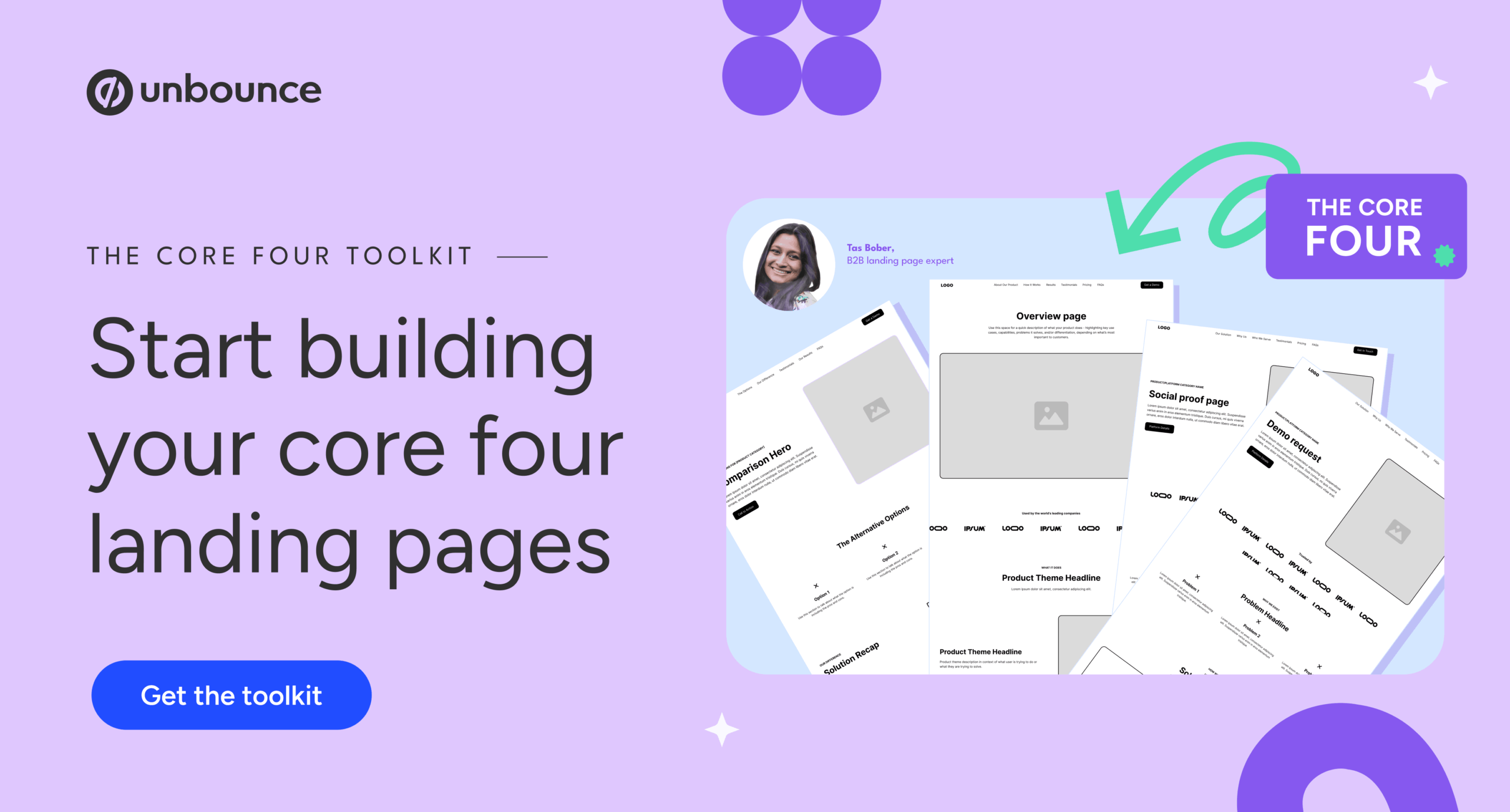
Recognizing that only 3% to 5% of a total addressable market (TAM) is in an active buying cycle at any given moment, industry experts have pivoted toward phased architectures. B2B landing page strategist Tas Bober introduced the "Core Four" framework to help paid media teams guide buyers through logical steps throughout their research lifecycle.
The framework establishes that a prospect should transition through targeted informational touchpoints before ever arriving at a decision-making interface:
- Top-of-Funnel (TOFU) Educational Content: Broad awareness pages addressing industry pain points.
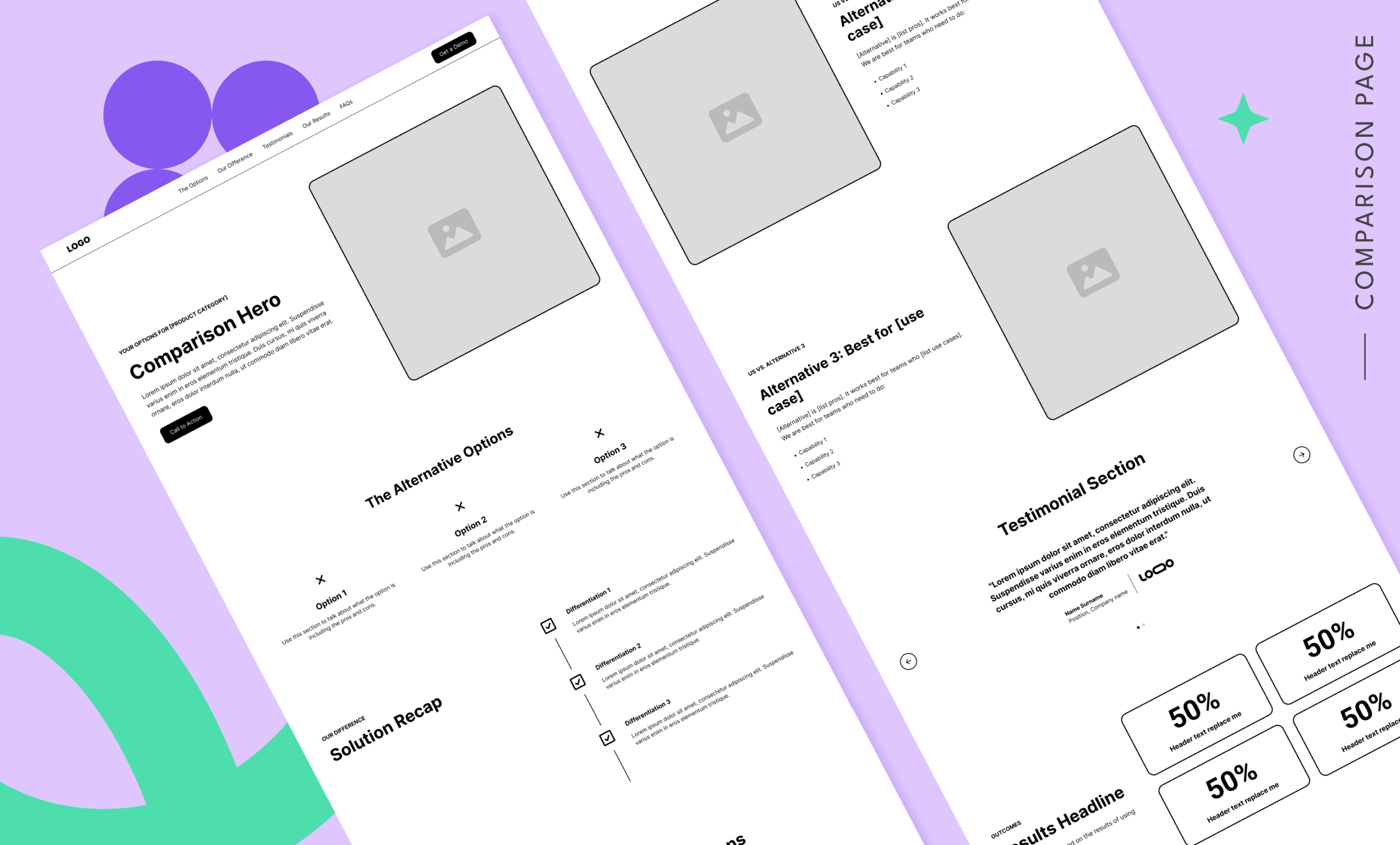
- Solution Comparison Pages: Mid-funnel assets where buyers evaluate alternative approaches.
- Pricing and Packaging Pages: Transparent breakdowns allowing organizations to self-qualify.
- Demo Landing Pages: The final conversion point for warm, well-researched buyers ready for a direct conversation.
In this chronological sequence, the SaaS demo landing page is never the first page a prospective buyer encounters; it should be the last. By the time an individual lands on a demo page, they should already understand what the product does, whom it serves, and why it commands consideration.

Supporting Data: Benchmarks and Performance Metrics
Data from recent conversion rate optimization (CRO) studies highlights the stark reality of modern SaaS acquisition funnels.
- Median Conversion Rates: Unbounce’s Conversion Benchmark Report places the median SaaS landing page conversion rate at 3.8%. However, first-party data compiled by Tas Bober regarding dedicated B2B demo pages puts the average closer to 3.1%. Realistically, healthy demo pages operate in the low single digits (3% to 4%).
- The Traffic Fallacy: Driving cold traffic to a demo page inevitably hits an algorithmic and behavioral ceiling. No amount of headline optimization can convince a cold buyer to book a sales call if they are still discovering they even have a problem. Conversely, when teams funnel warm, high-intent traffic to optimized pages, conversion metrics scale upward.
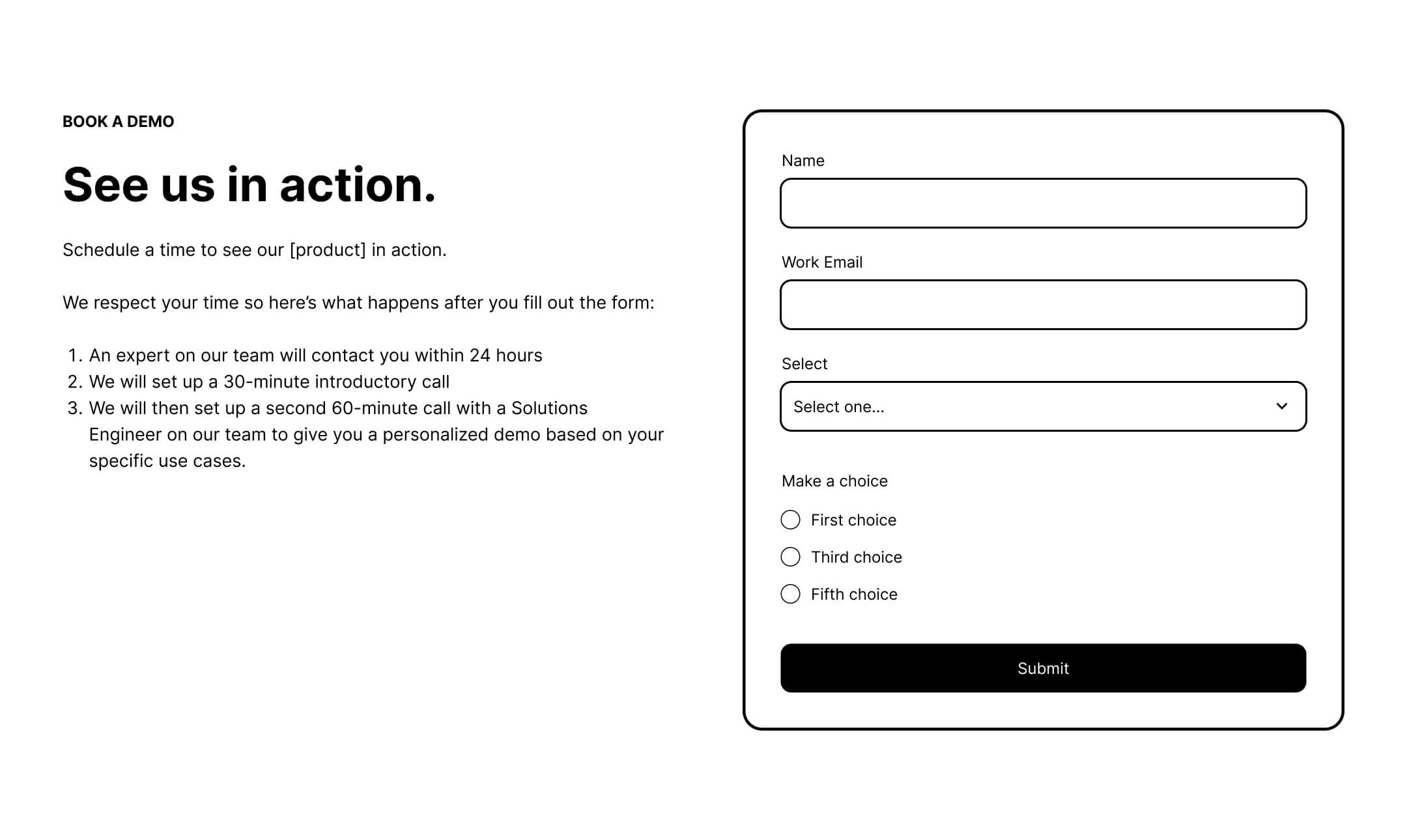
- Form Field Friction: According to 2026 digital application benchmarks, form conversion rates experience a sharp decline as fields multiply. Conversion rates hover around 17% for five fields, drop to 11% at seven fields, and plummet below 7% for ten or more fields.
Official Industry Responses and Strategic Shifts
As performance metrics shift, digital platforms and enterprise marketing teams are revising their playbooks regarding navigation, form architecture, and traffic qualification.
1. The Death of the "Dead-End" Page
Historically, landing page best practices dictated stripping out all navigation bars and external links to prevent users from escaping. However, Google’s updated ad quality prediction models reward landing pages that closely align with search intent and offer intuitive pathways to related information.
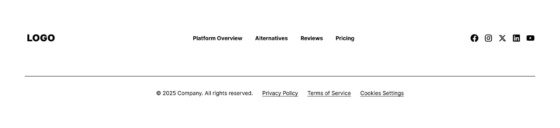
On a modern SaaS demo page, completely removing exit points can backfire. If a visitor is not yet ready to book a demo, forcing them to hit the "Back" button to return to search results hurts user signals. Implementing an anchor-linked top navigation alongside a minimal footer linking back to pricing, comparison, and educational pages keeps prospective buyers within the brand ecosystem.
2. Form vs. Calendly Integration
Organizations are increasingly evaluating whether to utilize a traditional qualification form or a direct calendar-booking tool (such as Calendly).
- Forms are superior when lead volume requires asynchronous routing, strict territory assignments, or multi-step qualification processes to prevent sales teams from being overwhelmed by unqualified prospects.
- Scheduling tools are effective when driving hyper-targeted, high-intent traffic from account-based marketing (ABM) campaigns where immediate calendar access closes feedback loops.
Implications: How to Audit and Rebuild Your Demo Funnel
For marketing executives and revenue operations leaders, fixing an underperforming demo pipeline requires a strict triage protocol: Fix your targeting first, then fix your page.
Step 1: Filter Your Traffic Sources
Ensure your ad spend is directed away from broad, cold audience pools and channeled toward high-intent segments:
- Retargeting visitors who have spent significant time viewing product and pricing documentation.
- High-intent branded search traffic.
- Target Account List (TAL) campaigns in ABM frameworks.
- Software review site traffic (e.g., G2, Capterra) where users are actively evaluating competitors.
Step 2: Structure Your Page Blocks Correctly
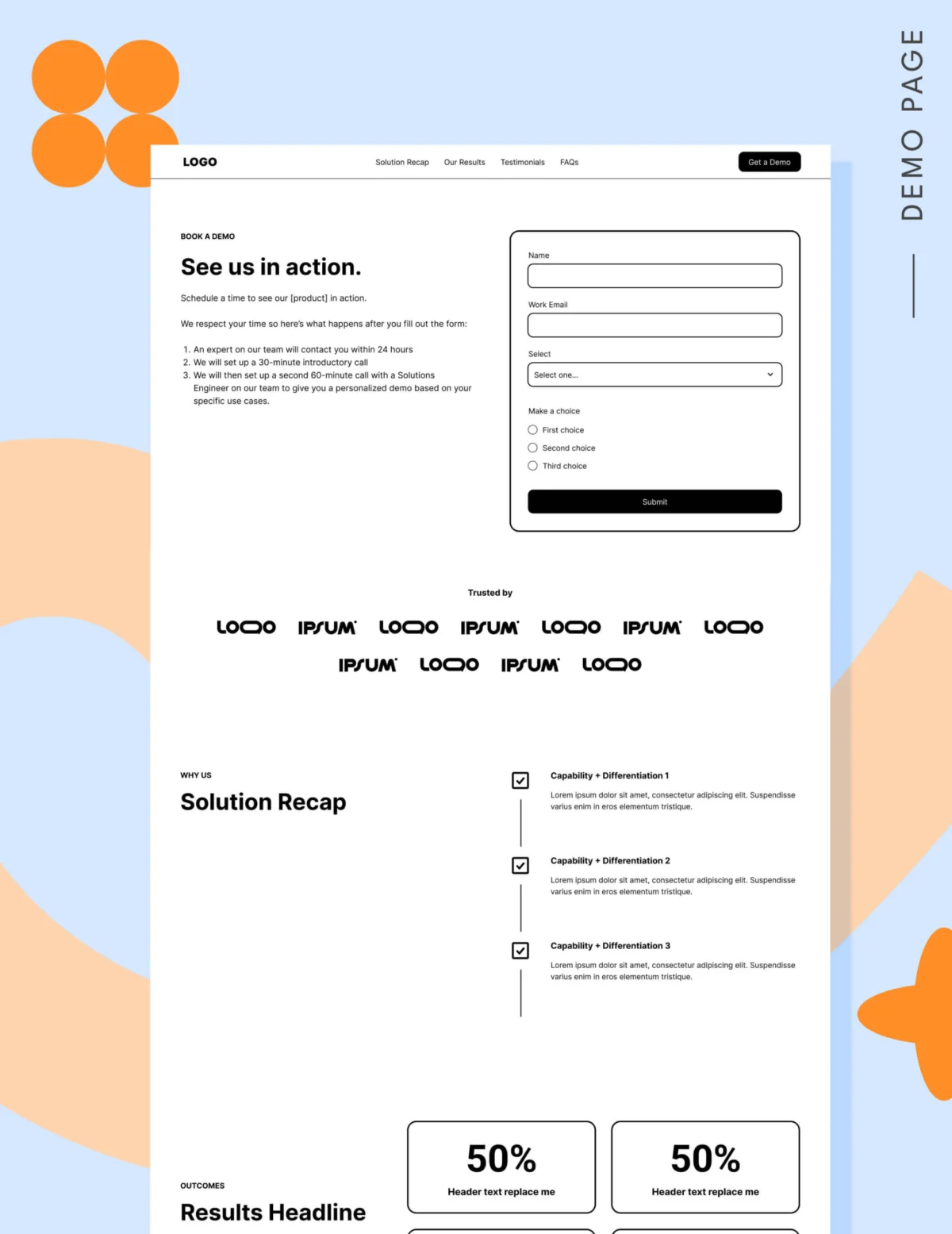
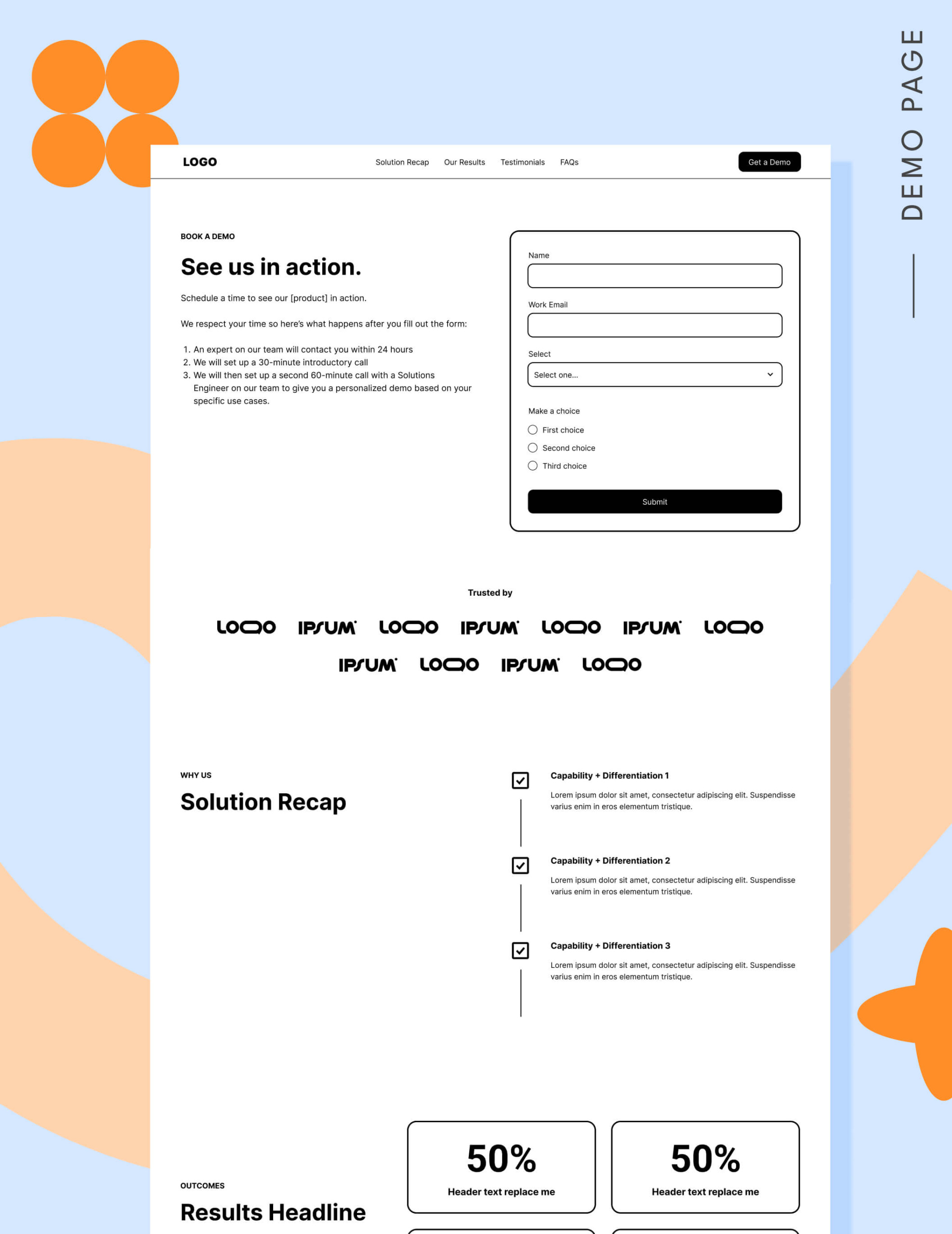
An optimized SaaS demo landing page must incorporate specific architectural blocks to de-escalate buyer hesitation:
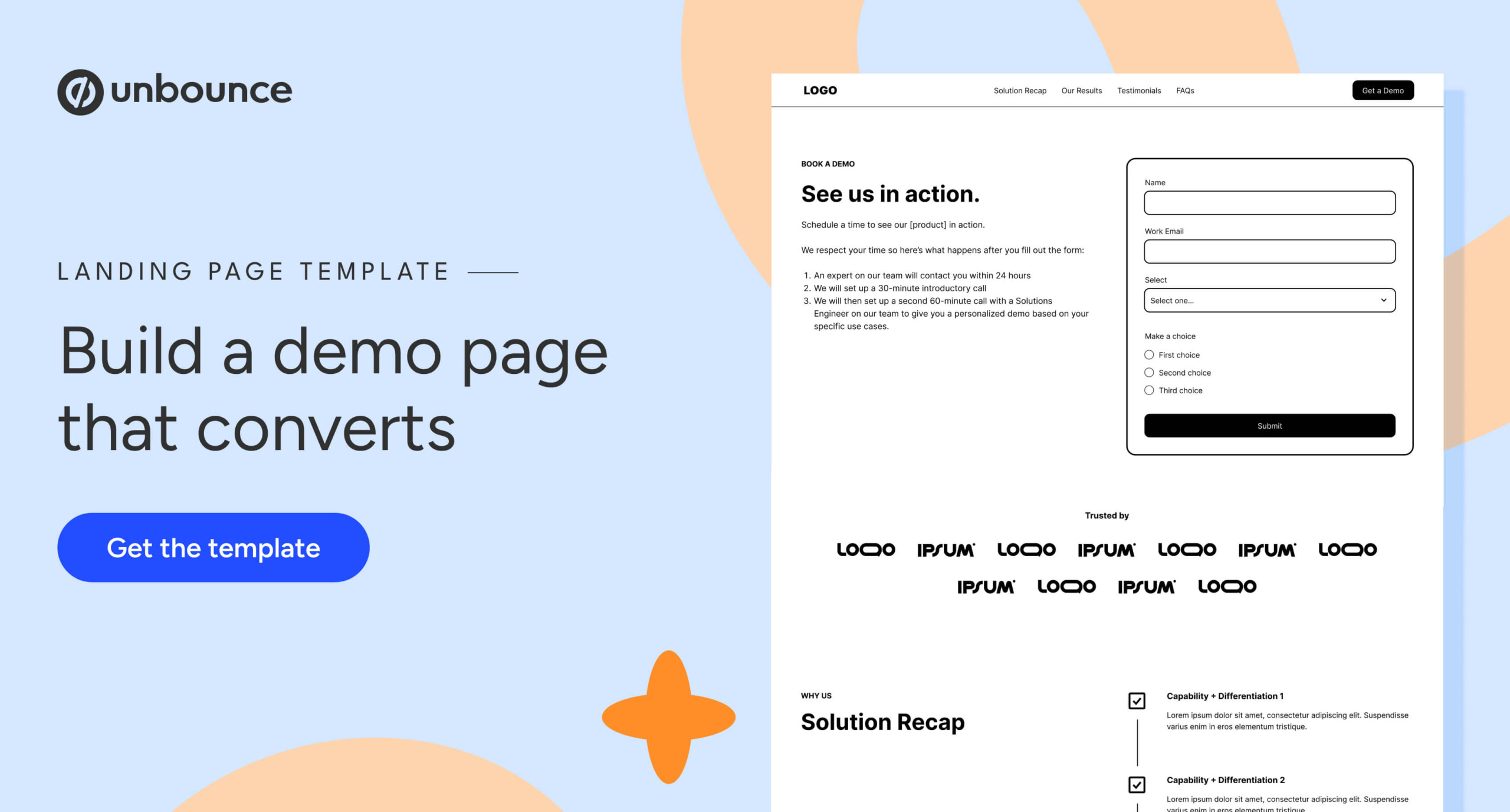
- The Hero Section: Position the form above the fold, accompanied by explicit copy detailing what happens next. Outline response times and meeting formats to eliminate fear of aggressive sales outreach.
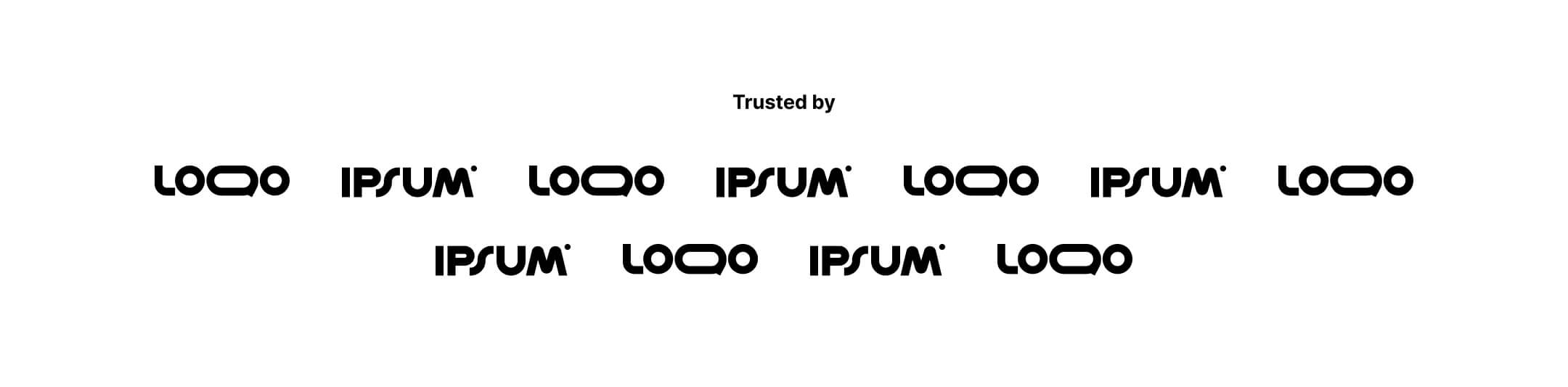
- The Logo Garden & Social Proof: Stack credibility using recognizable enterprise logos or, if operating in an emerging niche, micro-testimonials featuring direct quotes on why the solution was chosen.
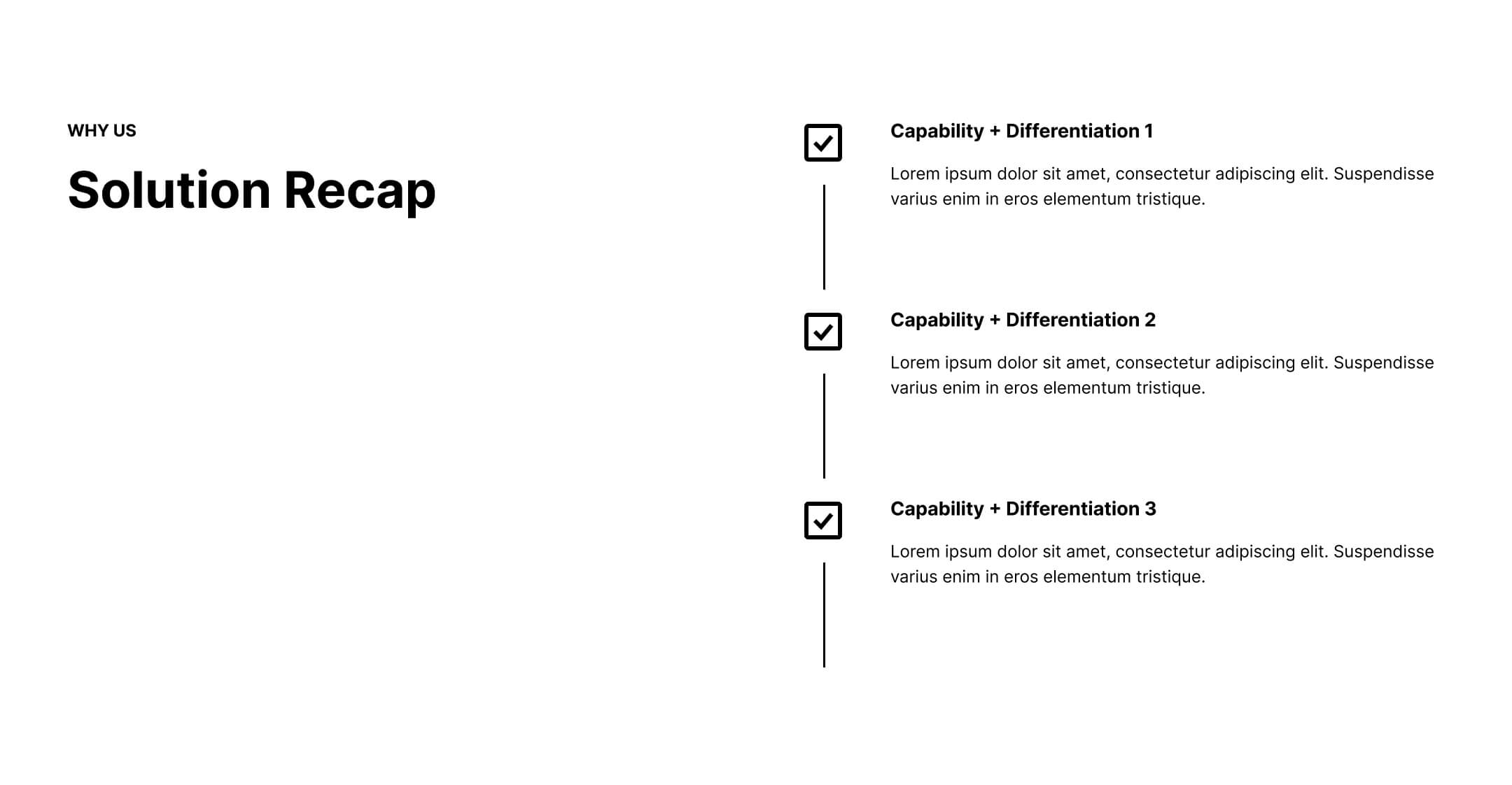
- Solution Recap: Remind buyers of your core differentiators and how they map directly to enterprise pain points.
- Measurable Results: Use quantifiable data points displaying ROI, efficiency gains, or time-to-value metrics.
- Comprehensive FAQs: Address top sales objections alongside logistical questions regarding onboarding and implementation timelines.
- Transparent Pricing Ranges: Even for sales-led organizations, displaying a "starting at $X/month" threshold or a condensed pricing grid filters out misaligned budgets before a sales call is booked.
Step 3: Refine Your Call to Action (CTA)
The phrase "Request a Demo" implies instant access to software, which often leads to friction when buyers realize a preliminary consultation is required. Innovators in the space have found success testing alternative CTAs. For instance, transitioning from "Request a Demo" to "Take a Tour"—paired with an interactive product walkthrough—has driven significant uplifts in pay-per-click conversion rates while lowering cost-per-lead metrics across enterprise campaigns.
Conclusion
When SaaS demo landing pages underperform, the knee-jerk reaction is often to rewrite copy or redesign layouts. In most cases, however, the bottleneck lies upstream in audience targeting and downstream in friction management.
By aligning traffic acquisition strategies with the reality of a 211-day buyer journey, streamlining form field requirements, and structuring landing page blocks to build trust rather than pressure, organizations can transform their demo pages from conversion dead-ends into predictable revenue engines.



