










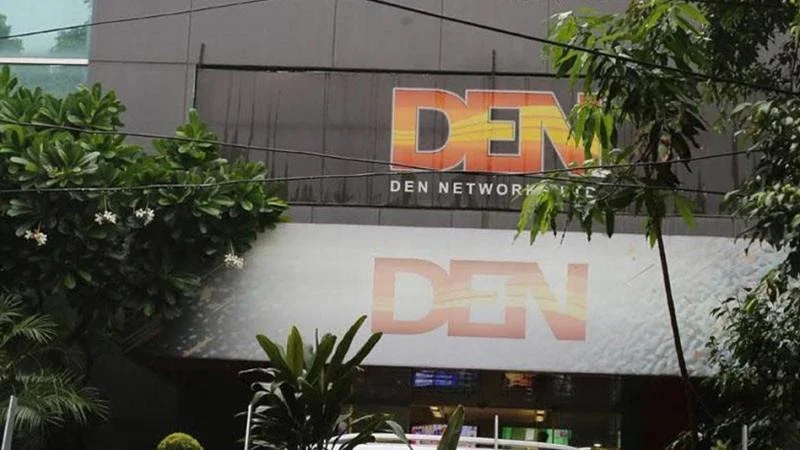
MUMBAI — In an era where traditional linear television and cable distribution networks face existential threats from aggressive over-the-top (OTT) streaming platforms and hyper-competitive broadband providers, financial survival often hinges on aggressive top-line expansion. However, for leading cable and broadband service provider Den Networks, the prescription for the quarter ended June 30, 2025, proved entirely different: rigorous operational discipline, astute cost management, and a powerful cushion from non-operating investment returns.
Despite registering a relatively measured pace of revenue growth, Den Networks reported a striking acceleration in its bottom-line profitability. The company announced a standalone Profit After Tax (PAT) of Rs 508.2 million for the first quarter of the 2025–26 fiscal year. This represents an impressive 41% year-on-year (YoY) increase compared to the Rs 359.3 million posted during the corresponding period of the previous fiscal year.
The financial results, reviewed and formally approved by the company’s Board of Directors during their meeting on July 14, 2025, highlight a corporate strategy that prioritizes margin protection and cash flow optimization over unbridled top-line scaling. As traditional media consumption paradigms undergo structural shifts across India, Den Networks’ performance offers a fascinating case study in how legacy players can insulate themselves against market headwinds through lean operations and robust treasury management.
Main Facts at a Glance
To fully grasp the financial dynamics of Den Networks during the first quarter of fiscal year 2025–26, it is essential to examine the core performance metrics that define the period:
- Standalone Profit After Tax (PAT): Rs 508.2 million, marking a 41% YoY jump from Rs 359.3 million.
- Consolidated Profit After Tax (PAT): Rs 536.4 million, reflecting the combined strength of the parent company alongside its 24 subsidiaries and five associate entities.
- Total Standalone Income: Rs 3,150.8 million, up from Rs 2,959.6 million in the corresponding quarter of the previous fiscal year.
- Core Operational Revenue: Rs 2,456.1 million.
- Other Income (Primarily Treasury/Investment Returns): Rs 694.8 million on a standalone basis, crossing Rs 700 million at the consolidated level.
- Total Standalone Expenses: Dropped 3.5% sequentially to Rs 2,566.1 million.
- Earnings Per Share (EPS): Expanded to Rs 1.07, compared to Rs 0.75 in the same quarter last year.
- Consolidated Total Assets: Stood at Rs 42,246.3 million as of June 30, 2025, rising from Rs 40,084.5 million a year prior.
Chronology and Boardroom Timeline
The trajectory leading up to the release of these financial results followed a structured corporate timeline typical of major Indian listed entities governed by strict regulatory compliance frameworks under the Securities and Exchange Board of India (SEBI).
Early July 2025: Pre-Earnings Close and Audit Reviews
Ahead of the formal board meeting, internal audit teams and financial controllers finalized the unearned and unaudited financial statements for the quarter concluding June 30, 2025. During this window, preliminary data suggested that while core operational revenues were growing at a muted pace due to competitive pressures in both cable and broadband markets, expenditure containment initiatives were yielding significantly better-than-expected savings.
July 14, 2025: Board Approval and Public Disclosures
The pivotal moment arrived on July 14, 2025, when the Board of Directors of Den Networks convened in Mumbai to review, discuss, and formally approve the unaudited standalone and consolidated financial results for the first quarter. Following the conclusion of the board meeting, the company disseminated its comprehensive financial disclosures to the stock exchanges (BSE and NSE), laying bare the details of its income streams, expenditure rationalization, and segment-wise performance.
Financial analysts and market participants immediately homed in on the sharp contraction in placement fees and the substantial contribution of other income, which collectively propelled the net profit past the psychological threshold of Rs 500 million.
Supporting Financial Data: Dissecting the Numbers
A deeper dive into the unaudited financial statements reveals the underlying mechanics of Den Networks’ earnings surge. While the headline growth figure of 41% in PAT immediately captures attention, the interplay between top-line components, cost structures, and tax liabilities tells a more nuanced story.
Revenue Breakdown: Core Operations vs. Treasury Yields
Total standalone income for the quarter reached Rs 3,150.8 million, showing steady growth from the Rs 2,959.6 million reported in Q1 FY25. A segment-wise examination shows that core operational activities brought in Rs 2,456.1 million.
However, an extraordinary pillar of support came from non-operating revenue. Other income sources—predominantly investment-related returns and treasury yields—contributed a massive Rs 694.8 million on a standalone basis. On a consolidated level, this treasury and investment income exceeded Rs 700 million, effectively accounting for nearly a quarter (approximately 25%) of the group’s overall incoming cash flows. This strategic reliance on a robust investment portfolio acted as an effective financial shock absorber against marginal pressures in core operating segments.
Expense Rationalization and Cost Control
The true driver of the bottom-line expansion was not aggressive revenue generation, but disciplined, surgical cost management. Total expenses fell 3.5% sequentially to Rs 2,566.1 million compared to the preceding quarter.
The most pronounced reduction occurred in placement fees—a critical expense category for cable distribution networks. Placement fees dropped sharply from Rs 484.1 million in the previous quarter down to Rs 361.3 million during the June 2025 quarter. Meanwhile, content acquisition costs—traditionally one of the heaviest overhead burdens for multi-system operators (MSOs)—remained largely steady at Rs 1,487.9 million, reflecting stable long-term arrangements with broadcasters and content creators.
Financing Costs and Tax Burdens
Capital structure management remained conservative. Finance expenses had a virtually negligible impact on the quarter’s ledger, standing at a nominal Rs 5.5 million.
Conversely, the company’s tax obligations experienced a sharp upward correction. Tax expenses surged by a staggering 113% year-on-year to hit Rs 76.6 million, up from the comparative period last year. Nevertheless, the sheer vigor of the operating performance, paired with the cushion provided by investment income, easily absorbed this heavier tax liability, allowing net profits to comfortably clear the Rs 500 million mark. Consequently, Earnings Per Share (EPS) improved notably to Rs 1.07, rising from Rs 0.75 a year prior.
Consolidated Performance and Asset Health
At the consolidated level—incorporating the parent enterprise alongside its extensive network of 24 subsidiary companies and five associate entities—the financial health remained robust. Consolidated PAT settled at Rs 536.4 million, while consolidated total income touched Rs 3,119.5 million.
Furthermore, the balance sheet exhibited long-term resilience. As of June 30, 2025, consolidated assets expanded to Rs 42,246.3 million, compared to Rs 40,084.5 million recorded at the same point last year. This steady accumulation of assets underscores management’s ability to preserve and grow enterprise value despite limited top-line momentum.
Segment Performance: Cable Resilience vs. Broadband Pressures
A granular review of Den Networks’ operational verticals highlights contrasting fortunes in the market:
- Cable Distribution: Remaining the unmistakable backbone of the enterprise, gross revenue from cable operations generated Rs 2,353.1 million during the quarter. Despite minor operating pressures, the segment continues to anchor the company’s market footprint.
- Broadband Services: In contrast, the broadband segment faced headwinds. Revenue from broadband slipped to Rs 104.6 million, down from Rs 121.2 million in the corresponding quarter of the previous year. This contraction mirrors the intense competitive pressures dominating India’s broadband landscape, where aggressive pricing from telecom giants and regional fiber providers continues to squeeze margins.
Although both broadband and cable distribution segments posted minor operating losses individually, these localized pressures were successfully neutralized by robust investment returns and targeted cost-containment measures.
Official Responses and Strategic Context
While formal executive commentary accompanying quarterly releases often emphasizes strategic continuity, the underlying posture of Den Networks reflects the influence of its parentage. Operating firmly within the broader Reliance Industries-backed media ecosystem, Den Networks benefits from immense infrastructural synergies, financial backing, and strategic alignment with Reliance’s overarching vision for India’s digital, broadband, and home-entertainment sectors.
Industry observers note that being part of the Reliance umbrella grants Den Networks access to superior bargaining power, technological integrations, and structural safety nets that standalone regional operators simply cannot replicate.
While corporate leadership did not issue extensive ad-hominem statements alongside the Q1 disclosures, regulatory filings and board notes consistently underscore a unified commitment to operational efficiency, debt-free or low-leverage balance sheet management, and prudent capital allocation. The capacity to extract high net profitability out of a modestly growing top line is viewed internally as validation of the company’s pivot toward margin-defensive operations.
Broader Industry Implications and Market Outlook
The financial results posted by Den Networks for the quarter ended June 30, 2025, carry profound implications for the broader Indian media, cable, and telecommunication sectors.
1. The Pivot from Volume to Value in Cable TV
For over a decade, India’s cable distribution industry has been locked in a race for subscriber volume, often sacrificing average revenue per user (ARPU) in hyper-competitive regional skirmishes. Den Networks’ Q1 performance demonstrates that mature MSOs can successfully pivot toward a value-and-discipline model. By reining in placement fees and stabilizing content costs, companies can protect their bottom lines even when subscriber additions slow down or churn rates rise due to cord-cutting.
2. Navigating the OTT and Broadband Crosswinds
Traditional cable operators face a dual squeeze: OTT streaming platforms are cannibalizing linear television viewership among urban youth, while aggressive fiber-to-the-home (FTTH) broadband operators are aggressively bundling television channels and high-speed internet. Den Networks’ broadband segment contraction—falling from Rs 121.2 million to Rs 104.6 million—vividly illustrates how difficult it is for mid-tier players to carve out sustainable market share against deep-pocketed national telecom titans.
3. The Vital Role of Non-Operating Income
Perhaps the most striking takeaway for financial analysts is the extent to which non-operating income can rescue a legacy business. With investment and treasury returns contributing nearly 25% of the group’s total income (exceeding Rs 700 million consolidated), Den Networks proves that a strong corporate treasury is no longer just a luxury—it is a critical strategic weapon. In volatile macroeconomic environments where core operations face cyclical pressures, investment portfolios can provide the necessary ballast to maintain healthy dividend policies, credit ratings, and investor confidence.
Conclusion
As India’s digital consumption habits continue their rapid evolution, Den Networks has demonstrated that disciplined corporate governance can triumph over top-line stagnation. By successfully balancing structural cost controls in its core cable business with powerful yields from its investment portfolio, the company has insulated its financial foundation.
For investors and industry watchers alike, Den Networks’ Q1 FY26 performance serves as a masterclass in resilience—proving that strategic agility, rigorous expense management, and smart treasury deployment can deliver stellar profit growth, even when the broader market tides are running against traditional media distribution.



