










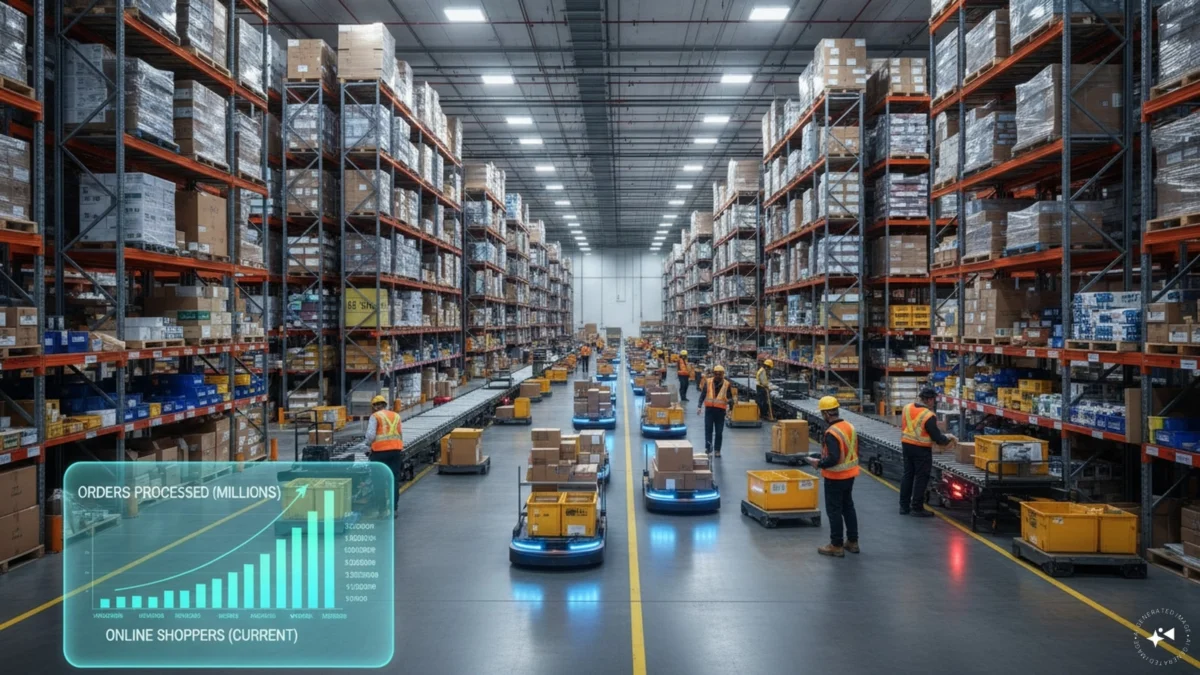
NEW DELHI — India’s e-commerce landscape has set a blistering pace for the final quarter of the fiscal year, with primary market leaders Amazon and Flipkart reporting unprecedented momentum in the opening hours of their respective flagship 2026 festive sale events. Powered by an aggressive appetite for premiumization, widespread adoption of flexible financing mechanisms, and an explosive surge in participation from India’s smaller towns, both platforms have logged milestone figures that underscore a profound shift in consumer spending habits.
While the exact metrics, reporting windows, and tracking methodologies vary between the two multinational giants, the early returns point to a deeply confident consumer base. From high-end Android smartphones and Apple-ecosystem alternatives to ultra-large-screen home entertainment systems and prestige beauty categories, shoppers have signaled that discretionary spending remains robust despite macroeconomic crosscurrents. Furthermore, the burgeoning success of quick-commerce integrations—with multi-city instant delivery networks handling a significant portion of early volume—suggests that convenience and speed are now central pillars of the Indian festive shopping experience.
Main Facts
The opening salvos of Amazon’s Great Indian Festival and Flipkart’s Big Billion Days for the 2026 season have redefined the scale of Indian digital retail.
- Volume and Traffic Spikes: Amazon reported that the total volume of products ordered during the opening phase of its sale doubled year-on-year, surging by 100%. Meanwhile, Flipkart experienced a massive influx of traffic, registering 6.3 million concurrent users during the inaugural hour of its event. Overall shopper traffic on Flipkart during this golden hour was more than six times that of a typical, non-sale trading hour.
- Geographic Diffusion: Demand has ceased to be an exclusive metropolitan phenomenon. Flipkart confirmed that nearly 50% of its opening-hour traffic originated from Tier-3 cities and smaller, semi-urban localities. On aggregate, shoppers residing outside major metropolitan hubs accounted for approximately 60% of total demand during the initial phase. Amazon reinforced this narrative by noting that orders were successfully placed from every single postal pin code across India, highlighting absolute saturation and reach.
- The Premiumization Wave: Across consumer electronics, personal tech, and large appliances, consumers heavily favored upper-tier models. High-end Android smartphones, luxury wearables, and ultra-HD televisions dominated carts, backed by financial enablers like Equated Monthly Installments (EMIs), no-cost financing, and device exchange programs.
- Quick-Commerce Acceleration: Both retailers leveraged their rapid delivery arms—Amazon Now and Flipkart Minutes—to fulfill high volumes of immediate consumption goods, registering exponential multiples over baseline daily transactions.
Chronology of the Opening Hours
The unfolding of the 2026 festive shopping window followed a meticulously coordinated timeline designed to capture maximum consumer attention at the stroke of midnight and during peak morning hours.
The Midnight Zero-Hour Surge
As the clocks struck midnight on the opening day, digital traffic spiked precipitously across both platforms. Flipkart’s servers instantly absorbed millions of concurrent visitors, peaking at 6.3 million active shoppers simultaneously browsing within the first 60 minutes. Early traffic analysis indicated that these initial visitors were high-intent buyers, with new customer acquisition on Flipkart jumping by 34% during this opening hour compared to previous baseline benchmarks.
The Morning Wave and Tier-3 Awakening
As the morning progressed, traffic patterns shifted from metropolitan tech enthusiasts to semi-urban and rural demographics. By mid-morning, data from logistics and server nodes indicated that Tier-3 and Tier-4 towns were driving the bulk of platform engagement. Consumers in these regions, many interacting with specialized festive interfaces and regional language prompts for the first time, steadily converted high-value items into completed transactions.
Concurrently, quick-commerce verticals experienced a localized surge. As urban households woke up to the festive morning, orders on Flipkart Minutes escalated to 3.5 times normal daily volumes, while Amazon Now successfully orchestrated sub-hour deliveries in more than 120 operational cities.
Supporting Data and Category-Wise Breakdown
A granular look at the data reveals that the 2026 festive opening was defined by specific category outperformance, heavily supported by inventive financing structures.
Smartphones and Personal Technology
The appetite for upgraded personal technology showed no signs of fatigue. Amazon noted a staggering 70% year-on-year expansion in the sales of premium Android smartphones during the opening phase. Computing and wearable segments witnessed astronomical multiples: sales of MacBook Neo laptops skyrocketed to 65 times their typical daily averages, while premium smartwatches and wearables logged a phenomenal 80-fold increase over baseline daily movement.
Flipkart reported a similar trajectory, highlighting a 73% jump in tablet sales alongside robust uptake for both flagship smartphones and newly accessible, entry-level 5G devices.
Home Appliances and Entertainment
Home upgrades formed a cornerstone of consumer spending. Amazon reported that its home entertainment sector operated at 77 times its standard daily capacity. Notably, screen sizes of 55 inches and above captured an overwhelming 65% market share of all televisions sold during the window. Large home appliances—including refrigerators, front-load washing machines, and air conditioners—soared to 50 times their usual daily volume.
Flipkart corroborated this trend within its ecosystem, logging a 30% year-on-year growth rate specifically for large appliances during the opening hour alone.
Fashion, Beauty, and Personal Care
Non-tech categories also enjoyed a blockbuster opening. Amazon’s fashion vertical scaled to seven times its normal daily output. The beauty and personal care segment emerged as a dark horse; one out of every four products purchased on Amazon during the first 12 hours belonged to the beauty category, with premium skincare and haircare formulations moving at a velocity of over 150 units per minute.
Flipkart observed a comparable 42% year-on-year surge in beauty sales during its opening hour. Men’s grooming proved exceptionally popular, with the platform recording peak sales velocities exceeding 1,600 units of men’s perfume every single minute.
Financing: The Engine of Affordability
High-ticket acquisitions would not have reached such dizzying heights without sophisticated financial scaffolding. Amazon disclosed that one in every two customers (50%) utilized EMI options to distribute the cost of their purchases, while one in three items sold came bundled with direct cashback incentives.
On Flipkart, affordability measures were equally prominent: one in four mobile phone purchasers leveraged device exchange programs to offset upgrade costs, while one-third of buyers opted for no-cost EMI structures to finalize their transactions safely.
Official Responses and Strategic Perspectives
Industry leaders and corporate executives have pointed to these early metrics as validation of multi-year investments in supply chain logistics, localized warehousing, and financial technology partnerships.
Spokespersons for Amazon emphasized that the geographic spread of the orders—touching every single pin code in the country—validates the company’s sustained capital expenditure in India’s tier-2, tier-3, and rural infrastructure. By embedding regional language interfaces, expanding pickup store networks, and scaling up the Amazon Now quick-delivery framework, the company has successfully transformed festive shopping from an urban luxury into a pan-national digital festival.
Flipkart executives echoed these sentiments, stressing that the dramatic increase in new customer acquisition (up 34% in the opening hour) proves that millions of Indian households are entering the formal organized digital economy for the first time via these sales. The heavy concentration of traffic from Tier-3 locations is viewed internally as clear proof that aspirations for premium goods are universal, and that digital platforms have successfully bridged the retail divide between Bharat and India.
Furthermore, supply chain architects noted that the integration of quick-commerce (such as Flipkart Minutes and Amazon Now) has transitioned from an experimental convenience into a core competitive battleground. Delivering high-demand appliances, electronics, and grooming items within minutes during peak festive loads demonstrates a maturation of Indian logistics networks that was previously thought unattainable at this scale.
Implications for the Broader Retail Ecosystem
While the initial figures released by Amazon and Flipkart paint an extraordinarily vibrant picture of the 2026 festive season, industry analysts advise a balanced perspective. Because the two retail giants track metrics across different chronological windows, utilize distinct operational definitions, and measure performance through proprietary lenses, direct head-to-head comparisons of overall sales volume remain complex. Furthermore, explosive opening-hour spikes, while indicative of strong initial momentum, do not automatically guarantee predictable demand curves across the entirety of the multi-week festive shopping calendar.
Nevertheless, the broader economic implications of these opening reports are profound:
- Validation of Consumer Confidence: The willingness of Indian consumers to lean heavily into premium product tiers—such as 55-inch smart TVs, high-end laptops, and prestige beauty lines—signals that urban and semi-urban middle-class households retain significant disposable income and harbor high aspirations for lifestyle upgrades.
- Mainstreaming of FinTech and Credit: The heavy reliance on EMIs, no-cost financing, and product exchanges illustrates that digital lending infrastructure has matured into an indispensable driver of retail consumption. Consumers are increasingly comfortable leveraging structured credit to bridge the gap between desire and affordability.
- The Quick-Commerce Revolution: The rapid scaling of instant delivery services during high-volume festive windows signals a permanent evolution in consumer expectations. Speed is no longer reserved for groceries and essentials; it is rapidly becoming an expected standard across consumer electronics and lifestyle products as well.
- Economic Catalyst for Offline and Online Manufacturers: The massive inventory clearing witnessed in the opening days provides local and international manufacturers with the necessary liquidity and market feedback to optimize production cycles for the remainder of the fiscal year, feeding positively back into industrial manufacturing, logistics employment, and ancillary service sectors.
As the 2026 festive season continues to unfold, retail watchers will monitor whether the phenomenal pace set by these opening days can be sustained through the upcoming holidays, ultimately cementing this year’s sales events as a historic watermark for Indian digital commerce.



